Golden Hairpin Locked in Copper Sparrow - Reviews

Golden Hairpin Locked in Copper Sparrow
+Add to Custom List
Sort
Add review
... Read More
Okay so I have to talk about the person in the black cloak on that oxcart. Who even IS this?? Because honestly, the way they handle everything is kind of terrifyingly calm. They get Ruan Xiaodie and her father onto the ferry, destroy the Governor's opium, and basically orchestrate the whole escape while staying completely detached emotionally. When Ruan Xiaodie tries to express guilt about leaving them behind, this person just brushes it off with 'I also have my own purpose in helping you.' That line hit me like a truck. It's either genuinely selfless AND pragmatic, or it's the coldest manipulation I've ever read. And then there's the whole reveal about the gold hairpin going missing from the evidence—someone took it. Someone who clearly knows more than they're letting on. Meanwhile Xu Hang is just... haunting temples now? Three months without showing up, and when he does return he's asking Buddhist monks about forgiveness while clearly harboring some serious unresolved stuff. These two characters are orbiting each other in the most frustrating way possible. One is playing 4D chess while the other is trying to figure out if he even wants to play the game anymore. The dynamic between them has to be electric when they finally collide again, and I am NOT okay with how slow this author is moving toward that moment.
... Read More
Let me just say this chapter made me physically anxious and I want to talk about WHY. On the Duan Yelin/Xu Hang front, the stakes are emotional annihilation. Xu Hang has clearly been surviving inside this relationship by refusing to explain himself, refusing to soften, using his captivity as both shield and weapon. Every conversation is a landmine. Duan Yelin kicks the car door when he leaves — that's not just anger, that's the sound of a man who loves someone who treats his love like a cage. The stakes here are whether either of them will break first. But the external stakes are what really got me. The Yan Gang — Ghost Master's crew — is in Hezhou. They're NOT there to worship ancestors. They're hunting Shen Jingmo. He's already half-dead, already hiding in a courtyard playing harmonica for children who trust him. And the people closing in on him are organized, trained, numerous. "Men in black" walking the streets two days ago, same uniforms, looking like soldiers. Qiao Song literally points one out running past the car and Duan Yelin recognizes them. The tension between these two threads is exquisite. Shen Jingmo is trying to build something fragile — a teaching position, a routine, a few hours a day of peace with children who sing his farewell song — while the entire machinery of his past converges on Hezhou. Meanwhile Duan Yelin is dealing with his own version of being hunted: Xu Hang's emotional withdrawal, the jealousy, the four-year-old prison they built together. Both men are trapping the people they care about. Both are about to find out that containment doesn't work. The stakes aren't just heartbreak — they're survival. And I cannot breathe waiting to see what happens next.
... Read More
Okay I need a minute. A whole fucking minute. Xu Hang and Yuan Ye's relationship has been the backbone of this entire story, and this scene is where the author finally peels it all back. Let me just— When Yuan Ye asks 'do you hate me?' and Xu Hang shakes his head, I thought my heart was going to stop. Not because it's sweet, but because it's so devastating. Xu Hang is the one who designed the entire revenge plot. He manipulated every variable. He became Yuan Ye's friend. And he feels nothing? Or maybe he feels too much and that's why he looks so calm? And then Yuan Ye gets angry—at Xu Hang's indifference. I know exactly what that means. It means despite everything, he still wanted his friend to care enough to hate him. Hate would have been easier. Hate would have been honest. The moment where Xu Hang says 'I know that you, like Old Madam Yuan, know right from wrong when it comes to major issues'—that's him recognizing Yuan Ye's moral core even as he destroys everything around it. He respects him. That's the tragedy. And the ending? Walking out into the sunlight without looking back? While Xu Hang holds the door and watches until he disappears? That's not just a goodbye. That's two people who will never say the things they actually want to say to each other again.
... Read More
The pacing here is deliberately ruthless and I love it. Think about the structure: grave one—wrong person. Grave two—body parts, gangrene worms. Grave three—random尸体, no Cong Lin. He's already digging blindly at this point, fingertips bleeding, clothes soaked in sweat. Then grave four—exhaustion takes over, he's kneeling, using his arms instead of his hands. Four graves, four beats, each one stripping away a little more hope. The reader is right there with him, exhaling faster with every empty pit. But then—cut to Yuan Sen arranging a wedding. Everything stops. No transition paragraph, no bridge, just: Even though some people were heartbroken, others were still living well. This structural choice is either bold or cruel, possibly both. It forces you to literally turn the page in your head and realize the world hasn't paused for Duan Zhanzhou's grief. And then we get the coda in Xiaotong Guan—Duan Yelin hearing that his brother hasn't eaten in days, vomiting alcohol and blood. The pacing shifts again from the raw individual tragedy to the quiet institutional aftermath. The chapter doesn't resolve; it evaporates. Which feels exactly right for a story this heavy.
... Read More
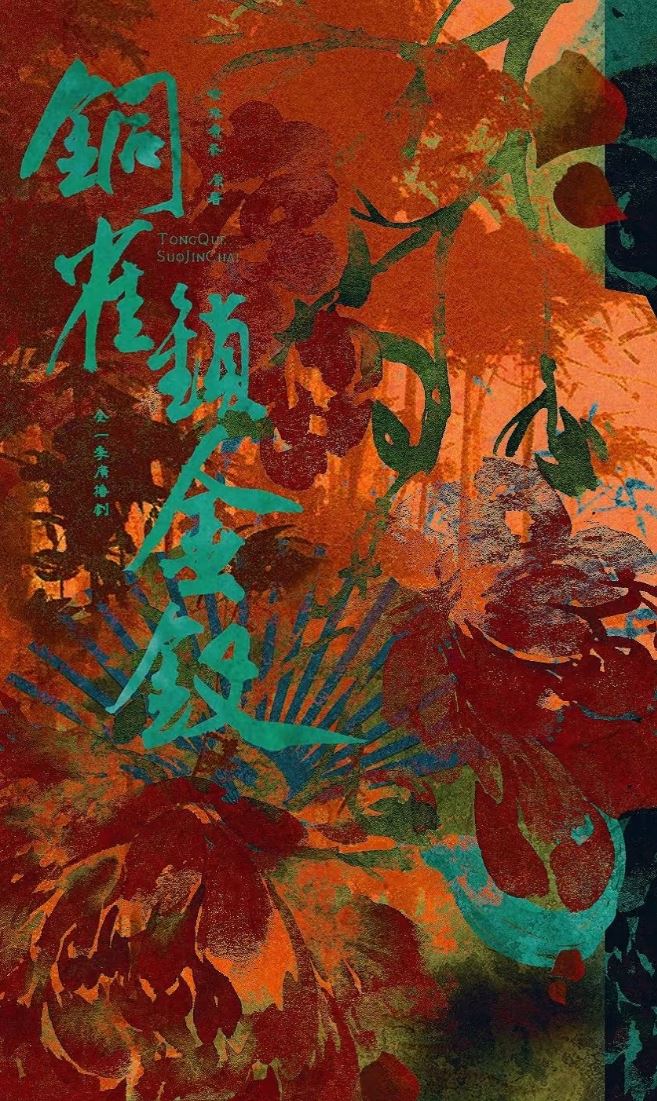
I need to talk about this ending because my hands are literally shaking. Xu Hang, of all people, is the one who tells Cong Lin the truth. Think about that for a second. This is the guy who was almost killed by Cong Lin. This is the guy who spent time in prison alongside him. And yet he's the one who looks at Cong Lin's bruised, wounded face — a face that still looks like a 17-year-old boy — and says with complete conviction: "Cong Lin, Duan Zhanzhou likes you." Not believes it. Not hopes it. Likes. Like it. With all the weight of someone who has actually WITNESSED what Duan Zhanzhou did. And then he lists the evidence like a prosecutor presenting exhibits: "For you, he almost broke into the Military Control Commissioner's mansion alone; for you, he was willing to give up the governorship that was within his grasp; for you, he even planned to rob the execution ground." That's not just information. That's Xu Hang, of ALL people, choosing to throw his life on the line for someone who once tried to kill him. The relationship between these two has shifted in such a profound way and I don't think either of them fully understand it yet. But let's go back to the main thing. Cong Lin's reaction is everything. He doesn't believe it. Of course he doesn't believe it. He's been telling himself Duan Zhanzhou hates him for SO LONG. "Even if everyone in the world died, he would not be happy." The self-loathing is so deeply baked into his worldview that even direct evidence can't penetrate it. And the relationship between Cong Lin and Duan Zhanzhou — oh god. The sleepwalking thing is the most tragic romantic setup I have ever encountered. Cong Lin couldn't even CONSENT properly because Duan Zhanzhou was asleep. They fell into this secret, shameful bond that neither of them chose and neither of them could control. And then Duan Zhanzhou woke up hating him, and Cong Lin had to play the villain to protect him. "It was like a dream, it was all in vain." That line. That SINGLE LINE contains an entire universe of longing and loss. The sister-brother relationship is equally devastating. Cong Wei and Cong Lin had this unspoken understanding from childhood — she shared her meat with him, warmed his bed, stood in front of him on missions. And then the day came when she asked him to kill her. The reversal of roles is so painful. The protector becomes the protected. The survivor becomes the one who has to live with guilt for the rest of his life. I keep thinking about how Xu Hang describes Cong Lin: "I can't protect such a heartless guy." But Cong Lin isn't heartless. He's the most wounded person in this entire novel and he's been carrying it alone since he was a child.
... Read More
The dialogue in these chapters is ABSOLUTELY razor-sharp. Let me just highlight a few exchanges because I cannot stop thinking about them. Duan Zhanzhou: 'You disgusting guy, were you planning to take advantage of me while I was drunk?' Best line. Best. It's so aggressively defensive, so projection-packed, that you know immediately he's terrified of something he can't name. And then 'Good thing you're mute—I don't have to listen to your disgusting excuses!' The cruelty is instantaneous and casual, which makes it hurt even more because he's basically saying Cong Lin's silence is preferable to his voice. Then Xu Hang's entrance: 'It has nothing to do with me to begin with. But since you seem to dislike him so much, I'll borrow him to move some herbs to my medical hall. Do you have any objections?' That casual, devastating 'it has nothing to do with me' followed by an offer that is anything but casual. Xu Hang is playing 4D chess while Duan Zhanzhou is over here throwing tantrums. Duan Yelin and Xu Hang's exchange is different in tone but equally precise. Xu Hang: 'You don't even know why I did that. Don't you doubt me?' And Duan Yelin's response—'Didn't you say that you hope I won't ask you? I don't doubt you.'—is so perfectly calibrated. He's holding Xu Hang to his own words, turning Xu Hang's request for non-intrusion into an argument for trust. Genius. The narrative voice itself is fascinating too. It moves between intimate close third-person (we're inside Duan Yelin's head, feeling his heart, his skin) and this almost cinematic detachment when describing Duan Zhanzhou's world. Two different emotional registers operating in parallel.
... Read More
Let's talk stakes because this batch is doing some serious misdirection. On the surface, everything seems resolved—the opium is destroyed, Ruan Xiaodie escaped, the immediate threat is gone, right? WRONG. The real tension isn't in what's happening, it's in what's MISSING. That gold hairpin. Someone took evidence out of an official investigation and the Military Control Commissioner suddenly stopped pushing for answers. Why? Is this person protecting someone? Blackmailing someone? Or are they setting up a trap that hasn't sprung yet? The original murder of Wang Ronghuo is STILL unsolved in the eyes of the law. Duan Yelin is caught between a Commissioner who went from aggressively questioning to mysteriously silent, and whatever game the cloaked figure is playing. Meanwhile Xu Hang is sitting in a temple asking a monk about forgiveness, which is the narrative equivalent of defusing a bomb while casually sipping tea. The stakes aren't dropping—they're escalating invisibly. Every chapter that feels peaceful is actually loading a gun. And I'm not even kidding. The last line about the weather getting warmer? That's not atmospheric detail, that's foreboding. Summer is coming, and in this story, heat means blood.
... Read More
"This kind of shame is actually a kind of worthless stubbornness, but Xu Hang relied on this little stubbornness, like a small kerosene lamp, to fend off the darkness of the entire night." I keep coming back to this line. I read it three times. THREE times. it's the most heartbreaking thing in these chapters and nobody talks about it enough. this whole relationship is built on coercion — duan yelin entering xu hang's space uninvited, demanding, taking, and then xu hang waking up early but refusing to face him, using silence as the last shield he has left. but this metaphor… a small kerosene lamp against darkness? that's not nothing. that's survival. the author made xu hang's stubbornness beautiful without making it romantic. it's not noble, it's barely functional, but it's HIS. and duan yelin KNOWS this. "Duan Yelin wasn't necessarily unaware of Xu Hang's thoughts, but he saw through them without saying anything, as if granting him this small bit of dignity." That sentence hit me in a weird way. is that compassion? or is that just a predator letting the prey think it has options? i don't know and the ambiguity is what makes this book genuinely good instead of just angsty
... Read More
Oh my god, can we just talk about this one moment where Xu Hang WANTS to touch Gu Fangfei's hair but his hand just... hangs there? And then the narrator gives us this devastating line: "His hands were stained with blood, so he couldn't touch anything too clean." I am actually not okay. This man is literally the most dangerous person in Hezhou and he knows it. He's coaxing her like she's a child—"Just bear with it for a while, alright?"—and he genuinely means it. But he can't even reach out to comfort her because he's convinced himself he's too filthy. And yet he still comes to treat her. He still shows up every single time. Meanwhile Gu Fangfei is sitting there in that rattan chair by the window, pale and thin, and the first thing she does is make sure the maid pays him. It's this bizarre intimacy where they don't even need to acknowledge the elephant in the room—they used to be engaged, he's clearly still deeply attached to her, but now they're... what exactly? Strangers who know each other better than anyone else? The moment really destroyed me because it's so unspoken. He knows she's blaming him for not warning her about the search. She knows he's the only person who comes when she's sick. But neither of them crosses that line. Except... did you catch that at the very end with the beggar? Xu Hang feels like he's heard that voice somewhere before and the text just cuts off mid-sentence. I am SCREAMING. Who is this person?
... Read More
Okay, I have to talk about the villain because holy shit this murderer is terrifyingly smart. Let me back up a second — the whole scene where Yuan Ye bursts into his dad's bedroom demanding answers? That's not just family drama, that's the plot pulling back the curtain. Yuan Sen claims he's closing the case to prevent more incidents, but the moment he gets caught secretly investigating something himself? Classic move. The murderer anticipated how the upper class would handle evidence, planted enough proof to convict Ruan Xiaodie, and now everyone thinks it's wrapped up. But Yuan Ye's realization hits differently: the murderer is powerful enough to make an official step aside and clever enough to cover every angle. That's the kind of villain who doesn't just outsmart the protagonist — they're playing chess while everyone else is still learning the pieces. I keep wondering: what is Yuan Sen actually hiding, and will Yuan Ye figure it out before the murderer strikes again? Because if the pattern holds, the next move is going to be brutal.
... Read More
Okay so let me just say—this sequence is a masterclass in escalating stakes through a single action. Duan Zhanzhou digging through a mass grave isn't just a plot beat, it's the entire emotional architecture of these chapters condensed into one relentless physical act. He starts digging with his bare hands, injuries and all, and each grave he opens gets worse. First it's just not Cong Lin. Then it's body parts. Then it's children taken by plague, headless corpses, hanged old men. The author keeps pulling the rug out from under us with every pit. And then—just when you think the tension can't tighten any further—he finds the coffin, lifts the lid, and Cong Lin is gone. Not alive, not really dead in a way that gives closure. Just gone. The twist that sneaks up on you is how this search mirrors something bigger: Duan Zhanzhou has spent the entire narrative being lied to by Cong Lin, and now even death can't give him the truth he's craving. He wants answers, he wants Cong Lin to explain, he wants that smile or praise—and there's nothing. The contrast with the cut to Yuan Sen celebrating his nephew's wedding right after? Chilling. It's not a transition, it's a knife twist.
... Read More
The detail work in this section is actually insane when you stop to think about it. The author takes a whole paragraph to make you understand the geography—Military Control Commissioner's mansion on one end, Heming Medicine Hall on the other, east and west, thirty minutes walking, fifteen by car with the shortcut. None of that is accidental. It's building an entire city in your head so that when Duan Yelin does the math and realizes 'unless he flew from the sky, it couldn't have been done by someone in the medical hall,' you're right there doing the calculation with him. That's worldbuilding as investigation tool and I love it. Then you've got these visceral images layered on top—the steaming medicine jars, the medicine boys cooking through the night, the blood and bandages at the hospital, Madam Yuan's weeping until she's nearly blind, Old Madam Yuan fainting from reciting sutras. The hospital ward scenes especially feel cinematic in a brutal way. Yuan Sen lying there unable to speak or write, just blinking, letting out ah ah sounds of pain—that's not melodrama, that's horrific realism. And the Yuan mansion being sealed off, assets seized, the whole family cast into poverty? It reads like a dynasty collapsing in real time. The atmosphere shifts from investigative thriller to family tragedy so seamlessly you don't even notice the transition until you're already sobbing for Yuan Sen.

Leave a comment

You must be logged in to leave comments. or
