But Deliver Us From Death - Reviews

But Deliver Us From Death
+Add to Custom List
Sort
Add review
... Read More
I need to talk about Amaryllis because she is Having. A. Moment. She's been sitting there as Empress, tolerated the coldness, put up with Cassian's lingering grief for Madame Marguerite, and the final line where Cassian basically tells her SHE's the delusional one? That is absolutely diabolical character writing. Let's unpack this: Cassian called the lookalike “Belle” - a name so intimately tied to his dead wife that Amaryllis herself knew it. But when she confronts him about it, his response is to flip the script entirely: “To be more precise, whenever the Empress sees anything resembling Belle, you become overwhelmed with guilt.” He takes HER emotional reaction and reframes it as pathology. That is some next-level emotional manipulation right there. Meanwhile, Amaryllis has this raw, almost desperate need for ANY acknowledgment from him. Watch how she describes his behavior: perking up at saints' names, stopping at similar voices, giving second glances to blonde hair. She's been monitoring him like this for years - that's not just observation, that's obsession born of insecurity. And she knows everyone knows. “You can't hide the sky with your palm.” But what kills me is her ending note - “She knew why such a cold man had made her his Empress” and it trails off. She knows exactly what she was chosen for. She was never chosen for herself. Meanwhile Lumière and “Lu” seem to have their own dynamics that I'm dying to understand. The power relationships in this story are... intense.
... Read More
Let me talk about structure for a minute because the way this author controls tension across these chapters is actually masterful, even if the content makes me want to throw things at walls. Chapter 14 starts in media res with Astaire violating Valentine. Humiliating, brutal, immediate. No warm-up. You're thrown into this darkness and you just have to go with it. Then we get exposition about how Astaire cherishes Valentine despite this—because she saved his life, because she sides with him unconditionally. This establishes the power dynamic: she's his prisoner who also happens to be his emotional anchor. The pacing then accelerates through Valentine comforting Astaire after he executes Count Glastia's ally. We learn about the political situation—his mother is dying, once she dies he'll kill Count Glastia. This is worldbuilding woven into character moments, which is efficient storytelling. Then the sexual encounter follows naturally, showing how Astaire's violence and his twisted affection are two sides of the same coin. Fast forward to the pregnancy reveal. The author takes a beat here—Valentine meets Cassian secretly, tells him she's pregnant. Cassian's response is the first crack in his composed facade. 'Astaire will be pleased.' The distance between what he feels and what he says creates this unbearable tension. Valentine realizes even her lover can't truly celebrate with her because the child belongs to someone else in the eyes of the world. Then the banquet. The Empress confrontation happens like a landslide—rapid, violent, irreversible. One moment Valentine is walking to the feast, the next she's on the floor bleeding. The transition from ceremony to catastrophe in under two pages is brutal pacing. The aftermath stretches out the grief. Astaire's threat to the Empress. Valentine waking up. The physician's diagnosis. Each beat lands like a hammer. By the time the chapter ends with Valentine's eyes going dark, you're exhausted. The author didn't rush the tragedy—they let it settle in, made you sit with it. That's controlled devastation.
... Read More
The structural choice to end Valentine's arc with the demon contract and then IMMEDIATELY launch into “Matthias de la Glastia Part 1 - A Misaligned Cause” is so effective. It's like the narrative is taking a breath after that emotional explosion and then pulling you into something completely different, except of course it's the same tangled web. Let me walk through the pacing rhythm: We open with Valentine's full breakdown - the revelation, the scream, the demon making contact. This is peak emotional intensity. Then there's a clean break, a chapter title like a curtain falling. “Sehera's Lumière had returned home.” Suddenly we're in a completely different register - reflective, almost nostalgic. Twenty years have passed. A sister reunion. Gentle banter between Lumière and Cassian. It feels warm. Safe, even. Then — and this is where the author shows real mastery - the maids are holding down a struggling woman, and suddenly everything from Valentine's section comes rushing back. The golden hair. The white skin. The voice. The name Belle Laure. It's Valentine's ghost walking into the room, and the pacing doesn't give you a moment to adjust. You're still reeling from the demon contract and suddenly there's a LIVE imposter being confronted. The scene escalation is also well-controlled - Lumière arrives calmly, gets told her companion was taken, rushes to find her, walks in on something disturbing, comforts the woman, and then Cassian's near-breakdown with “Belle…” happens organically within the chaos. By the time Amaryllis explodes and the chapter closes on her defeated realization, you're emotionally exhausted in the best way. No breathing room. That's deliberate craft.
... Read More
The stakes in this batch are absolutely catastrophic and I love it. Let's talk about what everyone stands to lose: Valentine loses EVERYTHING - her child (deliberately murdered), her ability to ever have children, her trust in two people she loved more than life itself, and ultimately her soul when she makes that pact with the demon. The bloody tears detail is gruesome and perfect - this isn't just sadness, this is a fundamental transformation of her being. She becomes something else. Something dangerous. Amaryllis is fighting a war on multiple fronts and doesn't even have the right weapons. She's Empress by title but powerless in practice. Her conflict with Cassian isn't just about jealousy - it's about the terrifying realization that she's living in someone else's definition of love. The worst part? When Cassian says “It's not me, but the Empress who can't forget” - he's not entirely wrong. Her obsession with his grief paralyzes her. She can't even access her own anger because she's too busy monitoring his. And Belle Laure/the real Valentine's double? She's the ultimate symbol of what's at stake - she exists solely because someone from Tristan decided to weaponize the memory of the dead. The fact that Cassian reaches toward her “as if entranced” shows how deep his unresolved trauma runs, and how vulnerable he is to being manipulated through the image of what he lost. The stakes here aren't about thrones or battles - they're about identity, memory, and the terrifying question of whether anyone in this story actually knows the real people they claim to love. Or whether love itself has just become another form of control.
... Read More
Let me just sit with this for a second. FIVE people betrayed Valentine. FIVE. Liam—the orphan she took in, who killed her. Count Glastia—who refused to let her rest, who turned her body into that horrific alcohol thing. Astaire—who lusted after her and caused everything. Amaryllis—who killed her child. And Cassian—who used all of it to deceive her. THAT list reads like a who's who of everyone in this entire novel. And yet—the person she hates most, the one she swears she will kill, is CASSIAN. Of all people. Not Liam, who physically murdered her. Not Amaryllis, who killed her baby. Cassian, because he was the one she LOVED and he USED it. That distinction matters so much. It shows how she measures betrayal—not by the physical act but by the emotional weight of it. And then there's Lucifer. Oh god, Lucifer. The way the text describes him—he's cold, he has no empathy, he's literally a demon—but there are these tiny moments. The way he asks if she's curious about what her child would have looked like. That question, asked with zero inflection, is the most human thing anyone has done for her since she woke up in that grave. And her response—refusing his offer to tell her—is devastating. She can't bear to imagine what she lost, because imagining it means accepting it's gone forever. The relationship between Valentine and Lucifer is this eerie parallel to every other relationship she's ever had: he offers her power, she offers him her soul, and somehow—somehow—he's the first entity in this entire story who doesn't lie to her about what he is.
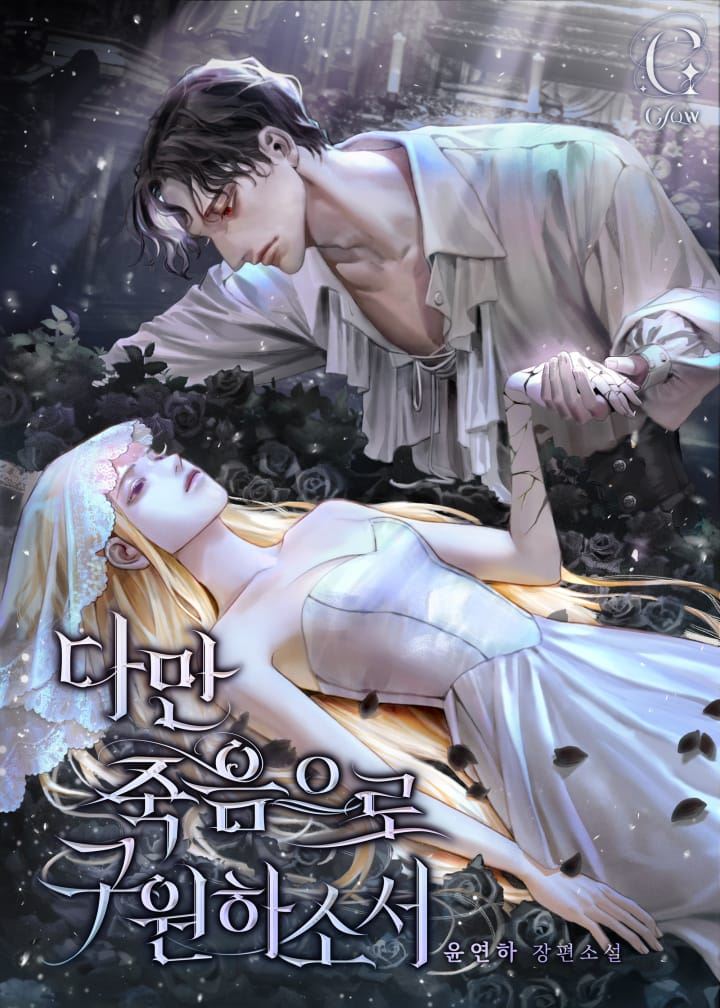
... Read More
Let's talk about dialogue because this author uses speech like a weapon. Astaire's lines are so deliberately overwrought—'I drown in your tears and suffocate even in your sobbing breaths'—that you can hear the performance in every syllable. He's not speaking to Valentine; he's speaking to the idea of Valentine, the trophy, the woman he owns. The pet name 'Tina' is chilling specifically because it's so casual, so domestic, coming from a man who just ordered executions. Meanwhile Cassian barely says anything and every word cuts. 'Suggest to Astaire that he should create a forest of meat and fill the pond with alcohol instead of water.' That's not a suggestion—that's a strategy delivered in the calmest possible tone. The contrast between his soft voice and his ruthless planning is exactly what makes him dangerous. And Valentine's final confrontation with Astaire—her voice is described as 'calm' and 'gentle' while delivering the most devastating indictment in the book. 'You should have died the day we first met.' Four words. No shouting, no theatrics. Just clinical precision. The narrative explicitly notes this is her 'first true confession' and that's the key. Up until now she's been performing—performing love, performing gratitude, performing smiles. The moment her dialogue becomes honest is the moment Astaire dies. It's brilliant.
... Read More
Okay so can we talk about how the author STRUCTURALLY engineered this entire confrontation to feel like a slow-motion car crash? It starts — and I mean STARTS — with what seems like a quiet hallway encounter. Amaryllis demanding answers. Cassian deflecting with cold politeness. You think: okay, marital spat, we've seen this before, move along. Then Cassian drops the word DIVORCE. BOOM. The tempo SHIFTED. Everything after that line reads like Amaryllis is running on fumes and adrenaline, and the narrative matches her energy. Her sentences get longer. More fragmented. She interrupts herself. She screams. Cassian's responses stay razor-short, one-liners that land like punches: "Do not use Bastian as a shield." "That's enough." "She would never have raised her voice to me." The alternating rhythm — her chaos, his stillness — is absolutely deliberate. Every time she builds momentum, he deflates it with a single line. It's chess. She's playing checkers and she doesn't even know it. Then — and this is the masterstroke — right when you think the scene has peaked emotionally, the author COMPLETELY pivots. We CUT to Count Glastia at a salon. Complete tonal shift. Polite greetings. Fake compliments. The kind of aristocratic smalltalk that makes your skin crawl because you KNOW something sinister is underneath. Lumière calling herself "Mademoiselle Sehera" while fanning herself on a red canapé — this image alone is cinematic. And then THE REVEAL about Valentine's corpse. Glastia confirmed it. He buried it. And yet... rumors persist. The chapter ends not with resolution but with a SPARK — Valentine's violet eyes glancing at Glastia. That is not a death. That is a RETURNING. The pacing between these two halves — the intimate, suffocating confrontation followed by the cold, political surface — creates this beautiful tension. One scene destroys a marriage. The other hints at a conspiracy. Neither gives you relief. You just want MORE.
... Read More
Okay, I need to talk about the Emperor and Count Glastia's confrontation because this changed EVERYTHING. Cassian summons Count Glastia at midnight, alone, no servants—classic power play. He doesn't raise his voice, doesn't lose composure. The narrative explicitly says: "It was a chilling aura. Count Glastia momentarily moved his lips." The guy who usually manages through persuasion and soft pressure is NOW pressing Count Glastia for an answer about where Belle's body was disposed of. And here's the twist that made my jaw drop: Cassian knew all along. Count Glastia thought he'd silenced Duke Blumir and kept the secret buried. But the emperor was patient. He waited. While everyone else was reacting to Madame Marguerite's reappearance, Cassian was quietly connecting dots. "Belle lived and died for me." That line came out quieter than his usual tone. Quieter but heavier. It's not even about justice—it's about personal respect. Cassian wanted to give Belle a proper burial, and Astaire's death + Valentina Blumir's intervention ruined that plan. He's NOT happy about it, and the fact that he frames it as "the utmost respect I could show for both of them" reveals how self-aware he is about what he's trying to do. Then the ending line: "Your thoughts are so shallow." Cassian looked at Count Glastia differently after this conversation—realized the count gave up on Astaire too easily. The emperor is recalibrating his entire view of his closest ally. This is a major plot pivot. The political tension is going to explode.
... Read More
So the first chapter is entirely a flashback—that's basically a spoiler the narrator just drops on you—and honestly? It works really well, but also it makes me wonder about the full structure of this novel. Let me think through why it lands. We open with the assassination. High impact, immediate stakes, visual and visceral (the glass shattering, the bloodied fingers). Then the rebels burst in, and we get Valentine's dramatic entrance—red dress, golden hair, saintly smile—and then BAM, her brother-figure Liam executes her. Fast. Brutal. No time to process. The cheers of the crowd immediately undercut any moment we might have had to sympathize with her, which is a bold choice. Then—jump forward in time to the grave scene. This is where the pacing really shows its teeth. The author lets silence sit. Lets the dust settle. Lets us sit with how completely forgotten Valentine is. And THEN the earth moves. The transition into Chapter 1's flashback, after that opening sequence, feels almost gentle by comparison. Sunlight, gardens, polite introductions. It's a deliberate tonal shift that rewards patience. The author isn't rushing to explain anything—they trust us to hold the mystery. My only concern? Some of the romantic content in the flashback runs long and the prose gets a bit repetitive with sensory detail. But that might be by design—the indulgence mirrors Valentine's own indulgence in this affair. So I'll forgive it.
... Read More
I need to talk about how EVERY character in this passage has a distinct voice, because the author is doing things with dialogue that I'm still processing. Amaryllis sounds like a drowning person. Her lines are breathless, repetitive, circling the same wound. "I am your wife. As Your Majesty said!" — she uses HIS WORDS against him, and it breaks my heart because it's the only weapon she has. "The one who swore before God to be with Cassian Pendragon forever is Amaryllis de la Sienne!" That declaration isn't romantic. It's desperate. She's trying to remind him of a contract he signed and she's the only one who still honors it. Cassian's voice is the opposite — surgical, minimal, devastating. "Should I care about such things?" Four words to level a woman. "Do not use Bastian as a shield." Two words to establish a boundary she can never cross. His dialogue is structured like commands disguised as statements, and the power imbalance is so thick you could cut it with a knife. But the MVP of this chapter is Lumière. "You haven't changed at all. Just as I remember." Said with a smile that doesn't reach her eyes. "I don't think the young and beautiful Mademoiselle would be particularly pleased to see you, Count. Don't we have separate generations that suit us?" This woman wields sarcasm like a blade and her dialogue has this velvety cruelty that makes every conversation she's in instantly dangerous. And then the narrative voice itself — the omniscient sections that explain Astaire's tyranny, Valentine's role as a spy, the political history — these passages have a completely different register. Formal. Historical. Almost academic. The contrast between the emotional dialogue and the cold exposition creates this jarring effect that mirrors the story's central tension: behind every intimate moment is a political calculation. The author's voice never betrays sentimentality. Even the most painful scenes are delivered with clinical precision, which makes them hurt MORE.
... Read More
Okay so let me just process this for a second. Liam KILLS Valentine. Not some background character, not a villain—we are TALKING about the person who was literally his sun, his light, the one he waited for, the one who asked him where Cassian was right before she died. And he does it. He looks her in the eyes and tells her her sins, then executes her like she's some monster. And the craziest part? The narration makes it crystal clear that NONE of this was actually her fault. Astaire was the tyrant. The nobles were corrupt. Cassian himself pushed Sehera deeper into the abyss. Valentine was just a girl trying to survive and love someone. And Liam knows this. He KNOWS this. And he does it anyway. Then—plot twist on top of plot twist—Valentine becomes a ghost and literally watches Cassian raise his wine glass to the moon while whispering her nickname. Bro, he was crying alone all night and we didn't even know. And then the CORONATION scene hits me like a freight train. He makes her Empress... and it's NOT Valentine. It's Amaryllis. And that little detail about the ghost-child, the one that would've been three or four years old by now? I am NOT OKAY. The way this chapter arc unfolds is brutal. It starts with what seems like a rescue, shifts into an execution, then moves into grief, then a new era of peace, and then—BAM—emotional devastation on top of everything. Cassian never visits her grave. He just quietly haunts the places they used to meet. That's not closure, that's a slow bleeding of the soul. And he gives the crown to someone else while living in permanent mourning. This plot does NOT go easy on anyone.
... Read More
The imagery in these chapters is absolutely dripping with symbolism and I'm obsessed. Snow-white nightmare. Blood-soaked embrace. The sea swallowing something pure. These aren't random descriptions—they're tracking Valentine's descent. Her purity didn't just die; it was murdered by betrayal and then deposited into the ocean, "battered by the storms." That's not a euphemism. That's a burial at sea. And the dead returning—this keeps coming back like a ghost (pun intended). Gwenael literally says: "If God allowed the dead to return, wouldn't Astaire be the first to jump out of his grave?" The narrative immediately counters with the truth: Astaire WOULD have done exactly that. He'd have killed everyone and usurped the throne. The dead don't just come back—they come back WRONG. But Madame Marguerite isn't really dead, is she? Or is she? The text says Count Glastia was "the last person to see Cassian dressing the cold corpse in burial clothes." Cold. Corpse. Burial clothes. Three words that should mean finality. Yet here we are. Lumiére brought back someone who looks like her. Valentine is channeling the dead woman's identity. The boundary between alive and dead has completely dissolved. Cassian placing a white lily on Astaire's grave—not for Astaire, but for the woman buried beside him. A flower meant for the dead, offered to another dead person, hidden beneath the performance of a nephew's memorial duty. That's grief disguised as tradition. That's love that can't be spoken aloud because it belongs to a tyrant's shadow. And Lucifer touching Valentine's cheek. Demons don't offer warmth. That cold caress is the antithesis of the embrace she once craved. What replaces love in this story? Power. Revenge. Vengeance. None of it is warm.

Leave a comment

You must be logged in to leave comments. or
