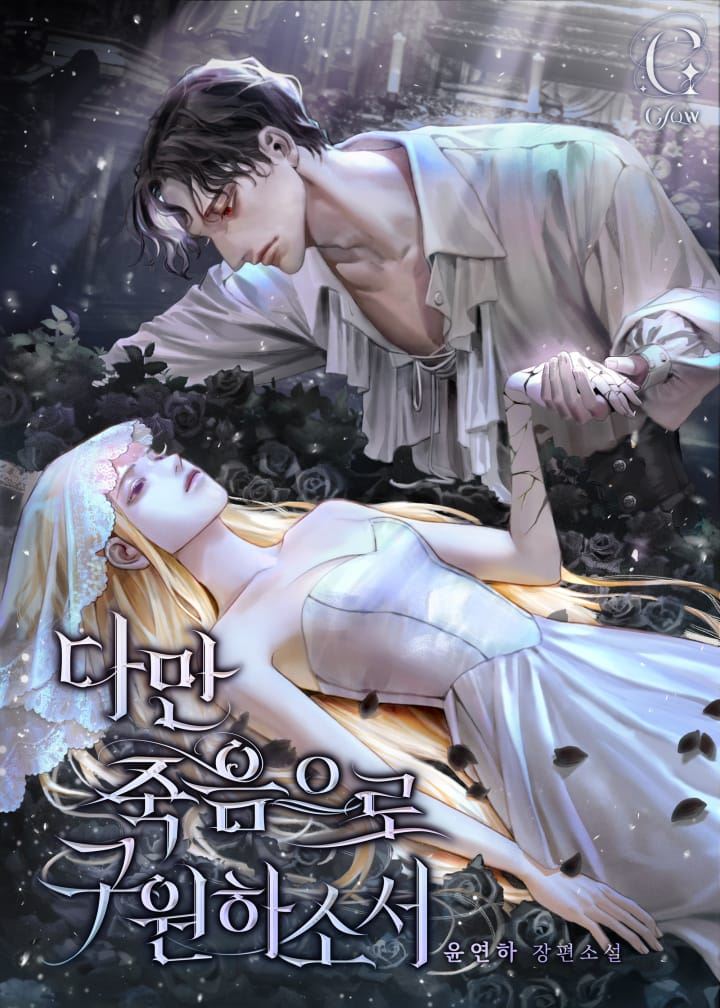
But Deliver Us From Death
Novel Info
  • Author:
  • Status:Ongoing

Summary

... Read More

Valentine de le Blumir, known as the Black Rose, was a noblewoman from the Blumir duchy who fell in love with Cassian Pendragon, the Emperor's uncle. Their affair began when Cassian proposed to her, but their happiness was shattered when an assassination attempt on Emperor Astaire III left Valentine scarred. Astaire, captivated by her beauty and her act of protecting him, forced her into the palace as his royal consort, stripping her of her freedom and her lover. Valentine entered the palace with a singular mission instilled by Cassian: survive by unconditional obedience to Astaire, no matter how cruel his actions, while secretly plotting the Emperor's downfall. She became the tyrant's mistress, using her influence to guide Astaire toward increasingly decadent and destructive decisions, all while maintaining a facade of devotion.

Valentine's life took a tragic turn when she discovered she was pregnant with Cassian's child. However, during a banquet, the Empress Solice insulted Valentine, leading to a physical altercation that caused a miscarriage and rendered Valentine permanently sterile. The loss of her child, combined with the humiliation and the irreversible damage to her future, shattered Valentine's spirit. In her despair, she fully embraced her role as the empire's villainess, encouraging Astaire's tyranny with fervor. Astaire, believing he had finally found someone who understood him, grew even more possessive and cruel, executing the Empress and her family in a fit of rage. Valentine watched impassively, her heart long dead, focusing solely on her goal of destroying the man who had ruined her life.

The rebellion against Astaire, led by Grand Duke Cassian and Valentine's adopted brother Liam, eventually reached the imperial palace. On the day of the coup, Valentine poisoned Astaire, watching him die with a genuine smile as she revealed that she had orchestrated his isolation. She believed her revenge was complete and that she could finally be reunited with Cassian. However, when the rebels entered the bedchamber, Liam drew his sword against her. He revealed that Valentine was seen not as a victim, but as the architect of the empire's suffering. The people blamed her for the famine, the cruelty, and the deaths, viewing her as a parasitic villain who had enabled the tyrant. Liam, torn between his love for his sister and his duty to the people, executed Valentine to satisfy the mob's demand for justice.

After Valentine's death, her body was discarded in a barren plot, unmarked and forgotten. Her soul, unable to move on due to her intense hatred and desire for vengeance, remained as a vengeful spirit. Years passed, and Cassian established a new dynasty, ruling as a benevolent emperor. He never visited Valentine's grave, yet he continued to mourn her in secret, visiting places they had shared and spending nights in solitude. During his coronation, Cassian announced Amaryllis, a woman Valentine had once met, as his Empress, and revealed that Amaryllis was raising a child who was actually Cassian's son, not Valentine's. This final betrayal broke Valentine's spirit completely, plunging her soul into a deeper hell of despair and anger.

Unable to find peace, Valentine's corrupted soul called out to a dark entity from the abyss. The entity, drawn to her wish to live and take revenge, resurrected her. Valentine rose from her grave, now a rotting, undead figure with maggot-infested flesh. A mysterious man with jet-black hair and red eyes observed her return. When she asked who he was, he replied that he had granted her wish for revenge. Valentine, though grotesque and broken, vowed to kill the person responsible for her suffering. The story concludes with Valentine, stripped of her humanity and beauty, beginning her journey as a vengeful spirit, driven by a hatred that transcends death.

Latest Release
DateGroupRelease
2026-10-03dusk blossoms c163
2026-10-03dusk blossoms c162
2026-10-03dusk blossoms c161
2026-10-03dusk blossoms c160
2026-10-03dusk blossoms c159
2026-10-03dusk blossoms c158
2026-10-03dusk blossoms c157
2026-10-03dusk blossoms c156
2026-10-03dusk blossoms c155
2026-10-03dusk blossoms c154
2026-10-03dusk blossoms c153
2026-10-03dusk blossoms c152

Community Reviews

Rating(0 / 5.0, 36votes)
5 stars
0(0%)
4 stars
0(0%)
3 stars
0(0%)
2 stars
0(0%)
1 stars
0(0%)

Popular reviews

... Read More
I need to talk about Amaryllis because she is Having. A. Moment. She's been sitting there as Empress, tolerated the coldness, put up with Cassian's lingering grief for Madame Marguerite, and the final line where Cassian basically tells her SHE's the delusional one? That is absolutely diabolical character writing. Let's unpack this: Cassian called the lookalike “Belle” - a name so intimately tied to his dead wife that Amaryllis herself knew it. But when she confronts him about it, his response is to flip the script entirely: “To be more precise, whenever the Empress sees anything resembling Belle, you become overwhelmed with guilt.” He takes HER emotional reaction and reframes it as pathology. That is some next-level emotional manipulation right there. Meanwhile, Amaryllis has this raw, almost desperate need for ANY acknowledgment from him. Watch how she describes his behavior: perking up at saints' names, stopping at similar voices, giving second glances to blonde hair. She's been monitoring him like this for years - that's not just observation, that's obsession born of insecurity. And she knows everyone knows. “You can't hide the sky with your palm.” But what kills me is her ending note - “She knew why such a cold man had made her his Empress” and it trails off. She knows exactly what she was chosen for. She was never chosen for herself. Meanwhile Lumière and “Lu” seem to have their own dynamics that I'm dying to understand. The power relationships in this story are... intense.
... Read More
Let me talk about structure for a minute because the way this author controls tension across these chapters is actually masterful, even if the content makes me want to throw things at walls. Chapter 14 starts in media res with Astaire violating Valentine. Humiliating, brutal, immediate. No warm-up. You're thrown into this darkness and you just have to go with it. Then we get exposition about how Astaire cherishes Valentine despite this—because she saved his life, because she sides with him unconditionally. This establishes the power dynamic: she's his prisoner who also happens to be his emotional anchor. The pacing then accelerates through Valentine comforting Astaire after he executes Count Glastia's ally. We learn about the political situation—his mother is dying, once she dies he'll kill Count Glastia. This is worldbuilding woven into character moments, which is efficient storytelling. Then the sexual encounter follows naturally, showing how Astaire's violence and his twisted affection are two sides of the same coin. Fast forward to the pregnancy reveal. The author takes a beat here—Valentine meets Cassian secretly, tells him she's pregnant. Cassian's response is the first crack in his composed facade. 'Astaire will be pleased.' The distance between what he feels and what he says creates this unbearable tension. Valentine realizes even her lover can't truly celebrate with her because the child belongs to someone else in the eyes of the world. Then the banquet. The Empress confrontation happens like a landslide—rapid, violent, irreversible. One moment Valentine is walking to the feast, the next she's on the floor bleeding. The transition from ceremony to catastrophe in under two pages is brutal pacing. The aftermath stretches out the grief. Astaire's threat to the Empress. Valentine waking up. The physician's diagnosis. Each beat lands like a hammer. By the time the chapter ends with Valentine's eyes going dark, you're exhausted. The author didn't rush the tragedy—they let it settle in, made you sit with it. That's controlled devastation.
... Read More
The structural choice to end Valentine's arc with the demon contract and then IMMEDIATELY launch into “Matthias de la Glastia Part 1 - A Misaligned Cause” is so effective. It's like the narrative is taking a breath after that emotional explosion and then pulling you into something completely different, except of course it's the same tangled web. Let me walk through the pacing rhythm: We open with Valentine's full breakdown - the revelation, the scream, the demon making contact. This is peak emotional intensity. Then there's a clean break, a chapter title like a curtain falling. “Sehera's Lumière had returned home.” Suddenly we're in a completely different register - reflective, almost nostalgic. Twenty years have passed. A sister reunion. Gentle banter between Lumière and Cassian. It feels warm. Safe, even. Then — and this is where the author shows real mastery - the maids are holding down a struggling woman, and suddenly everything from Valentine's section comes rushing back. The golden hair. The white skin. The voice. The name Belle Laure. It's Valentine's ghost walking into the room, and the pacing doesn't give you a moment to adjust. You're still reeling from the demon contract and suddenly there's a LIVE imposter being confronted. The scene escalation is also well-controlled - Lumière arrives calmly, gets told her companion was taken, rushes to find her, walks in on something disturbing, comforts the woman, and then Cassian's near-breakdown with “Belle…” happens organically within the chaos. By the time Amaryllis explodes and the chapter closes on her defeated realization, you're emotionally exhausted in the best way. No breathing room. That's deliberate craft.
... Read More
The stakes in this batch are absolutely catastrophic and I love it. Let's talk about what everyone stands to lose: Valentine loses EVERYTHING - her child (deliberately murdered), her ability to ever have children, her trust in two people she loved more than life itself, and ultimately her soul when she makes that pact with the demon. The bloody tears detail is gruesome and perfect - this isn't just sadness, this is a fundamental transformation of her being. She becomes something else. Something dangerous. Amaryllis is fighting a war on multiple fronts and doesn't even have the right weapons. She's Empress by title but powerless in practice. Her conflict with Cassian isn't just about jealousy - it's about the terrifying realization that she's living in someone else's definition of love. The worst part? When Cassian says “It's not me, but the Empress who can't forget” - he's not entirely wrong. Her obsession with his grief paralyzes her. She can't even access her own anger because she's too busy monitoring his. And Belle Laure/the real Valentine's double? She's the ultimate symbol of what's at stake - she exists solely because someone from Tristan decided to weaponize the memory of the dead. The fact that Cassian reaches toward her “as if entranced” shows how deep his unresolved trauma runs, and how vulnerable he is to being manipulated through the image of what he lost. The stakes here aren't about thrones or battles - they're about identity, memory, and the terrifying question of whether anyone in this story actually knows the real people they claim to love. Or whether love itself has just become another form of control.
... Read More
Let me just sit with this for a second. FIVE people betrayed Valentine. FIVE. Liam—the orphan she took in, who killed her. Count Glastia—who refused to let her rest, who turned her body into that horrific alcohol thing. Astaire—who lusted after her and caused everything. Amaryllis—who killed her child. And Cassian—who used all of it to deceive her. THAT list reads like a who's who of everyone in this entire novel. And yet—the person she hates most, the one she swears she will kill, is CASSIAN. Of all people. Not Liam, who physically murdered her. Not Amaryllis, who killed her baby. Cassian, because he was the one she LOVED and he USED it. That distinction matters so much. It shows how she measures betrayal—not by the physical act but by the emotional weight of it. And then there's Lucifer. Oh god, Lucifer. The way the text describes him—he's cold, he has no empathy, he's literally a demon—but there are these tiny moments. The way he asks if she's curious about what her child would have looked like. That question, asked with zero inflection, is the most human thing anyone has done for her since she woke up in that grave. And her response—refusing his offer to tell her—is devastating. She can't bear to imagine what she lost, because imagining it means accepting it's gone forever. The relationship between Valentine and Lucifer is this eerie parallel to every other relationship she's ever had: he offers her power, she offers him her soul, and somehow—somehow—he's the first entity in this entire story who doesn't lie to her about what he is.
... Read More
Let's talk about dialogue because this author uses speech like a weapon. Astaire's lines are so deliberately overwrought—'I drown in your tears and suffocate even in your sobbing breaths'—that you can hear the performance in every syllable. He's not speaking to Valentine; he's speaking to the idea of Valentine, the trophy, the woman he owns. The pet name 'Tina' is chilling specifically because it's so casual, so domestic, coming from a man who just ordered executions. Meanwhile Cassian barely says anything and every word cuts. 'Suggest to Astaire that he should create a forest of meat and fill the pond with alcohol instead of water.' That's not a suggestion—that's a strategy delivered in the calmest possible tone. The contrast between his soft voice and his ruthless planning is exactly what makes him dangerous. And Valentine's final confrontation with Astaire—her voice is described as 'calm' and 'gentle' while delivering the most devastating indictment in the book. 'You should have died the day we first met.' Four words. No shouting, no theatrics. Just clinical precision. The narrative explicitly notes this is her 'first true confession' and that's the key. Up until now she's been performing—performing love, performing gratitude, performing smiles. The moment her dialogue becomes honest is the moment Astaire dies. It's brilliant.
See all reviews

Custom lists

See all custom Lists