But Deliver Us From Death - Reviews

But Deliver Us From Death
+Add to Custom List
Sort
Add review
... Read More
I wasn't expecting Liam to show up in this batch and completely steal the scene, but honestly? His entrance with Amaryllis was probably the most emotionally complex moment in these chapters. Let me unpack this because it messes with the whole story. So Valentine hears crying in the corridor—she's used to it, it's the imperial palace, everyone's always sobbing around Astaire's tyranny. But this time she stops. Liam's voice is cold, colder than she's ever heard it. And there's this woman—Amaryllis de la Sienne, his fiancée—screaming about how he's never been sincere to her, how his heart lived somewhere distant. Classic love triangle stuff but executed with real pain. What hits me is Amaryllis's line: 'Because I wanted it. Because I desired it. Because it's mine!' She's confessing to something selfish, something that ruined someone's future, and she's not apologizing. She's owning it. And then Liam asks 'Do you seek forgiveness and love after ruining someone's future with your selfishness?' and she breaks. She's trembling, her red eyes full of tears, asking him to at least understand her. Then Valentine walks in and the politeness begins. 'Pleased to meet you, Madame Marguerite.' 'They say it's a good medicine for the fetus.' That vial. That cursed little vial. Amaryllis hands it to Valentine like it's a gift. And Valentine takes it without suspicion. Without even thinking about why a woman whose heart is broken would suddenly be generous to the emperor's mistress. I need to talk about Liam though. His voice is 'utterly cold.' Valentine notices immediately: 'It wasn't like the Liam Valentine knew.' This is the brother who's always been gentle, always soft-spoken, and now he's completely different. Something happened between him and Amaryllis that shattered whatever innocence he had left. Whatever 'it' is that Amaryllis did—whatever she desired and ruined—he's holding onto that coldness like armor now. And Amaryllis calling herself 'broken'—she's not asking for forgiveness, she's asking for understanding. There's a difference. She wants someone to see her pain even though she caused pain. That's complicated and human and I can't stop thinking about it.
... Read More
I need a minute. The scene where Valentine learns she can never conceive again—I genuinely sat with my phone after reading this. 'An empty, coldly abandoned body.' That's how the narrative describes HER own body. Not just losing the baby, but being told her body is now permanently empty, useless, broken. And then she screams. Not a dignified cry, not a movie-style tearful breakdown—a raw, animal sound. 'Like a beast, she just cried and wailed.' The text says she couldn't even feel the glass cutting her skin. That's the kind of grief that bypasses your body entirely. What kills me is that no one moved to help her. Everyone just watched. Pitying eyes, nobody reaching out. Even Astaire arrives late and instead of comforting her actually deepens her despair by being the living reminder of what he caused. And then Cassian shows up and whispers 'As long as you're safe, that's all that matters' while simultaneously plotting to poison Astaire. This author does not do clean emotions. Every tender moment is stained with manipulation. Every sweet word has a blade underneath. But god, when Valentine finally smiles genuinely at the end—after years of performing happiness for a monster—I actually felt something in my chest. Not joy. Something heavier. Something like catharsis mixed with grief.
... Read More
Okay so this entire chunk is a massive flashback that completely reframes everything we've read up to now. We thought Valentine was dead. Dead. But NO—she made a deal with Lucifer himself. A literal demon. And the way the chapter drops that reveal?Chef's kiss. You read about her rotting fingers, the maggots, the cold dirt of her own grave—and then BOOM, she's making a wish to come back. The narrative structure here is brilliant because the author doesn't just give us exposition; they force us to EXPERIENCE Valentine's horror in real-time. We feel the suffocation, the bone cracks, the realization that she's alive but not exactly ALIVE. And then the second wish—going back to the day before she met Astaire. That's such a specific, emotionally charged detail. She's not just rewinding time; she's erasing the entire tragedy from her lived experience. The plot threads are weaving together so tightly now: Belle Laure appearing in court, Liam's panic, Cassian's calm response—it all connects to this secret resurrection. The author is playing long-term chess and every piece on the board suddenly makes more sense. What I love most is how the "reveal" isn't just that she's alive—it's that she's planning revenge, she's chosen her targets, and she's methodical about it. This isn't some impulsive ghost story; this is a calculated campaign of destruction. And the Count Glastia setup? Oh man, the author is setting up a slow-burn psychological revenge that I am HERE FOR.
... Read More
Let me tell you about the most dangerous woman in this novel and it's NOT who you think. Amaryllis walks into a room where she knows she already lost and STAYS. That's the stakes. Her entire existence as Empress is a daily act of courage that nobody — not Cassian, not her court, not even the narrative initially — gives her enough credit for. She's sitting in a self-made prison and every morning she picks the lock and then sits back down because the alternative is worse. "Bear your own sins, Empress." That line from Cassian hits different when you realize the weight behind it. She chose this. FOR BASTIAN. And now she's being told that choice was hers alone and she bears the consequences without sympathy. Her daughter exists. Her son exists. Her position exists. None of it comes with protection. But the REAL stakes reveal themselves in the second half. Count Glastia confirming Valentine's corpse — he personally dressed her in burial clothes. He disposed of the body. He OBEYED the Emperor's order. And then he DISOBEYED it by keeping the body instead of destroying it. This man is carrying a secret that could topple an empire. And Lumière — sweet, mocking, fan-waving Lumière — is sheltering a woman who looks exactly like a dead girl. She calls her "our Belle" with genuine affection. Not manipulation. Genuine. And when that woman opens her violet eyes and GLANCES at Glastia... What happens when Amaryllis finds out the woman she's been losing sleep over is actually sitting in the same salon as her? What happens when Cassian realizes his dead wife might not be dead? What happens to Bastian — the son they've been using as emotional ammunition — when the whole foundation of this marriage crumbles? The stakes aren't just personal anymore. They'reDynastic. They're political. They're about to explode.
... Read More
I need to talk about the stakes because wow, everything is on fire here and I mean that in the best way. On the surface, this is a political rebellion story: tyrant emperor, rebel army, coup d'état. Classic stuff. But the real conflict isn't happening on battlefields—it's happening in bedrooms, in gardens, in whispered conversations between people who claim to love each other. Astaire killed people by the handful and was still 'cruel'—he executed starving citizens, cut off maids' wrists, tore out tongues. Uncomfortable to read, definitely, but the narrative makes it clear: he was a child tyrant who never grew up, and the empire paid for it. So the rebellion has moral grounding, right? Except—Valentine is the one who kills him. Not the rebels. Not justice. A woman who was trapped in his bed, playing the role of beloved concubine while secretly working for his usurper uncle. And then the rebels don't even thank her. They call her a villain and execute her. Liam cries while doing it, sure, but he still swings the sword. The irony is suffocating. The stakes escalate even further when Valentine wakes up as some kind of vengeful spirit. What does she want now? Revenge on Cassian for using her? On Liam for killing her? On Astaire for trapping her? The author hasn't revealed 'that person' yet, and the suspense is genuinely gripping me.
... Read More
Okay so Valentine's entire worldview just got obliterated in the best way possible. Like, the author had me reading along thinking maybe there was hope for her, then BAM - all those sweet whispers, all that devotion, it was a complete con. The reveal that Amaryllis and Cassian deliberately fed her medicine to kill her pregnancy and make her permanently barren? That hits different because it reframes EVERYTHING. Every moment of warmth Valentine experienced was manufactured by the people she loved most. And the cleverest part? The mechanism of the betrayal is so coldly practical - not some dramatic murder, but a physician's quiet verdict that she'd never conceive again, quietly administered while she was already vulnerable. The fairy tale structure then shatters completely when the demon appears. “Do you desire revenge?” and she takes its hand without hesitation. This isn't a woman who's wavering - she's fully committed now. The title card “Valentine de le Blumir – Lacrimosa of the Black Rose End” feels almost like an epitaph for what she was before this. And then right after, we pivot to Lumière's introduction and Belle Laure appearing, which sets up yet ANOTHER layer of deception that I am NOT ready for. The chapter structure here is doing a lot of heavy lifting - ending on the demon contract and then immediately introducing a living ghost.
... Read More
I keep coming back to the scene where Astaire tells Valentine she's the only one who understands him. You know how I feel about toxic relationships in fiction—this stuff makes me angry and sad at the same time. Astaire is literally abusive. He beat ministers to death in front of her. His hair is covered in blood when he comes to comfort her. And yet she still comforts him back. 'There must be a reason for everything you do, Astaire.' Like she's making excuses for a monster. But here's the thing—the author writes Astaire in a way that makes your heart hurt even while you're screaming at the characters. When he whispers 'My Tina, you are the only shining existence in my worthless gray life' and kisses the scar on her waist... there's this genuine tenderness underneath all the violence. It's not genuine care though, is it? It's possession. He's saying she's his most valuable thing because she saved him. She's a tool that comforts him. And Valentine's reaction—she barely swallows her nausea. She melts into his arms while he's imprinting his marks on her body. She's trapped. Not just physically but emotionally. She loves Cassian but Cassian can't save her. She stays with Astaire because she has to. The scene where she tells Cassian about the pregnancy and he says 'Astaire will be pleased'—her blood runs cold. She realizes she's completely alone in this. Then comes the miscarriage and the infertility diagnosis. Valentine trying to comfort herself by saying 'I can conceive again' and the physician shattering that hope. That moment when her brilliant eyes go dark—that's the emotional nadir of the entire arc. She's lost her child, her ability to have children, and really, she's losing herself piece by piece. I actually teared up when the text says 'Only the light in her once-brilliant eyes had disappeared.'
... Read More
The dialogue in this section is spare but it hits like bullets. Almost every line that matters is short, restrained, and devastating. Let me just list a few because I can't stop thinking about them. Valentine, full of hope: 'Where's Cassian?' That's it. Just two words after 'Where's Cassian?' And then Liam's response: '...I'm sorry.' Three words. That's all. No dramatic speech, no explanation. Just those three words and then his sword cries out. The restraint here is masterful. He could've told her the truth, tried to soften it—but he couldn't. He just apologized and killed her. Then later, the exchange between Liam and Count Glastia about where Valentine is buried. Liam: 'Tina... what did you do with Tina?' And Glastia just sneers back: 'You need not know.' The power dynamic in that scene is so sharp—you can feel Liam's desperation against Glastia's cold indifference. And Glastia's line 'You dare call yourself brother when not a drop of blood is shared?' cuts both ways. It denies Liam's love for Valentine while also reminding us that none of this would've happened if blood mattered more than bond. And Cassian's coronation vows—his line to Amaryllis: 'I won't be a good husband. Because I will prioritize duty and responsibility over speaking of love and affection.' That's not dialogue, that's a confession. He's telling her the truth while standing next to the ghost of the woman he actually loves. And Amaryllis, bless her, responds: 'Of course, Your Majesty. If I can only walk beside You...' She's accepting exactly what he's offering. She's not blind—she knows she's getting duty, not love. And she takes it anyway. The narrative voice itself is worth mentioning too. It shifts between third-person limited (mostly Valentine's perspective as a ghost) and omniscient narration, but the emotional tone never wavers from this aching, elegiac quality. Even the description of Sehera's prosperity has a bittersweet undertone—Valentine watches with 'quietly settled eyes' and thinks, 'Was this what you really wanted to do all along?' The prose doesn't gloat. It mourns.
... Read More
This text is drowning in symbolism and I'm only now catching it. Let's talk about the grave. Valentine literally climbs out of her own grave. But what does that mean? She WAS dead to the world—her reputation destroyed, her body desecrated, her name used as a synonym for treason. Coming back from that grave is symbolic of her reclaiming agency. But here's the thing: she's not fully alive either. Her skin crumbles, her bones creak, she's closer to a walking corpse. The author is making a point about what it means to be "alive" when your soul has been sold. Another symbol that hits hard: the alcohol. Valentine's body was turned into drinking alcohol—meaning people literally consumed her, used her, made her part of their pleasure. That's not just plot detail; that's a visceral metaphor for how women in this world are treated as objects to be consumed and discarded. And then there's Lucifer's offer—three wishes, and on the fourth, your soul is his. The number three is deeply symbolic (past, present, future; birth, life, death). Valentine uses exactly three wishes and is already on the edge of losing her soul. The deal itself mirrors every Faustian bargain in literature, but with a twist: she KNOWS what she's signing. She's not naive. She's choosing damnation willingly because the alternative—accepting injustice—is worse. The recurring motif of eyes is also striking: Lucifer's red eyes, Valentine's vision blurring, the child's deep blue eyes, Liam's trembling gaze. Eyes see truth in a world built on lies. Brilliant, brutal thematic work here.
... Read More
There is a moment—just one moment—where Valentine dies and the text says her dead soul 'could go neither to heaven nor hell. Her fallen vengeful spirit wandered the Imperial Palace alone.' And I just... stopped breathing. She doesn't become an angry ghost. She doesn't seek revenge. She STAYS. She stays because she can't leave Cassian. She watches him pour wine for her, watches him mourn in silence, watches him build a golden age without her. And when he names another woman Empress, the text says her soul 'fell into corruption... stepped into an unfathomable hell.' Not because she's bitter. Not because she wants revenge. But because the one person she loved chose someone else. The one promise they made—'honor each other's names, speak of love and devotion, share even small daily moments'—he literally tells Amaryllis he won't be able to keep that promise as her husband. And Amaryllis smiles through tears and says she'll endure any path of thorns. Valentine, dead and gone, hears this and her soul breaks all over again. And the worst part—the absolute worst part—is that Valentine STILL loves him. Through all of it. Through his betrayal, through his choice of another, she's still there. 'Because the voice that swore love, the air that whispered love, still lived vividly in Valentine's heart.' She wanted to be his lighthouse. That was her only wish. Just to help him find his way. And she did. She paved the road for his perfect reign with her own death. And he never even knew she was watching. I can't. I literally can't.
... Read More
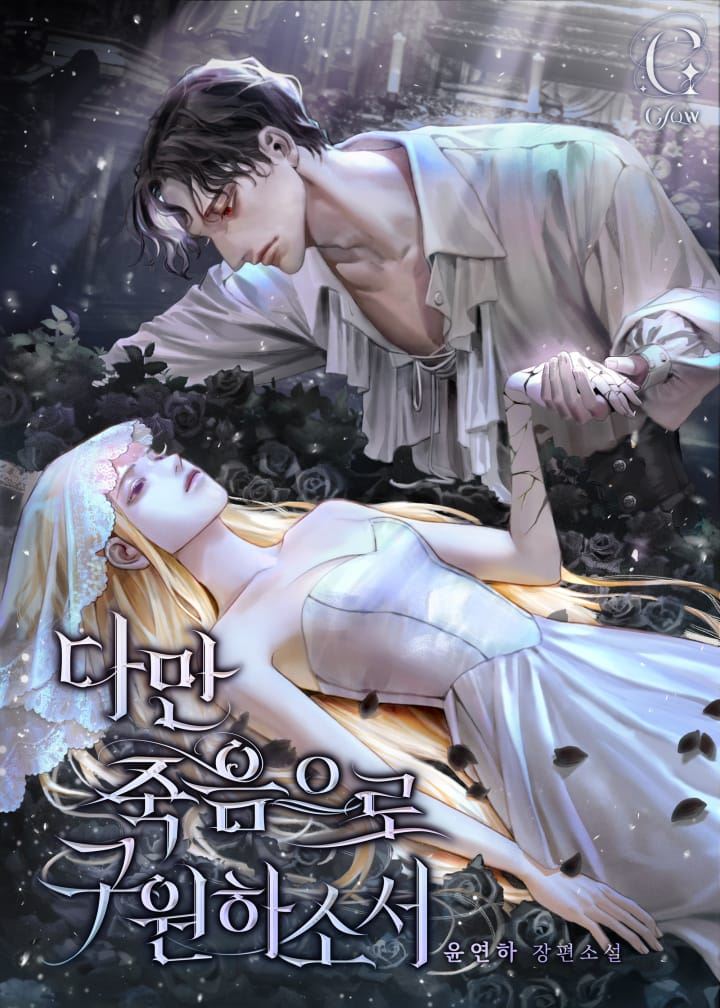
Let's talk about the visual storytelling here because the author is clearly working with a film director's eye. The opening of this section—Valentine 'bathed in the red sunset,' blooming with 'the intoxication of anticipated joy,' truly dazzling. She's framed like a painting. Light, warmth, hope. And then Liam approaches, and the sound design is incredible: 'Click, click. The sound of shoes striking the marble floor was incomparably clear.' You can hear every step. You can feel the dread building with each footfall. She's still glowing in that sunset light, still smiling, still asking about Cassian, and the reader is sitting there screaming because you can see it coming. Then the murder itself—'Liam struck Valentine as if killing himself.' The imagery of her 'tears of blood' turning her eyes 'pitch black' and her body falling 'helplessly' is horrifying but strangely beautiful. It's got this dark poetry to it. And then later, Cassian alone in the Emperor's chambers, raising a wine glass to the moon. 'As the red wine captured the moon's reflection.' This visual motif of light and reflection recurs throughout—the dawn breaking after his all-night vigil, his golden hair dyed red by the new sun, the 'dazzling' coronation. But the most haunting image has to be his nighttime walks: 'In the late night when only moonlight dimly illuminated the world, his footsteps would stop there.' The garden, the fountain, the water stream defying gravity, insects singing. A world so beautiful that he visits it in darkness, touching places where her warmth used to be. The contrast between the blinding daylight of political power and the tender darkness of private grief is the author's signature move here. Sehera gets 'milk and honey' under Cassian's rule while he personally lives in a kind of waking funeral.
... Read More
I don't understand why the Empress is so anxious." "Do you really not know when you say that?" I literally gasped when I read this exchange. This whole marriage is a masterpiece of emotional abuse disguised as duty, and the author does NOT hold back. Amaryllis is the poster child for tragic self-awareness. She KNOWS Cassian will never love her. She KNOWS he measures every inch of her worth against a dead woman named Belle. And yet she stays. She REMAINS. Every single scene, she's there — pleading, fighting, crumbling, rebuilding, and fighting again. The line that wrecked me: "Even if she were to be reborn, she would never be able to match even the tips of Madame Marguerite's toes." That's not jealousy. That's a woman watching her entire identity get erased by a ghost. But here's what gets me — Cassian isn't just cold. He's CALCULATINGLY cruel. Listen to this gem: "If Belle were alive, she would have made a truly ideal Empress." HE SAYS THIS TO HER FACE. After everything she just poured out. And then he closes with "If it were Belle, she would never have raised her voice to me" while literally stepping into her personal space. That's not just dominance. That's psychological dismantling. And yet — and this is the thing that keeps me up at night — Cassian's POV at the end cracks something open. The moment where he sees Valentine/our imposter and rolls Belle's name on his tongue like a prayer. He claims he never tried to forget. But the fact that ANOTHER woman resembling Belle triggers this visceral reaction in him... doesn't that say something about the prison he built for himself too? He's not just trapping Amaryllis. He's been trapped since Valentine died. They're both prisoners. Both performing versions of love they think they're supposed to want. And Valentine — whether dead or alive — is the ghost haunting both their marriages.

Leave a comment

You must be logged in to leave comments. or
