Between The Fingers, Boredom - Reviews

Between The Fingers, Boredom
+Add to Custom List
Sort
Add review
... Read More
I've been sitting with the imagery in these chapters and the symbolism is richer than I initially thought. Let me start with the flowers because they're everywhere and they mean different things to different people. The champagne-colored asters are specifically Zhao Yuan's grandmother's favorite, ordered from the same shop every year. They represent continuity—family tradition, love that repeats itself across years, something dependable. When Zhao Yuan gives one to Liming, it's like offering a piece of that continuity, that stability, to someone who clearly doesn't have it. A flower from a home full of love, given to someone walking through a dim afternoon. Then there's the eucalyptus. "A fragrance reminiscent of fresh grass with a touch of green." Fresh, alive, growing—but also something that's trimmed and arranged and placed into vases. Control over nature. Order imposed on chaos. That feels like it could mirror the whole family situation, honestly. And the gate! "Even during the day when someone was at home, the gate to Zhao Yuan's yard was never locked." This is such a loaded detail. An unlocked gate means welcome, trust, openness. But it also means anyone can enter—including Bian Liqin, who appears with a gift and a reason that might be more calculated than coincidental. The gate being unlocked is almost an invitation, and the story seems to be asking: what happens when someone you don't fully know walks through it? Bian Liqin's enamel vase is another symbol I can't stop thinking about. "It hasn't been used, so I'm giving it to you!" An unused vase for flowers that haven't been picked yet. A gift that represents future beauty rather than present. There's something hopeful and slightly melancholic about that—like he's planning for a future where these flowers will be displayed, where this gesture will be remembered. The whole text feels like it's about doors opening—literal gates, figurative relationships, the past catching up to the present. Zhao Yuan grew up in the same neighborhood as the Bian family but barely noticed them. Now both Bian brothers are entering his life simultaneously, and the story is asking whether these connections will deepen or disrupt what he already has.
... Read More
I need to talk about Bian Liming because this guy just walked into a room and already ruined someone's entire Christmas Eve and I am HERE for it. First off, the power dynamic between these two is already established in like six lines. Zhao Qian is the doctor, the professional one, the composed one who has practiced his greeting and is flipping through his notebook like nothing is wrong. And Bian Liming? He's trembling. His voice is described like a volcano cracking rocks. He brings coffee as a peace offering or a gesture of old familiarity, and then starts saying something about not remembering whether Zhao Qian had breakfast—something personal, something that implies they USED to know each other's routines. But the real kicker is Zhao Qian. He says "Ah Yuan" like it just slipped out. Who is Ah Yuan? Is that a nickname for Bian Liming from the past? A former lover? A friend? Someone he lost? The text doesn't tell us yet, and that's what makes it so good. We get these glimpses—Zhao Qian mentioning he's gotten used to a life without attachments, forgetting that life could be warm and happy, and then this person appears and his subconscious screams a different name. I also love that the patient's file lists gender as "Beta." That's a detail I can't ignore. Whether it's a sci-fi element, a classification system, or something else entirely, it immediately signals that this world operates on different rules than ours. And Bian Liming is coded as Beta but still walks in like he owns the space. What I'm most curious about is how their history shaped the present. Zhao Qian chose anonymity, a private clinic, a life without attachments. Bian Liming chose to appear as a patient with a fake name. Both are hiding something. I want to know what happened between them and why one is running from connection while the other is walking right back into it.
... Read More
There's a paragraph where Zhao Yuan perceives the silence between them as a visual thing—a deep dark blue, like a spreading and boundless liquid covering the floor—and then Bian Liming speaks and it "evaporates into nothingness within half a second." Who writes like this?! This is the kind of sentence that makes you slow down and read it three times because your brain is trying to process the image. The whole chapter is drenched in this kind of sensory texture. The freezer light illuminating Zhao Yuan's face. The unlit room where the only illumination comes from the TV screen. The sounds of other shoppers discussing their shopping cards creating this wall of noise that somehow makes their silence louder. Even the snacks become part of the mise-en-scène—the potato chips, the lemon tea, the chocolate that Bian Liming insists on keeping despite there being only two of them. None of this is filler. Every environmental detail is doing emotional work. The world of this story feels incredibly lived-in and specific—you can taste the honey lemon tea, feel the cold light from the freezer, hear the muffled TV broadcast in a dark apartment. And then the final shot pulls back to show us that outside these windows, a world of politics and violence is about to collide with their carefully constructed domestic bubble. The contrast between the warm interior scene and the cold breaking news is chef's kiss.
... Read More
The pacing in this sequence is genuinely impressive. Think about the structure: we start in the smoking room—quiet, claustrophobic, tense. Zhao Yuan alone with his nerves and a pack of cigarettes. Then Bian Liming enters, shifts the energy completely, they share a cigarette (intimate but understated). Then the competition begins, and the author does something smart: instead of describing the actual performance, we get Zhao Yuan's experience of it. Hard to distinguish good from bad, complicated piece... until the bow. That's when we know it went well. The author skips the boring parts and lands us exactly where we need to be. Then the Q&A—chaos, confusion, but Bian Liming stays calm. And finally the victory. The waiting period for scores creates natural tension, and when the father doesn't show up, it adds this subtle emotional complication without derailing the main arc. The chapter ends on a high note but leaves the Special Prize hanging as a future possibility. It's tight, purposeful, never drags. Every scene earns its place.
... Read More
'What some people took for granted, being born with and choosing freely—his freedom came at such a significant cost. Therefore, it couldn't be treated casually.' STOP. This line alone is enough to make the entire section worth reading. Zhao Yuan just realized that his parents' choice to become war correspondents isn't just about career change—it's about freedom, risk, sacrifice. The stakes have never been higher. These aren't desk reporters filing stories. They're going into an actively escalating conflict zone in Asia Minor where heavy weaponry has been photographed by satellites. Mom and dad could literally not come back. But what's clever is how the personal stakes mirror the geopolitical ones. Just as nations are positioning themselves for potential war, Zhao Yuan's personal world is about to shift irrevocably. He's being asked to grow up, to be 'brave and independent' at twenty-something, while his parents walk into danger. The conflict isn't just external—it's inside Zhao Yuan's head, between wanting to cling to his parents and needing to let go. And Bian Liming's side of things? He wants to lock down his future with his own strength, to not be the 'incompetent and helpless Beta' anymore. He's facing his own version of this conflict—internal pressure, identity crisis, the need to prove himself. Two characters, same theme: what are you willing to risk?
... Read More
Okay so let me just talk about the structure here because this opening is actually really cleverly built. We start with snow, right? Just snow falling over Jianghua City, all atmospheric, establishing mood, and then we're inside Zhao Qian's head with his little morning routine. Everything feels calm, normal, almost boringly peaceful. And then—Bian Liming walks in. But here's the thing that made me actually sit up: Zhao Qian says "Ah Yuan" before he even knows who it is. THAT is such a good plot detail. It's not a dramatic reveal where the name drops from the sky. It's a slip. A moment where his body remembers something his mind hasn't processed yet. And then the reader goes, wait—wait, who IS Ah Yuan? And THEN Bian Liming corrects him and everything shifts. The pacing from snow → breakfast → clinic → patient file → the door opening is masterful. The author doesn't rush ANY of it. Every small beat matters. Even the soy milk cooling down and the mist thinning—that's not filler, that's tension being built in real time. Zhao Qian is staring out the window, alone, and then someone enters who changes everything. Also, the fact that the patient file is so bare—just "B" and "Beta" and "sleep disorder"—and Zhao Qian himself is wondering if this is some kind of joke, or a setup, or a visit from someone important—that's good mystery work. The reader is right there with him, confused, guessing, and then BAM, the coffee cup lands on the table and the sentence cuts off mid-way through. Of course it does. Of course it ends right when it should continue.
... Read More
There is SO much going on beneath the surface in these chapters that I need to unpack. Let's start with the most obvious symbol: the coffee. Black coffee. Bitter. Zhao Yuan doesn't even realize what he's drinking until he's already sipped it. This is such a perfect metaphor for his relationship with Bian Liming—something that appears pleasant on the surface (the terrace, the sunlight, the companionship) but is fundamentally bitter and unacknowledged. He's consuming something that doesn't taste right to him but he keeps drinking because it's what's offered, what's convenient, what his friend wants. The dream house itself is another powerful symbol. It belongs to Bian Liming in the dream world—a world of success, formality, power. But the layout is completely different from Zhao Yuan's own home. This represents the fundamental incompatibility of their worlds. They may share space, they may share intimacy, but they are building different houses. And then there's the car scene, which is arguably the richest symbolic moment in the entire passage. The white void outside the window—"an indistinguishable, dazzling white"—represents the uncertainty of their future. Zhao Yuan cannot see where they're going because he has never truly looked at the journey ahead with Bian Liming. They've been so focused on the present moment—the hugs, the confessions, the intertwined fingers—that neither of them has actually charted a course together. The dream marriage is also deeply symbolic. It's not just Zhao Yuan's fear or desire manifesting—it's society's expectation wearing a mask of fantasy. The parents' conversation reinforces this: two betas, both men, facing social criticism, and the Bian family offering financial solution as a condition. Marriage here becomes both a romantic ideal and a pragmatic transaction, and the text refuses to resolve that tension. But the most powerful symbolic image might be the simplest: Zhao Yuan making egg pancakes, sprinkling salt and pepper, and being unable to taste whether it's delicious or not. When your entire emotional world is upheaving, even the most basic sensory experience goes numb. The mundane act of cooking becomes a metaphor for his dissociation from his own life. And that cliffhanger about the morning outbreak—arme...army? armistice? Something starting with ARME?—whatever it is, it's clearly going to disrupt this carefully constructed precariousness even further. The symbols keep accumulating, and I'm absolutely mesmerized.
... Read More
I need to talk about this coffee shop scene because WOW. Bian Liming invites Zhao Yuan to meet 'casually' and then immediately orders him a cappuccino—specifically asking them to hand froth the milk. This small detail tells me SO MUCH about where Bian Liming is emotionally. Think about it. In the past, they always split the bill. Never one person paid. But now? He's treating him. And he frames it as making amends for saying too much at the memorial service. This is Bian Liming figuring out how to care for someone without knowing how to say it directly. Classic Beta energy if you ask me—he wants to be the strong one who provides, who has it all together, but he's still learning. Meanwhile Zhao Yuan is just watching him plan his future—the competitions, the Huazhang Cup momentum, applying abroad together—and there's this 'slightly nostalgic and complex smile' on his face. Complex smile. THAT'S the key phrase. He's happy for Bian Liming, yes, but something else is going on too. They haven't spoken since that day at the memorial. And yet here they are, sitting across from each other like nothing happened. The relationship has shifted, I can feel it, but I don't know how yet and I need to keep reading.
... Read More
"They didn't sleep soundly." — three words. That's all the author writes about the night they shared a bed. Three words after a scene that builds for literally pages and then just... shrugs. That IS the emotional writing in this book. It's not grand confessions or dramatic scenes. It's three words that somehow carry more weight than anything I've read in this genre all year. Let me unpack why this hits so hard. Zhao Yuan just found out that the boy he's been circling around with an ambiguous relationship for God-knows-how-many-chapters accepted tickets from ANOTHER GIRL. Not even a romantic gesture—she literally handed him two tickets and he just... took them because they're a couple apparently? And his response isn't anger. It's this exhausted, almost tender scolding: "maybe you should refrain from teaching me about love. Why don't you figure out if you can handle it yourself first." That line broke me. Because what is he actually saying? He's saying I don't know how to do this either. He's saying the only reason I'm qualified to critique your love life is that I'm just as lost as you are. It's the most vulnerable thing anyone has said to me in a book. And then they run through rain together, pants soaked, shoes squishing, and end up in the same bed and "didn't sleep soundly." Not because they were doing anything scandalous. But because everything had shifted and neither of them had the vocabulary to name it. The intimacy is in the unsaid. The tension isn't in what happens between them—it's in what they're too terrified to happen. I genuinely cannot look at rain the same way again.
... Read More
Okay so let me just say this RIGHT NOW: the way the tension builds in these chapters is absolutely INSANE. You have Bian Liming showing up on Christmas Eve, six years after Zhao Yuan vanished without a word, and the stakes are already sky high from page one. But then it ESCALATES. Bian Liming isn't just asking questions—he's physically blocking Zhao Qian's sofa, squatting down like a stray dog that finally found its owner. And Zhao Qian? He's trying so hard to keep boundaries, switching between 'Mr. Bian' and 'Dr. Zhao,' treating this like a professional session when clearly it's anything but. The whole dynamic is this pressure cooker—Bian Liming wants connection, Zhao Qian wants distance, and the reader is just sitting there screaming at both of them. And then the flashback to the Christmas Eve dinner sixteen years ago, the warm eggnog and the turkey and the laughing family, and that doorbell rings—ding dong, three times, loud and piercing—and the entire chapter just CUTS off mid-description of the figure under the umbrella. I literally gasped. Six years of absence, a broken friendship, a secret identity, and now a mysterious visitor on what is clearly NOT a normal night. What happened that night? Who was at the door? Why did Zhao Yuan disappear? The author is feeding us clues like breadcrumbs and I am OBSESSED.
... Read More
I have to say something about the dialogue in these chapters because it is PHENOMENAL, and I need everyone to understand what the author is doing here. First, let's talk about Bian Liming's voice. Even in Zhao Yuan's dream—which should be unreliable narration, right?—Bian Liming sounds exactly like himself: confident, casual, slightly teasing, effortlessly charming. "Ah Yuan! Come with me to the evening banquet tonight? Although I'm already married, I can never show off my partner. If this continues, people will start doubting if I'm really married." This line is SO Bian Liming. It's playful, it's possessive, it's completely oblivious to the fact that saying this in a dream while Zhao Yuan is having an existential crisis is peak comedic timing from the author. And Zhao Yuan's dialogue—oh man. When he's screaming in the car, it's fragmented. Repetitive. "Where are we going?!" "Where are you driving to?!" "Bian Liming! Where are you driving to?!" Each repetition escalates the panic, and the dialogue does ALL the work here. No need for internal monologue when the words themselves are shaking apart. The parent's conversation is where the dialogue really shines though. The mother gets straight to the point: "You're about to graduate. Have you thought about where you want to pursue your master's degree?" Practical, direct, no-nonsense. The father's delivery is more measured, more careful—"So, Ah Yuan, do you really like Bian Liming? Do you want to get engaged to him?" This line is delivered with such tenderness and hesitation, and it perfectly captures a parent trying to navigate a conversation that could reshape their child's entire future. Zhao Yuan's responses throughout the parental scene are painfully realistic—"I, I haven't thought about it in detail," "Isn't it normal?"—the stammering, the deflection, the nervous chuckling. This is exactly how someone speaks when their entire world view is being questioned but they don't have the emotional vocabulary to process it yet. The author's dialogue here isn't just natural—it's layered with subtext so dense you could cut it with a knife. Every conversation is operating on at least two levels simultaneously.
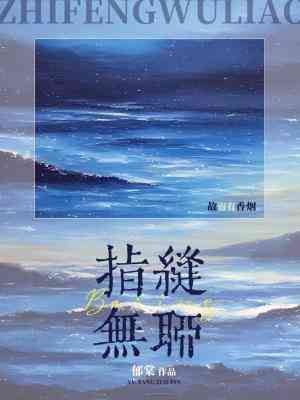
... Read More
There are so many symbolic layers packed into this short passage that I barely know where to start. The smoking room window—that wall of white quartz outside with nothing to see? It mirrors Zhao Yuan's internal state at the beginning: feeling trapped, restless, having no clear direction. Then Bian Liming arrives and changes everything. But the real symbolism is the sunflower image. Zhao Yuan watching Bian Liming bow and seeing a sunflower blooming in sunlight. Sunflowers turn toward light. They're proud, tall, impossible to ignore. This is a guy who "rarely smiled, always blamed life, and had never truly felt proud of himself" finally finding his own light. And then there's the Lin Cang Concert Hall name itself—"storehouse full, knowing the etiquette." Material security preceding spiritual pursuit. Bian Liming himself embodies this: he's found his artistic voice, his confidence, his moment. The competition setting mirrors the whole narrative arc of growth and self-realization. Even the shared cigarette becomes symbolic—not just intimacy, but the transfer of comfort, of nervous energy, of connection between two people who need each other in this moment.

Leave a comment

You must be logged in to leave comments. or
