Back to My Dad’s Youth - Reviews

Back to My Dad’s Youth
+Add to Custom List
Sort
Add review
... Read More
This chapter is a pacing masterclass. Let me break down why because the way the author structures this scene is genuinely impressive. We open with what seems like a simple joke about a cursed seat, then move through class dynamics, character introductions, rumor-building comedy, and end with an academic scene that somehow feels just as important as everything else. The transitions are smooth enough that you don't even notice you're moving between tones. The structure here follows this brilliant rhythm: comedy → character establishment → conflict → resolution → new conflict. The cursed seat joke opens with humor. Then we get the math class struggle (a low point). Then the break scene builds camaraderie and sets up the rumor. Then the history class creates a new mini-conflict with the teacher. By the end of the chapter, we've had multiple emotional beats without feeling rushed or dragged out. What really works is how the author controls tension. The math test situation creates immediate stakes for Lin Wangye—he needs to survive not just the class but his own ignorance. Then the rumor about being Lu Chengxuan's girlfriend creates social stakes. Then the history teacher calling on him creates academic stakes. Each conflict resolves quickly and gives way to the next one, keeping the reader engaged without overwhelming them. The chapter also uses this technique where smaller scenes build toward something bigger without announcing it. The classroom integration happens so naturally that by the time we reach the history class, Lin Wangye already feels like he belongs. The author doesn't pause to celebrate this progress—it just happens, which makes the pacing feel effortless rather than manufactured.
... Read More
The chapter structure here is really working. It opens heavy—Lin Shen talking about his brother in the hospital, Lin Wangye's family tensions, the weight of New Year expectations. We're sitting with that discomfort for a bit, then—BAM—the author pivots to Lin Wangye catching a bus to a pottery shop. The tonal shift is intentional and effective. It's like exhaling after holding your breath. Let me talk about this sequence: Lin Shen finds the money → folds it carefully → pocket it. That's three beats of quiet observation, no dialogue, just the act of discovery and response. Then we cut to Lin Wangye walking, waiting for a bus, arriving at the shop. The transition is smooth but noticeable—you feel the change in temperature, from the harsh glow of internet cafe monitors to the warm glass windows of a pottery shop at night. The pacing inside the shop is also interesting. It's all detail—the employees teasing, the hug, the kiss, the commentary from the girls. It's slow, almost lazy, and that's the point. This is a moment of peace. The author lets us sit in it. Then, walking home, the pacing quickens slightly—dialogue flows, gifts are exchanged, there's forward movement. By the time we reach the end with the lens cloth description, it's quiet again. Full circle. One thing I will say: the ending feels slightly abrupt. "I was going to buy you a new pair of glasses," Lin Wangye says... and then the text cuts off mid-sentence. That's either a cliffhanger for the next chapter, or the translation/excerpt just ended there. Either way, it's a deliberate choice that keeps you wanting more.
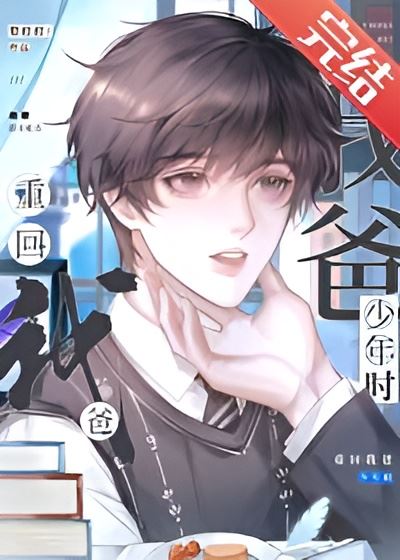
... Read More
There's something deeply symbolic about a chapter built around two people who can't quite shape whatever they're holding. Lin Shen's gamertag — "Deep in the Forest, Unseen by People" — is basically a philosophical statement. He's playing support, picking up the role nobody else wants, and still losing. Still being called a noob. The forest is where you go when you want to disappear, and yet here he is, engaging in a public flame war with a stranger. The irony is almost painful. Lin Wangye's clay is even more on the nose. He wants to make something — a cup, a gift, something tangible — but his hands won't cooperate. The clay breaks, twists, collapses. He keeps starting over like each attempt will somehow be different, but it's the same lump, same wheel, same lack of skill. The simplest shape is an ashtray. Something for someone who doesn't even smoke. There's a whole metaphor here about gift-giving as love language and the gap between intention and execution that I am NOT going to fully unpack because this is a reading note not a thesis. The pottery shop setting matters too — it's a place where people COME to create something with their hands, and Lin Wangye is there pretending he can do it solo. Meanwhile his phone is vibrating with ignored calls. He's physically present but emotionally distracted, just like Lin Shen dragging Lu Chengxuan into a game he's too frustrated to enjoy properly.
... Read More
Okay so this chapter is wild for reasons I didn't expect. Let me just start by saying the opening line about the cursed seat is genuinely one of the funniest things I've read in a school setting novel. Whoever sits next to Lu Chengxuan gets their grades destroyed—this is such a clever way to establish character dynamics without heavy exposition. It's also hilarious because Lin Wangye literally just transferred in and already his life is about to get complicated. But here's what actually surprised me about this whole chapter: the way the plot is setting up these future connections. Lin Wangye remembers Zhao Youyou becoming a CEO twenty years later. That's not just random lore—it's a narrative promise. The author is basically telling us, 'Hey, stick with this story because all these people matter later.' And honestly, that's exactly what makes me want to keep reading. The plot isn't just happening; it's building toward something. Then there's the whole girlfriend rumor situation. I love how Lin Wangye just embraces it with 'That's right, it's me!' instead of panicking. This character has clearly lived enough life to not be embarrassed by gossip, and it shows. The scene where Jiang Bowen and Zhao Youyou start teasing him about being Lu Chengxuan's fiancée felt like a perfect comedic moment that also serves the plot—we're learning about social dynamics and relationships through humor rather than awkward exposition dumps. The history class scene was another highlight. Lin Wangye not only knows the answer but explains it with actual confidence, which is both satisfying and a little intimidating as a reader. It establishes that despite being in a new body/time, he's still competent. The author balances the comedy with moments of genuine character establishment, and I appreciate that.
... Read More
Let's talk about how these characters actually SOUND, because the dialogue in this passage is remarkably distinct. Lin Wangye's voice is immediately recognizable—the way he deflects, minimizes, performs normalcy. "Just found out some stuff about... where I come from" — the ellipsis, the vague phrasing, the way he's trying not to burden Shi Yuan. Then when he says "Only a tiny bit sad. Not that much" while literally sniffleing, that's peak Lin Wangye. He wants to be strong, he wants to protect others from his pain, and he fails adorably at it. Shi Yuan's dialogue is sparser but infinitely more loaded. "But my happy little puppy doesn't look very happy right now" — this line does THREE things at once: it shows affection through a pet name, it demonstrates acute emotional perception (he can tell something's wrong without being told), and it subtly invites vulnerability without pressure. Then the offer of kisses as a healing mechanism? That's Shi Yuan being Shi Yuan—gentle, slightly teasing, emotionally intelligent in a way that makes you want to hug him. And Lin Shen! Oh my god Lin Shen. "We're totally getting in their way. Maybe we should get lost now. Don't wanna ruin my plans of becoming a grandpa by next semester." THIS man cannot stop being a menace. But there's something almost tender about it—lin Shen shows up with milk, observes the intimate moment, and instead of making it awkward, he deflects with humor while clearly caring deeply. He's checking on them while pretending not to. The narrative voice itself is worth noting too. It drifts between close third-person intimacy (we're inside Lin Wangye's head, feeling his chest ache) and slightly more distant observation (the hallway scene with Shi Yuan waiting). This gives the prose a conversational, almost diary-like quality that fits the emotional register perfectly.
... Read More
I went into that streetlamp confrontation expecting a funny beat and walked out feeling genuinely unsettled. Let me explain why because this is where the author really earns their keep. On the surface it's just two guys arguing about cigarettes—Lin Wangye snatching one out of Lin Shen's mouth, threats of violence, the whole routine. But underneath? Lin Wangye is projecting every fear he has about losing people onto this stranger. His line about 'your body belongs to you, but if you ruin it, no amount of money can fix it' isn't really about smoking. It's about helplessness. It's about the fact that he can't find his mother, he doesn't understand his father, and here is this guy he's somehow grown attached to casually destroying himself with habit after habit. The stakes here are never stated outright but they're everywhere. What does Lin Wangye stand to lose? Lin Shen, apparently, despite himself. And what does Lin Shen stand to lose? Who knows—but the fact that Lin Wangye's first instinct is protective, not suspicious, says something huge about where their relationship is heading. The author keeps the tension simmering rather than boiling. There's no dramatic confession, no tearful revelation. Just two guys eating street skewers while the unresolved things between them hang in the air like exhaust fumes. And honestly? That's more powerful than any climax could've been.
... Read More
There is a moment in this chapter that I will never unsee and I am so grateful for it. Lin Wangye wakes up half-dreaming, and the text says: "he stretched his arms out of the blanket, mimicking a butterfly stroke motion, and lazily stretched." I am not okay. A butterfly stroke motion. In bed. With another person. This is the most domestic, wholesome, unexpectedly funny image and it completely disarms everything that comes before and after it. Because immediately after this cute moment — after the stretching, the blanket burrito panic, the muffled呻吟 — we get the most tense conversation in the entire chapter. "You're not staying overnight." "In the end, you really just want to get rid of me, don't you?" The whiplash from comedic to emotionally raw is absolutely intentional and it works. What's clever about the structure here is that the author uses physical comedy to lower our defenses before pulling the emotional rug out. We're laughing at butterfly-stretch-Lin-Wangye and then BOOM — Shi Yuan has to be the bad guy and tell him to go home. The pacing is surgical. Every beat serves the next. And don't even get me started on the grandfather subplot. "My grandfather made breakfast." A grandfather WHO MAKES BREAKFAST for the love interest. This is the softest weapon ever deployed in fiction and I am weak for it.
... Read More
I need to talk about Lin Wangye's emotional journey in this chapter because honestly it hit different. He starts off physically fine but the second Zhao Youyou tells him about Shi Yuan's dad — the gambling addiction, the mother's death, the insurance money, the sister's leukemia — the author describes his reaction as his 'breath catching in his chest' and 'a crushing feeling of suffocation.' Not metaphorical language. His body literally reacts to knowing this, even though he already lived through this life once. That's the thing that gets me. He's heard this story before. He knows how it ends. And yet learning it through Zhao Youyou's voice in this version makes it hit him like he's experiencing it fresh. The passage where he thinks about Shi Yuan hugging his legs at the Zhua Zhou ceremony — a one-year-old choosing him, clinging to him — and how Lin Wangye didn't remember any of it consciously but had this 'sense of dependency deeply ingrained' since childhood… I'm not okay. Shi Yuan basically anchored himself to Lin Wangye from infancy and never left, and Lin Wangye only just now understanding the depth of what that means. Also the opening banter where Lin Shen swears he'll haunt them both in his dreams — that line is somehow simultaneously the funniest and the saddest thing in this chapter. Of course he's threatening eternal haunting. Of course. 😭
... Read More
"So you've played this game?" And just like that, two strangers become a father and son. I have to say, the plot device here is so elegantly simple. Lin Wangye spends the whole chapter drifting through different internet cafes, following this invisible thread, and when he finally finds Lin Shen—it isn't some dramatic confrontation or tearful recognition. It's just... a kid playing video games badly, trying to act tough. The author doesn't rely on big twists or convoluted subplots. Instead, the entire emotional weight rests on this one encounter. Lin Wangye already knows who this person will become, but we're watching him discover who this person actually is at seventeen. The contrast between the stoic chairman and this reckless, cigarette-chomping teenager is basically the entire thesis of the story. And then the comedic beat where his dad brags about a pentakill and immediately dies four times in five minutes—that's not just funny, it's revealing. We see a glimpse of the real Lin Shen, unguarded and human, before whatever pushed him into that cold, controlled adult emerges. That moment where Lin Wangye "keeps quiet" watching his father fail is doing so much heavy lifting. He's not judging, he's just... absorbing. Taking in this version of his dad that he never had. What I love is how the plot avoids any exposition dumps. We learn about the world, about the era, about their relationship, all through action and observation. The search for Lin Shen becomes a metaphor for searching for someone you think you know. Brilliantly understated.
... Read More
Okay so I need to talk about the moment Lin Shen trips. Like, up until that point he's been so stubbornly determined to prove he can make it down the mountain alone—refusing help, ignoring his condition, basically acting like invincible. And then the universe goes: nope. One uneven step and everything collapses. This is such a sharp pivot in the plot. The author literally lets Lin Shen's guard down for ONE SECOND—"just when he let his guard down for one tiny second, it happened"—and that's exactly when gravity betrays him. That's not accidental writing, that's intentional narrative cruelty. The whole structure of these chapters is built around this tension between independence and vulnerability. Lin Shen spends the first half refusing help, then the second half entirely dependent on someone else. The plot doesn't just move forward here, it REVERSES. And honestly? I was so invested in watching him try to maintain dignity while literally hanging off Lu Chengxuan that I didn't even mind that the temple visit got cancelled.
... Read More
Let's talk about that phone call. Oh god, that phone call. It starts like a standard “where were you” catch-up and somehow becomes one of the most devastating five minutes of romance writing I've read all year. Lin Wangye asks to visit him, and Shi Yuan gently, carefully, without even meaning to, says no. “My place is a bit far,” he says, and “we'll see each other next week.” Next week. They're going to wait a whole week to see each other face to face after everything that just happened, and the author's own note literally says “there's no way they'll wait until next week.” Which means the author knows this is torture, and the author is committing to it anyway. Meanwhile Lu Chengxuan is sitting there watching all of this, knowing something, keeping the secret, and Lin Shen is absolutely clueless—which is funny until you remember he's also the one who's going to fly into a rage over the property management office, completely missing the real emotional earthquake happening two feet away. The plot here is doing three things simultaneously: the external crisis of Shi Yuan's hospitalization and discharge, the internal crisis of Lin Wangye's unspoken feelings crashing into reality, and the side-plot of Lu Chengxuan's knowledge acting as pressure cooker. And honestly? It's masterful. The way every conversation circles around what's not being said is so much more powerful than if anyone just announced their feelings. This is a story that understands that the most painful moments in love aren't the dramatic confessions—they're the polite, careful rejections wrapped in concern.
... Read More
I need to talk about Lin Wangye because THIS BOY is everything right now. First you've got him in the car, pretending to sleep while Lin Shen absolutely roasts him about his dad, and his eyelashes are twitching like crazy. The fact that he's irritated but also can't even respond — that's such a specific kind of sibling energy. Like he's too exhausted by his dad's chaos to even engage. Then when he finds out Lin Shen is in the hospital? The switch is instantaneous. All that irritation gone, pure protective mode activated. He doesn't hesitate. He doesn't ask questions. He just RUNS. That's not just loyalty — that's love, the kind that doesn't need words. But then the Shi Yuan scene flips everything. This kid who was ready to throw hands one second is now standing outside a hospital room, hands shaking, face red, completely unable to process that the person he's been crushing on is lying in that bed. The contrast between 'I'm going to kill whoever hurt my dad' and 'oh my god it's HIM' is both hilarious and genuinely touching. And Lu Chengxuan? Cool as ice the entire time, peeling fruit like nothing's happening, dropping one-liners that cut through all the drama. Their dynamic is so effortless — he clearly cares but shows it in the most Chengxuan way possible.

Leave a comment

You must be logged in to leave comments. or
