Back to My Dad’s Youth - Reviews

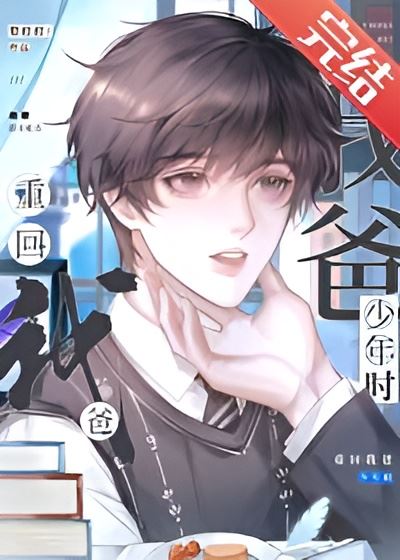
Back to My Dad’s Youth
+Add to Custom List
Sort
Add review
... Read More
Honestly, this section felt like someone letting me peek behind the curtain of a world I thought I already understood. Lin Wangye lands in the Lu mansion, gets a hot bath and new clothes—seems like pure comfort, right? But it's layered. Every time I think something is just a cozy scene, the author drops a detail that makes you sit up. Like when he's walking down that corridor and spots the Scott paintings. Oh, okay, so this isn't just any rich family. This is old money, real money. And suddenly the stakes of him accidentally bumping into one of them become funny but also kind of real—if he damages something, he's trapped here working it off. That's plot tension wrapped in comedy. Then the computer scene hits. I love how the author pivots from 'oh look, a desktop' to Lin Wangye's internal monologue about why he actually needs it. It's not about games—it's about information. He types in 'Shi Yuan' and gets nothing. That silence where information should be? That's devastating in a story about rebirth. He has memories of a famous person who doesn't exist yet in this timeline, and that gap is where the whole plot engine lives. He pivots to researching the Lin family business, and boom—we get exposition about Lin Pengcheng's origins, the partnership with the Lu family, the eventual fallout. All of it delivered through a screen in a guest room, which is somehow one of the most compelling ways to hand you backstory because it feels earned, not forced. What struck me most is the structural economy here. No big action scenes, no dramatic confrontations. Just a guy on a computer typing keywords and the story expanding outward. And it works because every search result is a piece of a puzzle I can't stop trying to solve. Who is Shi Yuan to Lin Wangye? Why did the Lin and Lu families fall out? What does Lin Wangye plan to do with this knowledge? The author isn't rushing to answer any of these, and that restraint is what keeps me turning pages.
... Read More
The dialogue in this chapter is genuinely remarkable because every character has a distinct voice that doesn't blur with anyone else's. Let me break this down because it matters. The classmates' reactions are a perfect chorus of teenage voices — "What! No way, oh my god," "Great, now who's going to help me with functions?" These aren't generic reactions; they sound like actual students who have been sitting through years of shared classes. The humor is organic, not forced. Fu Xuexue's explanation is character-consistent: pragmatic, brief, not looking for drama. "I want to go to Class A and solidify my grades." She doesn't over-explain or perform emotion. This is someone who has always been about results. Shi Yuan's corridor confession is deceptively simple. His dialogue throughout is economical — he doesn't waste words. When he says "I applied for the transfer myself" and then later explains the mock exam situation, his tone is matter-of-fact. But that calm exterior makes the emotional punch of "7th class has you" hit even harder because it breaks his normal pattern of restraint. Lin Wangye's voice is pure chaotic energy — the stammering questions, the cartoon singing, the koala-hug. His dialogue reads like someone whose thoughts move faster than his mouth. And the Lin Shen exchange at the end is perfectly deadpan: "Seeing is believing. Xiao Lin, come over here. We need to have a serious talk." "I'm not talking to you, I want to talk to Xu Suinian." "?" Three lines and you get an entire dynamic. Lin Shen trying to be the authority figure, Lin Wangye dodging, and that final question mark that says everything.
... Read More
Let's talk about how distinct these voices are. Lin Shen is pure exasperation: 'What's going on? You two playing some kind of love scene?' and 'Bring ten more, and I'd still take them all down.' He's the loud, protective friend. Lu Chengxuan is minimal, almost robotic in his efficiency: 'Don't worry, everything's fine.' But then there's Shi Yuan. His dialogue is sparse, but every word is weighted. 'It's so late, why are you still awake? If you need something, say it quickly, then get some rest.' It sounds dismissive on paper, but the subtext is care. He's offering a solution, a quick fix, because he's worried but doesn't know how to be soft. And then the math story? That's pure Shi Yuan. He's a man of logic, of functions and inequalities. He tries to use reason to combat anxiety, and when that fails and Lin Wangye falls asleep, he doesn't hang up. He just stays. The narration notes 'a tenderness in his eyes.' That's the author showing us what the dialogue hides. The contrast between Lin Wangye's emotional, needs-based texting and Shi Yuan's stoic, action-based listening defines their entire dynamic. It's not what they say; it's what they don't say.
... Read More
I am still not over the emotional engineering in these pages. Lin Shen doesn't just give money; he engineers a debt so Shi Yuan won't feel like a charity case. 'It's a loan. You'll pay me back. Write me an IOU tomorrow and stamp your fingerprint on it.' That line landed like a brick. It's protective, it's defiant, it's love disguised as a transaction. And then the follow-up: 'If he doesn't pay me back, who do you think I'm gonna come after?' The threat is soft, the loyalty is absolute. You watch Shi Yuan completely fracture in real-time—Adam's apple bobbing, eyes bloodshot, every muscle strained—but he can't form a single word. The silence at that table must have been deafening. It's not romance, not exactly. It's something deeper: a bond that says I see your pain and I will burn my own relationship with my father to steal you gold bars. The brotherly chaos of Lin Wanye hugging him like a ragdoll contrasts with Shi Yuan's quiet devastation, and that juxtaposition is brutal. Why does Lin Shen have to wrap every act of kindness in armor? And why does that make it hit ten times harder? I need to know what happens when Shi Yuan finally writes that IOU. What does he say then?
... Read More
Okay so I need to talk about something that hit me in this chapter because it was so subtle yet completely wrecked me. The "this time" moment. When Shi Yuan asks "Have you met her before?" and Lin Wangye panics trying to cover it up? That single exchange does SO much work. It confirms what the text has been hinting at — that Lin Wangye has some kind of knowledge from a previous timeline or life, and he's carrying this burden of knowing things he shouldn't know. The plot structure here is brilliant because on the surface it's just a hospital visit scene, but underneath there's this whole secret history that neither character fully shares with each other yet. And the way the author builds the information — we learn about the leukemia diagnosis, the financial struggle, the cold war with Lin Shen, the complicated Lu family situation — it all comes out naturally through dialogue rather than exposition dumps. The stakes feel real because they're grounded in specific details: acute lymphoblastic leukemia type B, moderate risk, not covered well by insurance, the bone marrow transplant that's the only real cure. These aren't vague dramatic threats, they're real medical and financial problems. The cliffhanger ending with "Don't worry" trailing off because Lin Wangye hasn't even finished explaining his plan... I literally gasped. There's also the subplot thread about Lin Wangye lying to his English teacher about having a headache to get out of history class. It seems small but it shows how consumed he is — the college entrance exams are coming up and he's already skipping classes to figure out how to save someone's life. The plot is threading multiple concerns together here: romantic tension, family secrets, medical crisis, academic pressure, and this mysterious "this time" element that suggests there's more backstory we haven't fully gotten yet. I'm hooked and I need to know what his plan actually is.
... Read More
I need to talk about how each character's voice is so distinct it's almost unreal. Lin Shen is the king of casual chaos. His dialogue is all shrugs and nonchalance — 'Eh, just some guy from our school,' 'Why'd you stop me? He'll end up apologizing for me.' This man gets injured, has a cast on his arm, and is still cracking jokes about it. The line 'By the way, aren't you supposed to bring something when you visit a patient? Not even a carton of milk? Cheap bastard' is peak Lin Shen. Completely unhinged and somehow adorable. Lu Chengxuan on the other hand speaks in complete opposite energy. His lines are short, cool, cutting. 'My dad wouldn't lose his kid. Maybe your dad's the careless one.' Deadpan delivery every time. The ellipses throughout his dialogue are basically a character trait at this point. And Lin Wangye's voice shift is remarkable. When he's angry and rushing to the hospital, his dialogue is sharp and urgent. But once he's in Shi Yuan's room? Everything becomes fragmented. 'H-Hi…' 'I… I'm here to apologize…' The stammers and hesitations tell you everything about what's happening internally. Shi Yuan's voice is another masterclass. Calm, measured, almost poetic even when he's just saying simple things. 'You're pretty well-known at school. I've seen you before.' What a devastating line to deliver so casually.
... Read More
This batch is a masterclass in tonal whiplash and I'm here for it. You start in a hospital corridor with this heavy, almost tearful moment — Lin Wangye holding those paper bags, his nose stinging, Dr. Bai contemplating dark family secrets. Then boom, next scene we're in Qingsen Internet cafe, Lin Shen's curled on a sofa like a smug cat, and Lin Wangye is pulling his hair over a Word document about e-sports hotels. The contrast is jarring in the best way. One moment you're feeling warmth and familial uncertainty, the next you're stressed about commercial real estate and rent costs. But what's genius about the pacing is how both scenes orbit the same emotional center — Lin Wangye trying to find his place. In the hospital, he's literally searching for his sister's ward, lost in a massive building. At the internet cafe, he's searching for the right location, lost in business strategy. The author uses physical space as a metaphor for his internal navigation. And that Lin Shen rejection scene? Perfect comic relief that lands because we just needed to exhale after the hospital tension. The coffee shop banter, the ‘Say something nice and I'll point you in the right direction' — it's giving us breath before whatever comes next. Chapter transitions here are doing heavy lifting, shifting mood without losing the protagonist's through-line.
... Read More
Okay let's talk stakes because this chapter operates on TWO conflict layers simultaneously and the author does not disappoint. Layer one: the board game. On surface level, it's just a game. But read it properly and the stakes are enormous. Lin Shen is fighting for acknowledgment, for a crack in Lu Chengxuan's armor, for proof that their rivalry matters to the other person too. Every round he loses but keeps playing, every six he rolls after being sent back to base — this is someone refusing to surrender something he can't name. And when he loses? He still doesn't stop. He chases Lin Wangye around the suite like a child, laughing, shouting, refusing to let the silence between him and Lu Chengxuan settle. Layer two: the DNA results. This is where the stakes become life-altering. Lin Wangye spent four days on a trip, apparently unaware that this answer was waiting for him. When he reads 'no biological relationship,' he doesn't scream or break down. He tears the paper and walks out. But what did he stand to lose? A family he thought he had. An identity. Belonging. And the fact that he handles it with such eerie calm tells us this wound is deeper than either of them probably realized. The internal conflict is what really grips me though. Lin Shen's stubbornness isn't just a personality quirk — it's his primary defense mechanism. He'd rather lose publicly than admit vulnerability privately. Lu Chengxuan's calculated restraint isn't just strategy — it's emotional self-preservation. Neither of them can afford to be the first one to care more. And Lin Wangye? He's navigating both external conflict (proving his identity to a doctor who misidentified him) and internal conflict (processing the dissolution of his imagined family) simultaneously. The scene where he rambles 'I'm Lin Shen's classmate, that's how I met his sister' while clearly emotionally compromised is devastating in its authenticity. We've all been that person — over-explaining, under-confident, hoping the other person will just... understand without us having to say the hard thing. The tension doesn't resolve. It compounds. And that's exactly why I can't stop reading.
... Read More
The pacing in these chapters is a masterclass in escalation. Let me break down the rhythm because it's too good not to appreciate: Beat one: arrival and wonder. Lin Shen walks in, sees the view, makes a self-congratulatory comment about picking the spot. Slow, easy, almost comedic. We're relaxed. Beat two: the dinner conversation that goes nowhere until it goes somewhere. 'What do you want for dinner?' becomes a gateway to the actual conversation neither of them wanted to have. The mushroom detail is deliberately mundane—Lu Chengxuan offering to have mushrooms flown in like some modern emperor—until it suddenly isn't. The pivot from 'shiitake availability' to 'your boyfriend is dating someone else and didn't tell you' is jarring in the best way. Beat three: the physical collision. Lin Shen tries to storm off, gets grabbed, ends up on top of Lu Chengxuan. This happens so fast that you barely have time to process it before the scene shifts from verbal sparring to something much more charged. Then the author does something really clever—they slow the pace down right after the physical escalation. Lin Shen's internal monologue ('Wait, hold on. This isn't what I was gonna say.') gives us a beat of clarity in what had become sensory overload. And then the resolution? Ordering food. Like, literally just going back to surface-level stuff. But the reader can feel the ground hasn't shifted back to where it was. The chapter doesn't resolve anything. It leaves everything suspended. And that's intentional pacing—I think the author wants us to sit in that discomfort for a while before the next batch hits us with consequences.
... Read More
Three hundred thousand. That number changed the entire trajectory of this story and I need a minute. Up until this point, the stakes have been emotional and interpersonal—unrequited love, family dysfunction, social climbing. Now we're talking about life and death. Xu Suinian's little sister has leukemia, and suddenly every character's motivations are reframed. Why was Lu Chengxuan so eager to leave the meal? Why did he pay without hesitation? He knows this is coming, and he's already calculated that he can afford to help while Lin Wangye cannot. The internal conflict is where it really hurts. Lin Wangye spent his entire existence believing that with foreknowledge, he could fix everything. No girlfriend? Manipulate fate. No money? His father's brother is the richest man in the city. But leukemia doesn't care about your spoilers. It doesn't care that you've seen this scene before in your past life. It just IS. And the external conflict is equally brutal—where does the money come from? Lin Shen is broke. Chairman Lin (the omnipotent uncle) is presumably the only source, but Lin Wangye can't just ask him. The suspense isn't whether they'll find the money—it's whether finding it will cost Lin Wangye something he's not willing to pay.
... Read More
There's something deeply philosophical about what's happening in this chapter, even though it reads as pure emotional drama on the surface. Lin Wangye spent years making long-distance calls — a yearning connection across distance — and then Shi Yuan returned, achieved success, became this perfect version of himself. But that perfection was built on suffering that Lin Wangye never saw. Now he sees it, and it changes everything. The central theme here seems to be about the burden of knowledge — knowing something painful about someone you love and not being able to un-know it. The leukemia isn't just a plot device, it's a symbol for every invisible struggle people carry. Shi Yuan handled his past silently. His sister is handling her illness silently. And Lin Wangye is discovering that loving someone means wanting to carry their burdens, even when you don't know how. The "this time" reference is particularly rich thematically — it suggests that love transcends even the boundaries of a single lifetime. If Lin Wangye has memories from before, it means his devotion isn't accidental, it's fated. There's also the theme of class and resources — the Lin family has money, but Lin Wangye is estranged from his father and his friend Lin Shen is in a cold war with his own family. Money exists but it's inaccessible, which is its own kind of tragedy. The bone marrow transplant — the only real cure — requires a donor, which raises the question of identity and blood. Is Lin Wangye his father's son biologically? Should he claim that connection? These questions about lineage and belonging echo throughout the narrative in ways that go beyond the immediate plot. What the story is really asking, I think, is: how far would you go for someone, and what parts of yourself would you have to sacrifice along the way?
... Read More
The stakes here aren't about life and death in the traditional sense, but they're devastating anyway. Lin Wangye is sick in a hospital bed, pretending to have a headache to skip class, and the reader knows immediately this isn't about math avoidance. He's running from something, and the text keeps circling back to the word sins without ever defining them. That's the central conflict—not external danger but this internal rot that Lin Wangye believes he deserves. Shi Yuan's conflict is equally intense but completely internal. He's fighting against his own hunger, his own greed to possess this boy, and he finds it terrifying because he's never felt anything this overwhelming. The text literally says he's never been more aware of how not noble he is. That's not just romantic tension, that's existential terror about what wanting someone this much means. Lin Shen adds another layer—he's worried about his son, suspicious about something being wrong, demanding explanations, and all of his love comes out as aggression and jokes. The scene where he smacks his thigh and raises his voice demanding to know why he gets twenty minutes while Shi Yuan gets everything? That's a father who's losing his child and doesn't have the vocabulary to say it. The stakes escalate with every interaction. Will Shi Yuan finally admit what he feels? Will Lin Wangye survive whatever punishment he thinks he's owed? Will Lin Shen break through his own patterns of rejection? Every character is standing on an edge, and the text keeps leaning them further without showing the ground below.

Leave a comment

You must be logged in to leave comments. or
