Back to My Dad’s Youth - Reviews

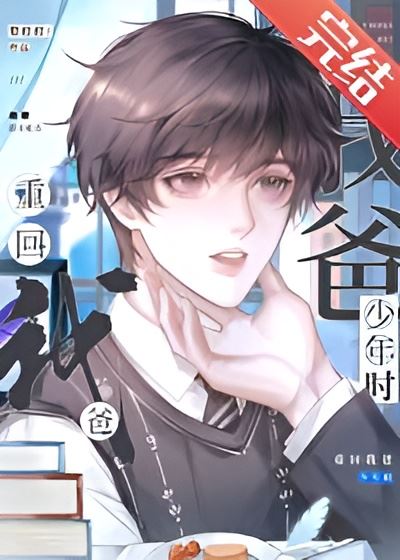
Back to My Dad’s Youth
+Add to Custom List
Sort
Add review
... Read More
Let's talk stakes because this chapter quietly raises the bar significantly. On the surface, the conflict is simple: Lin Wangye needs a household registration to attend Seven Middle School. Without it, he's stuck at Eleven Middle. The solution exists — Lu Chengxuan's uncle — but it comes with strings. The real stakes though are internal and they're layered. Lin Wangye is a reincarnated person who carries knowledge of the future. He knows that the Lu family and Lin Shen will eventually have a catastrophic fallout. If he legally joins the Lu family now, he's trapping himself. The moment that future arrives, he won't be able to walk away cleanly — not emotionally, not legally. His own past-life regrets about his relationship with Lin Shen make this even more acute. He lost his father once before because they never bridged that distance. He refuses to let institutional ties prevent him from choosing loyalty when it matters. And yet — education matters. Seven Middle School could change everything for him. Lin Shen understands this immediately, which is why his decision is so fast and so firm. He's essentially saying: I know what's coming. I know we might not end up on the same side. But right now, you deserve a chance, and I'm giving it to you. The stakes aren't about winning or losing. They're about timing. About choosing what you can control in a life where everything else keeps changing
... Read More
"No need to thank me." Four words. That's all Lu Chengxuan says when he tosses his down jacket to Lin Wangye in the cold. But man, the subtext in that moment is EVERYTHING. He saw the kid shivering, he saw Lin Shen trying to play hero and failing, and he just... stepped in. Quietly. No fanfare, no "I told you so," just action. Then he explains to Lin Shen why he called in a favor—"if someone vouches for him, it makes things easier"—and I'm sitting here watching this boy who clearly doesn't do anything halfway, even when he's trying to act casual about it. The fact that he already has connections at the police station suggests he's been operating in this world longer than either of them probably realize. And Lin Shen, meanwhile, is strutting between them like he's the main character of this friendship, arms draped over everyone, taking credit for Lu Chengxuan's actual competence. The dynamic is so deliciously unbalanced. Lu Chengxuan is clearly the anchor here but he lets them both have their moments. I just want to wrap him in a blanket. Also Lin Wangye wearing his jacket and calling him "brother" while Lin Shen is aggressively existing between them—this is going to be such a trainwreck of feelings and I will be front row.
... Read More
"No matter how old a person gets, whether young or old, their appearance always carries traces of their youth." That single line contains the entire emotional stakes of this chapter. Lin Wangye isn't just looking for his father—he's confronting the gap between who he knows and who his father was. The external conflict is simple: find Lin Shen, get back before evening study. But the internal conflict is enormous. What if he doesn't recognize him? What if he does and says nothing? What if this moment changes something irreversibly? The genius is that the author never lets us forget these stakes while keeping everything grounded in mundane reality. Lin Wangye's anxiety about being caught as a minor, his desperation to enter the cafe, his hope when he hears gaming chaos—these are all tiny surface tensions that mirror the deeper ones. And then the game itself becomes a microcosm of their relationship. Lin Shen bragging about skill he doesn't have. His son watching in silence. The father's vulnerability exposed through failure. What do they stand to lose here? For Lin Wangye, it's the chance to connect with a version of his father he never had. For Lin Shen, it's unknowingly losing a moment with his son that he'll never get back. The stakes feel enormous precisely because they're unspoken. Nobody says "I love you" or "I'm your son" or even "Who are you." They talk about game heroes and pentakills and crit chances. But underneath every line, something massive is happening. The tension never breaks into melodrama. It simmers. And that simmer is what makes this scene ache.
... Read More
This chapter is fundamentally about what family actually means, and every relationship in it reveals something different. Lin Wangye and Lin Shen's relationship is the central tension. Throughout the chapter, we see Lin Wangye grapple with the fact that every act of love from his father—every lesson, every moment of presence, every time Lin Shen made time despite being busy—wasn't biologically obligated. And yet, those acts of love weren't any less real because of it. In fact, they might be MORE real, because they were chosen rather than automatic. Lin Shen's characterization here is incredibly rich. He's the one who planted the doubt (by encouraging the DNA test), but he's also the one who will undoubtedly remain Lin Wangye's father regardless of the results. His crack about becoming a grandpa while genuinely caring enough to bring milk and check on them reveals the whole Lin Shen package: clown exterior, deeply felt interior. Shi Yuan's role as anchor is crucial. He doesn't try to fix anything. He doesn't offer empty reassurance or demand information. He simply provides physical comfort—the open arms, the forehead kiss, the patience. Their relationship dynamic here shows a mature intimacy where silence and presence matter more than words. Lin Qianqian is interesting too. She's positioned as both information-deliverer and emotional buffer—softening the blow, offering continued support, gently steering conversation toward safer territory. Her mention of the second hair sample feels almost accidental, but it reveals she's been paying attention to details Lin Wangye didn't even think about sharing. And Lu Chengxuan, barely present but filtering out Lin Shen's nonsense, represents the quiet stability in this chaos. These characters form a constellation around Lin Wangye's crisis, each one providing a different kind of support. The real question hanging over everything: if Lin Wangye isn't Lin Shen's son by blood, what IS he? And how does that reshape every relationship in this story? I'm obsessed with where this is going.
... Read More
Every character in this excerpt has a DISTINCT voice and I am taking notes because this is how you write dialogue that doesn't blur together. Lin Wangye sounds like a actual kid — short sentences, physical interruptions, emotional whiplash. "I passed math! I got a 92!" Then immediately: "I still don't know the things I should, but like you said, the things I can do, my accuracy improved and I got them right!" He's breathless. He's proud and frustrated at the same time. He stomps his foot. He pouts. His dialogue is ACTION — every line has a physical component attached to it. Xu Suihe's voice is the opposite — soft, sweet, echoing. "Brother Xiao Lin." "I stayed happy." "Did Brother Xiao Lin stay happy?" "Amazing!" She repeats, reflects, mirrors. Her speech patterns show us she's listening deeply, processing everything, making everyone around her feel seen. And Lin Shen — LORD. "What took you two so long?" No hello, no warmth, just demanding accountability. Then the arcade bet: "If you lose..." He cracks his knuckles, smiles "like the warmth of spring," and delivers a threat that sounds almost gentle. The juxtaposition ischefd'oeuvre. "You'll stay in an internet cafe with me playing games." It's casual violence wrapped in friendship. The narrative voice is equally distinctive. It doesn't just report what happens — it interprets. "He wasn't joking. He really couldn't learn it in two lifetimes!" The narrator steps in to emphasize the sincerity behind Lin Wangye's frustration. And then there's this amazing moment where the narration basically abandons subtlety: "Lin Shen never played it safe. As long as there was even the slightest chance to reach his goal, he was willing to take a gamble." This is the author leaning INTO the scene, whispering directly to us about what it ALL MEANS. The dialogue never feels staged. People talk OVER each other, they interrupt, they leave things unsaid. Fu Xuexue clearing her throat before thanking Shi Yuan — that THROAT CLEAR is dialogue-adjacent, it's body language as speech. The author understands that conversation is more than words.
... Read More
What are we actually fighting for here? On the surface, it was thugs and police stations and minor protection laws. But the real stakes shifted the second they got back to the villa. Lu Wei handing Lin Wangye that GPS watch is such a loaded moment. It's a gift, sure, but it's also a leash. 'Make sure to wear it all the time when you're out.' It's maternal, yes, but it's also possessive. Lin Wangye knows exactly how to play this—he puts it on immediately, sweet-talks her, makes her feel needed. He's giving her the emotional comfort she lacks with her own son, essentially stealing a bit of her affection. Meanwhile, Lu Chengxuan watches this exchange with that familiar detachment. The external conflict (the attackers) is resolved, but the internal conflict just mutated. Now Lin Wangye is deeply embedded in the Lu family's protective bubble, which means he's a target for anyone who wants to get to Lu Chengxuan. And that text at the end from Lin Shen? 'Why's Lin Wangye's phone always busy?' Something is coming. The calm after the storm is never calm for long.
... Read More
Okay so I need to talk about how Lin Wangye sees Shi Yuan here because honestly this is the most important character revelation in this entire batch. Everyone around Shi Yuan treats him like this untouchable, perfectly composed older figure — the wise uncle type who's handled everything gracefully because he's mature and experienced. But Lin Wangye? He immediately sees through it. He realizes Shi Yuan wasn't always like this. At SEVENTEEN, he was already carrying the weight of the world on his shoulders. The key line is when the narrator describes him as "a tightly stretched bowstring — always pulled to its limit, ready to snap at any moment." That's not the Shi Yuan everyone else knows. That's the real Shi Yuan, underneath all the layers of composure. And Lin Wangye notices this without even being asked to. He just... sees him. That tells me everything about why this character is special to Shi Yuan. Most people in this story are scheming or calculating, but Lin Wangye's perception is raw and honest. He doesn't try to fix Shi Yuan or perform for him — he just sits there and asks, "Are you doing okay?" with genuine concern. Then later he asks if Shi Yuan is happy. Not successful, not stable — HAPPY. Like that's the thing he truly wants to know. The hair-ruffling moment at the end is also huge. Shi Yuan initiates physical touch here. He takes Lin Wangye's wrist, guides his hand, then rubs his hair. This is a man who rarely lets anyone close, and he's doing it completely naturally, almost absentmindedly. That's more intimate than any grand declaration would be.
... Read More
Okay so let me just say this structure is actually pretty genius. You've got two parallel tracks running simultaneously — the present-day tension between Lin Shen and Lu Chengxuan, then BAM, a whole flashback or alternate timeline scene where Lin Wangye transfers into their high school. The way these two timelines feed each other is wild. In the present, Lin Shen finally drops this question: "Have you ever thought about resisting?" And honestly? That single line holds so much weight for the entire plot. He doesn't say what he really means — he wants Lu Chengxuan to choose him, to fight for him, but pride and fear keep him from saying it. Meanwhile, Lu Chengxuan's answer is perfectly in character: "Before having the ability to resist, any thought of it is just empty talk." Cold, practical, but also kind of devastating because it's true. Neither of them has the power yet. Then the scene shifts to Lin Wangye walking into that classroom like a golden retriever entering a room full of very serious people. The contrast between these two storylines — one drowning in quiet agony, the other bursting with sunny energy — creates this incredible narrative push and pull. I was fully invested in both threads at once. And don't even get me started on the seating arrangement reveal... class monitor sits in the center, new kid gets assigned right next to him, and I literally gasped out loud.
... Read More
This chapter is a masterclass in building momentum. It opens with what reads like a casual lunchtime conversation — info-dumping family connections, joking about green tea allergies, discussing part-time jobs. You could scroll past it. But the author is planting seeds. Lin Wangye says he wants to work just to stay busy, and the narrative immediately undercuts that with his internal monologue about feeling wronged late at night. Boom. The real motivation lands. Then we pivot to the classroom, the exam results, the teacher's speech — it's almost comedic in its school-life normality, except every word the teacher says about Lin Wangye 'asking questions' and 'working hard' carries that double meaning we now know about. The pacing slows again when Lin Shen and Lin Wangye walk out of school together, brotherly arm-over-shoulder energy, and then — HONK. Car. Window. Aunt. End of chapter. The cliffhanger isn't action-based; it's emotional. We're not left wondering what will happen next in a fight or a chase scene. We're left wondering what happens when the person who has been hiding his entire identity finally has to explain himself to his brother's actual family. That's a much harder question to answer, and the author knows it.
... Read More
"Right now, Lin Shen is still young and healthy, full of energy, with no major health issues." This sentence hits like a physical blow. Within one paragraph, the author establishes a ticking time bomb and then immediately shifts to Lin Wangye's frustration about not having a phone. That's the pacing genius here—no wasted breath, no sentimentality. Just the relentless forward momentum of worry. The structure operates on multiple timelines that weave together seamlessly. We have Lin Wangye's present investigation into family history, his memory of Shi Yuan's birthday (past), and Lin Shen's current afternoon at the cafe (present). These aren't separate strands; they're layered frequencies that amplify each other. The e-commerce backstory provides context for the parental conflict, which explains the emotional distance between fathers, which drives the son's anxiety. It's architectural storytelling—each piece supports the next. What keeps me engaged isn't cliffhanger drama but this accumulating dread. The author withholds crucial information deliberately: why did Lin Shen and Lu Chengxuan fall out? What exactly happened at that funeral? We get fragments, not explanations. This pacing respects the reader's intelligence while maintaining tension through anticipation rather than shock. There's also this wonderful rhythm of expansion and compression. When Lin Wangye remembers Shi Yuan, the prose expands to fill those sensory moments—the heartbeat, the breath, the moonlight. Then suddenly we're back in the cramped dorm with a practical problem. The transitions feel natural because they follow emotional logic rather than chronological order. It's how minds actually work: worry about health triggers memory of care, which triggers frustration about helplessness. The chapter ends on such a mundane note—Lin Shen checking his cigarette purchase—but we're left wondering about everything else. That's confident pacing. The author knows we'll keep turning pages not because of what's revealed, but because of what's hanging in the balance.
... Read More
I need to talk about the lunch scene because it wrecked me and I don't even know why. Lin Shen eating that meal and feeling like it had "the kind of simple, homey flavor that felt warm and comforting"—this man has been surviving on instant noodles and internet cafe fees, and one cooked meal from Lin Wangye undoes him. That hit different. And then the sleeping part. He dozes off on that couch next to Lu Chengxuan, wakes up bumping into something soft, and realizes half an hour passed. Lu Chengxuan switched from news to a sci-fi movie. Didn't wake him. Didn't move away. Just… let him sleep. Who does that? Who sits in silence with someone and lets them drift off without making it weird? The emotional whiplash of this chapter is unreal. You go from Yang Qingsen's teasing banter with Lin Shen (comedy) to Lu Chengxuan's icy entrance (tension) to this quiet domestic moment that feels like something out of a romance novel (oh no). And Lin Wangye is in the middle of all of it, totally clueless, just trying to be a good host while the emotional landmines go off around him. "Everyone has their own aspirations. When it comes to decisions about his life, only he can make them." — Lu Chengxuan saying this while probably looking directly at Lin Shen with feelings he's not going to name out loud.
... Read More
There's a specific kind of cold in this passage that I can't get out of my head. The northern winter nights, the wind scraping like knives—it's not just setting, it's emotional texture. The author takes us from the cozy glow of the food stall, where the old lady hands out exact change and the smells are probably thick and comforting, and then shoves us into this brutal open-air exposure. Lin Wangye is underdressed, shivering, and the physical discomfort mirrors his internal disorientation. But what really sells the worldbuilding is how intimate the environment becomes. That shared down jacket, the way Lin Shen's body heat forces them into this clumsy, coordinated walk—“follow my lead, I'll count to three”—it turns the frozen street into a playground, a trap, a stage. And then the police cars burst into that fragile bubble and everything collapses. The setting isn't backdrop; it's an active participant. The cold isolates, the warmth binds, and the public space of the school-gate crowd suddenly feels like a witness. I've never felt a location so much like a character before.

Leave a comment

You must be logged in to leave comments. or
