Assistant Lin Has Something To Say [BL] - Reviews

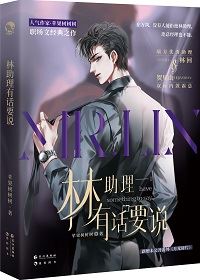
Assistant Lin Has Something To Say [BL]
+Add to Custom List
Sort
Add review
... Read More
"Do you really not need a hug?" I have replayed this moment in my head approximately forty-seven times since I first read it. Forty. Seven. Times. This is the kind of question that should NOT be capable of making me cry but here we are. He Jian Shan — the man who negotiates billion-dollar deals without flinching, who once had his rivals beaten within an inch of their lives — stands there asking Lin Hui if he needs comfort. And Lin Hui's response? Pure deflection comedy. He quotes the internet, jokes about being Daji, threatens to say "husband help me" only at home tonight. The man is using humor as armor and He Jian Shan KNOWS it. He lets him have the joke, watches him perform, and then opens his arms anyway. Just... opens them. No pressure. Just available. And when Lin Hui actually walks into those arms, He Jian Shan's first words are "I'm sorry." Not defensive. Not explaining. Just sorry. Because he knows this happened partly because of his own carelessness. That guilt he's carrying — about Zhou Donghui four years ago, about putting Lin Hui in the line of fire again — it's real and it's heavy and Lin Hui has to reassure HIM. "You're giving Fan Yu a tough job," Lin Hui says when He Jian Shan reveals his plan to go public. And there it is — the love language of this whole relationship. Not grand gestures (though the hug was nice), but "I will burn my own company's reputation to clear your name because you are not a commodity for others to rate and discuss." THAT is romance.
... Read More
So here's this whole subplot about Lin Hui giving up postgraduate studies, right? On paper it's a boring career decision story—horticulture student, grandmother dies, he quits—but the author layers it with such quiet rebellion. Lin Hui literally spent the entire afternoon crying on a stadium bench after getting that phone call, then went BACK TO WORK. That's not weakness, that's a whole different kind of strength the book keeps pointing at. Then you have He Jian Shan, this ‘king of business empire' who describes himself as a mere gear. The plot keeps flipping these power dynamics—every time Lin Hui seems subordinate (assistant, taking orders), he actually holds the emotional cards. Remember when he made He Jian Shan put on a hood just to steal a kiss? That's not passivity, that's calculated risk-taking in a world where both of them are trapped by expectations. The Luo Ting conversation works as exposition but also as structural irony—he's praising Lin Hui's maturity while simultaneously revealing how alone Lin Hui has been carrying everything. The plot doesn't resolve this tension neatly either; it just lets it simmer under dinner conversations and lake walks. I think what makes it work is the author refuses to let Lin Hui's backstory be tragic backstory. It's just… data. Information that shapes who he is without defining him.
... Read More
Okay so can we just talk about how He Jian Shan literally held Lin Hui's hand while recounting his mother's suicide? Like that detail hit me so hard I had to put the book down for a sec. This man has been carrying this entire trauma for years and he just... dumps it all on Lin Hui at 11pm after a company annual meeting. The power dynamic shift here is insane. And then there's Yao Qianyi as a character. I hate her but I also don't? She's this incredibly self-destructive person who loved dance more than anything, who chose her career over her family, who basically treated her son as an accessory to her image. But the scene where she asks to see the goldfish before she dies—it's so petty and human and devastating all at once. She wasn't thinking about anyone but herself even at the end. The father-son relationship between He Jian Shan and He Zhao is also quietly heartbreaking. They couldn't even face each other for years after their mother's death. And now He Jian Shan has to remind He Zhao that 'He Jianchuan is not Yao Qianyi' like some kind of trauma response. This family is wrecked. Lin Hui though—he just sits there holding He Jian Shan's hand, tears falling, unable to process what he's hearing. His reaction is so raw and real. He's witnessing someone's darkest memory and there's nothing he can do except be there. Also the paternity test thing?? He Zhao actually asked if He Jian Shan was 'also born of another man' at his own birthday party. That is the most vile thing a parent can say to a child. No wonder He Jian Shan left the country immediately after.
... Read More
"That's because he loves me." I need to sit down. He Jian Shan literally thinks this while sitting in a boardroom full of vultures and his entire thought process goes to his romantic relationship. This man is so unhinged in the best way. But also - hear me out - he genuinely seems to care about Lin Hui. Not just as an employee, not just as a partner, but actually. When he says 'I need to help him get them back,' he means it. And Li Feng Hai pointing out that buying a house for Lin Hui was thoughtful? He Jian Shan literally smiles and says 'Let's give him a holiday first' while thinking about flower photos on his phone. These two have built something real while the rest of the world treats Lin Hui like a commodity. The shareholders don't get it at all - they see a valuable executive who left, not a person who was pushed too far. He Jian Shan's speech about 'brothers still settle accounts clearly' though? That was him drawing a line. He won't let them use his personal life as leverage.
... Read More
The dialogue in this chapter is deceptively simple. On the surface it reads like everyday conversation, but the subtext is doing almost all the work. Let me just throw out a few lines that landed for me: "Your brother's paying." — Lin Hui says this to He Jian Chuan after resolving the entire conflict. Not "I got this," not "don't worry about it." He acknowledges the hierarchy and the relationship in three words. He's positioning himself as the brother's protector and benefactor simultaneously, and he does it while smiling and winking. The casualness is the weapon. "What's there to fear? Booth number three has your back." — He Jian Shan doesn't even look up from his phone when he says this. He's not performing. He's not being dramatic. He's just stating a fact of their life together. This is the kind of line that gets more powerful on rereads because you realize how much trust is embedded in the lack of emphasis. "Indeed intoxicating" — this is the narration, not dialogue, but it applies to the entire conversation pattern between Lin Hui and He Jian Shan. Their exchanges are intoxicating because neither says what they mean. Lin Hui asks if He Jian Shan had fun and gets redirected to a jealousy probe. Every conversation between them is a dance where the music is off-screen. And Mr. Liu's dialogue is written to be viscerally annoying — the exaggerated boos from his friends, the entitlement in "this calls for upping the ante," the petulance when he's rejected. His voice is flat and loud, which makes Lin Hui's quiet precision feel even more powerful by contrast.
... Read More
The armor metaphor in this passage is doing so much heavy lifting. He Jian Shan literally says he already armored Lin Hui—meaning he prepared him, protected him, made him strong enough to face the world. But then Lin Hui becomes his weakness anyway, and the tragedy is that weakness isn't the opposite of strength here. Weakness is just love with nowhere to hide. The shareholders weaponize Lin Hui precisely because He Jian Shan cares about him. Every online comment, every rumor, every accusation that Lin Hui climbed into bed to become queen—they're all attacks on He Jian Shan's judgment, his professionalism, his authority. And yet Lin Hui refuses to let that be the end of it. He sees the symbol of himself as a weapon and decides to redirect it: if he's going to be used as a tool against He Jian Shan, he'll wield that tool himself. The resignation announcement is his way of reclaiming the narrative. There's also this recurring image of distance and proximity that runs through the whole text—the physical distance between them in the office, the emotional distance of four years of unrequited longing, the geographical distance of the Ninghai project. Lin Hui wants to leave physically to protect He Jian Shan emotionally, but then he can't bear even that distance. "I can't leave you more than anyone else" is such a dense line—it means both that no one else matters more to him AND that he can't accept being separated from him the way others might be willing to. The office itself becomes a symbol too. It's where they hug and kiss and love, but it's also where Lin Hui was always just Assistant Lin, never the person behind the title. Now he's forcing the two worlds to collide.
... Read More
The pacing here is masterful. We start with a casual bar conversation, move through finding out about He Jian Chuan's viral fame, have this whole PR scramble, then end with domestic平静 - cooking fish, playing LEGO, planning New Year. It's not linear drama; it's slice-of-life with stakes simmering underneath. The author knows when to slow down and when to let tension breathe. What's interesting is how the Weibo post at the end acts as a hook without being a cliffhanger. It's not "what happens next?" - it's more like "the storm is coming, enjoy the calm while it lasts." The three-day holiday flying by, Lin Hui's reluctance to let time off end, it's all building this sense of precarious happiness. Like we know something's coming, but for now, they're just... together. The scene transitions work really well too. From the bar chat to the PR call to the kitchen to bed - it feels like a real day, not a constructed plot. And that final image of them falling asleep after discussing New Year plans? Perfect. It's not about resolving everything; it's about these people choosing to face whatever comes together.
... Read More
I need to talk about He Jian Shan because this character is doing something remarkable here. On paper he is a cold businessman type — pulling all-nighters, managing projects, treating relationships like partnerships that need to be win-win. But then look at what he actually does throughout these chapters. He watches Lin Hui sleep. He shifts his own body position to make it more comfortable for Lin Hui to lean on. He peels shrimp and crabs and picks out meat while Lin Hui talks non-stop. He stands in the wind waiting for him outside a car. The man says very little but his actions are screaming. That exchange where Lin Hui asks why he never explained things and He Jian Shan responds with 'I actually hope you would blame me a bit, don't always try to find excuses for me' — this is a character revealing his deepest insecurity in one sentence. He does not want to be understood. He wants to be held accountable. He wants Lin Hui to see him as flawed and choose him anyway. And Lin Hui immediately calls him out on it by saying 'how come you do things backwards when you are in a relationship?' What a perfect line. It captures everything about their dynamic. Lin Hui is the one who overthinks, who rationalizes, who always finds reasons for He Jian Shan's silence. He Jian Shan is the one who acts instead of speaks, who shows up in the wind, who stays quiet and lets Lin Hui build his own case. Their cinema moment is the kind of scene that defines a relationship in fiction. Two people who have been circling each other for God knows how long, finally in the same space, and they both just... collapse. He Jian Shan is exhausted from two days of non-stop work and he falls asleep with Lin Hui in his arms. Lin Hui quietly tightens his grip on his hand. Without opening his eyes. Two hours pass. Neither of them wakes up during the movie. And the author describes this as their 'first date.' I lost it. Lin Hui's refusal to tell He Jian Shan about his long-standing crush is also a fascinating character choice. It is not cowardice — it is deliberate. He says he does not want to use his past feelings as leverage. He wants things to take their natural course. But Luo Ting immediately recognizes this as self-sabotage, calling it 'overly sentimental' and 'playing it smart.' The contrast between these two approaches to love — Lin Hui's quiet devotion versus Luo Ting's performative grand gestures — says everything about how different people process affection.
... Read More
I need to talk about this one line. Right at the end. He Jian Shan, this man who has spent the entire chapter being measured and careful and composed, suddenly stops walking on an empty residential street in the dead of winter, turns around, and says: "I still miss you." STILL. Misses you. As in: even now, even with you beside me, even holding your hand, I still miss you. Like the absence was so deep inside him that closeness doesn't erase it—it just changes its shape. And then he follows it up with: "I can't be without you, I can't wait to establish a relationship with you, and you hold the control over this relationship." Who does that? Who just… hands over all their power like that? He Jian Shan spent years being the one in control, the rational one, the steady presence. And in this one night, after a single day of being together, he's laying bare every vulnerable string he has. He even tells Lin Hui that if asked what he likes about him, he still might not have an answer. THAT is how raw this is for him. Love isn't logical for He Jian Shan. It's breathing. It's automatic. It's the thing he doesn't notice until it's the ONLY thing he notices. Meanwhile, Lin Hui— Lin Hui who has secretly loved this man for YEARS—feels inadequate because it seems like He Jian Shan handles new romance so effortlessly. But the text makes it crystal clear: He Jian Shan was walking that same road yesterday, mind in a mess, wondering whether to apologize first or just speak directly. FLUSTERED. The calm exterior was a performance. Both of them are terrified. Both of them are desperately, achingly in love. And neither of them knows how to say it without sounding pretentious.
... Read More
Okay so the way He Jian Shan shows up with white roses after a whole week apart—Lin Hui literally said he didn't like red roses and somehow He Jian Shan remembered. That detail? Chef's kiss. But what really got me is how He Jian Shan handles the resignation situation. Instead of getting mad or pressing for answers, he just... lets it go. Uses the public announcement as cover. 'I know. I understand everything.' Four words and suddenly I'm sobbing. He could've demanded explanation, made a scene, but he chose trust. That's not weakness, that's strength wrapped in silence. And then the kaleidoscopes. Three of them. 'Childhood starlight, the moonlight we shared, and the sunset when I fell for you.' This man collects moments like other people collect souvenirs. I swear the way their history is woven into everyday objects is what makes their bond feel so lived-in and real.
... Read More
I keep coming back to that WeChat exchange. Lin Hui, stuck in his apartment because of a plumbing disaster, sends photo after photo of colorful flowers—vibrant, almost defiant. He Jian Shan, buried under work and resentment, replies with a single '1' each time. That's it. No emoji, no comment, just '1.' And yet, it's the most emotionally charged sequence in these chapters. It's not about grand declarations; it's about two people who've spent years communicating in silences and sideways glances. Lin Hui's enthusiasm feels like an olive branch thrown across a chasm of hurt. He Jian Shan's minimal responses aren't cold—they're controlled, because acknowledging the flowers outright would mean acknowledging how much he misses him, how much he's hurting. The CP chemistry here is baked into subtext. Every '1' is a heartbeat. I felt this in my chest. It's the emotional equivalent of holding your breath. And the way the narrative frames it—'Lin Hui understood his thoughts, and couldn't help but laugh inwardly'—tells you everything about their dynamic. They're operating on a frequency only they share. Later, when He Jian Shan tells Annie, 'Otherwise, you won't see Lin Hui become the General Manager,' it's not just a business projection; it's a vow wrapped in corporate jargon. This book doesn't do soap-opera tears; it does quiet, devastating intimacy. And that's what makes it stick with you long after you've closed the tab.
... Read More
I keep coming back to the imagery of light in these chapters. It's everywhere and I don't think it's accidental. The annual meeting opens with the tradition of lights dimming except for a single spotlight on He Jian Shan. This is LIN HUI'S favorite part of the entire year—not because of the speech itself, but because in that darkness around him, he can look at He Jian Shan without fear of being caught. The spotlight creates a world where seeing is one-directional. Lin Hui can observe; He Jian Shan remains unknowable in the glow. For eight years, this arrangement has served them. Lin Hui gets his stolen moments; He Jian Shan gets to be worshipped from the shadows without having to acknowledge the watcher. But this year, the dynamic flips. He Jian Shan looks UP. He breaks the单向 rule. The spotlight doesn't change—Lin Hui is still in the darkness—but He Jian Shan's gaze moves from the stage to the audience, from the observed to the observer. This is the first time in eight years that the light has worked differently, and it corresponds exactly with whatever decision He Jian Shan has made about their relationship. Then there's He Jianchuan under his own spotlight on stage, singing for a crowd that loves him while his father watches from the shadows below. The inversion is staggering. The son is illuminated; the father is dark. And the song itself—'The Answer'—well, I think we're supposed to be wondering what that answer is. Is it about identity? About freedom from patriarchal control? About the truth that emerges when you stop performing for the people who raised you and start performing for yourself? The slightly ajar office door at the end is another threshold image—visibility denied but not entirely blocked. Lin Hui is meant to hear this but not be seen hearing it. The whole chapter is about who gets to see whom, in what light, and on what terms.

Leave a comment

You must be logged in to leave comments. or
