After I Transmigrated as a Mermaid, I Transmigrated Back [GL] - Reviews

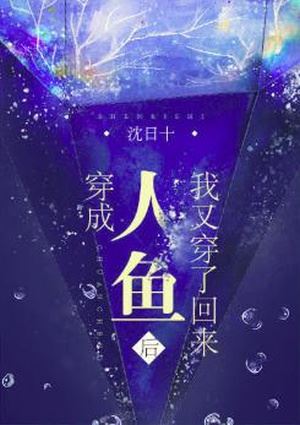
After I Transmigrated as a Mermaid, I Transmigrated Back [GL]
+Add to Custom List
Sort
Add review
... Read More
'Hmm.' That's it. That's the entire confession. Shen Zhifei says one word and immediately turns crimson because apparently admitting jealousy is harder than whatever cosmic thing she's been doing up to this point. And I am OBSESSED with this moment. Let me back up though because the emotional groundwork here ischef级别的. You've got Zhao Xiaokui, who's spent chapters being this slightly chaotic, bathtub-sleeping, ice-cream-asking person who treats the world like a playground, and then you have THIS scene where she's wearing a red dress and suddenly she's not a kid anymore—she's someone who looks at Shen Zhifei and sees her flush and decides to POUNCE. 'Are you jealous?' Those eyes 'sparkling like stars'—I literally gasped out loud. And Shen Zhifei's response? She pinches her ear, admits it in one syllable, then tries to pivot to 'eat your breakfast' like that's going to work. It's so painfully human. But the thing that really got me wasn't even the rom-com energy—it was the night before. Shen Zhifei dreaming/remembering/whatever-that-was about Zhao Xiaokui as a mermaid struggling alone in the deep sea, and feeling 'very fortunate' that she happened to be there when that book seal opened. That's not just plot exposition, that's devotion. She's looking at this statue of Zhao Xiaokui in her subconscious and feeling grateful she got to witness her pain. And then the flame that can destroy everything goes WEAK in front of the mermaid statue—because 'as long as Zhao Xiaokui remained in her heart for a day, her soul could never be consumed.' THAT is love language. That's not flowers and chocolates, that's cosmically-level protection. The red dress scene is just the cherry on top of a chapter that basically said 'we are bonded for life and I will burn reality for you' without using those exact words. I'm not okay.
... Read More
This chapter is a masterclass in controlled pacing. Let me walk through why it works so well. It opens IN medias res—with Lin Bai giving Zhao Xiaokui instructions mid-crisis. No warm-up, no exposition dump. You're dropped into the urgency immediately. The sacrifice setup (her running alone, them staying behind) happens fast but earns its emotional weight because the dialogue is sharp and grounded. Then the transition to Zhao Xiaokui's solo journey is where the pacing shifts gears. The author slows down perceptibly—describing the viscous darkness, the creatures beneath her feet, the way she navigates by following Lin Bai's calculated directions. Each step feels deliberate. The reader breathes differently here. You're running WITH her, feeling every resistance. "Thud—" — one word, one sentence. She hits the platform. The crystal ball appears. And then the temptation sequence stretches out, step by agonizing step. The author uses repetition deliberately: "Take it down" echoes five times, each one escalating the stakes. Your pulse rises with each iteration. Then—snap. Gou Rixin's voice from far away cuts through the spell. Reality re-enters the scene. The pacing JUMPS again, back to urgency, and she bolts through the crack in reality. The final section—the aftermath, the medical response, Wang Junwu's orders, the night wind and crows—slows everything down to near-halt. The chapter ends with the building being surrounded like "cheetahs ready to pounce." The transition from personal danger to institutional response creates this strange, lingering tension. You don't get closure; you get escalation. And that's exactly what keeps you turning pages.
... Read More
This chapter is absolutely packed with layered conflict and I need to map it all out because the stacking is ridiculous in the best way possible. First layer: the external supernatural threat. The Dark Council is out there, members are using real fangs to infiltrate human spaces (or at least appear in promotional content), and Zhao Xiaokui just handed the Night Walkers a potential breakthrough. The stakes here are organizational survival and potentially uncovering a network that's been invisible. Second layer: the personal stake. Zhao Xiaokui's mermaid identity versus their human disguise—they specifically reflect on how grateful they are to be odorless and fragrant as a human, which means the mask is both protection and performance. What happens when that mask slips? Third layer: the romantic stakes. The fangirl's anxiety about same-sex relationships facing backlash exists in a world where even supernaturals might not be accepted, and Zhao Xiaokui is navigating both supernatural politics AND public perception simultaneously. And let me not forget the interpersonal conflict inside the Night Walkers themselves—Gou Rixin's explosive temper, Wang Junwu's tyrant reputation, the whole gym crowd spectacle. Everyone has something to lose in every single thread, and the chapter ends with all of them about to collide. The training room fight that's building isn't just bros being bros, it's tension release from a chapter that's been loading conflict since page one. What I love most is how none of these stakes feel artificial—they all grow organically from character choices rather than author intervention.
... Read More
The pacing in this chapter is absolutely locked in. Let me walk through why. The author opens with a low-key question — 'Is she your student? Is she an adult?' — establishing Zhao Xiaokui's outsider status almost immediately. Then it transitions into her interacting with the stone tablets, the confusion building as everyone else fails where she succeeds. There's a brief exposition dump about superhuman aging and the Night Walkers' history with these relics that could have slowed things down, but it's positioned right when the reader needs context, not after the fun stuff. That's good instinct from the author. Then boom — the discovery moment. Professor Gu's ecstatic reaction pivots the energy from mystery to triumph. The chicken leg scene is a perfect comedic exhale before the drop. And then, in the final pages, the mood shifts again into something genuinely unsettling. That researcher vomiting, the painting that makes people sick, Su Mingyue's warning — it's a three-act structure compressed into what should be a straightforward 'discovery of ancient knowledge' scene. The author isn't just building plot, they're modulating emotional temperature. By the time you hit the end, you're not cheering anymore, you're uneasy. That transition from light to dark without warning is exactly the kind of pacing choice that keeps me turning pages at 2 AM.
... Read More
So this chapter drops the exposition bomb about Night Guardian right in the middle of a conversation like it's totally normal, and honestly? It works because Zhao Xiaokui's hesitation gives us breathing room. Su Mingyue pitches it casually — civil servant benefits, skip the public exams, mission bonuses for Night Watchers — and you can literally see the gears turning in Zhao Xiaokui's head. She doesn't just say yes immediately, which is good writing. She needs to 'go back and ask Shen Zhifei,' which ties the plot thread back to her emotional anchor. But here's what caught me off guard: the monitoring room. Gou Rixin practically vibrating, getting his leg pinched by Captain Zhang, Wang Junwu smoking and making snide comments — this is textbook tension-building without any actual conflict happening. The author understood that suspense isn't just about action; it's about how other people react to your potential choices. And those burly Night Guardian team leaders waving at Su Mingyue like they're running a bachelor auction? Comedic relief that somehow also worldbuilds. I chuckled out loud. The pacing here is spot-on — heavy exposition, then immediate comedic beat, then Shen Zhifei calling and suddenly we're back in emotional territory. Tight.
... Read More
Can we just talk about Su Mingyue for a second because THIS woman. She's a Nightwalker agent—supposedly used to the cold indifference of the world—but the moment Zhao Xiaokui shows up wanting to help, Su Mingyue softens. Like genuinely. The text literally says she felt 'a warmth in her heart.' That's huge for someone who works in this line of work. And then look at how she treats Zhao Xiaokui throughout: guiding her away from danger, patting her hand, whispering reassurances. Meanwhile Zhao Xiaokui is the one who actually led them to the right door in the first place. This dynamic is so much more interesting than a typical mentor-student setup. They're equals in different ways. And then there's the whole 'who is comforting whom' moment at the end—Su Mingyue squeezes Zhao Xiaokui's hand thinking she's being brave, but honestly? I think Su Mingyue needs that connection just as badly. Meanwhile, Lin Bai and Gou Rixin are solid partners but feel underwritten compared to the two women. Gou Rixin's all business and Lin Bai is the tech guy, but Su Mingyue has actual texture. And Bai Jingru—poor thing. She went from proud encyclopedia girl to traumatized victim in a single scene. What happened between these two chapters is a whole tragedy.
... Read More
'Everyone has to pay the price for what they do, and you are no exception, just like me.' This sentence is sitting in my head like a boulder and I can't move it. Because on the surface, these chapters feel... soft. A new bathtub. Chicken for dinner. Three ice creams. Shen Zhifei getting flustered because her girlfriend looks too good in a red dress. This is cozy fiction energy and somewhere underneath it all, the author has planted a landmine. The landmine is the spying mechanic. Shen Zhifei saw something she shouldn't have—a true god, presumably—and now we're learning what that could cost her. The rules are clear: below seventh order, life-threatening. Below fourth order, probably dead on arrival. The Abyss race whispers and corrupts your soul over days. The God race brainwashes you into devotion. And Shen Zhifei is apparently involved in something that ties back to Zhao Xiaokui's grandmother, who also 'paid a price.' What was hers? The mermaid statue in the consciousness space—that could be a trophy, a memorial, or a warning. The white flame going weak suggests that whatever Zhao Xiaokui went through in the deep sea left her permanently altered, and Shen Zhifei's inability to affect the statue means some consequences have already locked in. But the real stakes aren't just physical—they're about agency. The grandmother talks about fate being predetermined, and yet Shen Zhifei 'chose' to open the book and get involved. Is that choice real or scripted? If everything's predetermined, then the conflict isn't whether they'll survive—it's whether they'll ever truly choose anything at all. And that's infinitely scarier than any monster. The red dress scene feels almost dangerous in hindsight, like joy being celebrated right before the bill comes due. That's classic tension engineering and I am already bracing.
... Read More
There's this recurring image of water throughout the passage that I can't shake. Zhao Xiaokui submerges herself in a bathtub trying to wash away embarrassment, but what she really wants is the ocean — 'the boundless sea,' 'chasing the waves and the thunderbolts.' The bathtub is a failed substitute, a tiny stand-in for something vast and untamable. And then there's the mermaid 'nature' described as birds yearning to fly or thoroughbred horses yearning to run. Birds. Horses. Free creatures trapped in forms that can't carry them. This is the core metaphor of the whole book, isn't it? Zhao Xiaokui's body is a cage for a soul that belongs to something wilder. Even her eight houses — those gleaming concrete boxes scattered across cities — are just another kind of cage she built in her human life, full of wealth but empty of meaning. The real freedom she's looking for might not be on land at all.
... Read More
Okay so let me just say—the Nightwalker's store is absolutely iconic and I need to know where to shop. We're talking high-voltage discharge devices disguised as rings, necklaces that block mental powers, and long-handled umbrellas that double as weapons. This is the kind of worldbuilding detail that makes you want to pause and just... re-read the list. But then Zhao Xiaokui drops THE LINERIE ARMOR on us and I literally screamed. A black lingerie set made of some special metal with 'extraordinary properties' that protects vital areas like the chest and lungs? What kind of tactical gear company thinks to put that on the catalog? And Shen Zhifei's reaction—just standing there trying to remain composed while her ears turn red? I love that the world feels lived-in through these small absurd moments rather than through exposition dumps. The whole secret about the sneak attack being from an ORDINARY person, not a superpowered one, also tells us so much about this world. Superpowers are expected, tracked, prepared for. But a regular human with a glass bottle cap? That's the real nightmare. It's like the author is saying: the world you think you know is layered with invisible dangers, and the people who survive aren't necessarily the strongest—they're the most aware.
... Read More
Okay so the assassination attempt in the meeting room was actually really well done? Like, it happened at the most mundane moment — they're sitting there, negotiations wrapping up, everyone's relaxed — and suddenly it's chaos. The best part is that Zhao Xiaokui catches it before anyone else because she has, you know, literal supernatural awareness. She kicks the guy's wrist and sends him into a wall before the poison even touches the table. It's a nice subversion because normally these scenes involve the hero being ambushed and barely escaping. Here, the person who seems like background support (the 'assistant') is actually the one who saves everyone. But what really made me sit up straight was the aftermath — the collaborating party representative genuinely didn't know. He was played. Which means there's somebody pulling strings behind the Rong family situation AND behind this business deal, and that ties the political plot and the personal plot together in a way that doesn't feel forced. The poison detail with the sulfuric acid bubbling on marble was a nice touch too — it showed, didn't just tell. The chapter ended on that moment where Shen Zhifei looks at Zhao Xiaokui like she's processing something massive. Not resolved, just pivoted. That's a chapter ending I can get behind.
... Read More
Let's talk about Zhao Xiaokui's golden tail because this author does NOT play fair with imagery like this. "She had a rare golden fishtail. At least Shen Zhifei hadn't seen a second mermaid with the same color beside her." The fact that her tail is *uniquely* golden — that alone signals something special, something that sets her apart. And then the author immediately undercut that beauty: "someone had taken a piece away. The healed flesh formed a depressed, scarred area, making this fishtail, despite its beauty, seem less smooth and natural when swaying." A scarred golden tail. Of course. Of *course* the one mermaid who stands out the most is also the one carrying visible wounds. This is such a deliberate choice by the author — making her beautiful AND broken at the same time. Shen Zhifei notices both things instantly, and I think that's because she sees Zhao Xiaokui exactly as she is: radiant and ruined, and somehow both truths existing at once. What got me though was the aftermath of the confrontation. Zhao Xiaokui stares down these mermaids who are clearly stronger than her — taller, bigger fishtails, the whole deal — and she doesn't back down. Not until they leave on their own. And then that moment of vulnerability only Shen Zhifei witnesses? Where her posture changes, where disappointment leaks out? That's the kind of emotional intimacy that doesn't need romance to be devastating. It's friendship, it's something deeper, it's two people who know each other's real faces while the rest of the world only sees the scarred parts. I'm not crying, you're crying.
... Read More
I need to start by saying: this is the kind of chapter that made me put my phone down and just stare at the wall for three minutes after finishing it. Not in a bad way—in the way that means the pacing did exactly what it was supposed to do. It built, it released, it built again, and then it left you hanging in the most satisfying way possible. Let's talk about structure for a moment. The chapter opens with the effect—the hypnosis, the healing, the refreshed workers—and only then do we meet Xiao Su and learn about the song. That's reverse-engineered storytelling at its finest. We feel the phenomenon before we understand its source, which means every subsequent detail about Zhao Xiaokui comes loaded with dramatic irony. We already know something incredible is happening; we're just waiting to meet the person responsible. Then the pacing accelerates in waves that mirror the music itself. First the working class, then the downtrodden, then the artistic youth—each wave smaller but more intense. The text moves from external observation to internal experience, from societal impact to personal stakes, from viral fame to supernatural consequence. Each transition is smooth but each shift raises the temperature. By the time Zhao Xiaokui is sitting at home watching her rankings climb, we're already invested in her personally, not just fascinated by the phenomenon. And that bathroom scene? That's the chapter's second act climax. All the accumulated energy—viral fame, supernatural effects, growing power—converges into this intimate, physical moment. The cold water, the steam, the bubbling, the starlight consciousness. It's breathtaking in its escalation. Then the cutoff at the end, right as she's about to make some crucial decision in her luminous mind—that's not just a cliffhanger, it's a structural necessity. The chapter has been building toward this moment of choice, and stopping here means we cannot wait for the next one.

Leave a comment

You must be logged in to leave comments. or