After I Transmigrated as a Mermaid, I Transmigrated Back [GL] - Reviews

After I Transmigrated as a Mermaid, I Transmigrated Back [GL]
+Add to Custom List
Sort
Add review
... Read More
I need to talk about this moment where Zhao Xiaokui just falls apart over the stuff from her old home. Like, she wasn't even looking for them—she just noticed one thing and then suddenly everything came flooding back. The fact that Shen Zhifei went out of her way to collect all these scattered items from recycling stations and former neighbors? That's not casual. That's the kind of thing you do when someone matters to you. And then her line: "If I'm not good to you, then who should I be good to?" Chills. Actual chills. It's so simple but it carries this weight of someone who's spent years not needing anyone, and then suddenly someone refuses to let her go back to that. But also—I couldn't stop thinking about the Rong Zhen situation. Zhao Xiaokui's reaction to his call was SO funny. She literally wrapped her arms around Shen Zhifei and said "You belong to me now" like a toddler claiming a toy. And then she hung up on him while making an imaginary smack sound. Respect. The whole dynamic is fascinating because nobody in this book is just one thing. Shen Zhifei is gentle but clearly capable of handling dangerous people. Zhao Xiaokui seems sweet until she snaps. And Rong Zhen... ugh, he's the worst. Cheating, controlling, and now he's calling them about Tao Zijin like HE gets to decide anything? Please.
... Read More
Okay so this whole chapter is basically Zhao Xiaokui getting absolutely haunted by an Evil God, right? She's stumbling into elevators, dodging falling debris, and everyone keeps losing their minds about how much targeted hate this entity has for her. And then BAM — she accidentally discovers she can sing away mental power contamination just by humming. From straight-up cursed to literal treasure in one chapter. That's a wild tonal pivot. The way the author connects these two threads is honestly clever. Her water-based supernatural powers and her bad luck both feed into this third discovery — her voice. It's not random either. The researchers note that water-type supernaturals have enhanced perceptual abilities, so her hearing the right frequencies and producing the right resonance tracks with the established rules of this world. It feels earned, not deus ex machina. But I have to say, I loved how the chapter handled the stakes around the bad luck. Remember when the elevator door opened and she literally tripped into it? And then behind them, some guy riding it gets crushed? That hit differently. This isn't a gag about clumsiness anymore, it's a living embodiment of fate trying to kill her. And Lin Bai's response — closing his eyes and falling asleep in that soundproof booth, peacefully, like her voice literally washed over him — was such a quiet contrast to all that chaos above. Also side note: Gu Siyuan's line about "some people are born into this world with the innate ability to bring about change" is basically the author pointing at Zhao Xiaokui and going "yeah, it's you, honey." Chef's kiss.
... Read More
Okay so this batch is basically one giant tension-building sequence and I love it. The plot here operates on two levels simultaneously — there's the surface-level investigation (the Nightwalker team arrives, they do a mass parasite check) and underneath that, there's this creeping dread about Tao Zijin that never actually resolves. Zhao Xiaokui ends up placed next door, eavesdropping, and the chapter closes with her mental sea filling with "vague shadows" swirling around, eager to enter. That ending is NOT subtle at all, but in the best way. The author doesn't give us answers, just deeper questions. What are the shadows? Is Tao Zijin's parasite influencing Zhao Xiaokui already? Is it something else entirely? What I found really clever structurally is how the holy water test serves as both plot device and character moment. It confirms no one on the team is infected, which momentarily relieves tension, but then the very next beat drops us back into uncertainty with Tao Zijin's foul odor and those shadows. The plot doesn't let you breathe. Also, the fact that this method only works on a small scale — holy water is expensive, shelf life is short, the process itself is torture — that's classic worldbuilding through problem-solving. The characters aren't just facing an enemy, they're facing logistical limitations, which makes everything feel more grounded and desperate. The narrative arc here moves from investigation → temporary relief → deepening mystery. Classic structure but executed with real precision. That final image of the shadows in the mental sea though... chills. Actually chills.
... Read More
I keep coming back to the skincare subplot and I think there's more going on than meets the eye. Su Mingyue developed her own skincare products—products that slow aging in a world where some races naturally live for centuries. She's offering these to Zhao Xiaokui not just as a beauty tip but almost as a gift of something extraordinary in a world where ordinary people age and die at normal speeds while the superhuman world operates on different rules. The line "the aging rate of superhumans is slower than ordinary people" isn't just trivia—it's a quiet reminder of how fundamentally divided this world is. Those who have power live differently, literally. And then there's Zhao Xiaokui wanting to give the product to Shen Zhifei because she's "busy all the time, worrying about this and that." It's almost tender—a way of caring for someone by trying to preserve their appearance, their youth, while the world around them gets dangerously complicated. I can't tell if the author is commenting on how women express care through beauty products or if this is just genuinely sweet character detail. Either way, it layers nicely onto the theme of ordinary people trying to maintain normalcy in an abnormal world.
... Read More
Let's talk about what this chapter is actually saying underneath all the music charts and supernatural effects. At its core, this is a story about art as a literal force of transformation—and I don't mean metaphorically. The songs in this text actually change people. They heal trauma, restore hope, provide companionship to the lonely. This is the fantasy version of what every artist secretly hopes their work does: that it matters, that it reaches someone, that it changes the texture of their life. The “power of faith” is the most loaded symbol here, and it's brilliant because it redefines something usually associated with religion or idol worship into something more intimate and genuine. This isn't blind devotion—it's love and gratitude and admiration converging into energy. The text literally says the power of faith is “more advanced than supernatural energy,” which positions genuine human connection as the highest form of power in this universe. That's a theme with teeth. Then there's the mermaid imagery. “In front of the mermaid's vocal cords, these melodies became insignificant.” Mermaids have always been symbols of the untamable, the dangerous beauty that lures sailors to their doom—but here, Zhao Xiaokui's voice heals rather than harms. The subversion is elegant. The creature that was once feared now saves people from burnout and despair. Art reframed as salvation rather than seduction. And the starlight consciousness—well, that's pure visual metaphor for enlightenment. She's not just absorbing power; she's expanding. The text says her entire consciousness is “enveloped in starlight” and then asks: what decision is she being called to make? The implication is that absorbing the power of faith will change what she is, what she can do, how she relates to this world. It's a coming-of-age moment dressed in cosmic imagery, and it's beautiful. The question hanging at the end isn't just “what happens next?”—it's “who will she become?”
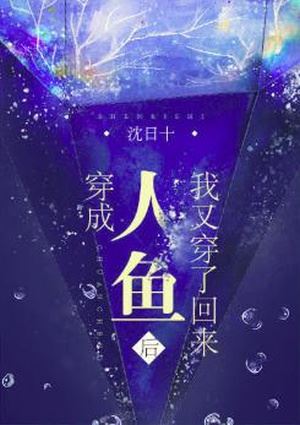
... Read More
I keep coming back to the number Shi Ning drops and I can't stop thinking about what that means for the entire world this story has built. Over three hundred second-tier supernatural beings in all of Huaxia. That's it. That's the ceiling. And they had to pull two of them from headquarters for a crisis that apparently couldn't be handled otherwise. The implication is terrifying and it's delivered with such casual matter-of-factness that it hits even harder. Think about what this means for the world. If second tier is this rare, then first tier must be even rarer still. What does the average person in this world know about their own government? Do they know that their country has roughly the same number of supernatural second-tier beings as some small cities have police officers? The text doesn't tell us, but the worldbuilding is doing a lot of heavy lifting through omission. The contrast between the supernatural and the mundane is where this story truly shines though. Here we have a government agency called the Nightwalkers that has an entire department handling investigations into parasitic evil gods, and their solution to this high-stakes investigation is to send their asset undercover on a pastoral variety show. A pastoral variety show where celebrities live in a village for seven days and six nights like a family. The fact that this exists as a legitimate cover operation in this world feels so wonderfully strange and specific. It's not generic spy fiction—the show is described in such concrete detail, with its seasons, its format, its constant guest who plays "dad." And then there's the imagery of Zhao Xiaokui's power manifesting. When she first advanced, it happened so fast Shi Ning was stunned. But the text also tells us that Zhao Xiaokui herself was operating at the visible peak of first tier despite already being second tier internally. That gap between appearance and reality—between what the world sees and what actually exists—is such a rich visual metaphor. The power of faith had been working beneath the surface, transforming her body gradually until the energy finally caught up with what was already there. This is a world where transformation happens invisibly, where people carry enormous power without anyone noticing.
... Read More
The transition in this excerpt is masterful pacing. It starts with pure, unadulterated fluff—the reenactment, the jokes, the 'five million' bit. You're relaxed. You're smiling. And then, almost sneakily, the author pivots. Zhao Xiaokui mentions Rong Zhen, the mood shifts, and suddenly we're getting an info-dump on marriage alliances, family politics, and business empires. If this were written by someone less skilled, it would feel jarring. But it flows because the pivot is triggered by Zhao Xiaokui's own thoughts. She wonders why Rong Zhen hasn't bothered her, *then* realizes Shen Zhifei handled it, *then* the exposition follows naturally. The structure moves from micro (their interaction) to macro (the family war) and back to micro (Shen Zhifei hiding her smile). It's a perfect loop. The chapter doesn't drag; it zooms in and out like a camera lens. And ending on that line about 'no need to completely offend Shen Zhifei' leaves you with a sense of resolved tension but also lingering power dynamics. What's the next move? The pacing promises there will be one.
... Read More
I need to talk about Zhao Xiaokui because this girl is fascinating and terrifying in equal measure. She just survived her first real battle against a vampire and her immediate reaction isn't relief or panic—it's cold, clinical self-assessment. She's analyzing her own combat skills like a disappointed coach reviewing game tape. That's not normal. That's not even close to normal. What makes her character so compelling is this mermaid background that the author reveals organically through her internal monologue. 'In the mermaid world, she managed to survive to adulthood not because she was exceptionally skilled in fighting but because every time she fought, she was willing to risk her life, adopting an attitude of either dying or surviving.' Do you understand how dark and powerful that is? This girl was raised in a world where hesitation equals death. Her survival strategy wasn't skill—it was willingness to trade her life for a kill. That's not a hero's mindset. That's a predator's or prey's mindset. And then Shen Zhifei enters the picture—a celebrity who's supposedly had everything handed to her, except right now she's penniless, contracts cancelled, and facing supernatural monsters for the first time. Yet when Zhao Xiaokui asks her if she's scared, Shen Zhifei admits it honestly: 'I'm just good at controlling my expressions.' That moment—where two completely different women, from completely different worlds, share raw honesty instead of performative bravery—hit me like a truck. Their dynamic isn't romantic. It's deeper than that. It's the bond between two people who've both learned that the world is far more dangerous than anyone told them, and they're the only ones who understand each other's reality. Zhao Xiaokui protected Shen Zhifei not because she owed her anything, but because... why did she protect her? The text says 'consider it payment for you taking care of me today.' A simple transaction. But I don't believe that for a second. The way Zhao Xiaokui scans the parking lot for threats before they leave. The way she deliberately avoids exposing herself to the supernatural authorities. She cares. She just doesn't know how to express anything other than actions.
... Read More
Okay so this whole sequence is fascinating because on the surface it looks like just a procedural scene—police find a supernatural girl, bring her in for registration—but the real plot movement is happening in the subtext. Su Mingyue deliberately doesn't reveal their true purpose when Zhao Xiaokui asks "Aren't you going to check first?" She just smiles and doesn't say. That's a tiny moment but it tells you everything: this team operates differently from normal law enforcement. They have agendas we don't fully understand yet. And then the snack stall detour—why does the author include this? It's not filler. It's worldbuilding disguised as slice-of-life. The old man who only accepts cash, the high school snacks that no longer exist digitally, the hundred-yuan bill from Shen Zhifei—it all reinforces that Zhao Xiaokui is temporally displaced. Five years skipped, and the world has moved on without her in ways small and large. That's efficient plotting. One scene does double duty. The tension around her questioning whether they'll do human experiments or lock her up is also doing heavy lifting for the larger narrative. It establishes that supernatural beings in this world have reason to fear authority. That's a conflict seed that's going to bloom later. And Lin Bai's cold professionalism versus Gou Rixin's goofy warmth creates an immediate dynamic that suggests this team isn't a monolith—they'll clash, they'll disagree, and that's where the drama lives.
... Read More
Okay so this whole chunk gave me whiplash in the best way. We've got three completely different threads running simultaneously and somehow they feel like they're pulling toward the same center of gravity. First there's the Zhao Xiaokui-Lin Bai thread where they're basically unpacking the entire magic system of this world, right? The idea that Merfolk knowledge lives in blood and soul while humans have to slog through books is such a clean worldbuilding move. It establishes hierarchy without any exposition dumps feeling forced. Then Bam — chapter shifts and we're following Wang Junwu's Night Watchers coming out of the woods with a captured nineteen-year-old. The parallel editing here is chef's kiss. Two completely separate storylines existing in the same moment, one methodical and disciplined, the other chaotic and personal. And the final beat with Shen Zhifei waking up sensing something about Zhao Xiaokui's transmigration — that thread I haven't seen pay off yet but I am SURE it's coming. My only complaint: the transition between the philosophy talk and the raid felt almost too abrupt. I needed a beat to breathe between those two worlds. But honestly that might be intentional, like the universe doesn't give you breaks.
... Read More
Okay I need to talk about this painting first because WOW. Zhao Xiaokui looks at it and BAM she's suddenly in this nightmare lava world and she can barely handle it. And the craziest part is this is just a REPLICATED copy. The original must be absolutely devastating. What I love about this plot device is how it instantly raises the stakes — these aren't just dusty old books, they're potentially lethal. The fact that two-thirds of the slate books are nearly incomprehensible and the rest are pretty low-level stuff makes me curious what the remaining third contains. Are we going to find that there's actually something incredibly important buried in there? Also, the mystery about whether mermaids exist on Earth or whether there's a connection between the last Earth civilization and the mermaid world is a really intriguing subplot to be woven in. It gives the whole archaeological angle more depth than just 'find artifacts, decode them.' That twist about the language being completely new rather than a variant of human language is exactly the kind of reveal that makes you stop and reconsider everything.
... Read More
What I love about this section is how the worldbuilding is woven into the drama rather than dumped on you. You're in a hospital, but it's a hospital where people are discussing fugitives with out-of-control powers and organizations called Night Walkers. The mundane and the supernatural exist in the same rooms, and that contrast makes everything feel more real. The way they classify power levels—A-level, Super A-level, tier-one extraordinary—creates an entire hierarchy that exists beneath the surface of normal society. Most people probably have no idea that communities like this exist. The fact that Zhao Xiaokui is 23 years old and already classified at a level that terrifies experienced operatives tells you everything you need to know about how rare and dangerous true power is in this world. I'm particularly struck by the detail about the mermaid world. This isn't just a city with superheroes—it's a world where different dimensions and realms coexist, where cultivation methods from one world are being tested in another. Zhao Xiaokui has knowledge that predates whatever society we're looking at, and she's been trying to share it with ordinary people who can't receive it. That adds a layer of tragedy to her character that goes beyond the immediate plot. The Night Walkers as an organization feel grounded and bureaucratic. They have captains, teams, pursuit operations, and internal disagreements. Wang Junwu wanting to sedate people instead of negotiating—that's a policy debate happening in real time. It makes the supernatural world feel like it has institutional inertia, which is way more interesting than a simple good-vs-evil structure. The hospital scene itself is a great microcosm of the world. You have extraordinary energy detecting changes in the environment, people using tablet devices to track fugitives, and a calm, unremarkable setting where all of this is happening. It's the kind of worldbuilding that trusts the reader to fill in gaps rather than explaining everything.

Leave a comment

You must be logged in to leave comments. or
