After becoming the protagonist’s inner demon - Reviews

After becoming the protagonist’s inner demon
+Add to Custom List
Sort
Add review
... Read More
There's this one image that keeps haunting me — five chairs at a table for four people. Yan Chun instinctively reaches for the extra one, and Chu Jinglan says "No need." That single gesture contains so much about what this story is really about. The house itself is a symbol. It starts empty, quiet, awaiting purpose. Then food boxes arrive, papers scatter across tables, a flower appears in a vase. These are tiny details the author layers in deliberately — the sense of home isn't built through grand declarations but through accumulated moments of warmth. The children aren't just learning to read and cultivate; they're learning what it means to belong somewhere. And Xiao Mo — his entire existence is about boundaries. Spirit form, unable to fully materialize, existing between worlds. The testing stone becomes this incredible metaphor because it's supposed to detect something real, something rooted, but Xiao Mo has to *fabricate* his way into acceptance. He has to pretend to have spirit root channels to be seen as legitimate. Isn't that basically what every outsider feels like at some point? Having to perform belonging because the world won't hand it to you freely. The flower in the vase. The cleared writing materials. The extra chair. These small domestic details are the author's way of saying that found family isn't about blood or origin stories — it's about showing up, sitting down, and leaving a seat for whoever comes next.
... Read More
I have to talk about how brilliantly Xiao Mo operates here. He's literally wearing a golden mask while everyone else is playing political games, and honestly, the contrast is everything. The entire arc from beast hunting to the sect confrontation is a perfect domino chain, and I love how the author weaves Xiao Mo's personal gain (killing 35 fourth-tier beasts!) with the bigger political drama. The way Su Baimo's lie backfires is genuinely satisfying. He thought naming the demonic cultivator would absolve him, right? Instead he paints a target on his own back. That moment when the Golden Core Martial Uncle accuses him of collusion — Su Baimo's entire worldview must be crumbling. He's completely trapped between two hostile sects and has no idea who to trust anymore. And then there's the immortal alliance disciples just standing there, not mediating but observing. The political landscape here is layered — both sects are affiliated with the same alliance, but status differences matter, grudges matter, and face matters even more. Xiao Mo exploits all of this effortlessly while pretending to be a casual spectator. The most delicious detail: the demonic cultivator who revealed his identity and boasted about eating their blood and flesh. He played right into Xiao Mo's hands without even knowing it. That line 'He's cooperating so well—I almost feel bad' followed by Chu Jinglan's deadpan 'I don't see your feeling bad, but your enjoyment is certainly blatant' is peak character writing. Xiao Mo may not feel bad, but he sure enjoys watching the world burn.
... Read More
Let's talk about what's actually at stake here, because on the surface this seems like two kids bickering over a flute, but dig a little deeper and the tension is doing heavy lifting. Chu Jinglan is being psychologically invaded. An inner demon — literally a manifestation of his own unstable mind — has taken residence in his head. He summoned his spirit sword and swung at it. He knows the sword won't work. He strikes anyway. That's not a rational decision; that's someone at the edge of their breaking point. The stakes aren't abstract. His sanity is the board they're playing on. And Xiao Mo? He's not some ancient evil entity. He's seventeen, transmigration victim, can't even take human form to sunbathe. His grievance is almost hilariously relatable — he's stuck in this arrangement too. 'You think I want this? I don't want to be your inner demon at all!' There's real desperation in that line. He's using the system points as a way to cope, to feel like he has agency in a situation where he has none. The author builds suspense brilliantly by alternating perspectives. You see Chu Jinglan's ear-splitting torment, then cut to Xiao Mo's smug satisfaction, then back to Chu Jinglan swinging his sword. Each viewpoint raises the question: what happens when one of them actually breaks? The emotional system keeps chiming — mental attacks successful, points accumulating — turning their conflict into something quantified and gamified, which makes it feel both more intense and more absurd simultaneously. What keeps me on edge isn't whether they'll fight physically. It's the question of what happens when this level of raw emotion doesn't resolve. They just cooled down and felt embarrassed. That's not resolution — that's a timeout. The next encounter won't be this contained. And that's what makes every quiet moment between their outbursts feel like the calm before something much worse.
... Read More
The pacing in these chapters is absolutely manic and I am here for it. We go from Xiao Mo admiring his freshly built courtyard with literal appreciation for the layout - peach tree east, pear tree west, swing, chaise lounge, stone table - to full-on existential crisis in the span of a few paragraphs. The structure does something really clever here. It opens with domestic tranquility. Xiao Mo is satisfied. Everything is peaceful. And then the system SCREAMS. That sudden shift from "let me enjoy my flowers" to "OH NO HE'S COMING" creates instant tension without any setup. The reader goes from relaxed to alert in one sentence. Then we get this amazing exposition dump about Chu Jinglan's background - the assassination attempts, the protective seal, the family dynamics - but it's woven into his actual research process. He's not just reading for the reader's benefit, he's actively trying to understand the mist ball phenomenon. This keeps the information from feeling like a textbook insertion. The chapter structure moves from action to reflection back to action again. Xiao Mo investigates the disturbance, we learn about the cultivation world's rules, Chu Jinglan's backstory gets revealed through his own investigation, and then we end on this cliffhanger with the protagonist Su Baimo's ambiguous love story being introduced. The author knows exactly when to speed up and when to slow down. The three-day time skip is handled efficiently, the exposition is earned through character motivation, and every scene transition feels purposeful. This is professional-level pacing.
... Read More
I cannot stop laughing at this. The way Xiao Mo casually offers to play music and the entire carriage EXPLODES into panic—Chu Xia dropping her teacup, Mo Zhi yelling and body-checking Yan Chun into his own forehead, Yan Chun trying to play it cool while clearly in pain. And then the flashback to the FIRST time Xiao Mo played? Birds SCREAMING and fleeing like the sky was ending. These kids had expectations! They thought they were going to hear beautiful music and instead got assaulted like war criminals. But here's the thing that actually made me smile—it's the kind of shared suffering that bonds people. Xiao Mo clearly thinks he plays well (the narrative doesn't confirm this, let's be real), and the kids are stuck with him on a long journey. There's an underlying warmth to it all, even if they're suffering through it. It's not toxic. It's not mean-spirited. It's just... a weird little family finding their rhythm. Also Chu Xia yelling 'Master!' like a tiny distressed duck? Adorable. I'm emotionally invested in these people suffering together and I will not be ashamed.
... Read More
The stakes in this passage are deceptively simple on the surface, a man has a fever, they need medicine, they need to get to Wei City, but underneath all of that is this terrifying vulnerability that makes every moment feel like it could go wrong. Chu Jinglan is unconscious, his qi and blood are depleted, his body is rigid with tension even in sleep, and Xiao Mo is a Nascent Soul cultivator who has to hide his true nature, disguise his cultivation, play a role he's never played before, and do it all while carrying the weight of someone else's life on his back. The conflict isn't just external, it's not just 'will the merchant believe them' or 'will the doctor find something wrong,' it's this deeper, quieter conflict of Xiao Mo realizing that he has become someone who would lie to strangers to save a life, someone who would pretend to be family, someone who would press his cold fingers against a fevered jaw and wait for it to yield. The stakes are raised even higher when we learn that Chu Jinglan was crippled before, that Xiao Mo secretly fed him second-grade spirit medicine while he was unconscious, that this fever is connected to old injuries, that the danger is not temporary but structural, built into the body itself. And yet the tension never becomes melodramatic because the author trusts us to feel the weight of what's at stake without spelling it out, and the result is a passage where a simple act of spooning medicine into someone's mouth becomes this profound statement about what it means to care for another person when they can't care for themselves. I'm genuinely terrified of what happens next.
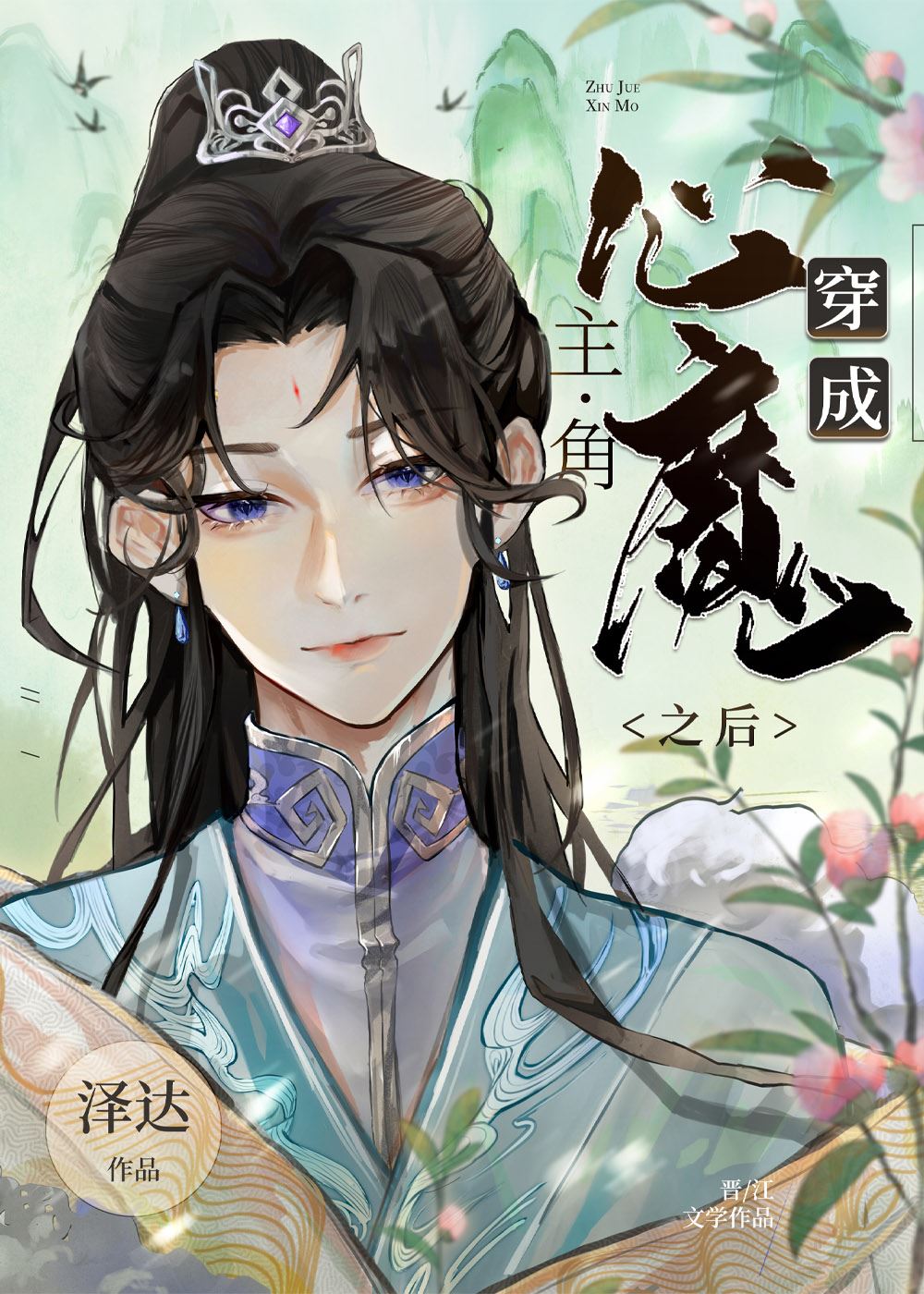
... Read More
Chu Jinglan's dialogue is basically three sentences per chapter and every single one lands like a punch. "This is my sea of consciousness." — Hostile power move. Classic. But then he doesn't argue when Xiao Mo agrees with him. He just... leaves. The conversation that happens between two people who share a brain but can't actually communicate is comedy gold and tragedy wrapped in one. Xiao Mo's voice though — that's where the real flavor is. His internal monologue is this chaotic mix of genuine philosophical depth (talking about long-term goals and finding meaning as an inner demon) and complete chaotic gremlin energy (two and a half flips above a dining table). The shift from melancholic sighing to 'I did a backflip because STEAK' is so human it hurts. And the system! The system is basically the audience surrogate asking all the questions we're thinking. 'Host, aren't you going out?' 'I monitored Chu Jinglan's morning schedule...' The way the system reads microexpressions and tries to decode human emotions is genuinely hilarious. It's the only character honest enough to say 'clearly not a simple matter' while Xiao Mo pretends everything is fine.
... Read More
This is going to sound silly but there's a moment in these chapters that I just keep coming back to and it wrecked me a little. Xiao Mo finds wooden planks and nails, dismantles a barrel, and starts helping Chu Jinglan repair the roof. No grand declaration. No dramatic pause. Just… he sees a problem and he solves it alongside the person he cares about. And Chu Jinglan doesn't tell him to stop. Doesn't insist on handling it alone. Just lets him be there on the roof with him. That's the whole relationship in miniature, honestly. Not the romantic tension—though there is that, simmering under every exchange, every loaded silence, every time Xiao Mo watches Chu Jinglan like he's trying to memorize something. But the DEEPER thing, the thing that actually got me: these two operate as a single unit without ever having to announce it. Xiao Mo anticipates. Chu Jinglan trusts. Neither one apologizes for the other's choices or tries to manage them. When Xiao Mo sends that message—"Chu Jinglan, Yushan Sect is planning to send people to bully us!"—he's not just informing him. He's saying: I heard something important and I thought of you immediately. I want you to know before anyone else does. And Chu Jinglan's response—"…Noted. Why do you sound so eager about this?"—that's him deflecting because the sentiment land too close to the bone. He can handle threats. He can handle hardship. He can't quite handle the softness underneath Xiao Mo's dramatic delivery. Meanwhile there's this undercurrent of friendship with Jing Lei and Song Xuan that's its own kind of tender. Song Xuan gives Jing Lei an out by framing his critique as mere suggestion. Jing Lei kicks him but doesn't actually refuse the input. They've been through whatever broke Jing Lei's dantian and survived it together, and that creates a bond that doesn't need words. What I'm trying to say is: the emotional core of this passage isn't any single moment. It's the SPACE between moments. The way these characters orbit each other without colliding. The quiet understanding that none of them have to explain why they're willing to stay. Anyway sorry that got a bit long I just—yeah.
... Read More
Can we just take a moment for the way Xiao Mo talks versus the way everyone else talks in this book? Because it's not subtle and I love it. When he says "What a pity, I actually quite like the name 'Du E'" — that's Xiao Mo being simultaneously casual and razor-sharp. He's complimenting Chu Jinglan's creation without making it a thing, wrapping it in what sounds like offhand observation. And Chu Jinglan's response? Nothing. Just a gaze shift. That silence from Chu Jinglan is its own voice—entirely distinct from Xiao Mo's chatter. You can tell they've been together long enough that silence between them has texture. Then there's the chicken soup moment. "At least Jing Lei is a proven success story—a bowl of real chicken soup." Fresh metaphor dropped in the middle of a serious discussion and it works because it's SO Xiao Mo. He's the kind of person who can pivot from life-or-death cultivation strategy to food metaphors in the same breath and make it feel natural. The author understood something essential about this character: his humor isn't armor, it's just how his brain works. He thinks in associations, in images, in taste. And Chu Jinglan's replies are always brief, functional, grounded. "Chicken soup?" — genuine confusion, not feigned. He's processing a new metaphor in real time. This is two people who communicate in completely different frequencies and somehow stay perfectly synced. That's not easy writing. That's careful, deliberate character work disguised as conversation. The narration itself has a voice too—observant, occasionally wry, never over-explaining. When it describes the flowers as "a vivid stroke of cinnabar on one's heart," that's the author's prose stepping in, not a character's. It's lush but controlled. The book knows when to be poetic and when to just move.
... Read More
I need to talk about the emotional core of this chapter because it's deceptively simple but hits harder than most romance scenes I've read. Xiao Mo has been through so much — Inner Demon spirit body, half his face covered by a mask, constantly underestimated — and here he is casually creating soundproof barriers because he has Nascent Soul cultivation now. But the real moment isn't about his power level. It's about him choosing to build that barrier AROUND himself rather than around the kids, so he doesn't have to deal with their complaints about his flute playing. That's self-awareness. That's growth. And Chu Jinglan, watching him do this hand seal after hand seal while sitting quietly beside him, saying "You don't need to block me out" — this is the kind of quiet emotional intimacy that cultivation novels do better than almost any genre. No confessions, no dramatic declarations. Just one person telling another they don't need to hide from them. The kids are completely missing this subtext of course. They're too busy celebrating that their Shixiong will wrap himself in a barrier so they don't have to suffer through his playing. But Chu Jinglan sees it. He sees Xiao Mo trying to protect everyone else's peace while quietly isolating himself, and he chooses to be the one person Xiao Mo doesn't need to protect. "It was an opportunity to temper your minds along the way" — Chu Jinglan saying this while the kids suddenly have a revelation that everything was a test? The author is layering so much beneath the surface comedy.
... Read More
There's this incredible symbolism running through these chapters that I can't stop thinking about. Chu Jinglan's sea of consciousness is described as having "a withered tree, a dead-silent lake, and the pale moon in the sky." This is the landscape of someone who is powerful but empty, successful but hollow. The darkness isn't evil - it's absence. Absence of warmth, absence of connection, absence of light. Then Xiao Mo appears and immediately starts decorating. Peach tree, pear tree, swing, chaise lounge, stone table. He transforms this void into something with purpose - flowers to enjoy, fruit to eat, comfort to rest on. The swing doesn't even need to be used; it just needs to exist. This is about potential, about the idea that presence matters even without utilization. The mist wall between their spaces is another brilliant symbol. It represents the barrier between Chu Jinglan's controlled exterior and Xiao Mo's chaotic interior. But it's permeable - the range changes, they compete for territory, they're destined to collide. This isn't two separate souls; it's one mind at war with itself. And then there's the mirror imagery - Xiao Mo literally looks like Chu Jinglan but represents everything Chu Jinglan suppresses. The red demonic mark, the alluring presence, the casual confidence versus the rigid, cold genius. This is the shadow self made flesh, the id given human form. The question the text keeps asking is: can you integrate your shadows? Can the withered tree bloom again? And more uncomfortably - what happens when your shadow becomes more real than you are?
... Read More
"Like a small beast in the forest, unable to find its way home." I need a fucking moment. That one line absolutely destroyed me. Not because it's overly dramatic — actually, it's the OPPOSITE. It's so restrained, so understated, and yet it conveys something so raw. Chu Jinglan has been holding it together for DAYS. Days of swallowing his pain, of performing normalcy, of letting the Chu family think they've got him exactly where they want him. And then he's alone in this house that was meant for Wan Yu — a house she will NEVER arrive at — and something just snaps. The text says he was "forcefully suppressing" it, and that's the key word. This isn't a breakdown. This is a controlled collapse. He's not wailing or throwing things. He's making muffled, trembling sounds, like someone trying desperately not to make noise even when their chest is literally tearing apart. And Xiao Mo — oh god, Xiao Mo just sits on the steps outside and plays his flute. "Twinkle twinkle little star." Of all songs. Of ALL songs. This idiot is playing a lullaby to cover up his best friend's sobbing, and it's the most tender thing I have ever read. And then the ending of that scene — Xiao Mo transforming into black mist to return to the sea of consciousness, and a wisp of that same black mist circling Chu Jinglan's eye corner like he's wiping away a tear. No words. Just that. That's it. That's the entire emotional argument of this whole novel right there.

Leave a comment

You must be logged in to leave comments. or
