After becoming the protagonist’s inner demon - Reviews

After becoming the protagonist’s inner demon
+Add to Custom List
Sort
Add review
... Read More
There are so many symbols stacked in this chapter I almost need to sit with them. The peach blossom hairpin. Chu Jinglan rubs it constantly. The bloodstains at the end "couldn't be removed. Until his vengeance was complete, Chu Jinglan had no intention of cleaning them off." A hairpin is typically an ornament — something pretty, decorative, meant to adorn. But this one is stained. It's been used. It has history. It's a weapon disguised as jewelry, much like Chu Jinglan himself. And then Su Baimo's blood. His own blood dripping from his bitten finger, and instead of stopping to treat it immediately, he watches it. That blood becomes a catalyst. It's the physical manifestation of his breaking point — pain so familiar he stops noticing it, until he does, and something inside him snaps into focus. "Dual cultivation" itself is the chapter's central symbol. On the surface, it's a cultivation method — two people merging to grow stronger together. But the author keeps reframing what it means. Chu Jiao's parents talked about it as marriage, as destiny, as finding your Dao companion. Su Baimo's parents warned against it to protect his future marriage prospects. And now Su Baimo is redefining it entirely — not as partnership, not as love, but as exploitation. "Why must those who engage in dual cultivation necessarily be Dao companions? Why can't there be many people?" The question hangs in the air like smoke. Dual cultivation as betrayal of its own meaning. Taking instead of giving. Using instead of connecting. It's the corruption of intimacy as a theme, and it's beautiful and horrifying. The gray robe demon and Chu Jiao both nearly killed Su Baimo. Both times he was powerless. Both times someone saved him. And now he's decided that being saved is no longer enough. The Middle Realm taught him that lesson. The blood on his finger proved it. And his eyes lighting up at the end? That's not hope. That's ambition wearing a smile.
... Read More
The pacing in these chapters is a masterclass in controlled escalation. We start with Xiao Mo's quiet hunt — methodical, efficient, almost meditative. Thirty-five fourth-tier beasts. Storage devices full. Spirit stones counted with divine sense precision. It's all very calm, very procedural. Then BOOM — two sects in a standoff, swords drawn, accusations flying. The transition is jarring in the best way. You go from the solitary pace of a hunter to the frenetic energy of a political storm in literally one paragraph. What I love is how the author uses Xiao Mo's position as an observer to control the pacing. He's neither too close nor too far. The reader experiences the drama at the same distance — close enough to hear every accusation, far enough to watch the larger patterns emerge. TheImmortal Alliance disciple casually dropping exposition about what's happening feels natural because Xiao Mo is literally asking about it. The chapter ends on this weirdly quiet note — Su Baimo fainting again, Dai Zisheng muttering gloomily, Mu Jian delivering practical advice about avoiding conflict. The storm passes but the threat lingers. That lingering quality is what makes me immediately want to turn the page. The political tensions aren't resolved; they're just paused. And Xiao Mo walks away with his spirit stones and his entertainment, completely unbothered while everyone else is bleeding emotionally and politically.
... Read More
The name Chu Jinglan gives their sect is 'Du E,' which literally means 'Crossing Adversity,' and I cannot stop thinking about what that means in context. This is a person who has clearly crossed significant adversity already—his expression, his cold ruthlessness, the way he holds authority without needing to exercise it openly. And now he's building something called 'Crossing Adversity' as if the act of crossing is ongoing, not completed. The word 'crossing' offers hope, as Xiao Mo notes, but the weight of 'adversity' is never far from either of them. The testing stone itself feels symbolic—a tool meant to determine spiritual potential, tossed casually between two people as a form of communication. It's a measurement of worth becoming an act of trust. And then there's the sect token versus the disciple plaques. Chu Jinglan holds the sect token, the symbol of ultimate authority, but he offers it to Xiao Mo without any real expectation that Xiao Mo will take it. Xiao Mo strokes his own simpler plaque instead, spinning it idly. Authority is available, but belonging matters more. The blood contract mentioned in passing—binding the three children to serve Chu Jinglan even after the sect dissolves—is another layer of this theme. They're building something temporary (a sect that may dissolve) on foundations that are permanent (blood contracts that outlast the organization). There's something deeply melancholic about that. And the spatial backpack, with its strange limitations—holding twenty swords or twenty storage devices but not twenty tons—mirrors the world's fundamental absurdity. Rules exist, but they're arbitrary, buggy, upgradeable. Growth is possible, but not guaranteed. The system's upgrade bar hanging there, visible but not yet filled, is basically the visual representation of hope in this story: something better is coming, you just have to wait and keep moving.
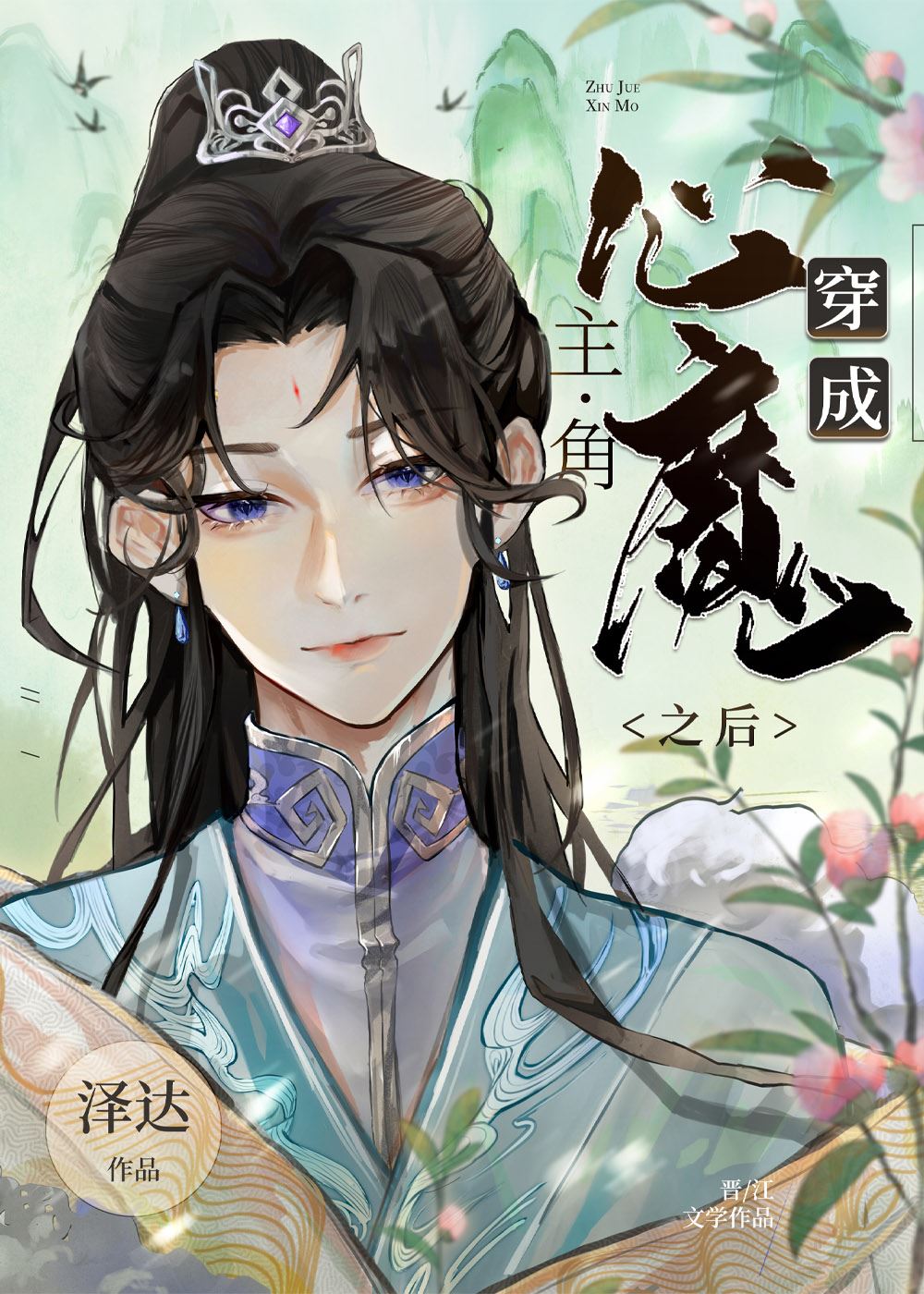
... Read More
There's so much going on symbolically in these five chapters and I can't stop thinking about it. The house itself is the central symbol — it was built for Wan Yu but she will never inhabit it. It'sChu Jinglan's secret independence from the family that owns everything else, but also a tomb for a future that will never happen. Peach blossoms specifically are significant in Chinese literature as symbols of both romance and transience — they bloom beautifully and then fall. Who is this garden blooming for? Then there's the night sky. Xiao Mo and Chu Jinglan are literally separated by a window — one inside in darkness, one outside under the Milky Way. The cosmos above vs the claustrophobic interior below. The stars are eternal and indifferent while human pain is temporary and intensely personal, and yet Xiao Mo chooses to sit under those stars just to keep watch over someone suffering. And the black mist. Xiao Mo is literally a being made of it, and yet that same mist becomes this delicate instrument of comfort — a wisp circling an eye corner like a phantom tear wipe. The thing that makes him inhuman becomes the thing that makes him most human. The flute playing "Twinkle Twinkle Little Star" is also not accidental. It's a children's song — simple, universal, almost absurdly innocent played against the backdrop of adult devastation. It represents a world before manipulation, before the Chu family's schemes, before Wan Yu was used as a binding agent. A world where things were simple. Where you could just play a flute and someone would feel better. And Xiao Mo's declaration at the end — "I want to see how far he can go" — reframes everything. This isn't sympathy. It's investment. It's choosing to witness someone's transformation rather than merely feeling sorry for them. The entire passage is about the difference between pity and companionship, and which one actually helps.
... Read More
'Blood trailed along the path.' Five words and I'm seeing the entire scene unfold like a film. The way the author handles this aftermath is masterful — no grand descriptions of the forest, no sweeping landscape shots, just that single image of blood on the ground and the two bodies cooling beside them. What strikes me most is how the worldbuilding emerges organically through the investigation rather than through exposition dumps. We learn about the tracking compass, the soul lamp in the Chu family ancestral hall, Fourth Master Chu's involvement, the hierarchy of cultivation realms (Foundation Establishment vs Nascent Soul vs Golden Core), the economics of storage artifacts and why even a young master only had a 10-square-meter one, the value system with banknotes and silver fragments — all of it woven into the natural action of searching dead bodies. The possession sequence itself is incredibly vivid. Xiao Mo's experience of 'finally having a physical body' described as 'very grounding' with 'a flesh-and-blood heart beating again after so long,' yet separated by 'a thin mist — like using a machine that works but isn't as comfortable as the original.' That metaphor is so precise. You can feel the distance between an ethereal consciousness and physical sensation, the wrongness and wonder of it all. The setting of a road in the lower realm where assassination attempts happen casually and tracking tools rely on blood essence from soul lamps paints this world as both dangerous and deeply interconnected. Every detail feels lived-in rather than constructed.
... Read More
There's a scene in these chapters where the entire weight of obligation and performance is compressed into one object and one gesture, and it haunts me. Su Baimo wearing Chu Jinglan's jade pendant to the tournament — that's love as performance, love as social signal, love as something displayed for an audience. Meanwhile Chu Jinglan refusing to wear his own pendant is either rebellion or self-preservation, and honestly I think it's both. The pendant becomes this tiny symbol of everything wrong with their arranged engagement: it's not a promise between two people, it's a prop in a family drama. Then there's the attendant who approaches Chu Jinglan with this carefully neutral delivery: 'while away from home, we mustn't let others think you're neglecting Young Master Su.' Translation: the family is watching, the family is judging, and your personal feelings don't factor into the equation. The phrase 'mustn't let others think' is doing so much heavy lifting here — it's not about what Chu Jinglan feels, it's about what the Chu family appears to the outside world. And Chu Jinglan's response is the most devastating part of the whole chapter. He doesn't argue. He doesn't refuse. He just frowns slightly and stands up. That frown is where all his frustration lives — contained, controlled, and invisible to everyone except the reader. The author never lets us forget that this character is constantly performing even when he thinks no one is watching.
... Read More
The stakes in this little scene are genuinely escalating and I need everyone to understand why this matters. Chu Jinglan is recovering from injuries, probably shouldn't even be practicing yet, but he's pushing through anyway because 'without spiritual power, his physique wasn't as strong as before.' He's aware of his weakness and fighting it. Meanwhile they need to get to the Middle Realm but the gate is locked behind a sect affiliation requirement. So his solution is to CREATE a sect. With five people. This is strategic thinking at its finest — not some grand empire-building fantasy, but a practical, almost bureaucratic workaround to a larger problem. The real tension though is internal: Xiao Mo is a transmigrator who knows the 'original novel' and now NOTHING matches. The sect that was never written about? The three loyal followers who apparently came from nowhere? Every detail Chu Jinglan reveals is a plot divergence that Xiao Mo has to process in real time. And the spirit stones reveal at the end — that storeroom full of gold, banknotes, and spirit stones? That's resources. That's preparedness. That's someone who planned ahead even without knowing exactly what was coming. The suspense here isn't about whether they'll succeed, it's about HOW much Chu Jinglan has already figured out that Xiao Mo doesn't know about yet.
... Read More
I can't quite put my finger on it, but something about this chapter has me on edge. On the surface, it's a search mission — find the kids, buy them, move on. Should be straightforward. But the author keeps layering stakes on top of stakes without you noticing. Xiao Mo is searching for children with special potential, and every kid he passes with poor aptitude is a subtle reminder that time might be running out. The twins turn out to be promising, yes, but what about the others they haven't found yet? And then there's Chu Jinglan's hidden injuries — Xiao Mo has to scan him physically because something feels wrong, and the fact that he's concealing pain adds this constant low hum of danger. The beggar kid adds another layer of tension. He's clearly connected to something bigger, he has history with Chu Jinglan that we don't fully understand, and he's hanging around a place where children are bought and sold. What's his endgame? Every conflict in this chapter feels unresolved and that's what makes it so gripping. You finish the chapter and your stomach is in knots because nothing is safe.
... Read More
The pacing here is absolutely relentless and I love it. We go from Chu Jinglan fainting onto Xiao Mo's shoulder to Xiao Mo carrying him on his back to intercepting a merchant caravan to lying about bandits to playing the caring older brother to spooning medicine into an unconscious man's rigid jaw in what feels like six paragraphs but actually contains an entire emotional arc. The author doesn't waste a single beat, doesn't linger on exposition, doesn't slow down to explain the system's limitations or Xiao Mo's cultivation stage, we just know it because Xiao Mo knows it and that's enough. The chapter opens with the system replying weakly and closes with Xiao Mo rubbing his warm fingertips and wondering if Chu Jinglan recognizes him even in sleep, and the space between those two moments is where the entire relationship has been building without either of them saying the word. What's remarkable is that the tension never drops, even during the comedy of the carriage ride, even when the young servants are blushing at Xiao Mo's smile, even when the merchant talks about his own children at home, because we always know Chu Jinglan is barely breathing and the fever hasn't broken and Xiao Mo is holding onto something fragile with both hands. The pacing choices here are surgical, every sentence advances plot or character or both, and I'm genuinely surprised the author hasn't been exposed for cheating because this level of compression should feel impossible.
... Read More
The lake scene is cinematic in the best way. Xiao Mo looking into the water and seeing his own face instead of Chu Jinglan's — the reflection as identity crisis, the mist clinging to him like he's dissolving, the cold flash of swordlight cutting through it all. I could literally see this as a film. The contrast between the ethereal, dreamlike quality of the mist form and the razor-sharp violence of Chu Jinglan's attack created this surreal atmosphere that felt both beautiful and threatening. Then you shift to the sea of consciousness — pitch black, empty, just Xiao Mo and a pillow. That transition from an outdoor mystical encounter to this void where he sleeps for a full day and night is jarring in the right way. It makes you feel his isolation. The worldbuilding detail about the 'three-story pavilion' with antique screens and carved windows being constructable in this mental space is really cool though — it suggests the sea of consciousness has rules and limits (no cities, but small courtyards are possible). And the light screen that scrolls downloaded novels from this world like an e-reader? Genius touch. It grounds the fantasy in something oddly relatable. The fact that modern items are prohibited but he can still recreate aesthetics and build entertainment? That's smart constraint-based worldbuilding. The world has logic, not just magic for convenience.
... Read More
Okay so let me just say this: the moment Xiao Mo tells Chu Jinglan 'Kill the person to your left' and the other guy just does it? I SCREAMED. Like actually made a sound in my room. The setup is so elegant too — we've got Chu Jinglan as this seemingly helpless cripple being cornered by two Foundation Establishment cultivators, and then he smiles. Not a desperate smile, not a brave smile, a lazy, almost amused smile. And then he whispers one sentence and both enemies kill themselves. Two vs. one and they're dead in seconds. The pacing here is chef's kiss — the tension builds with the sword tip at his face, the intel mismatch clue that something's off, and then the payoff hits like a truck. What's interesting is the narrative layering: this is their FIRST collaboration, remember? Xiao Mo is possessing Chu Jinglan's body for the first time, and the execution is flawless. It sets up this whole dynamic where Chu Jinglan has to be vulnerable enough to surrender control while Xiao Mo has to be ruthless enough to act decisively. They literally cannot survive without each other, and the plot keeps reinforcing that through action rather than exposition. The fact that they're both penniless afterward, digging through pockets for spare silver and common herbs, is such a grounded detail after such a high-stakes scene. It immediately pulls you back down to 'okay yeah, they survived but now what?' And that's exactly the kind of hook that makes you not be able to put the book down.
... Read More
Okay so let me just say—this sequence is masterful storytelling. You go from this almost cozy moment of Xiao Mo standing guard while Chu Jinglan rests, tapping his flute, casually reading cultivation techniques, and then BAM. Masked guy shows up carrying two unconscious people like grocery bags. The shift in tone is brutal and I loved every second of it. What really struck me is how the author plants details early and pays them off. The demonic cultivator's aura being disguised is mentioned, but Xiao Mo's Inner Demon nature lets him see right through it. And the treasure-seeking mouse! Such a small detail but it tells us everything about this guy's methods. He's not just some random murderer—he's hunting something specific, and he's already captured two people as part of his plan. The reveal that he's Nascent Soul mid-stage was a gut punch. We've been watching Xiao Mo accumulate power—three hundred spirit stones, thirty beasts hunted—and suddenly here comes someone who genuinely outclasses him. The system even says "if you're considering confronting him, I suggest you give it a try," which is the author basically winking at us saying "yeah, this is gonna be close." And that ending—"one for blood sacrifice, one for meat." What?? The fact that Zi Jiao literally wet himself from fear after being so arrogant earlier? The author did NOT come to play. Who survives this? Who gets sacrificed? And more importantly—what treasure is this guy really after? I need the next chapter yesterday.

Leave a comment

You must be logged in to leave comments. or
