Advancing to Chen Cang by a Secret Path - Reviews

Advancing to Chen Cang by a Secret Path
+Add to Custom List
Sort
Add review
... Read More
The dialogue in these chapters is deceptively simple, and that's what makes it so effective. Sheng Lin barely says anything, and when he does, it's clipped to the bone. "Not heavy." "The hat." "What's wrong?" Three words, maximum, and each one carries the weight of a man who has zero patience for nonsense. Xie Xihai, on the other hand, is all performative language—"This young master wants..." and the obsequious "Hero" that he uses like a shield. The contrast between them creates this hilarious friction. Xie Xihai tries on different tones the way he'd try on clothes: formal, entitled, flattering, whining. None of them work on Sheng Lin, and the reader feels every failed attempt. The innkeeper's dialogue is perfectly calibrated too—drowsy until a swordsman appears, then sharply attentive. "Sir, how many rooms?" The shift is instant and believable. What I love most is how the narrative voice itself stays close to Xie Xihai's perspective without ever becoming unreliable. We get his thoughts, his calculations, his resentment, but the narration doesn't judge him for any of it. It just... observes. Like someone watching a particularly dramatic person trip over themselves. The humor comes from that gap between what Xie Xihai thinks he's projecting and what he's actually doing. Dry heaving while plotting murder. Begging for water while dreaming of gold rewards. It's comedy carved from tension, and the author has mastered it.
... Read More
I have to talk about the atmosphere in this chapter because it is IMMACULATE. The way the author describes the forest after the rain — the grassy thicket turning into muddy ground, water stains trailing behind Xie Xihai like some kind of tragic little footprint map. You can literally feel the cold. You can feel those wet clothes clinging to skin. And then the FIRE. The heat wrapping around them, the rabbit meat sizzling, oil dripping, the smell filling the air. I swear to god I could SMELL that rabbit. I was sitting there hungry. There's also this moment where Xie Xihai is half-naked and shivering, hair spread across his chest like ink, and Sheng Lin is just sitting there processing the rabbit with a dagger. The visual contrast is everything — this pristine, elaborate multi-layered robe spread out on the ground next to Sheng Lin's bloody carcass and fur. It's almost comedic but also deeply intimate in a weird way. Two completely different worlds colliding by a campfire. And then Yicheng at evening — a small town, no good inns, Xie Xihai's face already looking terrible. The descent from cozy firelight to uncomfortable lodging mirrors the whole emotional trajectory of the chapter. The setting literally makes you feel the worsening situation. Brilliant work.
... Read More
Can we just talk about the undressing scene for a moment? Because I am not okay. Sheng Lin helps Xie Xihai take off his clothes and it takes BOTH of them quite a while to completely strip him. That detail—both of them, struggling, fumbling, close enough to feel each other's breath and skin—should be inappropriate. It SHOULD feel loaded. And it absolutely is, but the author writes it with such innocent practicality that it hits you in a completely different way. "Nestled in Sheng Lin's arms" Xie Xihai falls asleep. This is someone who has apparently been carrying the weight of an imperial mission and his own mortality, and the moment he's held by the person he trusts most, he just... goes soft. He becomes light. And then Sheng Lin literally carries him back to the inn. But the moment that ruined me was the snake dream. White silk, flying toward him, entangling him, suffocating him. And then REAL silk—or the memory of it—waking up as a wrist-thick golden snake hissing venom at his face. The metaphor is so on the nose it aches: Xie Xihai has always been bound, by his status, by his condition, by the expectations of a world that wants him dead or controlled. The dream doesn't lie. The snake doesn't care about his feelings. It just wants him. And the worst part—the absolute worst part—is that when he's tangled in the silk in his dream, Duke Zhou appears and shouts "You must not treat Lord Sheng unjustly!" So even in his subconscious, the guilt is there. Even in his deepest fear, he's worried about hurting Sheng Lin. Who does that? Who carries someone else's suffering as their final thought before death? I need a tissue and a beverage.
... Read More
Okay so I need to talk about this one moment because honestly it made me squeal. Sheng Lin, this absolute ice cube of a human who barely speaks in complete sentences, throws a robe at Xie Xihai and says literally just "Put it on." That's it. That's the entire dialogue. But he also LOOSENES the sleeves of that robe so it fits better? He noticed that the robe was too big and took the extra effort to adjust it?? And then when Xie Xihai falls onto his lap, all sticky with rabbit grease, Sheng Lin doesn't even flinch. He just... hands him another leg of rabbit like absolutely nothing happened. Like his heart isn't doing somersaults or whatever. And then THE FEVER SCENE. I was genuinely worried. Xie Xihai has those red flushes on his cheeks and Sheng Lin touches his forehead and FROWNS. The man who has never shown an emotion in his entire life frowns. That is the equivalent of a glacier adopting a puppy. I literally sat there like "oh no he's catching a cold oh no he's going to get worse oh no what do they do at this inn." The CP energy here is off the charts. It's not dramatic confessions or anything. It's just... Sheng Lin carrying all of Xie Xihai's stuff, giving him his own clothes, walking back to help him dress, riding fast but still waiting for him. "It's not hot now. Let's go first" — bro is trying so hard to act like he doesn't care that Xie Xihai might be sick and he's failing spectacularly.
... Read More
Let's be real for a second — Man Qu steals every scene he's in and I am HERE for it. First impression: he wakes up half-asleep, opens his door at dawn, and immediately clocks that these two just had sex. Not subtly. Not politely. He just KNOWS because of the smell and his "keen sense of smell" and his first words are basically "what were you doing, you impolite nephew, it's not even daylight." This man has zero filter and I respect it enormously. Then later when he's done the ritual and says: "Where is it fast? It's the young master falling asleep. This old man attracted the Gu worms until his old waist was about to break." COMEDY GOLD. He's basically complaining about back pain from performing emergency magical surgery while the recipients are passively unconscious the entire time. The energy is unmatched. But what really makes the dialogue work is how each character has a distinct voice. Sheng Lin speaks in measured, deliberate sentences — he explains things efficiently, he considers his words carefully (the Cangming Mountain invitation takes him "as if he had considered it for a long time"). Xie Xihuai's dialogue is shorter, more reactive, often trailing off into thoughts rather than complete statements. And Man Qu? Man Qu sounds like a grumpy old uncle who has seen too much but refuses to be impressed by any of it. The author isn't just writing characters who talk differently — they're writing characters who THINK differently, and that shows in every line.
... Read More
Okay let's talk about this ending. You know when Xie Xihai opens his eyes after being woken up, and he sees the way Sheng Lin is looking at him, and he literally thinks 'as if he wanted to devour him'? And then he gets scared? I felt that. I actually felt it in my chest. Because throughout this whole chapter, Sheng Lin has been performing this character—who is he being for Xie Xihai? The responsible guard, the silent carrier of packages, the one who says 'No one is angry with you' in that voice that's lowered like he's trying not to startle a bird. He unties Xie Xihai's belt. He helps him change. He plays with his fingers like they're the most interesting thing in the world. And then suddenly Xie Xihai sees what's behind all that care, and it terrifies him. But here's what gets me—the fact that Xie Xihai is TERRIFIED and still stays. Still asks 'Can't you sleep? Is something on your mind?' instead of running. He's been with this person for so long that his instinct isn't to flee, it's to understand. Even when he's scared, he's trying to read the room. That's not innocence—that's devotion dressed up as practicality. And Xie Xihai's vulnerability is everywhere if you look for it. The tears he's holding back because Sheng Lin doesn't like seeing him cry. The way he admits 'I'd rather die' about the pain without anyone pushing him. The drowsy leaning on Sheng Lin's shoulder on the dock. This person lets his guard down in tiny increments throughout the chapter, and each one feels like a gift he didn't mean to give. The line 'It's like bidding farewell to a righteous man, taking me for a final hearty meal' is Xie Xihai's version of vulnerability disguised as a joke. He's sensing something changing. He's aware that this kindness might have an expiration date. And honestly? That awareness makes the tenderness hit harder because he's already bracing himself for loss.
... Read More
Oh my god, the tension between these two. I've read romance novels with more chemistry than this car ride, and they haven't even touched each other properly—until that one moment where Xie Xihai's arms wrap around Sheng Lin's neck. I'm still thinking about it. Let's talk about what's happening here emotionally. Xie Xihai is clearly growing attached, or at least accustomed, to Sheng Lin's presence. He whimpers behind him out of boredom, yes, but also out of a need for connection. When Sheng Lin refuses to engage, Xie Xihai pushes back—not with anger, but with vulnerability: "Couldn't you have said something?" That's not a complaint; it's a plea. And Sheng Lin? He's a wall of ice most of the time, but watch carefully. He notices Xie Xihai's disheveled hair. He slows his pace when carrying him. He lets Xie Xihai lean into him without pushing away. The text says it directly: "Xie Xihai vaguely felt that Sheng Lin had been a bit nicer to him." Nicer. Not kind. Not affectionate. Just… less cruel. And yet, for someone who's used to being ignored, that's everything. The emotional arc here is subtle but devastating. Xie Xihai goes from frustrated prisoner to independent wanderer, and in doing so, he claims a small piece of agency. When he runs off to Yingchun Lane on his own, he's not just seeking entertainment—he's testing whether he can exist outside Sheng Lin's control. And when he buys nothing but stares at those Go pieces, he's searching for something mysterious, something that might mean more than their strained dynamic. I'm obsessed with how unspoken everything is. No confessions, no grand gestures. Just shared breath, reluctant carries, and the slow erosion of boundaries. If this were a film, the score would be a single cello note held too long. I'm emotionally invested, and I didn't even see it coming.
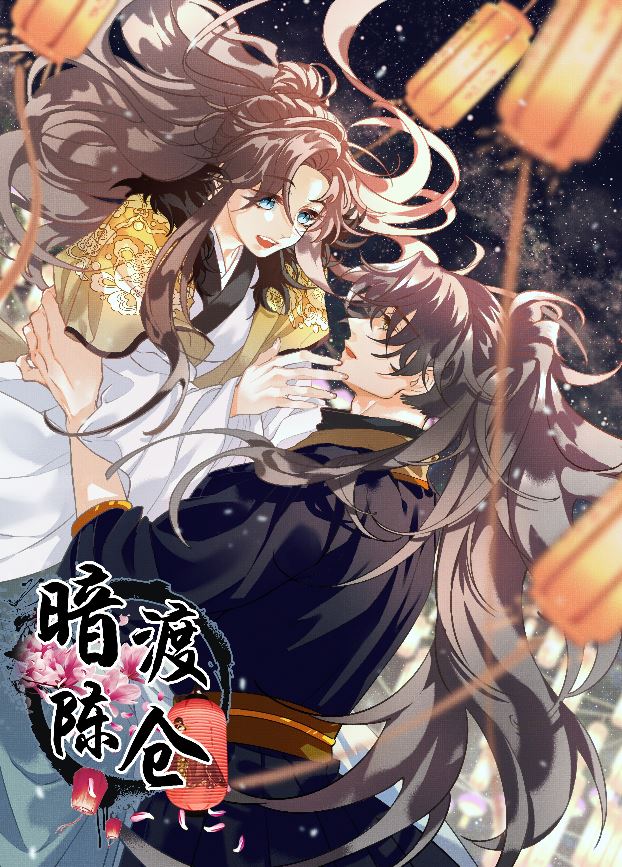
... Read More
Okay, can we talk about how the author builds atmosphere without describing a single building or landscape? The whole world of this scene lives in a room. That's it. A room with light, a bathtub, a bed, a book called Su Wen, and a porter who appears out of nowhere with food. But somehow you can *feel* the space. You know this is a temporary shelter, not home. You know they're in transit, between places, between versions of themselves. The bathtub scene hit me hardest. Water being brought up like it's totally normal. Sheng Lin helping him undress and carry him in—there's no romance novel swooning here, it's practical, almost clinical, but the narration keeps reminding us that their bodies have already been intimately entangled through the curse-lifting, so every touch carries this weight. Xie Xihai falls asleep in the tub and has no idea when he's lifted out. That detail—the gap in his awareness, the vulnerability of not knowing who handled your body while you were unconscious—is quietly terrifying. And then the porridge. Just... plain white porridge. Xie Xihai's dissatisfaction with it is almost comedic, but it's also heartbreaking because it's the first time in eighteen years someone got to be petty about food and get away with it. Now even that privilege feels conditional. The room itself seems to shrink as the chapter goes on. We start with him staring at Sheng Lin's face, then the world collapses to his hand against his own stomach, then to Sheng Lin's wrist under his grip. The geography of intimacy keeps tightening.
... Read More
There's so much running under the surface of these chapters that I can't stop thinking about. The black veiled hat—that's the most potent symbol, isn't it? Xie Xihai is literally covered, his identity hidden, forced into a role that isn't his. He's the true young master being paraded nowhere while an impersonator (or what we assume is one) rides out the back gate. The veil both conceals and diminishes him. Then there's Sheng Lin's sword—it's always present, leaning against tables, strapped to his back, casting eerie shadows in dim light. It's not just a weapon; it's authority, constraint, the boundary between protection and imprisonment. Xie Xihai can't move without it being there. And that water bag moment! Sheng Lin tosses it to him and it hits Xie Xihai on the head. A small detail, but it captures everything—the mismatch between these two. Sheng Lin thinks in terms of utility; Xie Xihai experiences the world as a series of indignities. The uncle's shops "all around" represent the safety net Xie Xihai can't access, the ordinary life he's been thrust away from. He clutches his old clothes to his chest like a lifeline at one point. What we're really watching is a young man being forcibly remade, stripped of every comfort, forced into a partnership he never chose with someone who sees right through him. The story isn't just about escape—it's about identity, about who you become when everything you've taken for granted is taken away.
... Read More
This chapter has three distinct spaces and each one carries its own emotional temperature. Let me break them down because the author is clearly using setting as a narrative tool and I respect that. First: Shang Ling's room. We never get a direct description of it, but through context we know it's a space of controlled intimacy—wine cups, past memories, the smell of drugged wine that Shang Ling caught immediately. This is a room where betrayals happen and where revenge is planned. The fact that she could smell the drug in her own wine speaks volumes about her vigilance and the world she lives in, where everything could be poisoned. Second: the palace interior where Sheng Lin is summoned. Cold, formal, authoritative. Shang Ling's dialogue here is sharp and measured—'Dispense with that. Call him over.' The power dynamics in this space are crystal clear. Every word hangs in the air like a threat. Third: the autumn night outside the back gate. This is where the scene truly transforms. 'The fragrance of golden osmanthus filled the air, mingled with the crisp autumn atmosphere.' The osmanthus detail is perfect—it's a flower associated with autumn in Chinese literature, often connected to reunion and nostalgia. The night watchmen warning about candles adds a touch of lived-in realism; this isn't a fantasy world with no rules, it's a place where dry weather means fire danger and someone has to patrol for it. The transition from the claustrophobic palace to the open autumn night is almost physical—you can feel the characters breathing again. And the final image of them walking toward Zhu Xuan Lake and Mount Cang Ming suggests a world beyond the capital, beyond politics, where ordinary pleasures exist. That contrast between confinement and openness is the setting doing its best work.
... Read More
'deduct two flowers' — I'm still not over this scene. Absolutely not over it. You have this Crown Prince, a guy who's been through literal life-and-death political intrigue, who comes back from the dead (again, apparently) and his immediate concern is creating a RED FLOWER LEDGER to track his partner's offenses. And the partner just... goes along with it? Grinds ink for him? This is the healthiest relationship I've ever read about and I don't understand how that's possible given the context of their lives. The banter is immaculate. When Xie Xihai writes down 'Sheng Lin glared at me the first time we met and deducted one flower,' and Sheng Lin is like 'wait, what about touching my buttocks by the stream?' — I physically cannot. These two have been together for so long that the grand romantic gestures have been replaced by bureaucratic intimacy. They're doing PERFORMANCE REVIEWS on their relationship. And then Xie Xihai counts and realizes he's already deducted over fifty flowers from himself. He's been keeping score against HIS OWN transgressions and he's losing. Badly. 'You're always disturbing me. Do you have malicious intentions?' — classic deflection from someone who is clearly completely smitten. But then the tone shifts. Xie Xihai says something genuinely tender: 'This time, when we go to the capital, I need to tell my mother about us.' And Sheng Lin's response — asking about 'lifting the curse' with such casual deflection — shows how much emotional armor this character wears. Xie Xihai calls him shameless, Sheng Lin throws him on the bed, and the threat of 'tonight will be your first night without a bed' is both a punishment AND an invitation simultaneously. Then there's the mother-son reunion. Xie Xihai seeing his mother after six months apart, watching her age, watching her lose weight, and she's trying so hard to be his mother instead of the formidable Queen she's become. 'You're so grown-up. What do you look like?' — she doesn't even recognize him. And he notices. He notices everything about her. The way she's holding his hand, the way she's wiping tears, the exhaustion on her face. This relationship had so much weight carried silently between them and now it's all coming to the surface. I need to know what happens next. I need to know what Shang Ling was going to say before the text cut off. What did she know? What did she suffer? What was the price of her love?
... Read More
I genuinely cannot figure out how the author manages to make a chapter about two guys roasting a rabbit and one getting a fever feel like an emotional rollercoaster. Let me walk through the structure because it is NEAT. It starts IN MEDIA RES — already in motion, already wet and miserable. No exposition dumps, no "previously on." We're just thrust into the aftermath of whatever happened and told to keep up. Xie Xihai's internal monologue about his revenge notebook immediately establishes their history without us needing a flashback. Efficient. Then the FIRE SCENE — this is the heart of the chapter. It's where everything slows down. The rabbit cooking, the sharing of clothes, the accidental fall, the sword demonstration. Each beat builds on the last: wet clothes → fire → food → proximity → accident → vulnerability → sickness. It's almost too perfectly structured, except it doesn't feel structured at all because the humor keeps it light. And the FEEDING. Xie Xihai offering the rabbit leg back to Sheng Lin — that moment of reciprocal care. The prince, who's been receiving everything, gives something back. And then he gets SICK and the pace quickens again, rushing toward the inn, building dread. The chapter ends on a note that makes you immediately want the next one because nothing is resolved and everyone is uncomfortable. Perfect cliffhanger energy.

Leave a comment

You must be logged in to leave comments. or
