Advancing to Chen Cang by a Secret Path - Reviews

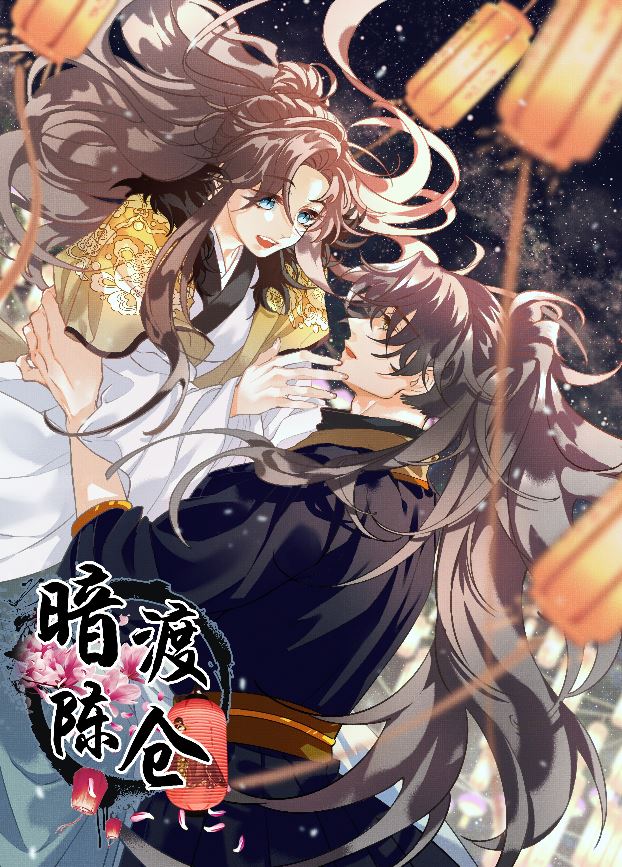
Advancing to Chen Cang by a Secret Path
+Add to Custom List
Sort
Add review
... Read More
Let me just enumerate the threats and dangers accumulated across these four chapters because my chest is tight: 1. The Emperor is dead. Dead with black blood. This suggests poison or some kind of supernatural element — we don't know yet and that's terrifying. 2. A usurper sits on the throne. Shang Ling reveals the man we thought was Xie Xingfeng is NOT him. This means: the entire political landscape is a lie. Everyone who pledged allegiance to 'Xie Xingfeng' has sworn loyalty to an impostor. Everyone who opposed him was fighting for the wrong side. And Xie Xihai — the rightful heir — is living under the name of someone else, in a court that would execute him on sight. 3. Shang Ling played along. She accepted the crown. She became Queen to a man who isn't who he claims to be. She risked everything — her life, her son's life, her honor — and she did it all while maintaining a deception that went deeper than either of them probably understood. 4. Xie Xihai is explicitly told he 'is no longer a person who should exist' in Qingguo. This isn't hyperbole. Li Yu says it with such casual terror that it lands like a death warrant. Every official in the new court could be working for the imposter. Every friendly face could be a threat. The capital he's returning to is not the capital he left. 5. Xie Xingfeng (the real one, presumably, or whoever he actually is) pushed Xie Xihai out as a pawn and intended to burn him alive in the palace. This isn't just political maneuvering — this is attempted murder. Cold, calculated, and successful enough that Xie Xihai had to flee for his life. 6. Shang Ling's past with Xie Xingfeng — she was sincerely in love with him. She married him. She believed in him. And it turns out that love was either manipulation or ignorance or both. The emotional betrayal here is staggering. She gave everything to a lie. 7. The personal stakes for Xie Xihai: he wanted to see his mother. He got that wish, but now he's learning that his mother has been living a lie, that his father figure is a murderer and a fraud, and that his entire identity is a liability. He wants to tell her about him and Sheng Lin — about their relationship — and now he wonders if that's even safe. If his mother has been deceived about everything else, what stops her from being deceived about him too? The imposter emperor storyline alone could fill an entire epic. But layered on top of that is the personal horror of realizing the person you trusted most in the world was never who you thought they were. And Shang Ling knew. She knew and she stayed and she played her part and now she's telling her son because he's grown up and because she can't carry it alone anymore. What happens next is going to be catastrophic and I am here for it.
... Read More
The stakes here are absolutely brutal and the author makes you feel every second of it. Two hours. That's how long Xie Xihuai has before the curse starts devouring his meridians. Two hours to find someone willing, to make this connection, and the person it has to be is Sheng Lin, the very person he's been at odds with this whole time. The tension isn't just sexual, it's existential — like if this doesn't work, Xie Xihuai dies. But it's also emotional, because beneath all the physical desperation there's this question of whether he can trust Sheng Lin with his body, with his life, with everything. And Sheng Lin? He's fighting his own conflict, right? He could walk away, he could let Xie Xihuai suffer, but he doesn't. The scene where Sheng Lin stops briefly because Xie Xihuai's screams are too pitiful — that's not cruelty, that's humanity breaking through. The external conflict is clear, the curse, the ticking clock, but the internal conflict is so much richer. Xie Xihuai wants closeness but is embarrassed, Sheng Lin wants to help but maintains control, and somewhere in between those two impulses something shifts that neither of them can undo. The stakes escalate from physical survival to emotional transformation and by the end of the chapter you're left wondering what happens when the curse lifts but the change between them doesn't.
... Read More
This carriage scene is everything. I keep thinking about how Xie Xihai clings to this tiny carriage like it's home — and it is, isn't it? It's the only thing between him and the world he's been forced into. When he begs Sheng Lin not to sell it, when he practically throws his remaining silver at him just to keep the door shut between them... he's not buying transportation. He's buying proximity. And Sheng Lin knows it. He has to know it. The way he lifts Xie Xihai onto the carriage — "arms like iron" — that's not just strength. That's control. That's power. The physical description alone made me sit up straight. "The oppressive feeling was strong." Oppressive doesn't even begin to cover it. It's electric. It's dangerous. It's the kind of scene where you read it once and then immediately reread it because your brain is trying to process what just happened. The flower system is genius. Four flowers to write to his mother. Four flowers lost and he faces consequences. He signs it like a prisoner signing a confession, but he does it with his eyes closed and his heart set — which means he's not naive. He knows what he's giving up. He's trading dignity for proximity, and he chooses proximity every single time. But here's what gets me: when he crawls out that night humming a mountain song he learned from a child near an inn, completely relaxed, completely himself — that's the Xie Xihai we need more of. Not the prince, not the heir, just... a person making noise. And Sheng Lin stops the carriage. Doesn't scold him. Just says they'll camp outdoors instead of finding people. Is that punishment? Or is it protection? He pushes Xie Xihai's head gently when the boy tries to lean into him. Gently. Not rough. Not rejecting. Just... controlling the distance. Every touch, every word, every silence between them is loaded.
... Read More
Let's talk about how good the dialogue is in this section because MOST cultivation novels could learn a thing or two from this. Master Man's voice is INSTANTLY recognizable. "This is absurd... too absurd!" followed by a full explanation of why it's absurd. He slams tables. He sighs. He tries to give advice and gets shut down. His dialogue has weight and texture — you can HEAR the exasperation in every line. When he says "Nonsense! Any man under the heavens who comes to dispel poison for him would be better than you!" — this isn't just exposition, this is a character reacting in real time. Sheng Lin's dialogue is almost the opposite. Sparse. Cold. "I reached the ninth level when I dispelled the poison for him." That's it. He doesn't brag. He doesn't elaborate. He just states it like it's a weather report, and it's somehow MORE impressive because of it. And Xie Xihai — oh man, Xie Xihai. "In the wilderness, where else could he find someone? It's not his fault." This is defensive, loyal, completely sincere. And then immediately after defending Sheng Lin, he's the one getting interrogated about his romantic intentions. The poor guy can't catch a break. The disciple outside listening to Xie Xihai's fabricated Snowfall Sword story is the cherry on top. We don't hear the disciple's lines, but we IMAGINE them — nodding along, getting moved to tears by a story that didn't even happen. That's the author trusting the reader to fill in gaps. Brilliant. Every character has a distinct vocal fingerprint. No one sounds like everyone else. That's rare.
... Read More
The scene where Sheng Lin disposes of the bodies is genuinely one of the most unsettling things I've read this year. Let me walk through it. Three dead assassins. Blood everywhere. Sheng Lin doesn't flinch, doesn't hurry. He pulls out a large body bag — like he's doing this regularly, like this is just Tuesday for him. Sprinkles some powder on the ground and the blood 'gradually clarified, becoming transparent, as if Xie Xihai accidentally spilled a bucket of water in the room.' The metaphor is so casual but so horrifying. Then he cuts open the bag, uses the sword hilt to open a shirt, and finds a tattoo on the assassin's chest — the emblem of the Northern Yan Rebellion. But here's the thing that made me actually laugh out loud: Xie Xihai squints at it in the morning light and says 'How come there's a flower on the chest.' A FLOWER. After witnessing three people die, after sitting in a room full of blood, this kid is noticing decorative elements. It's so perfectly character-driven. Xie Xihai is delicate, sheltered, traumatized — and still, his mind wanders to visual details because that's just how he processes the world. Meanwhile, Sheng Lin is methodically cleaning up murder scenes like a professional janitor. The contrast between these two men in that moment — one numb to violence, one overwhelmed by it — creates this entire world without a single exposition dump. I can tell so much about this setting from that one scene alone.
... Read More
Can we just talk about Sheng Lin for a second? The man doesn't say a single line of actual dialogue until he addresses Xie Xilin, and yet he completely dominates every scene he's in. When Xie Xihai stumbles into his arms after being physically shoved by his father, Sheng Lin's response is to push him away and give him a 'cold glance.' Not concern, not patience, not even mild annoyance—just pure, icy rejection. And then he immediately turns his attention to Xie Xilin with 'it's not considered troublesome,' because apparently sharing a chess game makes someone worthy of respect while the actual person being transported is just... baggage? The contrast between the two brothers is fascinating too. Xie Xilin is described like a 'lotus untainted by mud,' elegant and refined, coughing dramatically enough to nearly blow off the bed curtain while playing the role of the frail younger brother. But here's the thing—he's the one who 'arranged' Sheng Lin's involvement through chess. He's the healthy one who didn't get sent away. He's smiling modestly while his brother is being physically manhandled out the door. That kind of quiet competence paired with performative fragility is genuinely unsettling. And King Ning pushing Xie Xihai into Sheng Lin's arms like he's handing off a package—that's not a father seeing his son off, that's a political operator transferring assets. Xie Xihai has no idea what he's walking into, which makes him both sympathetic and terrifyingly vulnerable.
... Read More
'The fragrance of golden osmanthus filled the air, mingled with the crisp autumn atmosphere.' I need a moment. After all that political intrigue and mother-in-law interrogations, the author just gently places Xie Xihai and Sheng Lin walking through autumn, and suddenly everything feels soft and warm and I'm crying because THEY'RE ACTUALLY HAPPY. Let me explain why this ended up hitting so hard. Throughout this entire chapter, Xie Xihai has been anxious—nervous about his mother's reaction, guilty about the curse, unsure about his future. Every conversation he has is weighted with something unsaid. And then they leave the palace, step into the cool night air, and he reaches out to take Sheng Lin's hand. No grand declaration. No dramatic confession. Just two people who clearly care about each other walking together in the dark, planning boats and mountains and wine. The line 'You must treat me well' made me both laugh and feel deeply tender toward him. It's such a vulnerable thing to say to someone you're just starting to be with, especially when you know your family might not approve. But he says it anyway, and Sheng Lin's response is so gentle—'Good.' Two syllables that carry so much weight. And their future plans! Zhu Xuan Lake, rowing boats, the autumn moon, Mount Cang Ming, aged wine. These aren't just activities—they're the kind of domestic, quiet dreams that people make when they're thinking about spending a lifetime with someone. Xie Xihai doesn't drink much but says 'I'll take a sip for you' and Sheng Lin says 'Good.' That's the kind of detail that makes romance feel real instead of manufactured. This chapter could have ended with another political threat or a cliffhanger. Instead, it ends with osmanthus scent and warm hands and the promise of mountains. The emotional arc from tension to tenderness is so well done. I went from 'is Xie Xihai going to get in trouble' to 'they're going to be okay' in one seamless transition. That's craft.
... Read More
The stakes in this section operate on three different levels and they're all pressuring Xie Xihuai at once. First, the political layer: he's heading into the capital to meet the emperor, presumably to help Prince Ning, and the gates are literally described as "impregnable" with soldiers lined up outside. If he enters, he becomes "a bird in a cage, with clipped wings and unable to fly away." That metaphor isn't accidental — it's the author telling you directly what's at risk. Second, the personal layer: something happened to the Shang family's precious son, and while we don't know the details yet, it's clearly dangerous enough that Xie Xihuai is carrying blood-stained chess pieces and traveling under assumed identity. Third, and this is the one that got me — the tension between Xie Xihuai and Sheng Lin right before the city gates. "I don't want to go with you. I want to enter the capital." Xie Xihuai choosing the cage over staying with Sheng Lin is devastating because we know exactly what he's sacrificing. He knows what awaits him inside those walls, and he's walking into it anyway. The flower-selling girl guiding them through alleys, the mysterious Li residence, the guards appearing at the door — every element raises the question of what trap they're walking into. And the most terrifying part? Xie Xihuai goes in willingly. He's not being forced. He's making the choice to walk into danger because something outside the story matters more to him than his own safety. That's when you know the author has made you genuinely care — because you're not just worried about what happens to him, you're scared FOR him.
... Read More
"Why didn't you call me?" That's literally ALL Sheng Lin says in the entire bath scene and it hits like a freight train. Two words (plus "you") that carry so much weight. Is it anger? Is it worry? Is it something else entirely? The ambiguity is what makes it perfect. And Xie Xihuai's response: "You don't like massaging me" COME ON. This man just went through a snake attack, three armed attackers, probably PTSD levels of stress, and his brain immediately goes to *complaint about shoulder pressure*. That is such a specific, human deflection. He's terrified and he masks it with petty complaints. So relatable it hurts. The external villain's dialogue is equally sharp: "Sheng Lin, you killed my entire family. Little did I expect only one of me to remain." That's cold. That's the kind of line that makes you put the book down and just stare at the wall. Not over-the-top villain monologue, just... matter-of-fact devastation. Makes me wonder who this person actually is and what their relationship to Sheng Lin was before everything exploded. Also worth noting: the narrator's voice itself is incredibly grounded. No flowery purple prose, just clean observations like "Xie Xihuai's face turned as white as paper, shivering involuntarily." The author trusts the reader to feel the weight without over-explaining.
... Read More
I need to talk about the physical intimacy of this entire situation because WOW. Sheng Lin is CARRYING Xie Xihai. In his arms. Walking into a sect, kicking down a door (metaphorically — he actually sheathed his sword and kicked the Full Pavilion door), asking disciples where Master Man is. This is not a casual carry. This is full-on "I would burn the world before I let you die" energy, and Xie Xihai knows it. When Master Man tells them the Harmony-Seeking Heart Technique has to be dispelled repeatedly, and Sheng Lin is the ONLY one who can do it because only his ninth-level essence and blood can keep the gu worms alive — this is as intimate as it gets in this genre. There is no softer way to say it. Sheng Lin's cultivation, his breath, his very body is what keeps Xie Xihai alive. And Xie Xihai's mother is somehow involved in all of this. "There are so many good people in the world, why choose someone so special?" Master Man asks Sheng Lin, and I think he means it in multiple directions. The poison requires an intimate connection between two people's cultivation methods. But it ALSO requires — and this is what Master Man is really asking — why does Sheng Lin have to be the one? Why Xie Xihai? And Xie Xihai, sitting outside cracking sunflower seeds, making up stories about snowfall swords, probably has NO IDEA what just happened inside. Or maybe he does. Maybe he's been feeling the poison building inside him for days and still chose to go into the wilderness with Sheng Lin anyway. That's either the bravest thing or the stupidest thing I've ever read. Probably both.
... Read More
"I'll order another bowl of porridge. If you can't finish it..." The fact that Sheng Lin just trails off and implies Xie Xihai better eat tells me everything I need to know about this relationship. This man is THE worst at expressing actual care and the BEST at showing it through inconveniently placed actions. He teaches him self-defense, stays three extra days because Xie Xihai needs the recovery time, changes his blood-soaked clothes without a word of complaint, carries him like he weighs nothing, and then acts FROZEN when asked if he's okay. The chin pinch followed by the immediate cold dismissal? That's a man who is deeply, obviously affected by watching someone he cares about suffer and has no idea how to process it except by performing irritation. Meanwhile Xie Xihai—poor thing—can literally read Sheng Lin's mood at this point. "Having spent so much time with Sheng Lin, Xie Xihai could tell that there was something bothering him." That single line broke me. These two have such an asymmetrical dynamic where one is always performing nonchalance and the other is quietly decoding every micro-expression. And yet somehow it works. I cannot explain how it works but it works.
... Read More
Okay I need to process this on a deeper level and the first thing that comes to mind is that goddamn ledger. A small book. Red flowers. Deductions for offenses. Three flowers and you sleep on the floor. This seems like cute couple banter on the surface, but read it alongside everything else and it becomes something far more unsettling and beautiful. Xie Xihai is a Crown Prince who has been told he doesn't exist. He's navigating a court where his identity is a death sentence, where every door he enters is a side door, where even visiting his own mother requires elaborate deception. And in the middle of ALL of that, he creates a SYSTEM. A RULE BOOK. A LEDGER. He imposes order on chaos through bureaucracy. The red flower system is his way of saying: even when the world has no rules, I will make rules. Even when I can't control politics, I can control this small thing. Even when I might lose everything, I will keep score of the things that matter to me. And the flowers — red, like blood, like danger, like the passion he won't name directly. Each deduction is a reminder of connection, of history, of shared moments that have meaning only to them. When he writes 'Sheng Lin glared at me the first time we met,' that's not about punishment. That's about memory. That's about holding onto the beginning of something in a world where the present is constantly slipping away. The fifty-plus flowers he's deducted from himself — that's the tragic comedy of it all. He's punishing himself for things that aren't even his fault. For existing. For being born into this. For loving someone in a world that demands he hide that love. Then there's the phoenix robe. Shang Ling wearing the full imperial regalia while trying to have a simple mother-son moment. The robe symbolizes everything she's become — power, authority, survival — and also everything she's lost in the process. She became Queen to protect her son, but in doing so, she had to become a stranger to him. 'You're so grown-up. What do you look like?' — she literally doesn't know her own son anymore because the crown has consumed the mother. And the imposter emperor — the man sitting on the throne who is NOT Xie Xingfeng. What does that say about identity? About power? About how easily a throne can be occupied by someone who performs the role perfectly while hiding the truth underneath? If the emperor can be replaced, what does that make Xie Xihai — a crown prince who was told he doesn't exist? Who is anyone in a world this liquid?

Leave a comment

You must be logged in to leave comments. or