Advancing to Chen Cang by a Secret Path - Reviews

Advancing to Chen Cang by a Secret Path
+Add to Custom List
Sort
Add review
... Read More
How does an author take eight days of travel and make it feel like a page-turner? I don't know, but this writer did it, and I'm impressed. The pacing here is masterful. It starts slow—very slow—with Xie Xihai waking up confused, Sheng Lin being indifferent, the carriage journey ticking away hour by hour. But instead of dragging, the narrative uses repetition and escalation. Each interaction between them builds slightly: the head bump, the silent agreement, the bedtime routine, the midnight inn arrival. The tension isn't in plot twists; it's in the accumulating weight of shared space and unspoken words. Then, around day eight, the pace shifts. They arrive in Li Cheng, and suddenly everything speeds up. Xie Xihai explores the inn, demands to go to Yingchun Lane, argues with Sheng Lin, runs off alone, stumbles into a night market, discovers a mystical Go set. The chapter moves from meandering travelogue to urgent adventure in a matter of pages. That's controlled escalation at its best. The structure also plays with perspective. Most of the chapter stays close to Xie Xihai's experience—we feel his boredom, his frustration, his small rebellions. But moments like Sheng Lin observing him sleep, or the narrator noting "there was a possibility that he had grown accustomed to it," add layers without breaking immersion. And that ending! It cuts off mid-conversation with the stall owner. No resolution, no closure. Just a cliffhanger wrapped in mystery. It's annoying, yes, but also effective. I want to know what happens next. I want to see if those Go pieces really are spiritual. I want to know whether Xie Xihai will return to Sheng Lin or disappear further into this world. The pacing never lulls. Even the quietest moments feel purposeful. This is how you structure a journey novel.
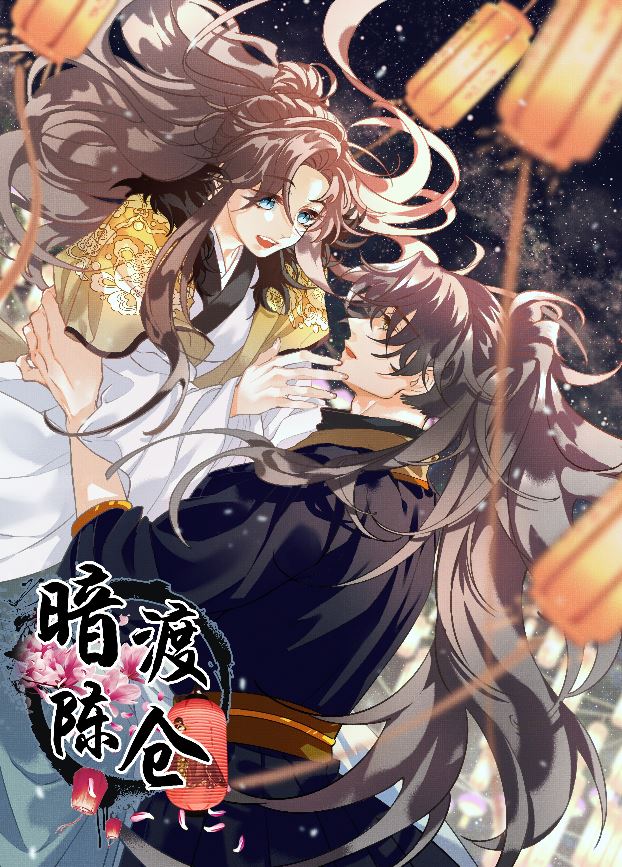
... Read More
Okay can we talk about how Sheng Lin is literally the coldest human being alive but Xie Xihuai just looks at him with those tearful eyes and says "hug me please" and I'm dead. The whole scene is this incredibly charged mix of vulnerability and restraint where Xie Xihuai is completely undone by the curse but all he really wants is physical closeness, skin to skin, and Sheng Lin keeps pushing him away even though it's literally killing him. There's this moment where Xie Xihuai says "what should we do" right against Sheng Lin's ear and I swear the narrator barely needs to describe anything because the tension is already there. And then Sheng Lin actually hugs him! But he doesn't do anything after that which is both cruel and somehow the most romantic thing ever written. The power dynamic here is insane, like Xie Xihuai is completely at Sheng Lin's mercy but he's also the one asking for it, and Sheng Lin is trying so hard to maintain control while clearly affected by everything. When Xie Xihuai finally whispers "you're the only one who's in a hurry" that was me gasping out loud. The way they go from enemies to this... whatever this is... it's not even romance in the traditional sense, it's something messier and more real.
... Read More
"As the blood seeped into the steps" — I keep coming back to that line. Just sitting there in my head, refusing to leave. Because it's not just a physical detail, is it? It's symbolic on so many levels and the author isn't even hiding it. Xie Xihai is climbing toward healing—toward the renowned physician, Master Man Qu—and what does he leave behind on every step? His own life, literally seeping into the stone. The mountain demanded this price upfront. And Sheng Lin, carrying him the whole way, watching that blood appear, saying nothing—what does that say about what he's willing to do? About what he's already lost? There's this recurring motif of thresholds in these chapters: the carriage stops, the horse stops, the cable car is blocked, the stone steps begin. Every entrance requires sacrifice. The mass grave back in Hancheng was one threshold—death itself. Qingyi Mountain is another. And I'm wondering what happens when they actually get inside that crimson door. Because if climbing 3000 steps and losing blood was the entry fee, what's the cost of whatever's waiting inside?
... Read More
Xie Xihai's voice is an absolute gift. Can we just take a moment to appreciate how naturally he talks? He goes from 'Whose was it this time? Those with flowers on their chests again?' to 'I miss her; I just want to let her know I'm safe' in the span of three sentences and it doesn't feel jarring because the man is genuinely inconsistent in a human way. He's performative, yes, but the letter to his mother reveals that underneath all the teasing and the bargaining and the dramatic sighs about palace eunuchs, there's a kid who just wants his mom to know he's okay. Meanwhile, Sheng Lin says maybe fifty words across these chapters and every single one carries weight. 'No.' 'No time.' 'What?' The man communicates in monosyllables and glances, and the narrative voice treats his silence as equally expressive as Xie Xihai's verbal overflow. Their dialogue isn't really dialogue half the time—it's one person performing and the other person absorbing, and the comedy comes from that mismatch. But then you get moments like the finger pressing down on Xie Xihai's lips, and suddenly the entire power dynamic shifts without a word being spoken. The narrative captures that shift perfectly by pulling back into pure description and gesture. The author clearly understands that some of the most important conversations between these two happen when neither of them is actually talking.
... Read More
The dialogue in this chapter is deceptively simple. These two don't talk about feelings. They talk about porridge. They talk about blankets. They talk about whether they can leave tomorrow. But god, the subtext is screaming. Take this exchange: "Let's set off tomorrow." "Set off tomorrow?" Sheng Lin pushed him back into bed. On the surface, it's two people negotiating travel plans. In reality, it's Xie Xihai testing whether Sheng Lin will let him go, and Sheng Lin refusing—not with words, but with a hand on his waist that makes him hum involuntarily. That's not dialogue. That's choreography. And Xie Xihai's voice—his internal monologue is where the real conversation happens. When he thinks about his mother forcing down his porridge by holding his throat and pouring it in, and then immediately contrasts it with how easily he can make Sheng Lin believe his act... that's not manipulative, it's tragic. He's learned to perform vulnerability because performance is the only currency he has left. Sheng Lin's dialogue is remarkably sparse. He says almost nothing of substance. "Awake?" "Can you endure the bumpy journey?" "Then, don't eat for now." "Wait until your body is better." Each line is functional, detached, professional. But the fact that he stays. That he reads beside the bed. That he almost agrees to teach him. The silence between his words is where his character lives. The chapter ends with Xie Xihai saying "Alright, let's see how you can escape" and the narration cutting to "Xie Xihai, wh—" That truncated sentence is the most honest thing in the entire chapter. He was about to say something real, and the author won't even let us hear it.
... Read More
Okay can we just talk about the scene where Xie Xihai is lost in the dark alley and calling for Sheng Lin? Because I read that and my chest physically tightened. Here's this prince who has never been alone, never had to navigate the world without servants and guards and structured environments—and suddenly he's standing in a dead-end alley at night holding a package of clothes he doesn't understand the price of, and he can't find his way back. His legs were shaking. He was about to shout Sheng Lin's name. That level of vulnerability is terrifying and it's shown so quietly. And then Sheng Lin appears. Behind him. Just standing there. And Xie Xihai's reaction—his heart slowly descending from his throat, his eyes wet, his hands cold and interlocking nervously. He says 'you scared me' and Sheng Lin says 'what's there to be scared of.' But Sheng Lin is the one who was out there chasing someone in the darkness, and he came back. The fact that he didn't catch the eavesdropper and returned instead shows where his priorities are. Xie Xihai notices the coldness of his hands and worries about whether Sheng Lin caught the person, not about his own fear. That's devotion without naming it. Then there's the sweetness of Xie Xihai sighing when he talks about Yingchun Lane. The text literally says his sigh sounded somewhat sweet. He's a grown man wanting to visit entertainment districts and he's embarrassed about it because his mother never allowed such things. And he's asking Sheng Lin to take him. There's this trust forming between them that goes beyond duty or survival. Xie Xihai is letting Sheng Lin see his childish sides, his curiosity, his want for ordinary experiences he's been denied. And Sheng Lin—who barely tolerates him—never refuses outright. He sets boundaries (the promise, the shut up comment) but he never abandons the prince. The morning after, Xie Xihai wakes up with his head still on Sheng Lin's chest. There's no panic, no embarrassment described. Just the quiet intimacy of two people who have been traveling together, surviving together, and slowly becoming dependent on each other in ways neither would admit during daylight.
... Read More
Let me just say: the pacing in this chapter is a controlled burn. The author doesn't rush the intimate scene, lets it breathe, lets us sit in the discomfort and intensity of it, and then—just when we think it's going to wallow—drops us into a tea house exposition dump that somehow doesn't feel like a info-dump at all. Here's why it works: the bedroom scene ends with Xie Xihai waking up alone, holding the blanket, wondering if Sheng Lin will come back. That single moment of vulnerability—"Would he come again?"—acts as a perfect emotional hinge. We're still riding the emotional wave from the previous scene when suddenly the perspective broadens to show us the full picture of why this journey even happened in the first place. Jixiu's exposition about Shang Ling, the Wenhé Sect, Ning Wang's plot—it's dense, sure, but the author distributes it through dialogue rather than narration, which keeps it moving. Every time I felt like it was slowing down, there's a new revelation: Shang Ling is Jixiu's sister, she's Xie Xihai's mother, she hid her martial past from Ning Wang, and she orchestrated all of this to make Xie Xihai suffer a little so he'd grow stronger. The chapter itself spans from around 5 PM to midnight, then jumps to the next evening. That time compression is smart. We don't linger on the journey—we get the emotional beats and the worldbuilding, and we move forward. No dragging. No filler. Just momentum. My only question: did anyone else feel like the transition from the bedroom to the inn was almost too clean? Like, one moment they're tangled in blankets, the next they're discussing political assassinations over tea? Or is that just the style of this story?
... Read More
"So thirsty." "..." *spills tea everywhere* I've read so many novels where dialogue feels polished and performative, but this? This is peak naturalistic writing. The conversations between these two are so refreshingly broken and real. Xie Xihuai literally can't form coherent sentences half the time — he's too exhausted, too embarrassed, too poisoned. His dialogue is fragments and whispers and threats delivered in a voice that can barely carry. And Sheng Lin? His lines are short, practical, almost functional. "Still hurting?" "Want to do what?" "It's not a problem." He doesn't do monologues, he doesn't do declarations of feeling. He communicates through actions and three-word questions. The narrator's voice is doing heavy lifting too. Notice how the prose itself becomes almost breathless during the intense scenes and then slows down to almost documentary flatness when Xiaolinzi is observing from the counter? The narrative voice adapts to match the emotional temperature of each moment. There's also this recurring pattern of Xie Xihuai trying to be coy or dignified and immediately failing — he pulls his clothes open after Sheng Lin just dressed him, he tries to threaten castration while literally trembling, he bites Sheng Lin's hand weakly like a kitten. The humor comes from the gap between what he's attempting and what he's actually managing, and the prose never mocks him for it. It just... observes. With what I can only describe as deep affectionate exasperation. The author clearly loves these characters and it shows in every awkward, beautiful exchange.
... Read More
Let's talk about what everyone is actually risking here, because the surface-level snake encounter is just the tip of the iceberg. Xie Xihai is dying. The text doesn't mince words about it—"his life was too short. He was about to complete it very soon." Every joyful moment in this chapter is shadowed by that knowledge. The lantern festival isn't just fun; it's a last hurrah. The carriage ride isn't just travel; it's a countdown. When he asks Sheng Lin to buy a lantern for his mother, he's not making a wish—he's trying to leave something behind, a physical object that will outlast him, a piece of Mozhou that will reach his mother's hands in some future where he isn't there. The snake that appears at the end raises the stakes from abstract mortality to immediate, visceral danger. This isn't a slow decline anymore—this is a creature inches from his face, venom spitting, ready to strike. The dream-silk becoming real snake is the narrative equivalent of saying: you thought you were safe in your temporary comfort, but the world is still trying to kill you. But the deeper conflict, the one that's been building across every chapter, is the one between duty and desire. Sheng Lin is escorting an imperial prince who may or may not survive the journey, through territory that may or may not be safe, while Xie Xihai is trying to make every remaining moment COUNT. He wants to visit Mozhou one more time. He wants his mother to have a lantern. He wants to be carried because it feels like being loved, even if it's just physical closeness, even if it's just temporary. And Sheng Lin? He's the one holding the lantern, carrying the boy, stopping the carriage only to spank him. He's complicit in every moment of comfort, and that makes him equally responsible for whatever comes next. The stakes aren't just Xie Xihai's life anymore—they're Sheng Lin's heart.
... Read More
Forget-Me-Not Poison. That name alone is enough to make you write fanfiction about it. But it's the little exchanges that make this book special. Like when Xie Xihai, half-asleep, looks at Sheng Lin and says "Forgetful as always. You always tell me important matters when I'm about to fall asleep. Are you trying to deceive me?" There's this playful accusation in his voice, this comfortable teasing that tells you everything about how long they've been together and how much trust exists between them. He doesn't need to know the full plan to feel safe with Sheng Lin—that's the real point. And then later, after the lanterns float away, Xie Xihai turns to Sheng Lin and says "Sheng Lin, my lantern went out, and you wrote the same wish as mine. Where will the Bodhisattva find my wish?" He's genuinely worried about this stupid lantern after everything that's happened—the fire, the escape, the poison, the war marching toward them—and that's so perfectly characteristic of him. He's anxious, soft, not interested in grand heroics, just wanting the people he cares about to be safe. Meanwhile Sheng Lin's responses are always so measured. "The Bodhisattva has great powers and will see it." One sentence, dismissive almost, but underneath it you know exactly what he means. The contrast between these two voices— Xie Xihai's gentle, questioning tone versus Sheng Lin's calm certainty— creates this rhythm in every scene that makes the dialogue feel alive.
... Read More
There are two symbols in these chapters that keep circling back in my head and I don't think they're accidental. First: the flower tattoo. When Xie Xihai sees it on the dead assassin's chest, he calls it 'a flower.' But it's actually the emblem of the Northern Yan Rebellion — a political symbol, a mark of allegiance, a brand. Someone chose to permanently mark their body with rebellion, and in death, it just looks pretty to this sheltered prince. That feels like commentary on how violence gets aestheticized, how political struggles become background decoration to people who aren't directly involved. Then there's the word 'pawn.' The narrator calls Xie Xihai a 'discarded pawn' when Prince Ning sends him to the capital. Pawns in chess can advance, can capture pieces, can promote to queens if they reach the end of the board. But they're also the most expendable pieces. You sacrifice them without hesitation. Xie Xihai's entire existence in this story seems to revolve around being useful or useless to other people's plans. He wants to find his uncle. He wants money. He wants to survive. But the narrative keeps reminding us that none of his desires actually matter to the people making decisions about his fate. The flower and the pawn — one is beauty hiding danger, the other is insignificance wearing a title. Both are about perception versus reality. What do you think?
... Read More
The opening scene is absolutely brilliant because it starts so mundanely. You have maids sweating over a young prince who takes thirty minutes to get dressed in seven or eight layers of flowing robes. It's almost comedic—the imagery of servants 'gingerly adjusting his clothes by twisting the straps around him' while 'sweating profusely' paints such a vivid, slightly absurd picture. But this domestic warmth is immediately weaponized. The same servants who helped him dress become the mechanism by which his father extracts him from his bed and shoves him toward the back gate. The contrast between the opulent interior and the cold exterior is striking. Inside the mansion you have incense burning, silk robes, careful attendants. Outside there's a swordsman leaning against the gate with such a killing aura that the guards 'dared not speak.' The transition from the intimate bedroom scene to the harsh courtyard departure creates this jarring sense that safety is an illusion. Xie Xihai's world is about to shrink dramatically—from a gilded cage in Hancheng to an uncertain journey through dangerous territory. The desolate city of Han, the border garrison context, the mention of Mount Junshan where the mother is praying—all of these details build a world that feels politically tense and geographically real. This isn't a vague fantasy backdrop; it's a specific place with history, factions, and danger.

Leave a comment

You must be logged in to leave comments. or
