Advancing to Chen Cang by a Secret Path - Reviews

Advancing to Chen Cang by a Secret Path
+Add to Custom List
Sort
Add review
... Read More
The assassins who disguise themselves as villagers selling roasted chicken is such a sharp detail. I love how casually the text describes it — the aroma, the roadside stall, the warm evening — and then suddenly a needle is flying toward Xie Xihai's throat. One moment he's happily running over saying "I want one," the next his breath is stopped and silver light is everywhere. "With the Lifesaving Sword half unsheathed, Xie Xihai covered his eyes." This line broke me. He doesn't watch. He doesn't see the assassin get thrown behind the carriage. He covers his eyes like a child. And when he opens them, it's already over. Sheng Lin has already won. Already saved him. Already wiped blood off the carriage like it was nothing. The contrast between the roasted chicken scene and the earlier carriage scene is what sticks with me. First we have warmth — the carriage as home, the breakfast, Xie Xihai trying to climb aboard and failing. Then we have cold — the silver needle, the poison, the blood. The world here feels lived-in and dangerous in equal measure. Villagers aren't just villagers. Inns hide Duanlou operatives. Even a simple meal can kill you. And yet, right after that life-threatening moment, we get Sheng Lin writing a single word on paper: "Behave." A child's rule. A grown man's punishment. The image of Xie Xihai grinding ink while this happens is both absurd and heartbreaking. The prince reduced to stationery assistant.
... Read More
This chapter is a masterclass in tonal whiplash, and I am here for it. It opens with this idyllic lantern festival scene, all warm candlelight and mountain songs, and you think okay, it's just a beautiful interlude. Then it casually drops that Xie Xihai's life is too short and he's about to complete it very soon. That single line lands like a brick. The entire sweetness of the previous pages gets refracted through a prism of impending loss, which makes everything afterward feel both more precious and more fragile. And then, after all that tender carriage travel, after Xie Xihai complaining about his damp blanket and rubbing his head against Sheng Lin's ear like an affectionate cat—the chapter pivots HARD. A dream about binding silk morphs into a real golden snake inches from his face. The narrative trick here is brilliant: the reader, like Xie Xihai, was lulled into a false sense security by the domestic comfort of the scene, and then BOOM, venom-spitting nightmare creature. That escalation from dreamed constraint to actual mortal danger mirrors exactly what I suspected about this story—the peace between these two characters is always one step away from being shattered. The subtextual plot thread running underneath the festival scenes is even better though. Xie Xihai asking Sheng Lin to buy a lantern for his mother isn't just a cute request—it's a boy who knows his time is limited making tiny, deliberate gestures of love and connection. He's trying to weave himself into Sheng Lin's future, asking him to carry something from Mozhou to the capital and beyond. And Sheng Lin's silence? Not refusal, not acceptance, just silence. That ambiguity is what keeps the plot taut.
... Read More
Okay, so this section is basically a road trip story disguised as character development, and honestly? I'm here for it. The plot doesn't have some massive twist or earth-shattering revelation—it's just Xie Xihai and Sheng Lin traveling for eight days in a carriage, and yet I couldn't look away. Why? Because the author understands that tension doesn't always need explosions. Sometimes it's just two people trapped in a small space, one refusing to speak, the other slowly unraveling from boredom and confusion. The main storyline here is simple: they're heading to Qingchi Town, and along the way, Xie Xihai learns that Sheng Lin isn't just a silent escort—he's someone who observes, controls, and occasionally shows glimpses of warmth (however reluctant). The subplots are smaller but effective: Xie Xihai's curiosity about Yingchun Lane, his impulse to run off alone, and finally, the mysterious Go piece stall that ends the chapter on a cliffhanger. That ending? Brilliant. It pulls us out of the travel narrative and into something weirder, something with stakes. One thing that stood out to me is how the plot mirrors Xie Xihai's internal growth. He starts off loud, demanding, almost childlike—"Couldn't you have said something?"—and by the end, he's wandering through night markets, bargaining for mystical artifacts, and making choices without consulting Sheng Lin. The plot isn't just moving them geographically; it's moving him emotionally. Is it coherent? Absolutely. Does it drag? Only if you're impatient with quiet moments. But those quiet moments are where the story breathes. I just wish the chapter ended a bit later—maybe after we saw what the Go pieces actually do. As it stands, the narrative hook is strong, but I'm left hungry. Still, I'll keep reading. This story knows how to hold my attention.
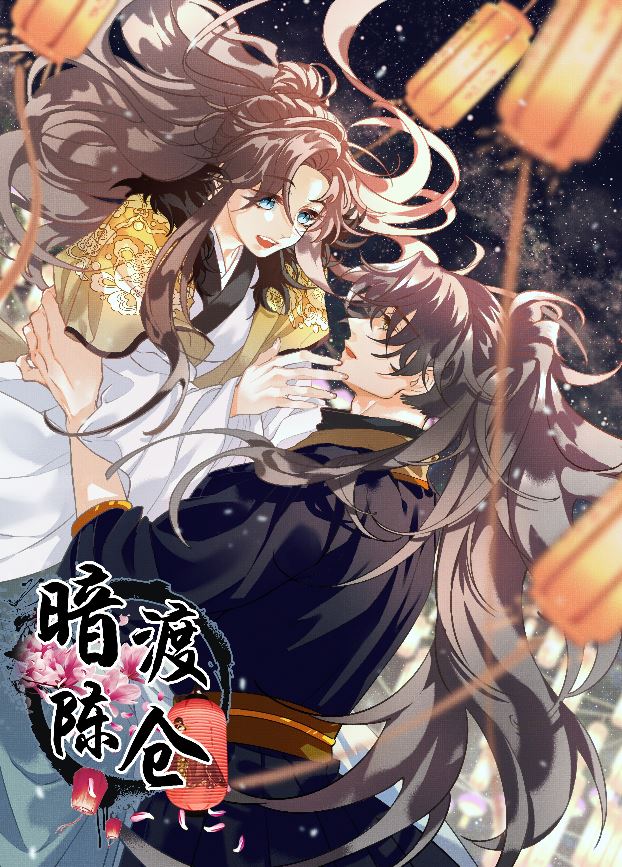
... Read More
The way this chapter layers personal intimacy against political turmoil is genuinely masterful. On one level, we have this raw, almost feral tenderness between Sheng Lin and Xie Xihai — he pins him down, whispers threats that are really promises, and the scene unfolds with this breathless urgency. But peel back the sheets and what's underneath is a rotting empire. Emperor Xie Hangyan swallowing alchemical elixirs like they're candy, sons dropping dead one after another, a Daoist who is somehow eight hundred years old running the government through a drugged-out monarch. And the timeline on this — four years of decline, half a year of outright chaos, and now King Ning's rebellion is being whispered about. Sheng Lin's master has summoned him back to the capital for June 23rd, which reads less like an invitation and more like a deadline. The personal and the political aren't just parallel here, they're feeding off each other. Every touch between these two feels charged with the knowledge that the world outside this room could collapse at any moment. That's tight plotting — making the intimate stakes feel as high as the political ones.
... Read More
Okay let's talk about this painfully awkward exchange between Xie Xihai and Sheng Lin on the horseback ride. The man just threw him off a horse, nearly killed him with the whipping, and Xie Xihai's response to being asked what he's thinking is... "thinking of you." I literally gasped. Not because it's romantic in any traditional sense, but because the sheer desperation of it is so human. This guy is absolutely terrified, he's being physically manhandled, he dry-heaves from the brutal riding, and his instinctive defense mechanism is to try and smooth-talk his way out of danger using whatever weapon he has left—which apparently is flattery. And Sheng Lin's reaction? He just stares down at him "like he was a mentally challenged person." The silence between them says everything. It's not warm, it's not hostile exactly—it's this bizarre, forced proximity where neither knows how to actually *talk* to the other. Xie Xihai is learning who this man really is beyond the reputation, and Sheng Lin is... well, what is Sheng Lin doing? Why doesn't he just throttle the kid? There's something protective underneath all that ice, and that makes me so curious about where this goes. Does Xie Xihai ever stop trying to manipulate him? Does Sheng Lin ever let his guard down? That moment where Xie Xihai catches himself mid-thought—"malicious gleam in his eyes"—and has to pivot to sweet words, that's the kind of fragile honesty that makes characters feel real. I need to know what happens when they finally drop the act.
... Read More
This line broke me: "Xiè Xīhuái and Shèng Lǐn, not related by blood or acquaintance, had encountered some physical intimacy due to the Héhuán Gu." Just... just stop. The author manages to capture the entire complicated emotional landscape in that one sentence. They weren't supposed to be close. This physical closeness was forced upon them by something external. And yet — and yet — the things that linger in Xie Xihuai's mind and the words stuck in his throat are NOT about the Gu anymore. The Gu was the catalyst, sure, but what grew from it is something entirely different. I need to talk about the scene where Sheng Lin calls him by his full name and Xie Xihuai feels that "tingling sensation." THAT is how you write romantic tension without being heavy-handed. No grand confessions, no dramatic declarations. Just a name spoken in a certain way and a body reacting before the mind catches up. And then Xie Xihuai thinking about dragging him to Cangming Mountain for flower wine someday — that's not obligation talking. That's someone who wants to share ordinary, unhurried moments with another person. That's devastating in the best way. The fact that he can't tell Sheng Lin about his future because it's "shrouded in thick fog" adds this layer of tragedy too. He wants to include him but literally can't. Oof.
... Read More
Let me just sit with this detail for a moment: Xie Xihai, dying on the ground, surrounded by the violence of his own body breaking apart, and his final conscious thought is about the clothes he's bleeding through—"These were the clothes he brought from his mansion, the ones he disliked the most..." That is such a devastatingly Xie Xihai detail. Of all the things to fixate on in your death throes, you think about how you hate the fabric of your clothes. And then Sheng Lin—who apparently didn't even flinch at changing those same clothes, who carried him, who must have handled every messy, blood-soaked detail—wipes him clean and brings him back to consciousness with a hot towel and medicine scent. The warmth of that moment is almost unbearable in its quietness. No dramatic confession, no tearful apology, just a clean robe, a steady presence, and a doctor who couldn't explain the poison. I'm not crying, you're crying. Also the part where Xie Xihai tries to act tough and say he's fine while his body literally betraying him? And Sheng Lin sees right through it every single time? That's not just romantic tension, that's being truly SEEN by someone and it's terrifying and beautiful and I need them to just communicate like normal human beings for five seconds.
... Read More
Okay so let me just say this upfront: the Héhuán Gu is one of the most efficient plot devices I have ever encountered. Think about it. You need two characters to get physically close, you need them separated from their support networks, you need a reason for one to escort the other somewhere remote, AND you need an ongoing threat that forces them to keep traveling together — all in one concept? Chef's kiss. The way the author uses it is brilliant because it operates on two levels simultaneously. On the surface, it's a medical crisis that demands immediate attention. But underneath, it's basically a narrative engine that strips away all the social niceties and forces these two people into intimate proximity. The detox scene with Man Qu is particularly well-structured — there's the ritual itself (tension rising), the silver thread emerging (that image is genuinely unsettling), and then the immediate aftermath where Sheng Lin just... doesn't leave. He stays. Which tells us everything about his priorities without him having to say it out loud. And then the bigger plot thread kicks in: Xie Xihuai hasn't heard from his mother, the capital situation is unclear, and they're already off the main road heading toward Cangming Mountain. The author is layering suspense like an onion here. Every chapter raises a new question while leaving previous ones unanswered. It's working.
... Read More
The He Huan Gu — the Peach Blossom Curse — this isn't just some random plot device, it's actually one of the most sophisticated symbols in the entire novel. A curse that forces intimacy, that makes the body betray the will, that leaves a physical mark like a peach blossom on the face. Think about what that means for Xie Xihuai, who has spent so long building walls around himself. The curse strips him bare literally and metaphorically, and the peach blossom marking him like something beautiful and fatal — it's almost cruel how perfect that imagery is. And the sword with 'Dusheng' on the hilt, the one that cut the rope and freed the horses, it represents choice, agency, the ability to break free from whatever binds you. But then inside the carriage there's no breaking free, only surrender. The entire chapter is about power dynamics and who holds them, and how the person who seems most vulnerable (Xie Xihuai under the curse) is actually the one who demands everything, while the seemingly powerful one (Sheng Lin) is the one doing all the controlling. Their positions literally switch throughout the scene. This is about trust, about letting someone see you at your most broken, and about the weird intimacy that comes from having no choice but to be honest with another person.
... Read More
Okay so first of all, the fact that Sheng Lin just saved Xie Xihai's life using a technique that IS THE POISON is the kind of plot twist that made me spit out my tea. Like, think about this — Xie Xihai was already poisoned, Sheng Lin uses the Harmony-Seeking Heart Technique to dispel it, and Master Man just drops "your Harmony-Seeking Heart Technique is the poison." The ultimate save is literally making things worse. This is chef's kiss chaotic storytelling. But here's where it gets GOOD — Master Man explains that the yin and yang clash causes severe pain, and Xie Xihai needs to experience this three to five MORE times before it subsides. Three to five more times. THREE. FIVE. And the only person who can do it properly is Sheng Lin, who has to somehow reach the NINTH level. And when Sheng Lin casually drops "I reached the ninth level when I dispelled the poison for him" like it's nothing, I nearly fell off my chair. He BROKE THROUGH during a medical emergency while carrying his friend through the wilderness. This man is not normal. Also the subplot with Xie Xihai's mother is lurking in the background like a loaded gun. Master Man basically says "if his mother finds out, how will your master explain?" and Sheng Lin doesn't even know who exactly entrusted his own master to protect Xie Xihai. Someone is hiding things from everyone, and I am HERE for it. The scene ends with Xie Xihai sitting at the door cracking sunflower seeds and making up stories about the Snowfall Sword technique — completely unaware (or maybe totally aware) of the emotional landmine he just triggered. The contrast between his lightweight behavior and the yin-yang poison situation is honestly hilarious.
... Read More
Okay I need to talk about this line because it absolutely wrecked me. Xie Xihai, who has been teasing and deflecting and playing hard-to-get this entire conversation, finally lets it out — "I miss you when I don't see you for a day." And then immediately doubles down with "I can't sleep well when you're not around." This man has never said anything direct in his life and now he's just... laying it bare. What hits me even harder is the asymmetry of it all. The narration tells us that they've never actually confessed to each other despite being intimately familiar with each other's bodies, and Xie Xihai's whole spiral about being mediocre compared to Sheng Lin — "If Sheng Lin had a hundred good qualities, Xie Xihai only had average qualities" — that's the most vulnerable thing in the entire passage. He's saying all these sweet things but inside he's convinced he doesn't deserve this. And Sheng Lin? He basically shuts down the self-doubt with one line: "Even if you don't want me to accompany you, I want to be with you." That's not romance-novel fluff, that's someone who has made a conscious choice and is refusing to let Xie Xihai talk himself out of it. The fact that Xie Xihai then pretends it's about discussing business matters instead of admitting he wants Sheng Lin there is so painfully human.
... Read More
Did the author just abandon the book?  Very sad as it was turning into a good book

Leave a comment

You must be logged in to leave comments. or
