This Isn't My Novel! - Reviews

This Isn't My Novel!
+Add to Custom List
Sort
Add review
... Read More
I need to talk about the worldbuilding because this universe has some absolutely unhinged concepts and I am here for them. There's a tree called Yggdrasil growing at the center of the imperial palace and its fruit produces Familiar Eggs. You get handed one at seventeen and it hatches on your eighteenth birthday. This is apparently normal. I have questions about who decided this was fine but whatever. The Austri Ducal Family produces white-furred feline predators. Harðr's is a white lion that's over two meters long and apparently grows to five meters in battle mode—which, honestly, is elephant-sized and that image just refuses to leave my head. And then KARVALDR GETS A BLACK-FOOTED CAT. A black-footed cat. That's like eleven inches long in reality. Even in battle mode it barely tops a meter, roughly a Maine Coon at best. The irony is physically painful. Everyone's probably watching him like what is THAT and predicting expulsion while behind his back. The scene where he demands a whip instructor despite having a cat the size of a housepet is the comedic peak of everything. He's about to wield a whip and command a creature that could fit in someone's coat pocket. The visual of this is either the most intimidating or the funniest thing in the entire genre and I haven't decided which yet. Also the formal speech imitation thing—like he's consciously deciding to sound cringey because that's what the original body sounded like? That's the kind of detail that tells you the author actually cares about making this world feel lived-in rather than just a backdrop.
... Read More
Let's talk about how characters communicate here. The dialogue is deceptively simple, but the subtext is everything. Take the scene with the attendant asking why he stayed still during the slap. The MC's response is a masterpiece of deflection disguised as analysis. He's not answering emotionally; he's presenting a logical breakdown of family politics. The attendant's reaction—'Are you all right?'—is so perfectly written. It's professional concern bleeding into personal confusion. And the MC's reply, 'I don't feel like he's my father,' delivered with this hollow detachment... wow. That line hit me hard. It's not angry; it's empty. The voice here is consistently sharp, self-aware, sometimes cynical, often witty. The narration balances introspection with external observation seamlessly. Even the internal monologues feel distinct from the spoken dialogue. When he thinks, 'Wow, I look absolutely wrecked,' it's casual, almost detached, but when he speaks to Yohrn, he modulates his tone strategically. This is a character who treats social interaction like a game he's learning to play, and the prose captures that beautifully. The humor is dry, the observations are precise, and there's a underlying current of loneliness that never quite disappears, even in the lightest moments.
... Read More
There's a moment where the protagonist deliberately lets the pen slip from his hand and he mutters about weakness. But here's the thing—he did it on purpose. He was planning to take notes to organize his thoughts but instead chose to feign physical instability. Every gesture becomes performance. His posture, his speech patterns, his handwriting tremor, his apparent confusion about his own body—all of it is curated to sell the narrative that he's an amnesiac noble who can't be held responsible. But underneath that performance there's this razor-sharp awareness of exactly what he's doing. The whole text is built on this duality: he's playing a role while simultaneously being acutely aware that roles are all he has. The original body had no attachments, no true relationships, no sense of self beyond what others projected onto it. Now the possession adds another layer—his actual memories are gone or displaced, and what remains is a strategic assessment of how to survive in a body that everyone already wrote off. Even the whipping incident from the original story connects to this theme. Karvaldr lashed out at someone for gossiping about his familiar—literally enforcing a social hierarchy through violence because his position was already under threat. The current protagonist, by contrast, is choosing submission and invisibility as his survival mechanism. He won't whip anyone. He won't give anyone a reason to come after him. The question hanging over everything is whether avoiding conflict is the same thing as resolving it, or if he's just delaying the inevitable with better choreography.
... Read More
'If the Korean readers were to see this decision of mine, they'd object, saying, What do you mean?! Tomorrow's meal and today's meal are different!' STOP. I am not okay. This narrative voice is so distinctly self-aware and funny that I want to frame it. The protagonist constantly breaks the fourth wall without actually breaking the fourth wall. He's talking to himself in third person sometimes, commenting on his own decisions like a film critic reviewing his life choices. And then he drops things like 'A healing novel protagonist who skips meals is like a hot iced americano or a cold hot chocolate' which is such a weird specific metaphor that only a web novel author would think of. The internal monologue reads like someone who writes fiction for a living now can't stop analyzing their own existence as narrative structure. Even the way he addresses the egg — 'don't be too lonely and wait bravely for me' — has this weird mix of sincerity and performativity that makes him feel alive. Not literary alive. Internet alive. Messy alive. Which is exactly right for a transmigrated web novel author.
... Read More
Okay, so this part where the Duke just... smacks him and doesn't even say a word? Chilling. Absolutely chilling. It's not some dramatic showdown with lots of shouting; it's colder than ice. The duke comes in like, 'Here's your punishment,' and leaves like, 'Don't make me do it again.' And the protagonist just stands there, taking it, completely still. What is going on in his head? I love how the author uses silence here. The whole scene is built around what isn't said. The protagonist is analyzing every micro-expression, trying to piece together this strange, distant father figure. Then later, when he's explaining his reasoning to the attendant, you realize he's not just surviving the situation—he's reverse-engineering the duke's motives. He figures out that the slap wasn't about fatherly love; it was a calculated warning about family image. That's such a sharp, almost clinical way to view something so personal. It tells you everything you need to know about this character's survival instincts. He doesn't have time for emotional processing; he has time for tactical analysis. And the plot keeps moving—there's the Ether lesson setup, the hair-management subplot with Yohrn, the looming threat of the Academy. The narrative balance between internal strategy and external pressure is masterful. Every scene feels like it's serving multiple purposes. This is a story that respects your intelligence.
... Read More
The heterochromia detail is not just aesthetic; it's loaded with symbolic meaning. Sky-blue mixed with purple, described as a 'stain'—this visual flaw mirrors his inherited half-ability, half-worthiness. The original author of the novel apparently designed this character with significant backstory potential before abandoning him as a villain. That meta-layer adds richness: we're watching a character who was supposed to be more, but got reduced to a plotting device. Now our MC is inhabiting that fractured identity, trying to rewrite his fate while carrying the physical mark of his 'defectiveness.' The Ether system itself is a metaphor for inherited power—literally reflected in eye color. It raises questions about nature versus nurture, destiny versus choice. Can someone born with half the family's gift forge a different path? The protagonist's journey seems to be about reclaiming agency from a script written by another. Even the whip mentioned in passing feels symbolic of Austri family traditions—tools of control, discipline, perhaps abuse. These elements weave together to create a narrative about breaking cycles and redefining self-worth beyond bloodline expectations.
... Read More
I just finished chapters 27 through 34 and I need to spend some time talking about how the author controls the rhythm of this story because it is genuinely masterful and I want to dissect exactly what makes it work so well. Let me start with the opening of this section. We drop into a scene that's already at maximum tension—the narrator has just discovered their own novels in this world, standing in a library, facing the original protagonist who is already hostile. There's no warm-up, no exposition, no 'let me explain the situation.' We're IN it immediately. This is the kind of opening that makes you commit to keeping reading because you already know something important is about to happen and you need to know what. The pacing decision to reveal the novels first—before anything else—is brilliant. The narrator spots the book titles, recognizes them as their own work, and experiences that moment of pure confusion before Reisir even speaks. This reverses the typical transmigration narrative structure. Usually, the protagonist figures out WHERE they are first, then WHO they're dealing with. Here, the world has already revealed its most shocking secret (your books exist here), and now we have to navigate the interpersonal consequences. That's a fresh structural choice that keeps the story from feeling formulaic. Then the author does something really clever with the emotional pacing. Just when the tension peaks—with Reisir shouting, red-rimmed eyes, fully in confrontation mode—the library club member appears and deflates the entire situation by kicking them both out. This is comedic relief, yes, but it's also a pacing tool. The scene was reaching an intensity that couldn't sustain itself without a release valve, and the author provides one naturally through a third character who has her own agenda. The reader exhales, and then we're immediately back into the emotional confrontation in the hallway. The apology scene is where the pacing really shines. The narrator practices their expression in a mirror beforehand—this detail does double duty. It advances the plot (we understand the narrator is strategic) while also slowing down the emotional beat. We get a moment of quiet preparation before the big conversation, which makes the actual dialogue feel earned rather than rushed. And then the narrator's internal monologue during the apology—admitting they don't care about the family honor, calculating whether Reisir will believe them, feeling genuine sympathy for the original protagonist—this is where the chapter breathes. The author lets us sit with the narrator's moral complexity instead of rushing through to the next plot point. The multiple-choice question moment is another pacing gem. The narrator tries to invoke their imaginary reader interface, expects it to work, and then... nothing. No window appears. Just silence. This is a beat of vulnerability, a moment where the narrator's usual coping mechanism fails them. It's funny, but it's also a structural pivot. The narrator can't rely on game-like systems or reader feedback anymore. They're on their own, and the story acknowledges this by letting the moment hang for a beat before moving on. Reisir's test—'Tell me the plot'—is a perfect structural device because it serves multiple purposes simultaneously. It tests the narrator's honesty, it reveals Reisir's character (he cares enough about the story to verify), it creates a new question (will the narrator pass?), and it builds anticipation for the next scene. This is what good pacing looks like: every beat advances the narrative while also deepening character and theme. The ending of this section leaves us with an incomplete thought—the narrator is debating whether to ask how Reisir found their novels, and then Reisir interrupts with his plot test. This cliffhanger structure is effective because it transfers the reader's curiosity from one question to another without any dead air. We were wondering about the novels, and now we're wondering whether the narrator will pass the test. The curiosity chain never breaks. What I appreciate most is that the author never lets the pacing become predictable. Some sections move fast—Reisir's sudden outburst, the library club member's interruption. Others slow down for emotional processing—the narrator's reflection on their overlapped past, the mirror practice scene. The variation keeps the reader engaged because they never know whether the next moment will be action or introspection, and that uncertainty is exactly what makes transmigration novels work.
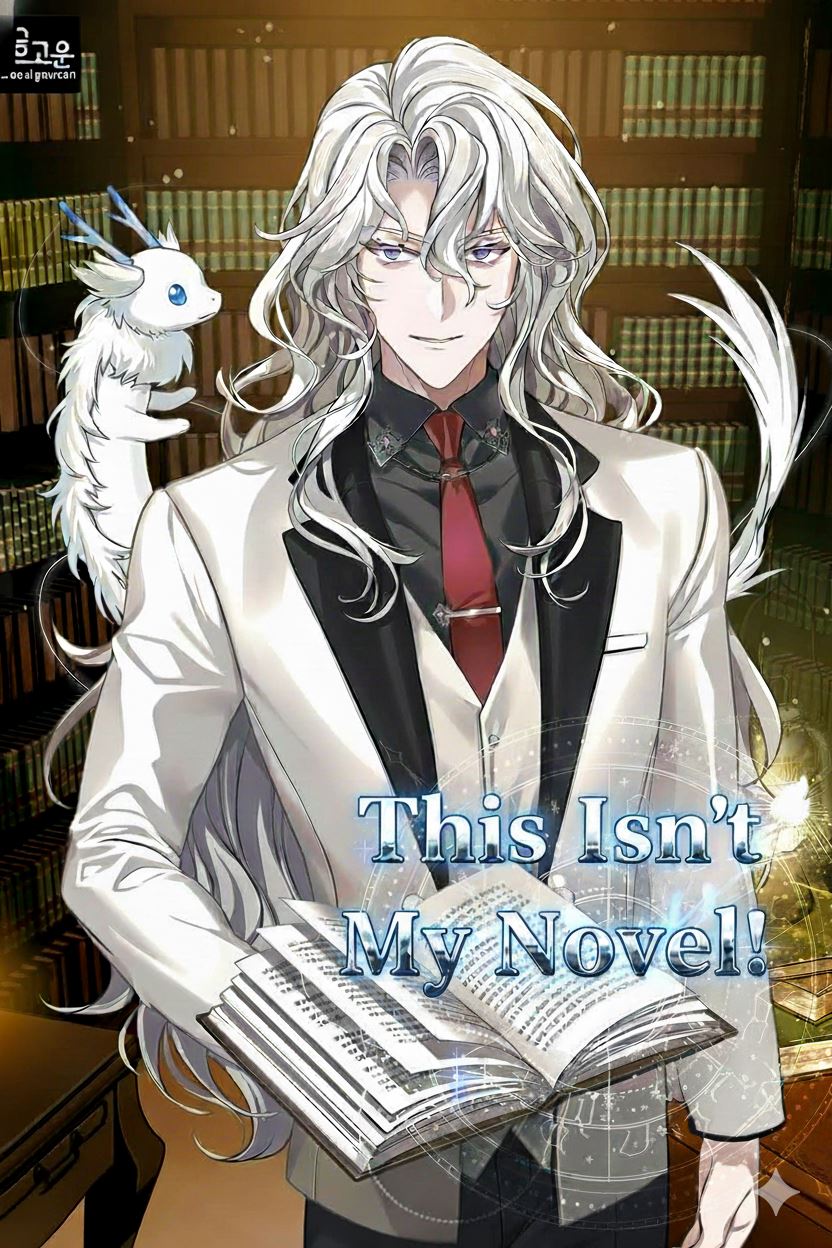
... Read More
Let me tell you about Tryggdrik because this character deserves analysis. At first glance he seems like your typical fawning sidekick - calling someone 'Lord aldrKarb' one moment and 'that woman' the next when talking about the fiancée. Demoting her title shows his true disrespect. But the genius of this character is what we learn about his motivation. He's not just a yes-man; he's actively constructing Karvaldr's abusive behavior from the outside. The text reveals he "constantly stimulated Karvaldr's low self-esteem to make him commit evil deeds." Think about that for a second. This is psychological manipulation at its finest - someone feeding a vulnerable person's worst impulses until they become destructive. The protagonist notices this immediately and declares "I'm going to stop bullying people now," which surprises everyone including Tryggdrik who protests like someone taking away his favorite toy. That's such a great character beat. And then there's Vigdís - her name literally means 'The Battle-Goddess Who Decides for Herself,' yet she's trapped in this engagement arrangement where Count Sjalfráði won't let her attend academy because it would give her 'strange ideas.' She sneaks into the party hiding on balconies, clearly terrified of Karvaldr's jealousy. The protagonist's protective instincts kick in when he warns Tryggdrik: "don't mess with 'Reisir Daudabiner' either." Not that he particularly cares about Reisir, but he recognizes the pattern of abuse. These relationship dynamics are so layered. Karvaldr wanted blind devotion, Tryggdrik wanted power through proxy, and Vigdís just wanted freedom. Now the protagonist has to negotiate all three while maintaining a quiet life, which is apparently impossible in this world.
... Read More
The symbol that keeps looping in my head is the phrase 'defective product.' Hárðr uses it casually, almost carelessly, and it says everything about how this family system works. Karvaldr isn't treated as a son—he's treated as a malfunctioning piece of machinery in a prestigious household. The ducal family values power inheritance above all else, and anyone who doesn't measure up gets filed under 'waste of space.' Then there's the poison itself. The original Karvaldr buying his own poison and consuming it deliberately is such a loaded image. He had everything—wealth, status, a dukedom—and still chose to end it. What does that say about a world where your worth is measured by your ability to inherit supernatural abilities? When you're the third son with no unique powers and no hope of succession, what's left? The suicide attempt also mirrors the protagonist's own death. Two deaths. Two men who didn't choose to die and got thrust into situations beyond their control. One died by truck-kun, the other nearly died by poison, and now they're occupying the same body. There's something almost poetic about that—two people who were victims of circumstances combining into one consciousness trying to survive. And of course, the bullying subplot ties directly into this. Karvaldr lashing out at an innocent protagonist isn't just villainy—it's the behavior of someone who's been systematically devalued and has learned that the only power he can exert is over people weaker than himself. The cycle of abuse writes itself here without the author needing to spell it out.
... Read More
Okay so I need to talk about Reisir because this guy is genuinely one of the most interesting original protagonists I've encountered in a transmigration story, and not just because of his dramatic interactions with Karvaldr. Let me break down why his relationship dynamics hit differently. First, let's talk about the power imbalance here. Reisir got suspended last semester because of Karvaldr, failed his exams, had to spend his entire vacation doing remedial classes, AND Karvaldr specifically sought him out right before the break just to mock him. That's not just bullying—that's calculated cruelty from someone who clearly enjoys having power over someone weaker. And yet, Reisir is still holding onto his dignity in this library scene. He's yelling, sure, his eyes are red-rimmed, but he's not begging or submitting. He says 'I won't let you trample me' basically. That stubbornness? That's the mark of someone who's been broken but refuses to stay broken. But then here comes the narrator—currently inhabiting Karvaldr's body—and instead of leaning into the villain role, they actually TRY to apologize. Like, full-on practiced-the-expression-in-the-mirror kind of apology. 'I swear it on the honor of the Austri Ducal Family.' The narrator even admits internally that they don't care about the family honor at all but desperately want Reisir to lower his guard so they don't get killed. This is such a fascinating dynamic because both characters are performing. Reisir is performing defiance while terrified, and Karvaldr is performing remorse while calculating survival. Neither of them is being entirely genuine, and yet somehow the apology actually WORKS a little. Reisir's eyes waver. He starts listening. You can feel the shift. What really sold me though is how the narrator's personality shines through even when they're pretending to be someone else. They keep slipping into meta-commentary—like when they think 'As someone who isn't the real Karvaldr, this is incredibly unfair, but...' or when they genuinely get a weird surge of pride that Reisir likes their novel so much he gets defensive about it. The narrator isn't just playing a role; they're wrestling with the moral complexity of being trapped in a bully's body while trying to do the right thing. That internal conflict makes them instantly sympathetic despite being the antagonist from Reisir's perspective. And then there's the author-reader relationship angle, which is just peak irony. Reisir is basically testing whether the narrator is a real fan of the Star Author by asking them to recount the plot of the second novel. The narrator has to prove they've read it without revealing they wrote it. This whole layering of identities—narrator is a reader in our world, an author in Reisir's world, and now a character in a novel inside that world—creates this incredible tension where every conversation is layered with hidden meanings. I also love that Reisir has exactly ONE friend, and she's a noble. This detail matters because it explains why his taste in novels got him ostracized. A typical noble would dismiss 'snack culture' web novels as beneath them. Reisir is isolated not just by bullying but by his own interests. He's a nerd in a world that doesn't value nerds. That makes his defensiveness about the Star Author's work so much more human. He's not just protecting a book—he's protecting a part of himself that he already feels ashamed of. The narrator noticing all of this and feeling sorry for him while also being amused by the absurdity? That's character writing at its best. Both characters feel fully realized, and their relationship has so much room to grow from here. I genuinely can't wait to see what happens next.
... Read More
Okay so there's this scene where the protagonist goes to the library and discovers something wild about the novel section. Turns out the physical books here aren't just random imports from our world. He starts noticing that completed web novels only have one volume when they should have way more, and some are just... gone. Like, author Senna dropped them mid-series and those stories simply don't exist here. It makes him wonder if this entire world is somehow shaped by the reading habits of the original author. And honestly? That gave me chills because it flips the whole premise on its head. The transmigration isn't just about surviving in a dangerous fantasy world. The world itself might be a reflection of someone's subconscious taste in literature. Which raises the question: what happens when the original author stops writing? Does the world stop making sense? The protagonist's anxiety about whether he got this information too early, before his 'plot portion' was supposed to reveal it — that meta worry is honestly one of the smartest plot devices I've seen. It's not just 'oh I know the story.' It's 'am I reading the story wrong and will I die because of it?' That's genuinely unsettling and I loved every second of it.
... Read More
I need to process what I just read because my emotions went through a literal rollercoaster in these eight chapters and I am not okay. Let me start with the most surprising emotional beat: the narrator feeling PROUD. Like, genuinely proud, like a little spark of warmth in their chest, because Reisir cared so much about their novel that he got angry when he thought someone was going to mock it. Think about that for a second. The person who transmigrated into the villain's body, the person who should be the most self-centered character in this scene, actually feels validated and touched because the original protagonist values their creative work. That's such a specific, unexpected emotion and it hit me way harder than any dramatic plot twist could have. The line that wrecked me though—this is the moment I need to discuss—was when the narrator thought: 'As someone who isn't the real Karvaldr, this is incredibly unfair, but...' This tiny aside, this brief acknowledgment of the fundamental injustice of their situation, carried so much weight. Here is a person who didn't ask to be in this body, didn't ask to inherit these relationships, didn't ask to be everyone's enemy. And they're still trying to do the right thing anyway. The fact that they acknowledge the unfairness instead of just accepting it or complaining about it shows such remarkable emotional maturity. Then there's Reisir's emotional state, which is a mess in the most realistic way possible. He wants to give up. He literally wonders if submitting would make the bullying stop. But he's also terrified that if he kneels once, he'll never stand up again. This is such an accurate portrayal of how victims of prolonged abuse think. It's not about pride—it's about survival. If he shows weakness, Karvaldr will see it and escalate. So he holds his neck up crooked and keeps fighting, even though he's exhausted and terrified and alone. The detail about him forgetting he's in a library and shouting with red-rimmed eyes? That's not anger. That's someone whose emotional reserves are completely depleted and who snapped because the stress finally became too much to contain. What struck me most deeply was the narrator's sense of overlap between their own past and Reisir's. 'My own past overlapped with his, making my heart feel heavy.' I don't know the full backstory yet, but this single line tells me everything I need to know: the narrator has been bullied too. They understand Reisir not through empathy alone but through shared experience. That connection is what makes their attempt to apologize feel genuine rather than manipulative, even though they admit they practiced the expression in a mirror. There's also this undercurrent of loneliness in both characters that made my chest tighten. Reisir has one friend—a noble, of all people, which means even his friendship comes with social complications. The narrator is trapped in a foreign world, surrounded by people who hate them because of someone else's actions, trying to figure out how to survive while maintaining their sense of self. Two isolated people who find each other in a library, one holding a book they love and the other holding a body they didn't ask for. That image stayed with me long after I finished reading. And then the humor hits you out of nowhere—the narrator trying to pose a multiple-choice question to imaginary readers, getting no response, and then just... moving on. It's funny, yes, but it's also a coping mechanism. The narrator uses humor and meta-awareness to deal with situations that would otherwise be overwhelming. That's not just good writing; that's psychologically accurate. People who survive difficult situations develop ways to distance themselves from the pain, and the narrator's fourth-wall-adjacent commentary is exactly that. The emotional complexity in these chapters is extraordinary. Every interaction carries multiple layers—surface dialogue, hidden motives, past trauma, unspoken fears—and the author weaves them together without ever making it feel cluttered. I read this section three times and each time I caught something new I'd missed before.

Leave a comment

You must be logged in to leave comments. or
