This Isn't My Novel! - Reviews

This Isn't My Novel!
+Add to Custom List
Sort
Add review
... Read More
There's something so quietly devastating about the library scene. It's supposed to be a mundane encounter—two students bumping into each other near a bookshelf—but the author layers it with so much unspoken tension. You can feel the weight of Karvaldr's past cruelty pressing against every word Reisir speaks. And then the narrator's internal monologue about wanting to be 'an extra in your life,' wanting to be scenery... it hits different when you know what happens to people who get too close to Reisir. The ordinary setting becomes a cage. 'If our classes overlap and we run into each other in the lecture room, let's just treat each other like we're not there.' That line absolutely wrecked me because it sounds so casual but it's actually a survival strategy.
... Read More
What strikes me most is the emotional isolation underlying all these strategic interactions. Despite being surrounded by people attending to his needs, he's profoundly alone. The line 'It feels strange and awkward for someone to treat me with sincere interest' broke my heart. He doesn't recognize genuine kindness because he's never experienced it. So he treats it like a resource to be managed, a favorability metric to be optimized. Even his gratitude feels rehearsed. And yet, there are cracks. When he looks at his reflection and sees someone 'sickly and prickly,' he's acknowledging a vulnerability he rarely voices. The relationship with Yohrn offers glimmers of something real—shared silence, small gestures of care, unspoken understanding. But can these moments transcend their transactional origins? I find myself hoping against hope that this cold, calculating survivor might allow himself to be soft with someone. The emotional journey here isn't about grand declarations; it's about microscopic shifts in perception, tiny breaches in armor. It's the difference between saying thanks because it's strategically wise and meaning it because you actually want to. That distinction matters more than anything else in this story.
... Read More
The way the author structures this entire confrontation around game-like OPTION BOXES is genuinely brilliant and I'm still recovering. First it's Option 1: agree and become the reading friend. Then Option 2: confess the full truth. Then Option 3: publicly destroy both the novel and Reisir at the upcoming party. Each option carries its own doom, and watching the narrator eliminate them one by one is like watching someone slowly realize every exit is locked. The pacing here is so tight—you never get a breath because the stakes escalate with each eliminated choice. And then, just when you think there's no way out, Option 4 appears: scrape Reisir's pride raw and become someone he actively avoids. It's cruel, it's effective, and the narrator delivers it with this cold clarity that shows how desperate they've become. 'That's all I have to say. You don't seem to have anything to say either, so I'll be on my way.' The casual exit after such a heavy conversation—that contrast is everything.
... Read More
Let me just sit with this for a second. The protagonist is carrying around an unfertilized egg that houses a familiar that hasn't been born yet. He hugs it while crying about wanting to live. He talks to it like it's a child. And then there's the library full of incomplete stories — novels that were abandoned, volumes that never got written, entire worlds that died on the page. The egg and the incomplete novels are the same symbol. Both represent potential that hasn't realized itself yet. Both could die at any moment. Both are being carried around by someone who knows how fragile existence is. The protagonist just died once and came back. Now he's carrying another life that hasn't even started. And the world around him is full of stories that were never finished. There's something deeply melancholic about all of this. It's not an action-heavy passage at all. It's a meditation on unfinished things and the terror of possibly not surviving long enough to see them complete. I need a moment.
... Read More
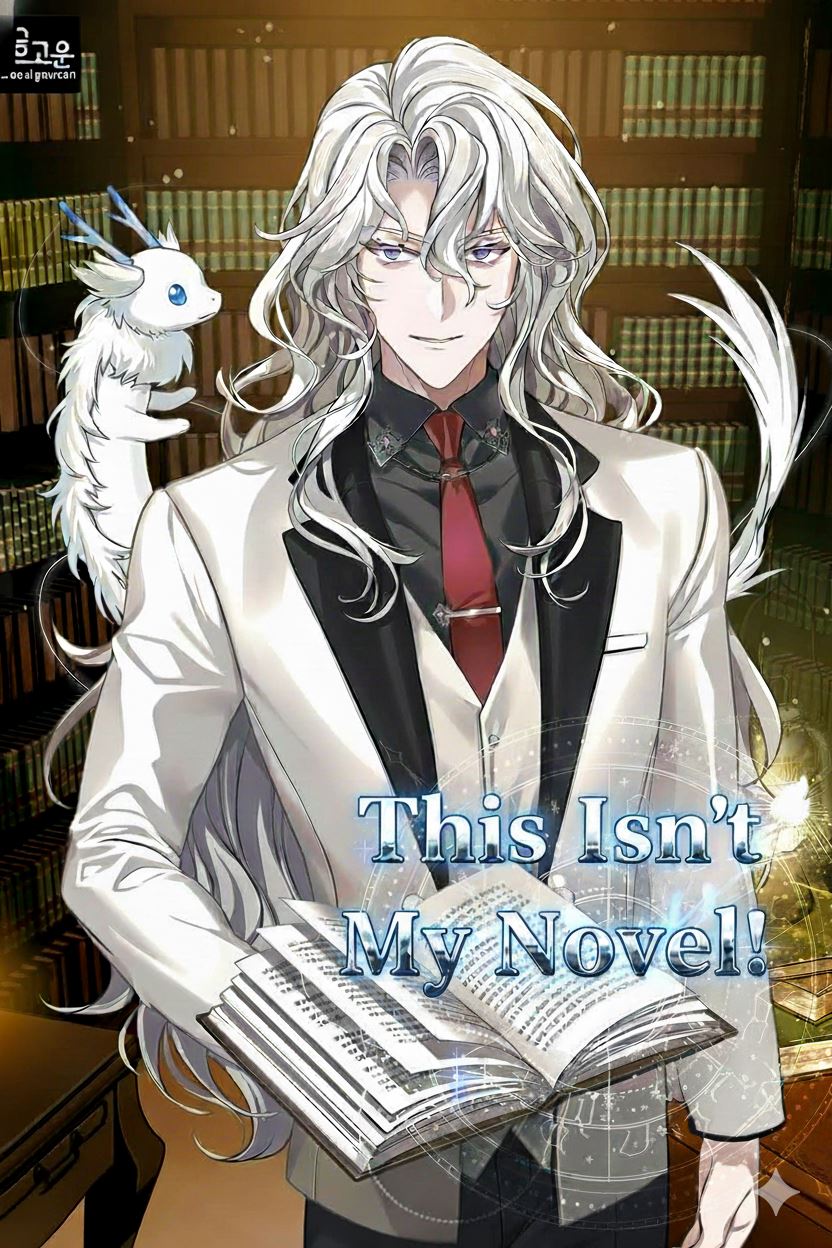
The familiar egg. That little egg sitting on the table in his dorm room, the only thing he carried with genuine affection. 'Well then, big bro is going out for a bit. You guard the room well~.' He says it gently, strokes it, speaks to it with real warmth — and then immediately leaves it unguarded because it can't protect itself and neither can he. It's the softest moment in this entire passage and it hits harder than anything else. Everything else about this text is about performance. The indifferent expression at the carriage departure. The forced cheerful facade. The bitter smile he catches himself making and quickly hides. The calculated decision to approach Reisir with an apology rather than letting fate play out its brutal course. He's acting Karvaldr at all times, even when Karvaldr isn't watching. The only real emotion in the whole chapter is directed at an egg that can't even hatch yet. And then there's the whole Norse mythology framing — Einherjar, Valhalla, Loki's insults, the author's pen name meaning 'heated debate' or 'diss rap battle.' This world is LITERALLY built around warriors who died in battle and are preparing for Ragnarök, the end of all things. His entire existence in this body is a kind of death — Karvaldr died and something else took his place. He's an Einherjar in his own right, a ghost haunting a dead man's life, waiting for his own Ragnarök at the academy. The familiar egg is the only thing that's actually ALIVE and growing, the only real future in a story built entirely around death and performance.
... Read More
'I really want to live... or rather, I don't want to die again.' Like, what. One chapter ago this guy was scheming and calculating and now he's curled up hugging an unborn familiar egg confessing his deepest fears to it. And you know what? It's the most human moment in the entire passage. The fact that he had a mother who loved him, that he experienced his own death before being reborn into this body, that every time someone close to him dies it reopens old wounds — this is a person who is literally carrying two sets of grief on top of a survival instinct that's running on fumes. And then he apologizes to the egg afterward like 'sorry, I'll stop talking about dying now.' That pivot from raw vulnerability to forced normalcy? Chef's kiss. Also the Reisir situation is interesting because the protagonist specifically resolves NOT to get involved with the original protagonist, which as he himself admits is the exact kind of resolve that ALWAYS fails in transmigration stories. He knows the cliché. He's naming the cliché. And he's still terrified he won't escape it. That's not just good character writing. That's someone who understands their own traps.
... Read More
I am obsessed with the dynamic between the protagonist and Yohrn. It's so layered. On the surface, it's a tsundere noble and his loyal attendant. But dig deeper, and you see a calculated performance from the MC. He knows exactly how to manipulate Yohrn's sympathy to build favorability. The moment where he says 'thank you' in this deliberately shy, awkward voice is peak social engineering. And yet... is there a flicker of genuine warmth underneath? When Yohrn hands him snacks after long study nights, or fans him during training—that's not scripted duty. That's care. The protagonist recognizes this. He admits to himself that it's convenient, but also that having an ally is better than being alone. I keep wondering if he'll start caring for Yohrn despite his own plans. The power imbalance is obvious—Yohrn works for the duke—but their interactions feel increasingly mutual. There's a sweetness in the mundane details: the hair grooming, the shared quiet moments. It's not dramatic, but it's deeply human. And that's what makes it so compelling. Will Yohrn discover the truth about the possession? Will the MC's carefully constructed facade crack under genuine affection? The author is laying groundwork for something emotionally complex here.
... Read More
'Gasp...! When did so many sequels come out? There are even four new works!' I literally made a noise reading this part. The protagonist goes to the library looking for knowledge about Ethers and abilities, and what does he do? He gets distracted by the novel section. And then he discovers that this fantasy world apparently has THE EXACT SAME GENRE OF WRITING as the web novels from his original world. Sentence-length titles, serial formats, the whole thing. 'The titles were getting longer, and sentence-form titles were not uncommon, making it look as if I was browsing the web novels from the world I used to live in.' This is such a bizarre but wonderful meta touch — he's a transmigrator who used to read web novels, now in a world where those same kinds of stories exist. Is he reading stories written by other transmigrators? Or is the author of this world just accidentally replicating Earth's pop culture? Either way it's gloriously disorienting. And his inner voice throughout this whole passage is so distinct — all deadpan self-awareness, constantly narrating his own strategy like a chess player thinking three moves ahead. 'I know I shouldn't compare it to web novels where the key keywords and the gist are crammed into the title, but...' That parenthetical aside where he immediately contradicts himself is SO relatable. It's the kind of voice that makes you feel like you're inside someone's head who's always one step removed from their own experiences, observing everything including their own impulses.

Leave a comment

You must be logged in to leave comments. or
