This Isn't My Novel!
+Add to Custom List
Genres:
Tags:
Novel Info
  • Author:
  • Status:Ongoing

Summary

... Read More
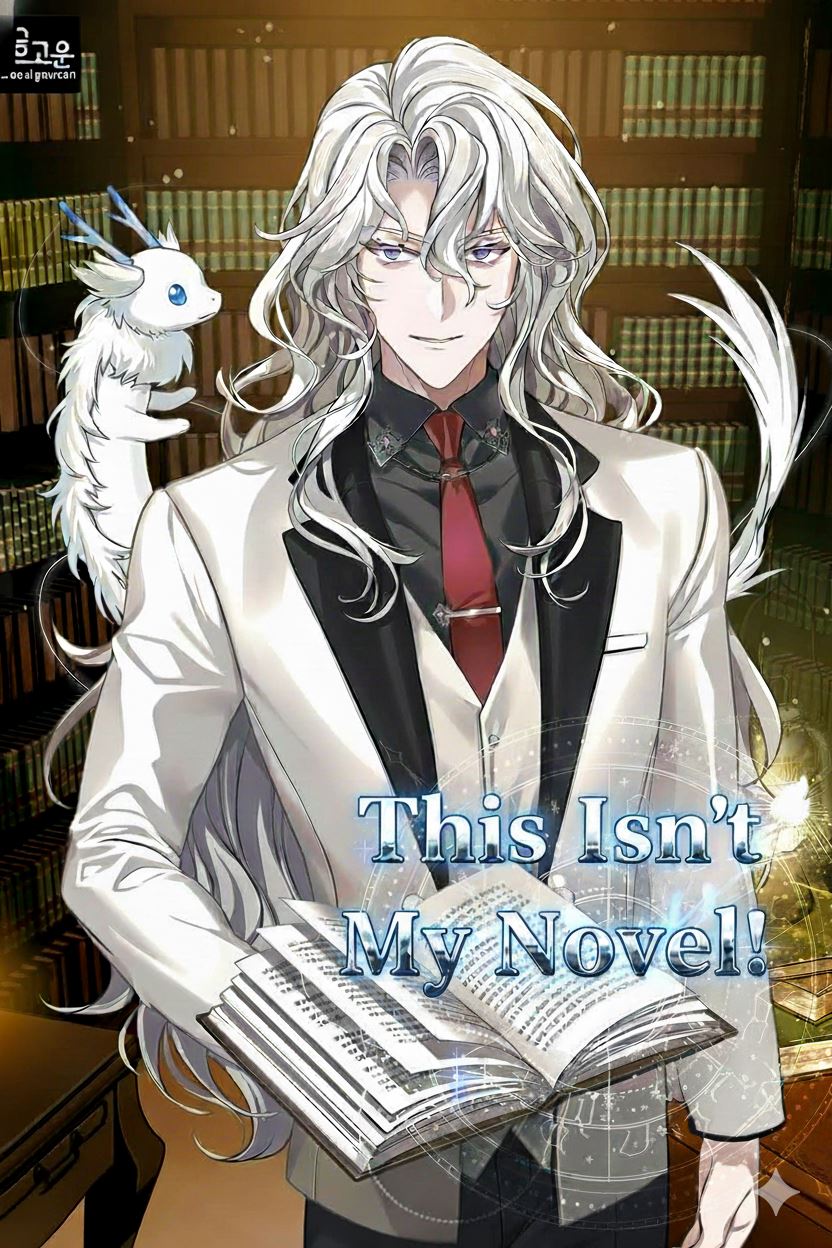
A web novel author specializing in lighthearted healing fiction dies and transmigrates into Karvaldr Austri, the third son of a powerful ducal family in the dark fantasy novel I Alone am the SSS-grade Einherjar. Unlike typical isekai protagonists, he did not write this novel and possesses no foreknowledge of its plot developments beyond what he read as an external audience. The body he inhabits is that of an early-stage villain who bullied the original protagonist, Reisir Daudabiner, and is destined to die by the hands of a protagonist whose allies all perish around him. Upon possession, Karvaldr discovers he has inherited amnesia and learns that he nearly died from poisoning only days prior. Investigation reveals that he purchased the poison himself and attempted suicide, a detail absent from the original narrative.

Karvaldr's father, Duke Hardr Austri, is indifferent and abusive, viewing his son as a defective product due to Karvaldr's incomplete inheritance of the family's purple Ether abilities. The protagonist lacks poison resistance and ability, marked by heterochromia with a faded blue tint in one eye. Rather than seeking redemption or revenge, Karvaldr adopts a pragmatic survival strategy: he plans to hide his transmigration, maintain the facade of the original Karvaldr, and avoid the original protagonist at all costs. He recognizes that simply staying away may not be enough, as the original protagonist carries deep grudges that could lead to fatal retaliation later.

Over the following weeks, Karvaldr rigorously studies Ether manipulation, combat skills, and noble etiquette while managing his public image. He cultivates a relationship with his young attendant, Yohrn, using calculated displays of vulnerability and arrogance to secure loyalty and information. Karvaldr anticipates the birth of his Familiar, which turns out to be a Black-footed Cat, a small feline that draws mockery from peers but offers limited combat utility. He acknowledges that his physical strength remains insufficient for direct confrontation with the original protagonist, who has already awakened to a Status Window and possesses silver Ether from clearing a Demon Realm.

Returning to Valhalla Academy a week early, Karvaldr searches the library for information regarding dual Ether inheritance, hoping to discover latent abilities. There, he encounters Reisir, who is reading one of the author's novels titled The Gate From My Novel Devoured the World. Karvaldr discovers that his own published works exist in this world, written under a pseudonym represented by a star symbol. Rather than confronting the mystery immediately, he seizes the opportunity to approach Reisir directly. He apologizes for last semester's bullying, swears never to harass him again, and claims to share the protagonist's admiration for the same author. Reisir remains suspicious but lowers his guard slightly after Karvaldr defends the literary merit of the web novel genre against noble pretensions. The encounter ends without resolution, leaving Karvaldr to continue his preparation for the inevitable conflicts ahead, aware that the original plot has already diverged from its recorded path.

Latest Release
DateGroupRelease
2026-10-01dawn translations c306
2026-10-01dawn translations c305
2026-10-01dawn translations c304
2026-10-01dawn translations c303
2026-10-01dawn translations c302
2026-10-01dawn translations c301
2026-10-01dawn translations c300
2026-10-01dawn translations c299
2026-10-01dawn translations c298
2026-10-01dawn translations c297
2026-10-01dawn translations c296
2026-10-01dawn translations c295

Community Reviews

Rating(0 / 5.0, 44votes)
5 stars
0(0%)
4 stars
0(0%)
3 stars
0(0%)
2 stars
0(0%)
1 stars
0(0%)

Popular reviews

... Read More
I need to talk about the worldbuilding because this universe has some absolutely unhinged concepts and I am here for them. There's a tree called Yggdrasil growing at the center of the imperial palace and its fruit produces Familiar Eggs. You get handed one at seventeen and it hatches on your eighteenth birthday. This is apparently normal. I have questions about who decided this was fine but whatever. The Austri Ducal Family produces white-furred feline predators. Harðr's is a white lion that's over two meters long and apparently grows to five meters in battle mode—which, honestly, is elephant-sized and that image just refuses to leave my head. And then KARVALDR GETS A BLACK-FOOTED CAT. A black-footed cat. That's like eleven inches long in reality. Even in battle mode it barely tops a meter, roughly a Maine Coon at best. The irony is physically painful. Everyone's probably watching him like what is THAT and predicting expulsion while behind his back. The scene where he demands a whip instructor despite having a cat the size of a housepet is the comedic peak of everything. He's about to wield a whip and command a creature that could fit in someone's coat pocket. The visual of this is either the most intimidating or the funniest thing in the entire genre and I haven't decided which yet. Also the formal speech imitation thing—like he's consciously deciding to sound cringey because that's what the original body sounded like? That's the kind of detail that tells you the author actually cares about making this world feel lived-in rather than just a backdrop.
... Read More
Let's talk about how characters communicate here. The dialogue is deceptively simple, but the subtext is everything. Take the scene with the attendant asking why he stayed still during the slap. The MC's response is a masterpiece of deflection disguised as analysis. He's not answering emotionally; he's presenting a logical breakdown of family politics. The attendant's reaction—'Are you all right?'—is so perfectly written. It's professional concern bleeding into personal confusion. And the MC's reply, 'I don't feel like he's my father,' delivered with this hollow detachment... wow. That line hit me hard. It's not angry; it's empty. The voice here is consistently sharp, self-aware, sometimes cynical, often witty. The narration balances introspection with external observation seamlessly. Even the internal monologues feel distinct from the spoken dialogue. When he thinks, 'Wow, I look absolutely wrecked,' it's casual, almost detached, but when he speaks to Yohrn, he modulates his tone strategically. This is a character who treats social interaction like a game he's learning to play, and the prose captures that beautifully. The humor is dry, the observations are precise, and there's a underlying current of loneliness that never quite disappears, even in the lightest moments.
... Read More
There's a moment where the protagonist deliberately lets the pen slip from his hand and he mutters about weakness. But here's the thing—he did it on purpose. He was planning to take notes to organize his thoughts but instead chose to feign physical instability. Every gesture becomes performance. His posture, his speech patterns, his handwriting tremor, his apparent confusion about his own body—all of it is curated to sell the narrative that he's an amnesiac noble who can't be held responsible. But underneath that performance there's this razor-sharp awareness of exactly what he's doing. The whole text is built on this duality: he's playing a role while simultaneously being acutely aware that roles are all he has. The original body had no attachments, no true relationships, no sense of self beyond what others projected onto it. Now the possession adds another layer—his actual memories are gone or displaced, and what remains is a strategic assessment of how to survive in a body that everyone already wrote off. Even the whipping incident from the original story connects to this theme. Karvaldr lashed out at someone for gossiping about his familiar—literally enforcing a social hierarchy through violence because his position was already under threat. The current protagonist, by contrast, is choosing submission and invisibility as his survival mechanism. He won't whip anyone. He won't give anyone a reason to come after him. The question hanging over everything is whether avoiding conflict is the same thing as resolving it, or if he's just delaying the inevitable with better choreography.
... Read More
'If the Korean readers were to see this decision of mine, they'd object, saying, What do you mean?! Tomorrow's meal and today's meal are different!' STOP. I am not okay. This narrative voice is so distinctly self-aware and funny that I want to frame it. The protagonist constantly breaks the fourth wall without actually breaking the fourth wall. He's talking to himself in third person sometimes, commenting on his own decisions like a film critic reviewing his life choices. And then he drops things like 'A healing novel protagonist who skips meals is like a hot iced americano or a cold hot chocolate' which is such a weird specific metaphor that only a web novel author would think of. The internal monologue reads like someone who writes fiction for a living now can't stop analyzing their own existence as narrative structure. Even the way he addresses the egg — 'don't be too lonely and wait bravely for me' — has this weird mix of sincerity and performativity that makes him feel alive. Not literary alive. Internet alive. Messy alive. Which is exactly right for a transmigrated web novel author.
... Read More
Okay, so this part where the Duke just... smacks him and doesn't even say a word? Chilling. Absolutely chilling. It's not some dramatic showdown with lots of shouting; it's colder than ice. The duke comes in like, 'Here's your punishment,' and leaves like, 'Don't make me do it again.' And the protagonist just stands there, taking it, completely still. What is going on in his head? I love how the author uses silence here. The whole scene is built around what isn't said. The protagonist is analyzing every micro-expression, trying to piece together this strange, distant father figure. Then later, when he's explaining his reasoning to the attendant, you realize he's not just surviving the situation—he's reverse-engineering the duke's motives. He figures out that the slap wasn't about fatherly love; it was a calculated warning about family image. That's such a sharp, almost clinical way to view something so personal. It tells you everything you need to know about this character's survival instincts. He doesn't have time for emotional processing; he has time for tactical analysis. And the plot keeps moving—there's the Ether lesson setup, the hair-management subplot with Yohrn, the looming threat of the Academy. The narrative balance between internal strategy and external pressure is masterful. Every scene feels like it's serving multiple purposes. This is a story that respects your intelligence.
... Read More
The heterochromia detail is not just aesthetic; it's loaded with symbolic meaning. Sky-blue mixed with purple, described as a 'stain'—this visual flaw mirrors his inherited half-ability, half-worthiness. The original author of the novel apparently designed this character with significant backstory potential before abandoning him as a villain. That meta-layer adds richness: we're watching a character who was supposed to be more, but got reduced to a plotting device. Now our MC is inhabiting that fractured identity, trying to rewrite his fate while carrying the physical mark of his 'defectiveness.' The Ether system itself is a metaphor for inherited power—literally reflected in eye color. It raises questions about nature versus nurture, destiny versus choice. Can someone born with half the family's gift forge a different path? The protagonist's journey seems to be about reclaiming agency from a script written by another. Even the whip mentioned in passing feels symbolic of Austri family traditions—tools of control, discipline, perhaps abuse. These elements weave together to create a narrative about breaking cycles and redefining self-worth beyond bloodline expectations.
See all reviews

Custom lists

See all custom Lists