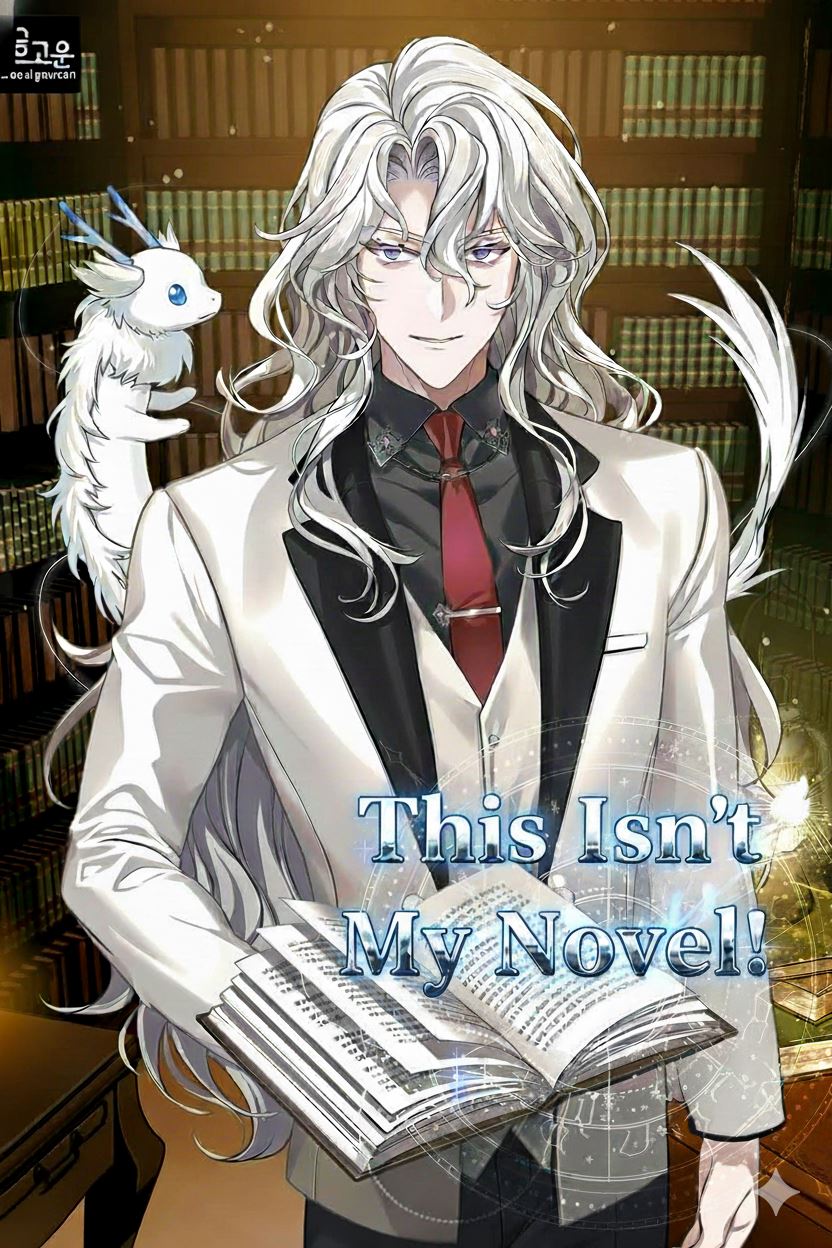
I have to talk about the setting of this chapter because it's honestly one of the most vividly realized scenes I've read in a transmigration novel, and I want to break down exactly why it works so well.
The library at Valhalla Academy. Just thinking about it now, I can see it clearly. Heavy doors that are well soundproofed—that detail matters because it creates this intimate bubble where two characters who shouldn't be having a vulnerable conversation actually do. The narrator and Reisir are kicked out of the library but continue their discussion in the hallway, and that transition from a controlled, quiet space to a more exposed, public one changes the entire emotional temperature of the scene. In the library, they're hiding. In the hallway, they're exposed. The physical space mirrors their emotional trajectory perfectly.
Now let me talk about the worldbuilding details that the author drops so casually but which actually build an incredibly rich universe. The necktie colors differentiating enrollment years. Reisir notices the narrator's necktie and immediately knows they're a first-year, while the library club member is a second-year senior because her tie is blue. This is such a natural way to establish social hierarchy without any exposition dumps. You're just observing characters looking at each other, and suddenly you understand the entire grading system of this academy.
The Library Club Badge near the collar is another gorgeous detail. It's small, specific, and tells you everything about this character—she's young but holds authority, she's dedicated enough to volunteer in the library during her free time, and she's not afraid to enforce rules even on people who might be above her socially. When she kicks both of them out, it doesn't matter that one of them is apparently a Ducal family member. The badge gives her power, and she wields it.
Then there's the novel section at the entrance of the library, where the 'serious' novels are displayed. The narrator notices these and immediately makes a judgment about the world's literary culture—nobles prefer dense, time-consuming reading material, while 'snack culture' web novels are looked down upon. This is worldbuilding through aesthetic preference, which is honestly one of the smartest approaches an author can take. Instead of telling us 'this world has class-based cultural preferences,' the author shows us what books are displayed prominently and lets us infer the social hierarchy from that.
The detail about the Star Author's books being engraved with a special character instead of a pen name is fascinating from a worldbuilding perspective. Why does this world obscure the author's identity? Is it because web novel culture doesn't exist here in the same way? Or is there something about this fantasy world's publishing industry that makes pseudonyms the norm? The narrator seems genuinely puzzled about HOW Reisir ended up reading their novel in the first place, which suggests that either web novels have found a weird path into this world, or there's something supernatural about the whole transmigration situation that we haven't fully understood yet.
The educational system itself is worth discussing. 'Only novels catering to noble tastes would have developed' because 'educational opportunities are skewed towards the nobles.' This single line establishes a whole caste system without any dramatic confrontation or exposition. The narrator is observing from within the system and noting its inequalities matter-of-factly, which makes the world feel lived-in and real.
And can we talk about the visual of Reisir holding those books—《The Gate From My Novel Devoured the World》on the cover—and the realization hitting the narrator? The bookshelf next to the Original Protagonist contains volumes matching the narrator's first and third serialized works too. This image—the protagonist surrounded by books that belong to someone from another world—is almost dreamlike in its surreal quality. It's a scene that feels like it could be a keyframe in an anime, frozen in time, with dust motes floating in the library light and Reisir's wary expression reflected in the book covers.
The atmosphere throughout this entire chapter is remarkably consistent. There's this underlying tension—the fear of being caught, the weight of unspoken histories, the constant awareness that these two characters are fundamentally misunderstood by each other—but it never overwhelms the scene. The setting supports the emotions rather than competing with them.