The Anchor-Wielding Paladin - Reviews

The Anchor-Wielding Paladin
+Add to Custom List
Sort
Add review
... Read More
I have to say, the subplot with these pirates is genuinely one of the freshest things in this whole arc. You've got this whole chapter dedicated to the antagonists planning their move, which is already unusual—most novels just throw the enemy at the hero without showing us how they got there. The Boss laying out the strategy: Clayton is 4-Star, his crew has five 3-Stars and sixty 2-Stars, they've killed Paladins before, and the real prize is the goddess avatar itself. It reads like a heist briefing, and honestly? It worked on me. I was leaning forward thinking, okay, this could go either way. But then Clayton walks into that house and it turns out the entire ambush was... underwhelming. Six people. A fake sick mother act. pistols that get deflected by a chain. And Clayton neutralizes all of them without even trying. The anti-climax is the point, isn't it? This is a guy who was once The Strongest, now trapped in a teenager body that barely reaches 4-Star, and even at his weakest he's still untouchable by ordinary standards. The plot twist here isn't that he gets into trouble—it's that we see him struggle with the anxiety of not being able to hold back if someone actually strong shows up. "I am so feeble right now that I would have no choice but to kill that person." That line hit me harder than any action scene. The real tension isn't whether he'll win—it's whether he can keep his hands clean.
... Read More
The pacing here is absolutely relentless and I mean that in the best way possible. You go from Clayton waking up confused to declaring his divine mission to fighting sea monsters before you've even finished processing what just happened. Chapter structure is doing a lot of heavy lifting. The domestic scenes with his parents take up maybe a third of the text, establishing emotional grounding, and then BOOM - alarm sounds, he's sprinting toward danger. The author doesn't let us linger too long in sentiment. Every emotional beat gets interrupted by action, which keeps the momentum rolling forward. What's interesting is how the physical limitations create pacing tension. Clayton wants to leap twenty stories like he used to, but he can barely make it partway up a crane. He wants to fight like the Paladin he became, but he's getting winded after ten minutes of running. The prose itself mirrors this - sentences get shorter, more urgent, more fragmented as the monster attack begins. You feel his desperation through the rhythm of the writing. The chapter ends with him requesting power from Vishujei and grabbing an oar as a weapon. No neat resolution, no victory lap. Just a kid with an adult's determination trying to survive against impossible odds. That cliffhanger energy is exactly what makes you want to immediately start the next chapter.
... Read More
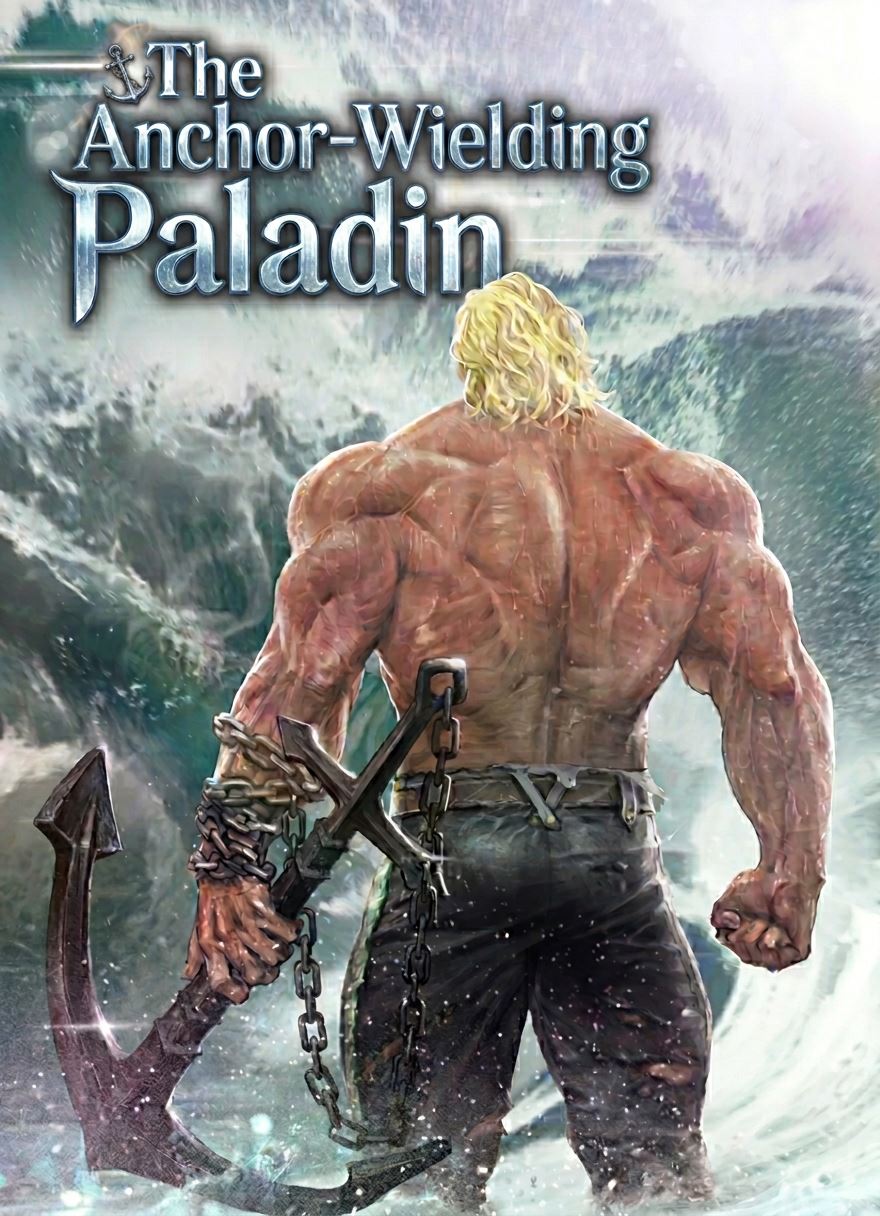
There's a moment in this passage where Clayton undoes the anchor chain and something incredible happens visually. He doesn't swing it like a weapon—he grasps it and focuses, and the Authority of the Deep Sea compresses it. The chain becomes an iron whip, the anchor shrinks to a handle. But the weight stays the same. I literally felt that weight reading it. The image of a scrawny fifteen-year-old boy holding something that weighs as much as it did before compression, moving it like it's nothing, is the kind of visual storytelling that doesn't need paragraphs of description. Then there's the house in the Kamtona slums—pirates could enter and occupy it without anyone stopping them. That one line tells me everything I need to know about this city. It's lawless, it's corrupt, and the Church probably has zero presence here. The contrast between that grimy, dangerous slum and the holy mission Clayton is on creates this tension in the setting itself. He's walking into a den of thieves as an Apostle of a goddess, and the world doesn't care. But my favorite visual beat is probably the bullets ricocheting back. "The deflected bullets had all ricocheted back to their own hands, breaking their guns and injuring their wrists." It's almost comical how cleanly he dispatches them—not with explosions or drama, but with precision so absolute it looks like they defeated themselves. And Clayton's internal reaction? "Clayton was genuinely bewildered that they had all been neutralized in a single move." Even he's surprised by how effortless it is. The worldbuilding here is in the details—the power scaling system, the black market for Holy Oil, the idea that a god's avatar can be physically carried and squeezed. None of this feels tacked on; it feels lived-in.
... Read More
There's a moment in these chapters that hit me like a truck. Clayton fights a Mid-Grade Monster, barely survives, tears it apart with Quiella's tentacles, and then the crowd cheers. They chant his god's name. They call him Lord Apostle. And he's fifteen years old. The text says: "It wasn't just because he had won. There was a spectacle to Clayton's fighting style. It was a thrilling and refreshing display... everyone was excited by the unconventional brutality of him beating monsters with it." But underneath all that external praise, Clayton feels only regret. Regret that he's weak. Regret that using Divine Power burdens Quiella. Regret that he can't just solve everything with his bare hands like he probably could in his previous life when he was stronger. "Pant. Pant... It's still hard to face a Mid-Grade monster without Divine Power. I don't want to use it since it's a burden on Quiella..." That line broke me a little. A fifteen-year-old boy carrying the weight of a dying world, trying not to drain the god who's already giving everything she has. And still he smiles at the end. Still lifts the anchor one-handed and grins at the crowd like he's fine. Like he's not running on fumes. The friendship thread here is also quietly devastating. Heyshan sacrificed himself to send Clayton back, and Clayton will never get to thank him in this timeline. Quiella tells him to be grateful and move on, and he does. But the chill he feels looking toward the wharf—something unspoken, something he can't quite process. Grief doesn't always announce itself with sobbing. Sometimes it's just a sudden coldness on your skin.
... Read More
Quiella is a character who makes me laugh and wince in equal measure. The way she shuts down Clayton's desire to reunite with his old comrades is brutal but honestly kind of brilliant. Four solid reasons, delivered with zero emotional warmth, and then she just spits ink in his face. That's not cruelty—that's love language for a tentacle god. And Clayton? He's so earnest about everything. He gets genuinely excited about meeting his comrades again, then immediately folds when Quiella dismantles his plan. "That is the most correct choice!" he says like he's reciting a moral textbook. This boy has no chill and I respect it. The most interesting dynamic though is the faith-god transaction. Quiella explains it plainly: believers offer will in the form of Faith, gods return Divine Power. But Clayton's internal monologue betrays something deeper—he doesn't want to use Quiella's power because it's a burden on her. She's weakened. Every prayer, every miracle costs her something. And yet he still summons it when it matters. That's the tragedy of their relationship: they need each other, they care about each other, and the very thing that binds them is a limited resource. "How lamentable. How can an Apostle so weak possibly protect the world!" — Clayton says this genuinely, and the text confirms he's not faking. His self-awareness about his own weakness is what makes him compelling. He knows he's not enough yet, and that knowledge eats at him more than any monster could. I also love that other Paladins and Priests from different churches are fighting alongside him. The Worldbuilding here is setting up alliances that feel earned, not forced. Teom's priest healing Clayton mid-battle shows this isn't just a solo hero story.
... Read More
Okay so I need to talk about Clayton because THIS MAN. He's called the weakest Paladin and the worst-timed hero ever, and honestly? I respect him so much for it. The way he carries himself throughout all this... he's this giant guy (over two meters, 120 kilograms!) who basically just shrugs and laughs and says "heh heh" no matter how hard his friends pile on the guilt. But it's not like he's ignorant about it. The text literally says he inwardly accepts it too. He knows they're right. What hits me hardest is his relationship with his god, Quiella. She's this tiny, frail, almost insignificant goddess who practically no one worships anymore. And Clayton, this massive guy who could throw cannonballs and deadlift ships, becomes this gentle protector. The text says it backwards from how it usually goes — "it wasn't the great god blessing the believer, but the great believer elevating the god's status." THAT IS SO BEAUTIFUL. It's like... he made her significant through sheer devotion. And then when he gets sent back, his first instinct isn't anger or confusion, it's rushing to her side asking if HE made her weak. That man would carry the world and apologize for the pressure. His dynamic with his comrades is equally layered. They blame him constantly — "what if you had started 10 years earlier?" — and yet they still need him. The Six Saviors literally put all their remaining faith into sending HIM back. Even the ones who resent him recognize that only Clayton could pull this off.
... Read More
The author does something really clever with structure here. We open with Clayton being dragged along by a crying girl, then immediately cut to a pirate ship where we get the full tactical briefing. This is classic misdirection—the reader thinks, okay, this is going to be a big fight, these pirates have a plan, there's tension. And there IS tension, but it's the wrong kind of tension. We're worried about Clayton getting caught, but the real worry should be about what happens if he loses control. The transition from the war room scene to Clayton entering the slum house is seamless. No chapter break, no time card—just a quick exchange with the girl and then he's walking into the trap. And then... nothing happens. Not nothing in a boring way, but nothing in a devastating way. Six pirates fire, Clayton deflects, six pirates are down. Two pages. The pacing here is brutal because it's honest: Clayton isn't in danger from these people, and the narrative knows it. The author could have padded this into a three-chapter arc with escalating fights, but instead they chose to show us that the real stakes aren't physical survival. What saves this from feeling flat is the quiet aftermath. Clayton binding the pirates with tentacles, his calm speech about justice versus Quiella's judgment, the pirates' confused reaction to the idea that a goddess has courts. That's where the chapter earns its length. The fight was over in a breath; the implications hang in the air.
... Read More
Okay so the plot in these chapters is absolutely layered and I need to unpack the big strategic move here. Clayton is essentially on a full-world war mission in his head—rebuilding Quiella's power, hunting down Calamity seeds, saving heroes before they die. But then BAM, the story drops this info about Heyshan. One of the Three Chosen, sacrificed himself to send Clayton back, and in this timeline he's permanently out of commission. Clayton literally just gets ink spat in his face for dwelling on it. That's dark comedy and world-building in one move. But the real plot win for me is the dimensional gate fight. Clayton doesn't just swing his anchor at monsters—he pulls the ENTIRE ENTITY that opened the gate out through the portal. That's not brute force, that's tactical thinking. And then he goes ahead and SMASHES a second dimensional gate with his anchor because apparently conventional attacks don't work on them. Who thinks to do that? Not me, definitely not me. The author really rewards players who pay attention to problem-solving. Also the ending where people are gossiping about whether he's 15, 25, or 35 is such a nice touch. It establishes he's the youngest Apostle in history while letting the readers know the truth. And his struggle against a Mid-Grade monster as an Apostle tells us everything we need to know about his current power ceiling. The plot is clearly setting up a growth arc—we're watching someone who's already incredible but not yet at his peak. I'm invested.
... Read More
Here's what keeps me up thinking about this passage: the pirates aren't the threat. They're background noise. The real conflict, the one that actually matters, is internal. Clayton explicitly says it: "I am so feeble right now that I would have no choice but to kill that person." A 6-Star enemy exists somewhere out there, and if they show up, Clayton can't just subdue them. He can't use tentacles to bind and break wrists. He would have to kill. And he doesn't want to. This is the core tension of the entire regression arc, and it's brilliantly contained in a scene where literally nobody dies. The pirates wanted to kidnap him for ransom or squeeze him for Holy Oil—they're motivated by greed, which is almost adorable in its banality. But somewhere out there are people who could actually challenge him, and the gap between who he was and who he is right now is a chasm he can't bridge yet. Quiella understands this better than anyone. When she says "Just kill them. Send them to my dinner table. A 6-Star would be delicious," she's not being cruel—she's being pragmatic in the only way she can. She's a god who has lost much of her power, trapped in a jar, dependent on a teenager's body. Her solution is simple because her perspective is ancient: threats should be eliminated. Clayton's refusal to accept that is what makes him worthy of being her Apostle in the first place. The stakes aren't whether Clayton survives this encounter. They're whether he survives himself.
... Read More
The pacing in these chapters is really well calibrated. We start with a long exposition-heavy conversation between Clayton and Quiella about world strategy, Calamity seeds, future knowledge advantages, and why they can't reunite with old comrades. That could easily drag, but the author keeps it moving by making Quiella increasingly dismissive and physical—she's spitting ink, being casually cruel about a dead friend, basically treating existential dread like a minor inconvenience. Then just when you think it's all talking, the dimensional gate opens and the action explodes. First wave of weaker monsters, Clayton mowing them down with the anchor. Then the real threat emerges—the Demonic Entity itself pulling through. The fight with the Mid-Grade Beast has genuine tension because we see Clayton struggle. His anchor isn't suited for close combat. He has to improvise. He has to call on Divine Power he doesn't want to use. The stakes feel real because he's visibly pushing past his limits. And then right after he wins, another gate opens. He runs to the city center, smashes it with his anchor, gets blessed by a Teom priest, and cleans up the rest. Four gates closed. Three Mid-Grade Monsters defeated. Nearly a thousand lesser monsters killed. All in one day. And the chapter ends on a question from the crowd: "But isn't he a bit weak for an Apostle?" That final beat is such smart pacing. It acknowledges the reader's possible concern (is he strong enough?) while simultaneously answering it (he's fifteen and already doing this much). The story never lets you settle into complacency. Just when you catch your breath, another gate opens.
... Read More
Let's talk about stakes because they are REAL in these chapters. The Calamity is coming. The gods of the Celestial Sphere—sun, moon, stars—are all declined. The sky literally can't fend off Demonic Entities anymore. Dimensional gates are opening over the sea and dumping monsters into civilian areas. And Clayton, the youngest Apostle in history, is currently weaker than he needs to be. The internal conflict is brutal: Clayton knows he should be using Divine Power to fight more efficiently, but every use drains Quiella, who is already weakened. So he fights hand-to-hand with an anchor that's awkward in close quarters, gets pushed back ten meters by a Mid-Grade Monster, and barely survives. The text makes it clear: "It was not something that could be done with mere physical strength, nor with a strong will." But he does it anyway. External stakes are equally high. If Clayton fails to close these gates, monsters pour into the city. If he can't protect Rerence, the central sea falls—and last time that's exactly what happened. The entire world collapsed because the center fell first. He's not just fighting monsters; he's fighting a timeline that already ended once. And the suspense? The author nails it. That moment when the chain extends into the gate and hits 'the bottom'—what is he pulling? The anticipation is perfect. Then the six-legged beast emerges and Clayton can't just punch it. The people stop evacuating and start watching. The crowd goes from panicked to hopeful to doubtful to cheering. We feel every emotional shift because Clayton's survival is never guaranteed. The closing line of the crowd questioning his strength is genius stake-management. It reminds us: this kid is out of his depth, and the Calamity isn't going to wait for him to level up.
... Read More
So the translator's note literally tells us to read everything like shouting because every line ends with an exclamation mark. And somehow it works. It gives the whole thing this shonen energy where characters are constantly operating at maximum volume. Captain Salvatore's dialogue is fantastic - pure working-class fisherman energy with that perfect blend of rough affection and immediate belief. 'Ovesis, my God! Of all the nine gods, you pick Quiella!' followed by three punches. That's not just dialogue, that's character in motion. Mrs. Salvatore's voice is equally distinct. She goes from abusive cooking threats to devout worship in three seconds flat. The contrast between 'I thought this was my son, but he's a bastard!' and 'You may not believe it, but it's true!' shows how these parents operate on pure instinct and emotion. Clayton's own dialogue has this weird combo of teenage impulsiveness and ancient warrior certainty. He declares himself a Paladin to his parents, then immediately admits to the militia 'I am!' when asked if he's already one, clearly forgetting he's not actually a Paladin yet. That gap between his adult self-confidence and his teenage reality creates this hilarious dramatic irony. The narrative voice itself is worth mentioning - it's got this wry, slightly sarcastic commentary woven into serious moments. Like when it casually explains that yes, both parents die in the original timeline, but there were 'room for extenuating circumstances' because the sea serpent was very long. The tone never takes itself too seriously even when dealing with grief.

Leave a comment

You must be logged in to leave comments. or
