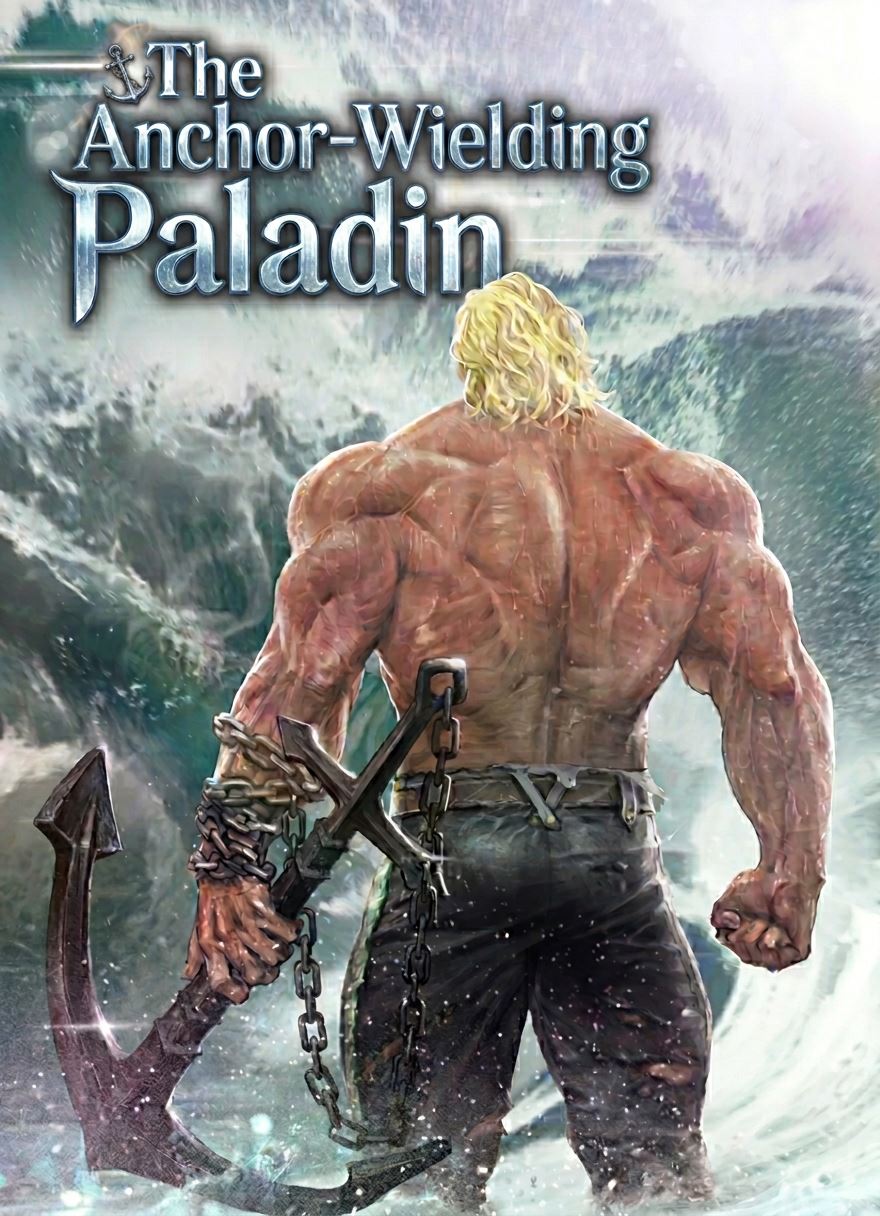
The Anchor-Wielding Paladin
+Add to Custom List
Genres:
Tags:
Novel Info

Summary

... Read More

Clayton Salvatore was the Paladin of the Deep Sea, the final member of a legendary group known as The Saviors. While his five comrades were hailed as the strongest individuals in history, each blessed by major deities, Clayton served Quiella, a minor sea god considered the weakest in the pantheon. The Great Cataclysm, a catastrophic event known as the Deicide Cataclysm, systematically slaughtered the gods of the world before devastating humanity. Clayton’s regrettability stemmed from the fact that he had spent a decade as a simple fisherman before receiving his divine revelation. His comrades lamented that if Clayton had become a Paladin ten years earlier, he might have been chosen by stronger gods like Ovesis or Teom, potentially saving the Maritime Empire and altering the course of the war. Despite this, Clayton bore no resentment, accepting the blame for his perceived delay even as he fought to the death alongside his peers.

The conflict reached its grim conclusion when the remaining gods and their champions were defeated. Only Heyshan, the Three-Chosen of the Celestial Sphere, survived alongside the dying Clayton. With their last reserves of life force, the celestial gods united the faith of all humanity to perform a miracle that defied natural order: sending Clayton back in time. Heyshan explained that none of the other strong warriors could change the outcome, but Clayton possessed a unique potential that could alter fate. They sent him back to when he was fifteen years old, the age when he was still an unaware fisherman, in a desperate bid to prevent the death of the gods and the subsequent ruin of the world.

Clayton awoke in his teenage body, physically weaker but mentally intact with all his future memories. He immediately recognized the urgency of his mission. The Deicide Cataclysm was imminent, and he needed to secure his status as an Apostle to Quiella before the gods began to die. His first act was to declare his intent to become a Paladin, shocking his parents who had hoped he would join the navy or serve a more popular god. Despite his frail physical condition, Clayton demonstrated innate superhuman strength, defeating low-grade sea monsters that had invaded the waterfront of Kamtona City. He fought with an oar and later an anchor, displaying combat techniques that far exceeded his apparent level, thereby capturing the attention of the local clergy and the public.

A critical turning point occurred when Clayton discovered that Quiella’s divine authority had already begun to wither, severing the connection between the goddess and her clergy. Realizing that this anomaly was linked to the temporal displacement, Clayton descended into the Deep Sea to confront his deity directly. He found Quiella in a withered, near-death state, having consumed her own limbs to sustain the miracle that allowed his regression. The goddess prepared to accept her fate, advising Clayton to seek out stronger gods like Ovesis to ensure humanity’s survival. However, Clayton rejected this resignation. He declared that it was the duty of humans to save gods, not the other way around. Channeling his own life force and unyielding will, Clayton poured his energy into Quiella, reigniting her divine spark.

This act of reversing the natural order stunned the celestial gods, whose light dimmed as they watched the weakest deity regain her power through human intervention. The surge of divinity restored Quiella’s strength and simultaneously designated Clayton as her official Apostle. The clergy of Kamtona, witnessing the pillar of black light rising from the sea, knelt before him, recognizing the return of the Paladin of the Deep Sea. Clayton emerged from the ocean with the full authority of Quiella, ready to confront the coming Calamity. Armed with knowledge of the future and the revitalized power of his goddess, he vowed to protect the world and rewrite the tragic history that had previously destroyed everything he held dear.

Latest Release
DateGroupRelease
2026-10-01dawn translations c162
2026-10-01dawn translations c161
2026-10-01dawn translations c160
2026-10-01dawn translations c159
2026-10-01dawn translations c158
2026-10-01dawn translations c157
2026-10-01dawn translations c156
2026-10-01dawn translations c155
2026-10-01dawn translations c154
2026-10-01dawn translations c153
2026-10-01dawn translations c152
2026-10-01dawn translations c151

Community Reviews

Rating(0 / 5.0, 35votes)
5 stars
0(0%)
4 stars
0(0%)
3 stars
0(0%)
2 stars
0(0%)
1 stars
0(0%)

Popular reviews

... Read More
I have to say, the subplot with these pirates is genuinely one of the freshest things in this whole arc. You've got this whole chapter dedicated to the antagonists planning their move, which is already unusual—most novels just throw the enemy at the hero without showing us how they got there. The Boss laying out the strategy: Clayton is 4-Star, his crew has five 3-Stars and sixty 2-Stars, they've killed Paladins before, and the real prize is the goddess avatar itself. It reads like a heist briefing, and honestly? It worked on me. I was leaning forward thinking, okay, this could go either way. But then Clayton walks into that house and it turns out the entire ambush was... underwhelming. Six people. A fake sick mother act. pistols that get deflected by a chain. And Clayton neutralizes all of them without even trying. The anti-climax is the point, isn't it? This is a guy who was once The Strongest, now trapped in a teenager body that barely reaches 4-Star, and even at his weakest he's still untouchable by ordinary standards. The plot twist here isn't that he gets into trouble—it's that we see him struggle with the anxiety of not being able to hold back if someone actually strong shows up. "I am so feeble right now that I would have no choice but to kill that person." That line hit me harder than any action scene. The real tension isn't whether he'll win—it's whether he can keep his hands clean.
... Read More
The pacing here is absolutely relentless and I mean that in the best way possible. You go from Clayton waking up confused to declaring his divine mission to fighting sea monsters before you've even finished processing what just happened. Chapter structure is doing a lot of heavy lifting. The domestic scenes with his parents take up maybe a third of the text, establishing emotional grounding, and then BOOM - alarm sounds, he's sprinting toward danger. The author doesn't let us linger too long in sentiment. Every emotional beat gets interrupted by action, which keeps the momentum rolling forward. What's interesting is how the physical limitations create pacing tension. Clayton wants to leap twenty stories like he used to, but he can barely make it partway up a crane. He wants to fight like the Paladin he became, but he's getting winded after ten minutes of running. The prose itself mirrors this - sentences get shorter, more urgent, more fragmented as the monster attack begins. You feel his desperation through the rhythm of the writing. The chapter ends with him requesting power from Vishujei and grabbing an oar as a weapon. No neat resolution, no victory lap. Just a kid with an adult's determination trying to survive against impossible odds. That cliffhanger energy is exactly what makes you want to immediately start the next chapter.
... Read More
There's a moment in this passage where Clayton undoes the anchor chain and something incredible happens visually. He doesn't swing it like a weapon—he grasps it and focuses, and the Authority of the Deep Sea compresses it. The chain becomes an iron whip, the anchor shrinks to a handle. But the weight stays the same. I literally felt that weight reading it. The image of a scrawny fifteen-year-old boy holding something that weighs as much as it did before compression, moving it like it's nothing, is the kind of visual storytelling that doesn't need paragraphs of description. Then there's the house in the Kamtona slums—pirates could enter and occupy it without anyone stopping them. That one line tells me everything I need to know about this city. It's lawless, it's corrupt, and the Church probably has zero presence here. The contrast between that grimy, dangerous slum and the holy mission Clayton is on creates this tension in the setting itself. He's walking into a den of thieves as an Apostle of a goddess, and the world doesn't care. But my favorite visual beat is probably the bullets ricocheting back. "The deflected bullets had all ricocheted back to their own hands, breaking their guns and injuring their wrists." It's almost comical how cleanly he dispatches them—not with explosions or drama, but with precision so absolute it looks like they defeated themselves. And Clayton's internal reaction? "Clayton was genuinely bewildered that they had all been neutralized in a single move." Even he's surprised by how effortless it is. The worldbuilding here is in the details—the power scaling system, the black market for Holy Oil, the idea that a god's avatar can be physically carried and squeezed. None of this feels tacked on; it feels lived-in.
... Read More
There's a moment in these chapters that hit me like a truck. Clayton fights a Mid-Grade Monster, barely survives, tears it apart with Quiella's tentacles, and then the crowd cheers. They chant his god's name. They call him Lord Apostle. And he's fifteen years old. The text says: "It wasn't just because he had won. There was a spectacle to Clayton's fighting style. It was a thrilling and refreshing display... everyone was excited by the unconventional brutality of him beating monsters with it." But underneath all that external praise, Clayton feels only regret. Regret that he's weak. Regret that using Divine Power burdens Quiella. Regret that he can't just solve everything with his bare hands like he probably could in his previous life when he was stronger. "Pant. Pant... It's still hard to face a Mid-Grade monster without Divine Power. I don't want to use it since it's a burden on Quiella..." That line broke me a little. A fifteen-year-old boy carrying the weight of a dying world, trying not to drain the god who's already giving everything she has. And still he smiles at the end. Still lifts the anchor one-handed and grins at the crowd like he's fine. Like he's not running on fumes. The friendship thread here is also quietly devastating. Heyshan sacrificed himself to send Clayton back, and Clayton will never get to thank him in this timeline. Quiella tells him to be grateful and move on, and he does. But the chill he feels looking toward the wharf—something unspoken, something he can't quite process. Grief doesn't always announce itself with sobbing. Sometimes it's just a sudden coldness on your skin.
... Read More
Quiella is a character who makes me laugh and wince in equal measure. The way she shuts down Clayton's desire to reunite with his old comrades is brutal but honestly kind of brilliant. Four solid reasons, delivered with zero emotional warmth, and then she just spits ink in his face. That's not cruelty—that's love language for a tentacle god. And Clayton? He's so earnest about everything. He gets genuinely excited about meeting his comrades again, then immediately folds when Quiella dismantles his plan. "That is the most correct choice!" he says like he's reciting a moral textbook. This boy has no chill and I respect it. The most interesting dynamic though is the faith-god transaction. Quiella explains it plainly: believers offer will in the form of Faith, gods return Divine Power. But Clayton's internal monologue betrays something deeper—he doesn't want to use Quiella's power because it's a burden on her. She's weakened. Every prayer, every miracle costs her something. And yet he still summons it when it matters. That's the tragedy of their relationship: they need each other, they care about each other, and the very thing that binds them is a limited resource. "How lamentable. How can an Apostle so weak possibly protect the world!" — Clayton says this genuinely, and the text confirms he's not faking. His self-awareness about his own weakness is what makes him compelling. He knows he's not enough yet, and that knowledge eats at him more than any monster could. I also love that other Paladins and Priests from different churches are fighting alongside him. The Worldbuilding here is setting up alliances that feel earned, not forced. Teom's priest healing Clayton mid-battle shows this isn't just a solo hero story.
... Read More
Okay so I need to talk about Clayton because THIS MAN. He's called the weakest Paladin and the worst-timed hero ever, and honestly? I respect him so much for it. The way he carries himself throughout all this... he's this giant guy (over two meters, 120 kilograms!) who basically just shrugs and laughs and says "heh heh" no matter how hard his friends pile on the guilt. But it's not like he's ignorant about it. The text literally says he inwardly accepts it too. He knows they're right. What hits me hardest is his relationship with his god, Quiella. She's this tiny, frail, almost insignificant goddess who practically no one worships anymore. And Clayton, this massive guy who could throw cannonballs and deadlift ships, becomes this gentle protector. The text says it backwards from how it usually goes — "it wasn't the great god blessing the believer, but the great believer elevating the god's status." THAT IS SO BEAUTIFUL. It's like... he made her significant through sheer devotion. And then when he gets sent back, his first instinct isn't anger or confusion, it's rushing to her side asking if HE made her weak. That man would carry the world and apologize for the pressure. His dynamic with his comrades is equally layered. They blame him constantly — "what if you had started 10 years earlier?" — and yet they still need him. The Six Saviors literally put all their remaining faith into sending HIM back. Even the ones who resent him recognize that only Clayton could pull this off.
See all reviews

Custom lists

See all custom Lists