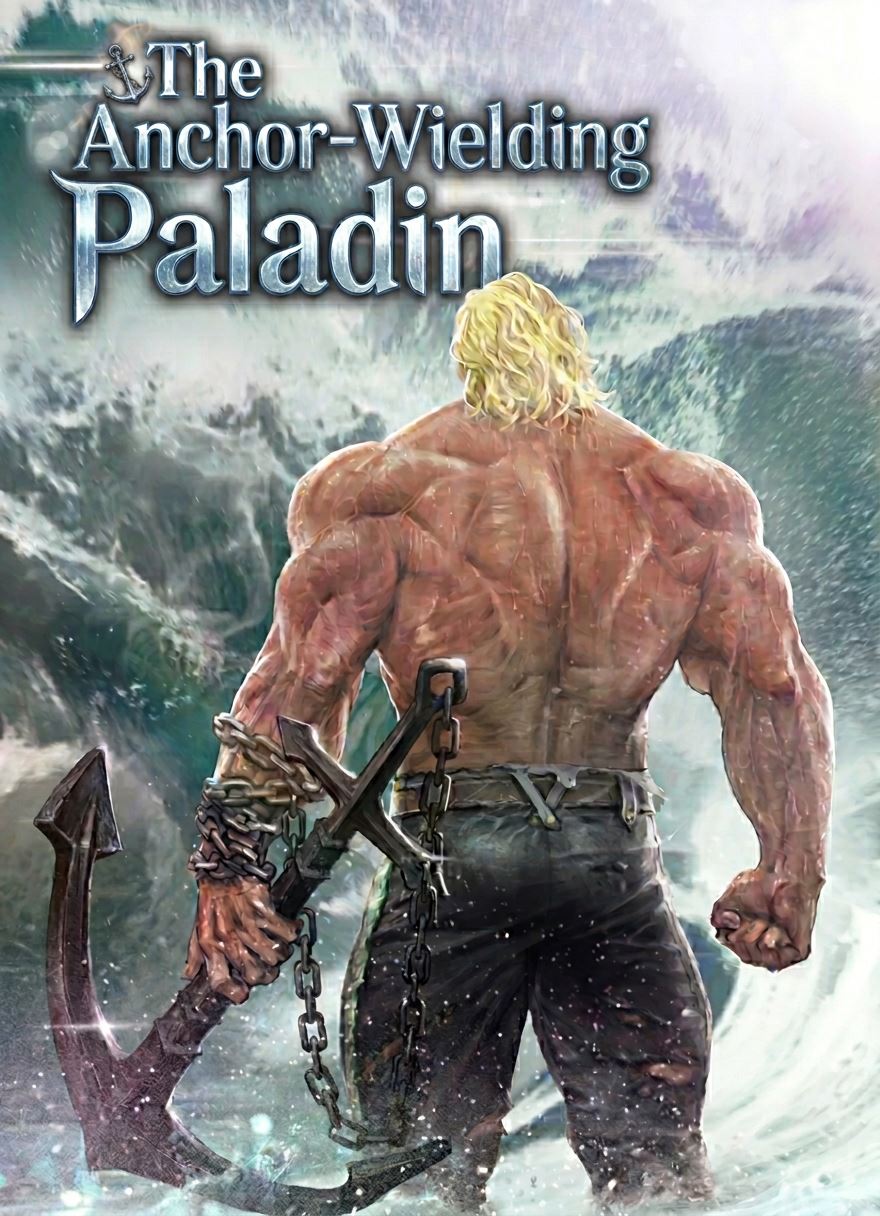
Okay I need to talk about how the author builds atmosphere in this section because it is ABSOLUTELY FILLED with worldbuilding that doesn't feel like infodumping at all.
Let me start with the opening image: two Paladins from the Church of the Deep Sea patrolling the wharf in full gear — neat black uniforms, masks covering their faces, carrying anchor-shaped maces and flails. The author doesn't just tell us they exist, they show us through the eyes of TWO PRIESTS from OTHER GODS who are watching them pass by and MUTTERING. This is such a natural way to reveal information — through gossip, through annoyance, through the casual observations of ordinary people going about their day.
'We've been seeing those guys a lot lately.'
'That's because they have to step up and fight now.'
Three sentences and I understand an entire economic and theological shift. Quiella used to be the funeral insurance church — nobody wanted to worship them, they were only visited for dead relatives and payout claims. Now they're the FRONT LINE. The priests of Dambo-o and Maiashi are watching these armored figures and realizing with dawning horror that their own churches are losing relevance.
The visual details are extraordinary. The anchor-shaped weapon counterweights — this is such a specific, tactile image that grounds the whole thing. These aren't magical sword-wielding paladins; they're people who looked at thick-skinned monsters and went 'regular swords don't work, we need blunt force.' The evolution of their gear tells the story of the Calamity without a single exposition paragraph.
Then there's the attack alarm — 'Bwoooooo!' — and the priests scattering to their posts. The author never explicitly says what an attack alarm sounds like, but that onomatopoeia does the job. You hear it. You feel the urgency.
And Clayton himself — described as moving through the crowd during a lull, helping residents, accepting gifts and redistributing them. There's this image of him literally surrounded by people, arms full of offerings, passing them to those who need more. It's a deeply visual scene of abundance and redistribution.
The jar detail is brilliant worldbuilding too. Quiella doesn't have a temple or a statue — she lives in a jar that Clayton wears like a necklace. The water inside turns black even under sunlight, and her eye gleams blue. This is a goddess who exists in something small and portable and almost mundane, which makes her strategic brilliance even more unsettling.
The wharf setting — where commerce meets danger, where gods' clergy walk past each other like rival gangs — feels so alive. You can smell the bilge water, hear the distant alarm, feel the tension between the churches. This isn't a fantasy world built from maps and timelines; it's a world built from STREET CORNERS and WHARVES and THE SMELL OF CRIME.