Winner Takes All - Reviews

Winner Takes All
+Add to Custom List
Sort
Add review
... Read More
"Oh, Jinxin was also born in the Year of the Goat," Mrs. Li added seriously. I laughed out loud at this line, and then immediately felt guilty for laughing, because it's actually devastating in context. Here's a mother, trying to find a cosmic justification for her son possibly loving a man, reaching for something as flimsy as Chinese zodiac compatibility. Meanwhile, Li Shuo internally recognizes the deeper superstition at work — the one his parents haven't even named yet. The real superstition isn't about birth years. It's the belief that if he just likes someone enough, if he's careful enough, if he's GOOD enough, the damage won't matter. And that's the theme that keeps echoing through this passage: the tension between self-deception and clarity. Li Shuo tells himself he's "cultivating his mind and body" — reading, working out, cooking, drinking tea — but we know what that really is. It's an elaborate ritual of trying to scrub someone off his skin. "He needed to calm down and forget the strong 'memories' Zhao Jinxin had left on his body." Those quotation marks around memories are doing SO much work. They're not memories. They're evidence. The recurring symbol here is doors and thresholds. Jinxin keeps appearing at Li Shuo's door — first metaphorically through texts and calls, then literally walking into his home. Each threshold crossed is another boundary Li Shuo failed to enforce, not because he's weak, but because kindness without boundaries is just self-betrayal wearing a nice suit.
... Read More
The stakes here are tiny and enormous at the same time. On the surface it's just two guys deciding whether or not to have sex for the first time. But read closely and you'll see the real conflict isn't physical—it's the gap between what Zhao Jinxin wants and what he thinks he deserves. Every time he initiates and then pulls back, he's testing a hypothesis: if I stop first, maybe I won't get hurt when you eventually leave. The line 'You can. But I can't' isn't about ability. It's about armor. Li Shuo knows this. That's why when Zhao Jinxin asks 'Can I do it?' the second time, Li Shuo doesn't hesitate. He flips the script. 'Don't go.' Three words and the power dynamic shifts. Zhao Jinxin thought he was the one holding back, the one protecting himself. Turns out Li Shuo was the one waiting. Now I keep thinking about that translator note—'shit about to go down.' What shit? What happens after 'First Time'? Because if this chapter is any indication, the real conflict isn't whether they sleep together. It's what comes after. The domestic bliss—the cooking, the chores, the projector movies—that's the calm. The next chapter is probably the storm. And I'm here for it. The stakes were never about sex. They were about who gets to be vulnerable first and whether the other person will catch them or pretend not to notice.
... Read More
Okay so the stakes just quietly exploded and I need a minute. Everything felt warm and cozy in that bedroom—porridge, bear hugs, whispered dirty talk—and then Li Shuo drops the bomb casually like he's discussing the weather. 'I'm thinking of going back to China next month.' Zhao Jinxin's entire energy shifted in one sentence. 'Don't go back.' Not 'why' first. Just a flat, immediate objection. And Li Shuo keeps going—he's talking about work, about his dad, about Beijing branches and senior executives—like he didn't just poke a hornet's nest. This man is so earnestly trying to be reasonable about leaving the person he just became intimate with. The tension here is absolutely delicious because nobody is saying the real thing. Li Shuo needs to return to China for practical reasons. Zhao Jinxin doesn't want him to leave. But neither of them is talking about the actual fear underneath it. What happens if they're apart? What happens if Li Shuo changes his mind? What happens when Zhao Jinxin's father—the formidable Shao Qun he's messaging RIGHT NOW—gets involved? And that ending note. The phone message to Shao Qun. I was already suspicious but now it's confirmed beyond doubt. Zhao Jinxin is playing a longer game and Li Shuo is too wrapped up in feeling seen and desired to notice the strings being pulled. The suspense isn't whether they'll end up together—that ship has sailed. The suspense is what happens when the other shoe drops and Li Shuo realizes his young boyfriend may have been engineering this entire connection from the start.
... Read More
I've been thinking about Zhao Jinxi's dialogue all night. This guy—eleven years younger, thick-skinned, always smiling—and yet every line he says feels like it's calculated to dismantle Li Shuo bit by bit. Listen to this exchange: "I like you. I want to sleep with you." — "What's wrong with that?" He says it like he's ordering food. Like it's the most normal thing in the world. And Li Shuo's response? "You can keep on dreaming though." Cold. Dismissive. But they both KNOW that's not how this ends. The dialogue between these two has this weird rhythm where Zhao Jinxi is all surface energy—teasing, flirting, fake-crying about his hand—and Li Shuo is all resistance on the outside but completely unraveled underneath. Their voices couldn't be more different. Zhao Jinxi's lines are bouncy, playful, deliberately provocative. He even has that performative quality—"playfully pinching an imaginary skirt and giving a flirtatious curtsey." He's ALWAYS performing, even when he's being serious. Then there's Li Chengxiu on the phone. Completely different register. "It's too extravagant." "I'm not very good at talking." Reserved. Careful. Every sentence measured. And Li Shuo's responses to him are gentle almost to a fault—"my sweet Chengxiu," "just patiently wait for me to come back." You can hear the difference in how Li Shuo speaks to each of them. With Zhao Jinxi, there's friction and heat. With Li Chengxiu, there's... something else. Something heavier. The dialogue itself is telling us everything the narrator won't say out loud.
... Read More
Okay let's be real—the stakes here are deceptively simple but also terrifyingly complex. On the surface, Li Shuo just met a handsome guy on a plane who sent him some nudes. That's it, right? Wrong. Li Shuo is a man who has built an entire life around control. He has his business in China, his parents he checks in on, his routine (texting Xiao Chengxiu at midnight like clockwork). He refused his father's company outright. He's careful, measured, predictable. And then this guy shows up, flips his blindfold, whispers in his ear, and suddenly everything feels off-balance. The internal conflict is palpable: Li Shuo tells himself he won't give his number, that he'll refuse politely, but watch what actually happens—he smiles, he engages, he saves the photo. His body is betraying his careful calculations. And that nude picture? It's not just titillation; it's power. Zhao Jinxin is literally holding images that could disrupt Li Shuo's whole world, and Li Shuo saves them anyway. "For example, this photo in front of him gave him a strong visual impact." Strong. That's such an understatement. He's affected, he's intrigued, he's potentially compromised—and he knows it. The tension isn't whether they'll meet again (Zhao Jinxin just said they will), it's whether Li Shuo can maintain his composure when he already wants to lose it. And honestly? I think he's done.
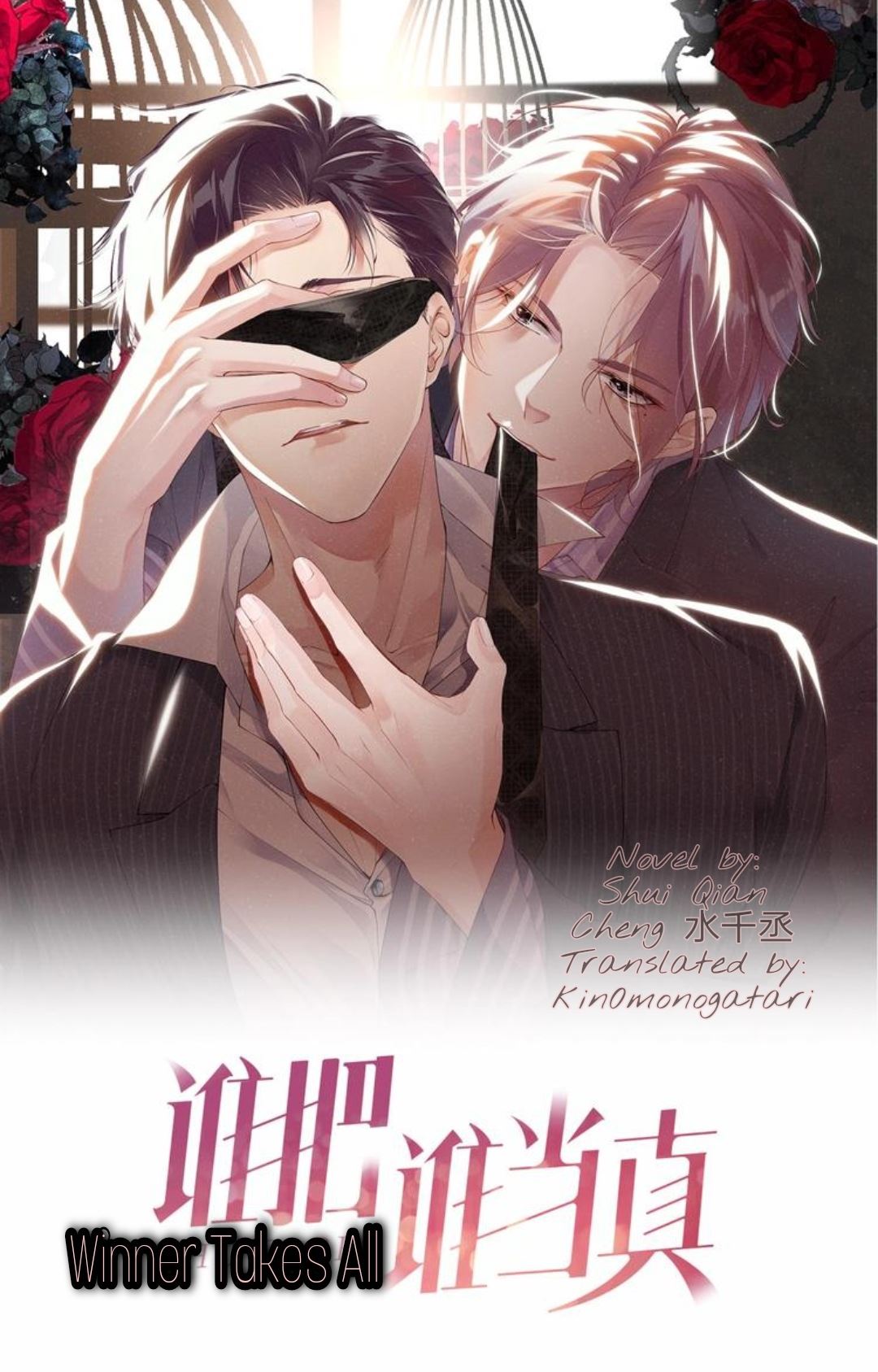
... Read More
Zhao Jinxin is one of my favorite toxic-adjacent characters ever written. He walks into that office smelling like fresh paint and immediately goes into full caretaker mode, but let's be real — half of him just wanted an excuse to carry Li Shuo home like a princess and the other half genuinely cares. Both motivations? Totally valid. The moment when he touches Li Shuo's forehead and says “Uncle Li, is it okay to let me be by your side?” — this is where the mask slips, isn't it? One second he's being the playful rogue who makes inappropriate comments, the next he's genuinely vulnerable, asking for permission like he actually fears rejection. And Li Shuo? The man who spent three paragraphs trying to politely send him away while simultaneously thinking “there's no need to trouble you” in his heart while his inner voice was literally saying the exact opposite. I LOVED this duality. When illness drops his guards, everything becomes so much more honest. That line “You can't give me what I want” — delivered while feverish and half-delirious — hits so much harder because it's not performed for anyone. It's just true. Zhao Jinxin's response “If I can't give it, then no one else can” is one of those lines that stops you cold. Is it arrogant? Absolutely. But there's also something dangerously self-aware about it, like he knows exactly what he is and exactly what Li Shuo needs, even if Li Shuo would never admit it sober. The power dynamic here is everything. Zhao Jinxin literally carries Li Shuo home. He arranges doctors. He watches him sleep. And Li Shuo, the composed, mature, always-in-control older man, is reduced to a flustered mess who can barely clench his fist. This reversal is delicious. But here's what gets me: Zhao Jinxin doesn't take advantage. He feeds him water. He checks his temperature. He jokes around to lighten the mood. Even when he admits to getting aroused just looking at Li Shuo in that white tank top, he still pulls back. The wolf pretends not to pounce. That restraint? More powerful than any domination scene. I keep waiting for Li Shuo to catch on to how much Zhao Jinxin actually cares beneath all the teasing and manipulation. But maybe that's the point — he might already know, and that's what terrifies him most.
... Read More
There's this recurring motif in the novel of drinking as a proxy for power negotiation, and this chapter is absolutely dripping with it. Every glass of alcohol represents something being offered, demanded, or refused. Li Shuo blocking wine for his father is filial duty wearing a social mask. Zhao Jinxin drinking half a catty solo is a performance of devotion that doubles as a claim to belonging. The executives pressing drinks is their way of testing loyalty hierarchies. But the most potent symbol in this chapter is honestly the window. Li Shuo looking out of it during the car ride. Zhao Jinxin watching Li Shuo from across the conference room without ever meeting his eyes directly. Windows are barriers that are also transparent — you can see through them but you can't touch what's on the other side. That's basically their entire relationship condensed into glass. And then there's the phrase 'You have won' which echoes throughout the whole narrative like a cursed blessing. Zhao Jinxin saying it with what sounds like reverence — as if bowing to some almighty power — suggests he genuinely believes Li Shuo has conquered him. But win what? Lose what? The novel keeps this deliberately ambiguous and I think that's intentional. Love as conquest, love as surrender, love as ownership — they blur together until you can't tell which is which. The father mentioning that if Li Shuo hadn't left China, Zhao Jinxin might have grown up different, saved Lao Zhao from worrying — this casual speculation about alternate lives and alternate loves is the kind of thematic thread that makes rereading this entire series feel like a completely different experience.
... Read More
The dialogue in this passage is razor-sharp. Every line does double duty—you're advancing the plot AND revealing character at the same time. Look at Li Shuo's voice: short, cold, precise. 'Get out.' 'What the fuck are you doing now?' 'You are already out of the game.' He doesn't use metaphors. He uses scalpel cuts. Zhao Jinxin's voice is different—more expansive, more emotional. 'I am in love with you.' 'I can't be separated from you.' 'You can only respond to me.' His sentences are longer because he's trying to fill the space between them with words. When Li Shuo has nothing to say, Zhao Jinxin keeps talking. That's their dynamic in dialogue form. The best lines are the ones that twist. 'I regret it' from Zhao Jinxin should be romantic, but coming after 'I will never bother you again' it's devastating. And Li Shuo's response: 'No, you gave yourself forty-three days to sleep around with all kinds of people.' He takes Zhao Jinxin's sincere confession and reframes it as calculation. That's not just dialogue—that's character warfare. Even the narrator's voice changes. When describing Li Shuo's anger, it's clinical: 'expression became abnormally cold.' When describing Zhao Jinxin's desperation, it's physical: 'arms tighten,' 'heart throbbed uncontrollably.' The narrative perspective shifts subtly to match whose pain we're feeling in each moment. One line broke me: 'There's nothing different between you and the boyfriends that I broke up with in the past.' That's not just rejection—that's erasure. Li Shuo is telling Zhao Jinxin he's replaceable. And we know it's a lie because Li Shuo is the one who can't let go.
... Read More
There's this recurring idea that fever strips people bare—makes them irrational, honest, unable to maintain their usual defenses. Li Shuo himself notes this: "After all, he was sick. So he was irrational. The clear-headed Li Shuo would never allow himself to show such weakness." The fever becomes this strange liminal space where truth leaks out. Li Shuo's delirious words—that famous line about giving something to no one else—are the most honest thing he's said in chapters, and he can barely remember owning them. Then there's the imagery of heat and cold running through the whole chapter. Li Shuo's burning body vs. the "icy spring water" of Zhao Jinxin's humming. Zhao Jinxin literally coolens him while simultaneously making everything more intense. The wet clothes he changes out of represent the old version of Li Shuo being shed. And that final line about not being able to understand? It's not just romantic confusion—it's the theme of the whole story crystallized. Understanding requires trust, and trust requires honesty, and neither of these men has given the other either. The house itself feels like a character: private, enclosed, nowhere to run. We're watching two people who want each other desperately but keep choosing the wrong tools to get there.
... Read More
This chapter is dripping with symbolism, and I'm obsessed. First, the Africa donation—it's not just charity; it's Han Feiye's attempt to atone for a life he feels he wasted. But he says it was 'too late.' Too late for what? For Li Shuo? For himself? The recurring motif of time is brutal here: zodiac signs, twelve years, 'next year will be my zodiac year'—it's all about cycles they can't escape. Then the darkness. Zhao Jinxin's fake power outage, the moonless sky, the small light sources that make things 'even scarier.' Darkness here isn't just absence of light; it's absence of truth, of clarity, of honesty. Li Shuo literally rushes into it, hoping to comfort someone, but ends up standing in a cage of someone else's making. And the chapter title: 'Boundaries.' What boundary? The one between past and present? Between love and possession? Between forgiveness and forgetting? Li Shuo tries to draw one at the end—pointing at his neck—but Zhao Jinxin just hugs him tighter. The symbolism isn't subtle; it's suffocating, just like the theme itself.
... Read More
Okay, so the chapter opens with this frantic energy. Li Shuo is getting news about Li Chengxiu— disappeared, phone off, no trace. That's your classic inciting incident for a subplot, right? Instant mystery, instant stakes. And it's not just gossip; Wen Xiaohui's anxiety feels real, and Li Shuo locking himself away to search tells you this character is invested, maybe more than he lets on. But then, boom, Zhao Jinxin appears and drags him out for a drink. The plot switches gears from desperate search to… what? A date? A interrogation? The tension doesn't drop; it just changes frequency. You're left wondering: is this bar scene a distraction from the main crisis, or is it another layer of the puzzle? Li Chengxiu's absence hangs over every line of dialogue. It's a smart structural choice—the ‘missing person' thread keeps the narrative spine taut while the social scene provides breathing room. But does the pivot feel earned? Or is the author playing with contrast to highlight Li Shuo's divided loyalties? I keep waiting for the bar conversation to somehow tie back to the missing guy, and maybe it will. For now, it's a tense, character-driven interlude that asks more questions than it answers.
... Read More
Okay so let me just say this — the way the author structured these chapters is chef's kiss. You've got this whole scene at the dining table with the families, right? Seems like filler, seems like warmup. And then BAM. The phone dies. Li Shuo wakes up to a dead phone, goes through the motions of walking dogs, has this almost-normal morning with Zhao Jinxin, and then — the text from Li Chengxiu drops like a guillotine. 'I can't go to America with you. I'm almost thirty, and I don't have the courage to start over in a strange country.' The pivot from that goofy dog-walking scene to absolute devastation is brutal and I love it. The author basically lulls you into feeling safe with the comedic beach resort vibes — the butler on a bicycle, the dogs jumping on Zhao Jinxin — and then just yanks the rug out. This is what I mean by '拍大腿' moments. The setup was so mundane that the payoff hits ten times harder. And the line from Zhao Jinxin — 'Give up on Li Chengxiu' — before the text even arrives? That's foreshadowing layered on top of foreshadowing. He already knows. He's already seen something. The reader doesn't know yet, but we feel it. By the time the text confirms everything, it's too late. What's interesting structurally is that Chapter 54-57 basically does a complete emotional arc in one sitting: reconciliation → domestic calm → rupture. Three movements in four chapters. That's not easy to pull off without feeling rushed, and somehow the author makes it feel inevitable rather than forced.

Leave a comment

You must be logged in to leave comments. or
