Winner Takes All - Reviews

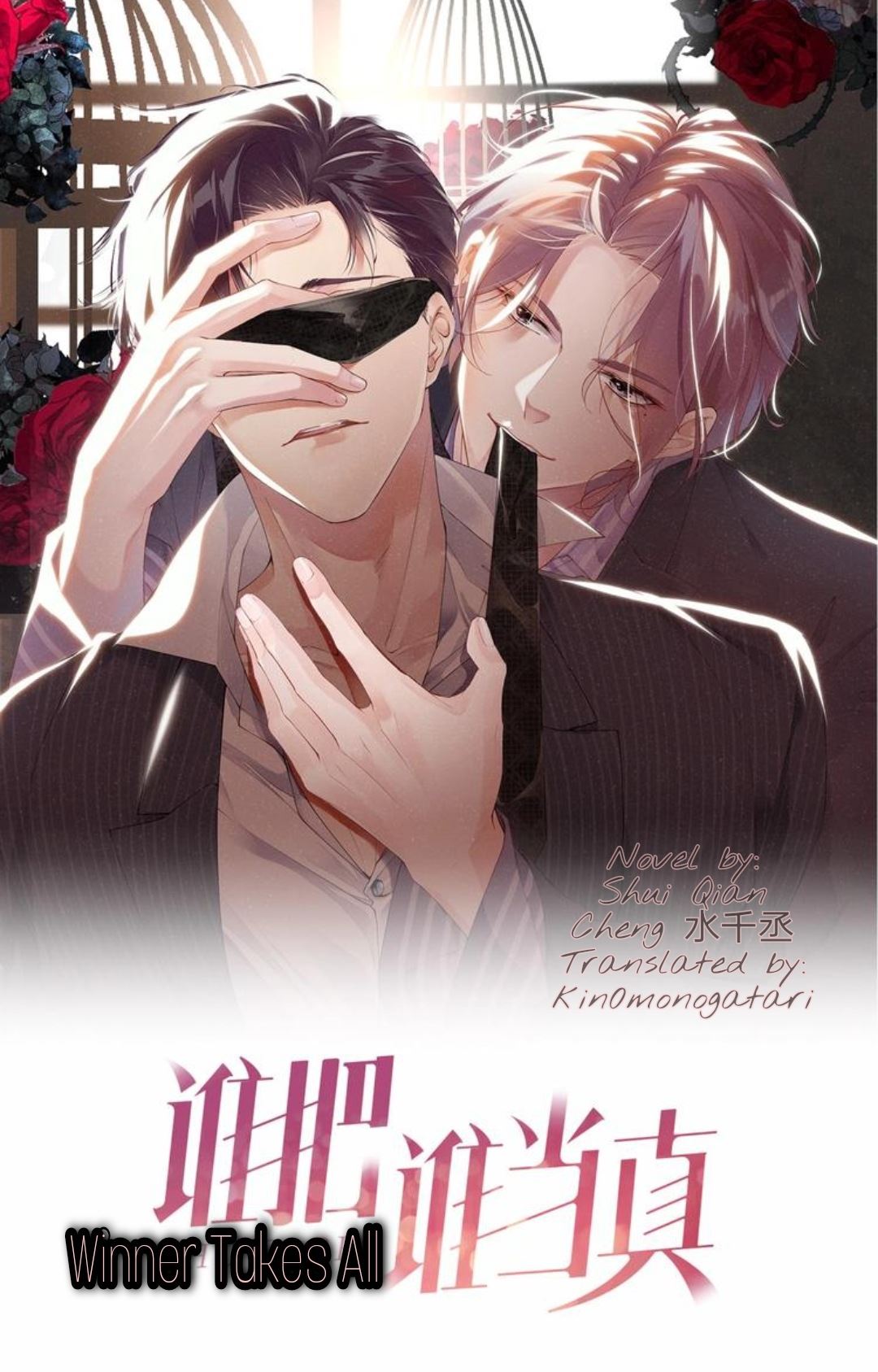
Winner Takes All
+Add to Custom List
Sort
Add review
... Read More
Can we talk about how visually CINEMATIC this entire sequence is? The author really understood how to frame these scenes like camera shots. First you have Li Shuo standing in a room he carefully decorated — flowers on the wall, heart-shaped candlesticks, murals, ribbons, curtains — and then he SMASHES IT ALL. The stool hitting the table like a drum of battle, the paint bucket splashing across those white sheep toys. I swear I could see every frame. And then the aftermath: Zhao Jinxin walking down a corridor with cleaners surrounding him in the elevator, the doors opening to reveal that devastation, the petals scattered on paint-splashed walls, and still somehow being able to make out 'happy birthday' and Zhao Jinxin's English name written among the wreckage. The visual contrast is brutal — what was once romantic and warm turned into something almost grotesque. But here's what really got me: the author doesn't describe any of this through dramatic narration. It's all shown through Zhao Jinxin's slow, unwilling walk toward the suite, his trembling breath, the way he doesn't even care that paint ruins his shoes. He walks through garbage like it's sacred ground. And then later, Li Shuo's apartment — dim light, him lying in bed for twenty-four hours, the doorbell sounding like it's coming from another dimension. Two spaces, two kinds of emptiness, both perfectly rendered.
... Read More
What are the stakes in this scene? Everything. Literally everything. On the surface, Li Shuo is confronting the possibility that his entire relationship with Zhao Jinxin was a performance. But dig deeper and the stakes multiply. There's his friendship with Wen Xiaohui — who is literally holding back tears and rage outside that door. There's his rivalry with Cheng Xiu, which Zhao Jinxin has been manipulating like a chessboard. And then there's the child, hanging over all of it like a ghost. The internal conflict is where this scene really lives though. Li Shuo spent so much of the novel trying to 'tame' Zhao Jinxin, trying to build something real through patience and concession. And now he's hearing that every gesture of trust was seen as entertainment. That's not just heartbreak — that's an identity crisis. Who was he if his sincerity was someone else's amusement? "The rotten internal organs bleed all over the floor. This gloomy hospital corridor instantly became a slaughterhouse of his own." That line is not hyperbole. That is the narrator giving us direct access to Li Shuo's internal devastation. The physical metaphor does so much work — this isn't abstract pain, it's visceral, it's bodily, it's irreversible. And the external stakes? Zhao Jinxin is already planning his exit strategy. 'When I get tired of him' — future tense. The clock is ticking. Li Shuo doesn't just have to process this betrayal; he has to decide what to do before Zhao Jinxin decides for him.
... Read More
Okay so Zhao Jinxin follows Li Shuo into the bathroom and literally just SHUTS THE DOOR. Like bro, this is such a tell for his entire character. He operates on impulse, he doesn't respect boundaries, but he's also so shamelessly self-aware about it. When he pressed Li Shuo against the bulkhead and said 'What I want to do is definitely not childish' — that's not some smooth romantic lead moment, that's a guy who knows exactly what he's doing and enjoys the power play. And the wildest part? Li Shuo is genuinely flustered. I can feel his heart racing from the text, and Zhao Jinxin literally calls him out on it: 'your heart is beating so fast.' It's infuriating and also kind of brilliant characterization because you can't even dismiss Zhao Jinxin as a cartoon villain. He's confident, charming, wealthy, talented — the narrative literally tells us he's rare. He just happens to be a goblin when it comes to Li Shuo's consent. But then he steps back and says 'I seem to have fallen in love with you at first sight' with visible disappointment? That's not manipulation, that's someone who's used to getting what he wants and genuinely stung by rejection. Meanwhile Li Shuo has these ironclad personal principles — he considers Zhao Jin xin tempting but he's married to someone else emotionally and won't compromise. The dynamic between them is so toxic and magnetic at the same time. Who is this other person anyway?
... Read More
Okay let's talk about these two because WOW. Zhao Jinxin is such a fascinating character. He's the perfect mix of charming and unsettling. On the surface he's sweet—‘Xiao Shuo, when Jinxin moves to China, you must take good care of this Didi of yours' and everyone smiles and plays along. But there's something predatory underneath that sweetness. That whispered ‘I told you we will meet again' while looking sideways at Li Shuo? Chilling. He's been waiting for this. He planned this. Or at least, he knew exactly how to position himself. And Li Shuo's reaction is so much fun to analyze. He's clearly unsettled but refuses to show it. Remember the childhood flashback—he saw the nanny rolling her eyes and the other kids being kept away from baby Jinxin, and even then he ‘didn't step forward.' He noticed everything but stayed carefully distant. That's who he is: observant, guarded, protective of his boundaries. And now he's facing this person who clearly crossed some line before and has resurfaced at the worst possible moment. The power dynamic here is SO interesting. Zhao Jinxin has this confidence—the ‘sweet, endearing smile' that doesn't reach his eyes when he's talking to Li Shuo alone. Meanwhile Li Shuo is mentally calculating how to avoid getting ‘entangled” while maintaining family harmony. These two are on completely different wavelengths but forced to share a dining table. What really got me was Li Shuo's concern about Li Chengxiu. He can't leave him, he can't disrupt his plans, and now THIS person is entering his orbit. The stakes just went way up.
... Read More
Okay so let me just say — this chapter sequence is absolutely BRILLIANT in how it handles the central confrontation. The Shao Qun vs. Zhao Jinxin scene hits like a truck. I thought I knew where this was going, and then the "I have never dated anyone" line came out and I literally sat up in bed. It's such a devastating reversal because it takes something that should be protective (revealing family connection) and turns it into a weapon — Zhao Jinxin's entire identity as someone who can manipulate situations falls apart in that one sentence. But what I find most interesting is how Li Shuo functions as the observer-turned-participant. He's been watching this whole thing unfold, trying to maintain some kind of rational distance, and by the end he's the one admitting: "How could he become less and less like himself." That's the plot pivot right there. The external conflict (finding Li Chengxiu, the father subplot) is still simmering in the background, but the real story here is about control — or rather, the loss of it. The late-night phone call is such a perfect structural choice too. After all that drama, we get this almost domestic scene that somehow feels more tense than anything else. Zhao Jinxin showing up at 3am counting down seconds... the author knows exactly how to keep you hooked without relying on big action sequences.
... Read More
Okay I need to talk about that one line because it wrecked me. Amidst all this raw, almost violent physicality between Zhao Jinxin and Li Shuo, Li Shuo whispers 'Jin Xin... Why... do I like you...' and that's it. That's the knife twist. Everything before it—Zhao Jinxin dragging his drunk half-conscious body up the stairs, the selfish hunger, the possessive monologue about making sure Li Shuo never dares look at anyone else—it all builds this picture of someone who loves like he's starving. But then Li Shuo, barely awake, in the middle of being absolutely consumed, asks WHY. Not 'why are you doing this' but 'why do I like you,' like he's genuinely puzzled by his own surrender. That's the emotional core of the whole thing. Zhao Jinxin stops. The narration literally says 'suddenly stopped.' All that momentum, all that controlled aggression, and one question from Li Shuo brings him to a dead halt. That's when you know these two are trapped in something real, not just physical. And then the aftermath—cleaning him up, kissing his forehead, seeing the phone on the nightstand—Zhao Jinxin shifts from predator to caretaker so fast it's almost touching. He's worried about something else even while lying next to this half-dead man. I keep coming back to that moment of stillness after the storm.
... Read More
So Zhou Jinxing drops this whole exposition about land exchange rights certificates — government IOUs from the 1990s real estate bubble — and I initially thought it was just plot mechanics. But sitting with it now... it's a metaphor so on the nose it aches. The land exchange rights certificate holder has the right of refusal as long as they can match the price. They can always buy the land back. They have priority. This is literally what Zhao Jinxin is doing with Li Shuo — positioning himself as the original claimant who gets first refusal on Li Shuo's life, regardless of whether Li Shuo wants that privilege. "There is no reason for the government not to sell the land back to the original owner for the difference in appreciation between land prices." Translation: the universe owes him back what was originally his. The concept of "fair value compensation" is how Zhao Jinxin rationalizes his obsession. He believes the math works in his favor. And then Li Shuo's fantasy about wanting three or four children with two fathers — a future that explicitly excludes Zhao Jinxin because "These things are too far away for Zhao Jinxin." His dream life requires emotional availability Zhao Jinxin cannot provide. The impossibility isn't external; it's fundamental to who Zhao Jinxin is. "Misfortune can form into fortune. Even if his heart is riddled with holes, at least he saw the wrong person clearly." — This line lands like a hammer. Self-awareness as survival mechanism.
... Read More
"The embankment in his heart had arbitrarily dug a hole." This line. This single line. I've read it three times and it still doesn't get easier. Li Shuo spent an entire month building this wall—this careful, deliberate structure—to keep Zhao Jinxin out of his head. Work, projects, normalcy, moving on. All of it was the embankment. And then one phone call from an old man who just wants him to check on his son, and boom, a hole appears out of nowhere. Not because Li Shuo wanted it to. Not because he's weak. But because the urge to check on someone you claimed to be over is stronger than any wall you build. The symbolism is so elegant it hurts. An embankment holds back water—emotions, memories, attachment. And holes in embankments aren't deliberate; they're accidental, random, inevitable if the structure isn't reinforced. The author isn't even being dramatic here, just stating a fact. But that fact contains the entire tragedy of their relationship: Li Shuo never really stopped caring, he just built a dam and hoped it would hold. Meanwhile Zhao Jinxin is probably sitting in that empty house, drinking, thinking the exact same thing from the other side.
... Read More
"Isn't it me that you like?" Zhao Jinxin whispers this. Just once. Just quietly. And then Li Shuo says "Not anymore, go out" and the entire air in that room just died. I've been waiting for this moment since literally chapter one. Every time these two fight, it's because Li Shuo is always the one absorbing damage, always the one being patient, always the one tolerating. And here he is—finally hitting back. Not just hitting back, but hitting for someone else. THAT is what broke Zhao Jinxin. Look at this line: "Li Shuo never hit him before even when he was at his angriest, and most of the time, when he was too angry, he was still tolerant and he spoiled him." That's a whole paragraph of emotional history in two sentences. Li Shuo spent all this time being the bigger person, and Zhao Jinxin KNEW that, and he still pushed, and pushed, and pushed until Li Shuo had nothing left. And then Li Shuo's internal state during the slap: "His heart beating wildly like crazy, the hostility in his body was rushing uncontrollably, and his whole persona was in a state of erupting from the inside out." This isn't a calculated moment. This is years of swallowed anger finally finding an exit through his palm. I cried a little reading this. Not because it's sad—it's because it's cathartic. Finally. FINALLY. The translator's note says Uncle Li won't forgive this easily. Honey, I don't think he's supposed to.
... Read More
The stakes in these chapters operate on three levels simultaneously, and the author weaves them together with terrifying precision. First, there's the immediate interpersonal conflict — Li Shuo vs. Zhao Jinxin, the question of who controls their relationship, who has the power to hurt whom. Zhao Jinxin's line "I have never dated anyone" raises the stakes enormously because it reveals that for all his calculating nature, he's actually been completely inexperienced. He's been playing at being someone he's not, and now the mask has slipped. Second, there's the external threat — finding Li Chengxiu. The thousand yuan transfer is a breadcrumb that could lead to the father, but Shao Qun is also moving. This creates genuine danger and urgency that runs parallel to the romantic tension. If Shao Qun finds Li Chengxiu first, everything changes. But the third level — the one that truly haunts me — is the internal conflict. Li Shuo's realization that he's become "less and less like himself" is the deepest stake of all. He's losing control not just of his relationship with Zhao Jinxin but of his own identity. The contract he signs, the measured responses, the attempts to categorize this as just a physical arrangement — none of it works anymore. The question hanging over everything is: what happens when both external conflicts converge? When Shao Qun finds Li Chengxiu AND Zhao Jinxin forces the emotional confrontation they've been avoiding? That's when the real explosion happens, and I am NOT ready.
... Read More
Zhao Jinxin's voice has always been tricky to pin down, and that's precisely why this chapter's dialogue works so well. He speaks differently here—less performative, less teasing, more grounded. Listen to the exchange where he explains his relationship with his parents: 'When I was young, my parents were overprotective, which led to a strong rebellious streak in me.' That's not the Zhao Jinxin we've met in previous chapters. That's someone explaining himself honestly, without the mask. The dialogue here does something remarkable: it lets us hear the real man beneath the flirtatious exterior, and Li Shuo is the one hearing it. His responses are equally revealing. 'You really are…' he trails off. He can't finish the thought. Why? Because for the first time, he's encountering something he can't categorize. Zhao Jinxin has spent the entire novel being someone else—manipulative, playful, unknowable. Now he's just… present. And Li Shuo doesn't know what to do with that. The best dialogue moment, though, comes at the very end. Zhao Jinxin says, 'How about repaying me with your body?' and Li Shuo says, 'Okay.' Two words. Two words that carry the weight of the entire novel. Think about what happened just before this line. They talked about family, about distance, about whether Li Shuo made the right choices returning to China. The conversation was serious, intimate, adult. And then Zhao Jinxin flips the switch—jokes, teases, tests the waters. Li Shuo's 'okay' is not naive agreement. It's recognition. He knows Zhao Jinxin is serious. He's been waiting for this moment without knowing it. The author's dialogue style here is deceptively simple—almost clinical in places—but that's the point. When Zhao Jinxin drops the performance, his voice becomes clearer, sharper. And Li Shuo's willingness to meet him there? That's the most honest exchange in the entire book.
... Read More
There are so many layers of symbolism packed into these few chapters that I keep going back to them. The hickey first. It's not just a love bite — it's a brand. Zhao Jinxin, who keeps saying he has no right to claim Li Shuo, marks him anyway. It's physical proof of a connection that exists outside of labels or definitions. The fact that Li Shuo considers covering it up and then deliberately doesn't — that's a tiny but massive character moment. It's the moment he stops trying to hide the messy, complicated reality of his current life from his past. The café is another loaded symbol. It hasn't changed in twelve years. The books have been updated, the people have changed, but the place itself is frozen in time — just like Li Shuo's memories of Han Feiye. "Just like his feelings for Han Feiye, it was untouched for twelve years." The narrator literally makes this comparison. The café IS Li Shuo's preserved memory of that relationship. And then there's the imagery of water. Han Feiye is described as having a "water-like, supremely gentle yet strong temperament." Water that appears calm on the surface but has depth underneath. That's exactly how he acts in this scene — composed, gentle, but with something moving just beneath the surface that Li Shuo can't quite read. The title of this chapter — "Jealousy" — is also doing heavy lifting. It's not just about romantic jealousy. It's about the jealousy of time itself. Zhao Jinxin is jealous that Li Shuo has a history with someone else. Li Shuo might be jealous that Han Feiye has built a life without him. Han Feiye is jealous of the person currently leaving marks on Li Shuo's neck. Everyone in this scene is jealous of something, and nobody is saying it out loud. The recurring motif of hiding and revealing — the scarf, the makeup consideration, the deliberate exposure of the hickey — keeps coming back throughout. What do we hide? What do we reveal? And to whom? These questions are the spine of the whole novel.

Leave a comment

You must be logged in to leave comments. or
