Winner Takes All - Reviews

Winner Takes All
+Add to Custom List
Sort
Add review
... Read More
The dialogue in this section is SO sharp it cuts. I'm not even being dramatic. Every exchange between Li Shuo and Zhao Jinxin at that doorway reads like two people speaking different languages while pretending to understand each other. Li Shuo's voice is all clipped commands: "Key." "Get out." "Just give me back the key to my house." He's not having a conversation—he's conducting an evacuation. Every sentence is a barrier. Even when he tries to make small talk with his assistant earlier, saying he "drank too much," the lie is so obviously clumsy that it reveals everything about how shattered he is. His assistant jokes about a breakup and Li Shuo's heart literally tears apart. He can't even handle casual warmth right now. But Zhao Jinxin's dialogue is what really gets me. The way he says things like "I didn't bring it" and "I don't want this" and "I didn't intend to hurt you"—each one technically an answer, each one completely missing the point. He's speaking in careful, measured sentences while Li Shuo is hemorrhaging. The contrast is brutal. And that translator's note about the Chinese curse! Okay, I appreciate that they kept the cultural specificity instead of Westernizing it. "ZJX deserves that." Fair. Absolutely fair. The narrative voice itself is interesting too—third person limited, deeply embedded in Li Shuo's head but with this almost clinical observation sometimes. Like when it describes the slap: "like a slap in the face of someone who didn't know who was slapped in the face, where they touched, the bones collided, the skin rubbed, and the pain was so hot that they both froze." That's not just dialogue, that's the narration itself becoming physical. The author's voice merges with the moment. I also love how the assistant's casual joke functions as dialogue that cuts deeper than anything Zhao Jinxin says. "Did you just break up with someone?" Four words from a minor character that wreck Li Shuo more than the actual breakup conversation did. That's skilled writing right there.
... Read More
This chapter is obsessed with the idea of games and who gets hurt when someone stops playing fair. The translator note spells it out: 'can't afford to play' means you lose if you give away your heart. Philip gave his heart and got destroyed. Han Feiye is coming back hoping fate will work differently this time. Zhao Jinxin treats relationships like territory to be defended. And Li Shuo? He's the one who walked away from a game because he knew he'd lose — and now he's in another one with someone who doesn't even know they're playing. There's also the mirror between Shao Qun and Zhao Jinxin that I can't stop thinking about. Shao Qun ruined Li Shuo's career. Zhao Jinxin ruined something between Li Shuo and Han Feiye. One is family, the other is... well, Zhao Jinxin is also family now. The question hanging over everything is whether you can separate the person from their actions, and whether love gives you the right to look away. Li Shuo's lawyer call at the end — 'the line of defense in the man's heart was about to collapse' — this is both about Shao Qun's legal case and about Li Shuo's own emotional breaking point. Two collapses happening at once.
... Read More
Okay so I re-read this whole section three times trying to figure out what's actually happening with Li Shuo and I still have more questions than answers which is honestly the best kind of confusion. He's stuck somewhere with no way back to China, Shao Qun is apparently behind it, but the translator's note literally spells out that ZJX is falling hard without even realizing it himself?? Like the author just GAVE us that information like it's totally obvious but in the actual text it's SO subtle you almost miss it. That fishing float scene where Li Shuo's just staring blankly? The text says several days have passed and lawyers haven't made progress. Several DAYS. And he won't ask his dad for help. And won't accept ZJX's help either. The plot is built on this delicious irony where everyone around him is offering escape routes and he's just sitting there like a fish on a hook (which is also the joke about waiting for a big fish lol). I love how Shao Qun's plan is almost casually revealed through Li Shuo's internal monologue rather than through dramatic exposition. He probably doesn't want Li Shuo in jail, just unable to return. That's such a realistic villain move instead of cartoonish evil. It makes the stakes feel more personal too. What do you even do when someone just... slowly walls you in without actually doing anything illegal enough to call the police? Also Zhao Rongtian's line at the end about the two brothers working together sent chills down my spine. Is he genuinely oblivious or is he manipulating this too? The chapter just ends mid-sentence almost which is such a deliberate author choice to make you lean forward. This plot isn't letting go of me yet.
... Read More
Let me just say this structure is *chef's kiss*. Chapter 7 opens mid-crisis. Li Shuo is already in the thick of it, phone calls flying, Xiang Ning reporting, tension already at eleven. The reader has no idea what's happening and honestly? Neither does Li Shuo. And then—bam—we cut to the chapter title, a completely tonal shift to something tender and romantic, and then we go INTO the flashback that explains everything. This is such a smart way to handle exposition. Normally, an author would either front-load all the backstory (boring) or bury it so deep you forget why you're reading (also bad). But here, the backstory arrives as a *relief*—after the frantic phone call scene, we get to sit with Li Shuo in his quiet room, going through old files, remembering. The pacing literally matches his emotional state: panic, then decompression, then reflection. The transition from the present crisis into the Benhui memory is seamless too. He opens the notebook → remembers the boss → remembers the late-night confrontation → remembers signing the audit → remembers the aftermath. It's almost documentary in its restraint. No melodrama, no dramatic pauses, just facts accumulating like evidence in a case file. Which is basically what this chapter is—a trial without a courtroom. And the chapter ends on this note: "But he..." literally cut off mid-sentence. I don't even know if the text got truncated or if that was intentional, but either way, it's leaving me hanging like the worst kind of friend who won't tell you the ending.
... Read More
This is the part where I sit up and take notice because something shifted. Li Shuo is not the type of guy who gives up ground easily. He calculates, he weighs, he keeps his cards close. But after that night, his entire posture changed. Not just physically—though let's be real, the soreness detail had me wheezing—but emotionally. He went from being wary of being used to genuinely wondering if maybe he could trust this kid. And Zhao Jinxin... look at him. The moment Li Shuo wakes up, instead of running or hiding behind a joke, what does he do? He gets out of bed and immediately starts thinking about feeding him. 'I'll bring the food in and feed you.' That's not a performance, that's instinct. The boy wanted to take care of him, not just take from him. That contrast with everything Li Shuo expected is everything. Then Zhao Jinxin tells him 'you're suited to being mine' while brushing his face against his like some possessive golden retriever. It's ridiculous and deeply revealing. He's declaring ownership but also offering total devotion at the same time. That's the Zhao Jinxin problem—he can't do anything in just one direction. But then BAM. Text message sent to Shao Qun right after Li Shuo mentions going back to China. The reader is screaming. Because we know exactly who that is. Zhao Jinxin is already maneuvering even while being sweet in bed. How do you trust someone who loves you like this but also treats every interaction like chess?
... Read More
The contrast between the two main settings in this section is so deliberate and so well done that I had to analyze it. We start in what feels like a cold, clinical space—Li Shuo's apartment, Zhao Jinxin at the door, the confrontation happening in this contained environment. The emotional temperature is freezing. Even the gifts Zhao Jinxin brought are described as 'wet and cool' from the ice packaging. Nothing warm here. Nothing alive. Then Li Shuo flees to Sanya, and suddenly we get: 'When the sun is high in the sky, he stays in the resort, reading books and listening to music. After the sun goes down, he drives a rented car. It is very pleasant to go for a drive by the sea, take a look at the city and surrounding environment.' This is supposed to be paradise. Sunny, beachside, relaxed. But it doesn't feel like paradise to me. The setting is perfect on paper—private pool, beach access, supermarket in the resort, growing green vegetables—but Li Shuo 'still doesn't sleep well.' The physical warmth of the location contrasts with his emotional coldness. He's surrounded by sunshine but dreaming about the guy who hurt him. The resort itself is almost too perfect—everything you could want without stepping outside. But that's the problem, isn't it? It's insulated. Controlled. Safe. And Li Shuo can't find peace there because he's running FROM something, not TOWARDS something. I also loved the Wen Xiaohui Weibo scene—the digital world intruding on Li Shuo's physical escape. The contrast between his quiet resort life and the viral explosion of attention back in the real world creates this interesting tension between public perception and private pain. The author uses setting not just as backdrop but as emotional counterpoint. Beautiful locations, internal turmoil. It's a choice that deepens the storytelling significantly.
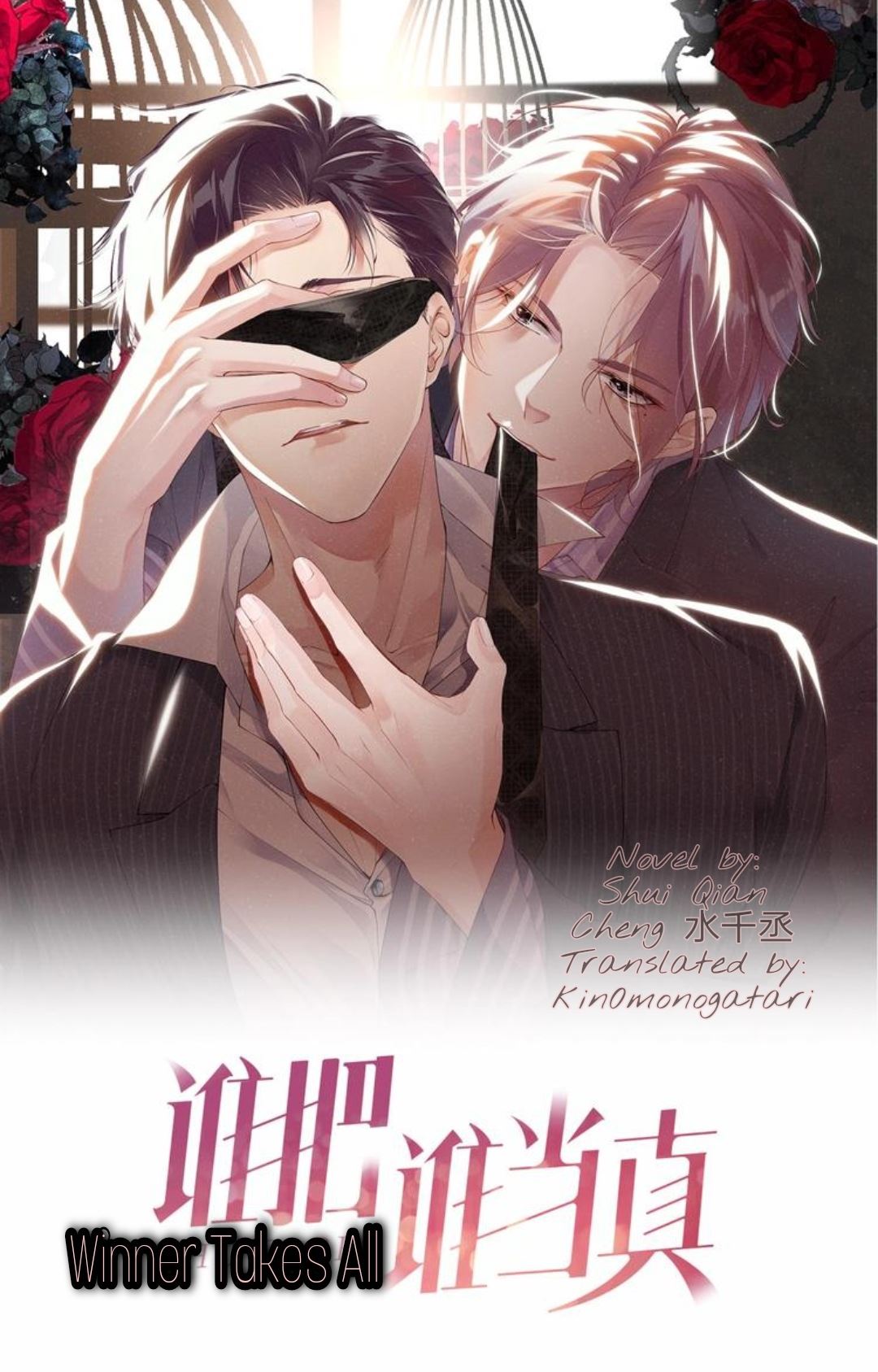
... Read More
Wen Xiaohui says "Hmph" and I swear to god that single sound carries more personality than most characters' entire dialogue sheets. He pouts, his cheeks bulge with anger, he wants to badmouth Zhao Jinxin but holds back so as not to make things uncomfortable. This man has zero filter in every other situation and here he's carefully editing himself? That's devotion. And Li Shuo's line: "It's still crooked, and you can't do bad things even if you are jealous." He says this while feeling sorry for Zhao Jinxin. The cognitive dissonance is amazing. He's holding onto moral principles while being completely soft for the guy who broke them. The most natural-feeling exchange in this whole chapter is Zhao Jinxin and Li Shuo on the plane. Zhao Jinxin: "Do you feel relieved?" Li Shuo: "I'm not that kind of person. If I want to vent my anger, I will do it by myself. It is meaningless to gloat over other's misfortune." And then Zhao Jinxin's eyes light up — not with happiness, but with something unreadable. "How do you want to do it by yourself?" The subtext is SO thick you could spread it on bread. Li Shuo's response is painfully understated: "Just talk it out." He literally has no idea what Zhao Jinxin is asking. The man is sitting there with "unusually bright" eyes and Li Shuo thinks the solution is CONVERSATION. Oh honey. Oh sweet summer child. And Li Chengxiu's silence — he barely speaks at all. Just nods, shakes his head, says "No, I'm starving to death." When someone is this broken, the author lets the absence of words do the talking. That's skilled writing right there.
... Read More
Let me just sit with this image for a moment: Li Shuo, arms around Zhao Jinxin, reading a best-selling thriller aloud, while Zhao Jinxin acts like a sleepy baby saying "it's scary" despite clearly not paying attention to the plot. They're in a hotel room, weeks away from home, with a whole birthday secret being plotted downstairs, and this is the quiet centerpiece. "You are very brave," Zhao Jinxin says, and Li Shuo laughs and calls him out on not actually listening. But the tenderness in that exchange—God, the tenderness. It's not dramatic. It's not grand gestures or declarations. It's just... presence. Choosing to stay. Choosing to read aloud even when your partner is half-asleep in your arms because the act of reading itself is the gift. And then Li Shuo tests whether Zhao Jinxin forgot his own birthday, playing with his slender fingers like it's nothing, like he's not holding his breath. The vulnerability there is staggering. He's the one who remembered. He's the one who planned everything. And he's asking in the most casual way possible whether Zhao Jinxin even noticed the date passing. I need a minute.
... Read More
There's this one image that has been haunting me since I finished these chapters—the sunlight pouring through the curtains. "A long absence of warmth." Li Shuo lying under it like it might kill him, and he'd welcome it. If the sun can kill bacteria, why not kill him completely? That is the most depressing sentence I have read all year and I mean that as the highest compliment. The sun here isn't warm. It's punitive. It's exposure. It's the universe saying look at yourself, look at what you've become. And he can't look away from the mirror either—swollen eyelids, bluish dark circles, cheekbones emerging like accusations. The mirror is a recurring symbol throughout this passage, reflecting not just his physical decay but the death of his identity. The old Li Shuo who was "always proud of the spring breeze" is gone. What's left is someone who cuts himself shaving and can't control his own hands. Then there's the door. So much about the door. It's the boundary between his private devastation and the outside world. Zhao Jinxin keeps trying to cross it. Li Shuo keeps trying to close it. But that hand pressed against the door—"full of force as it holds back" Wait, I need to also talk about the cold water. Early autumn, freezing temperature, and Li Shuo steps right in. The physical shock as armor against emotional pain. His body reacting violently to cold because his heart is already dead inside. And the blood from the razor—so small, so insignificant, but he can't lift his head afterward. The body keeps score even when the mind tries to escape. The bags Zhao Jinxin brought—all his things packed away—but he refuses to give back the key. possession versus access. He took everything but won't let go of entry. That's the entire relationship in one gesture. Zhao Jinxin doesn't want to own Li Shuo anymore. He just wants to still be able to walk in. I'm not okay. I am genuinely not okay after reading this.
... Read More
I need to talk about Zhao Jinxin because this chapter completely reframes everything I thought I knew about him. On the surface he's the flirtatious, annoying younger guy who won't take no for an answer. But watch what he does here—he kisses the old butler on the cheek, makes sure Li Shuo sees it, and then casually says 'Don't tell my parents, okay?' Do you understand what that does? He's marking territory. He's reminding Li Shuo that this entire situation is a secret, that Li Shuo has constraints he's trying to navigate, and that Zhao Jinxin is fully aware of them. But he's also being protective—Si Shushu won't gossip, and Zhao Jinxin knows exactly how to handle an elder like that. This isn't just a simp. This is someone who's calculating moves. And then there's the office scene. Li Shuo dismisses him as 'too young, inevitably lacking experience' and Zhao Jinxin literally straddles him while dismantling that assumption. He understood Director Han's KPI anxiety faster than Li Shuo gave him credit for. The man is sharp as a tack underneath all that charm. But the most revealing moment for me is Li Shuo's internal monologue about responsibility. He says 'perhaps he shouldn't blame Shao Qun entirely. He was also to blame.' That's not just guilt—that's a man who's honestly examining his own role in a tragedy. It's rare in this genre to get that level of self-awareness from the gong. Most MCs would just rage and move on. Li Shuo is sitting with the uncomfortableness of his own complicity. Meanwhile Zhao Jinxin's been there the whole time, watching, waiting, learning. He sees Li Shuo's expression change, he notices when Li Shuo tenses, and he responds accordingly. That's the thing about Zhao Jinxin—he never misses a detail about the person he's pursuing.
... Read More
Okay so this chapter has this entire section where Zhao Jinxin is basically trying to seduce Li Shuo with words and it's SO intense and I can't even. Let me break this down because this conversation hit me differently. Zhao Jinxin asks Li Shuo: "Have you ever been so captivated by someone?" And Li Shuo's internal response? He actually stops to think about it. And the answer is... no. He can't understand that kind of intense, self-sacrificial feeling. This is such a devastating moment for me as a reader because you can feel Li Shuo's emotional armor being probed here. He believes people should be masters of their emotions. He has always been a master. But Zhao Jinxin is systematically turning his world upside down. Then Zhao Jinxin says something that genuinely made me gasp: "Being 'captivated' is a kind of passion. It is addictive like a drug." And Li Shuo's response is this cold, clinical "We all know drugs are harmful." Like he's deflecting the entire way. He can't just sit with the emotion. He intellectualizes it. He makes it a debate. That's who he is — controlled, rational, unshakable. Until now. But what got me even more was when Li Shuo is feeding Zhao Jinxin and Zhao Jinxin says, "Very few people are as impatient with me as you are. My pride hurts a bit." And Li Shuo... can't bring himself to say something hurtful. Despite all the harassment, despite everything, Li Shuo's basic kindness wins out. That's not weakness, that's who he IS. Confucian values running deep. And Zhao Jinxin KNOWS this and uses it. The line that wrecked me: "How heartless. If one day you fall in love with me, will you regret this?" And Li Shuo's response: "If that day ever comes, we'll talk about it then." He doesn't dismiss it outright. He doesn't laugh it off. He leaves the door cracked open. Even just a crack. And I was SCREAMING. This push-and-pull? The way Zhao Jinxin corners Li Shuo emotionally with every conversation? I'm obsessed.
... Read More
The tension in that doorway scene is making me physically shake. Three men standing there, past trauma and current desire all tangled up, and you can literally hear silence if you read it out loud. Han Feiye showing up pale and thin and saying "I'm late, aren't I?" — that was a gut punch. He clearly went through hell trying to reach Li Shuo, thought he was being abandoned AGAIN, and what does he find? His boyfriend wrapped around someone else's finger. But the real stakes here aren't just romantic jealousy. This is about CONTROL and TRUST. Zhao Jinxin blocked calls. He intercepted communications. He engineered a situation where Li Shuo's oldest friend would think he was being dumped. And when confronted, he just... owns it like it was a reasonable business decision. "This person is my rival. Is there anything wrong with me dealing with the rival?" Li Shuo is caught between someone who makes him feel alive and someone who knows his history. He's not stupid — he says "I am no longer a child" but he's clearly been played. The question haunting me is: does Li Shuo actually believe he can trust Zhao Jinxin going forward, or is he just exhausted from fighting? And Han Feiye calling Zhao Jinxin "heartless" when HE'S the one who did the most devious thing in this entire chapter? Irony levels are off the charts.

Leave a comment

You must be logged in to leave comments. or
