Winner Takes All - Reviews

Winner Takes All
+Add to Custom List
Sort
Add review
... Read More
There's something really clever about how the setting mirrors the emotional state of these characters. The resort/villa feels like a bubble world — you've got the families chatting on sofas, the wooden table with open space underneath where secrets happen, the dogs, the old butler on a bicycle who sees everything but understands nothing. The butler moment is a masterpiece of incidental worldbuilding. Zhao Jinxin yells 'Come on, baby' and the butler just... rides away. Says he's going to the supermarket. The text says he looked 'as if he had just been enlightened.' He knows. He has to know. But he chooses not to know. That's the entire household's survival mechanism right there. And the domestic scenes — the meal with both families, the dog walk, the nighttime beeping that Li Shuo dreams away — these aren't just atmosphere. They're the normal life these characters are either reaching for or running from. The villa feels lush and isolated, like a greenhouse where emotions grow too fast because there's no wind to knock them down. The contrast between the bright morning (dogs, laughter, sunlight) and the dark middle-of-the-night phone check is almost cinematic. The author moves between these two lighting conditions like a film director — wide shots of the resort, close-ups of fingers on phone screens, the glow of a dead battery charging back to life right as someone's world goes dark.
... Read More
The dialogue in this passage is sharp enough to cut glass. Zhao Jinxin's voice is immediately distinct: provocative, teasing, relentlessly forward. 'I guess your favourite position is doggy style…' delivered with a laugh, shoulders shaking. It's insulting and intimate, all at once. Li Shuo's voice is the foil—restrained, analytical, but with cracks. His long, detailed date itinerary is a character reveal in itself: he's thoughtful, curated, trying to impose order on chaos. When Zhao Jinxin dismantles it with three crude questions, Li Shuo's silence is louder than any retort. The exchanges crackle with competitive energy. They're sparring, but the weapons are preferences and psychology. Zhao Jinxin's line 'Sex is part of dating. Honestly, all the eating, listening to music, and visiting exhibitions—aren't men's ultimate goals to get into bed?' is both a joke and a truth bomb. It reduces the entire romantic fantasy to its base component, and Li Shuo is too embarrassed to argue. The humor is dark, the tone shifts from playful to hostile to something dangerously close to attraction. Every line serves dual purpose: advancing the conversation while exposing the speakers. It's dialogue that doesn't just tell you what they're saying, but what they're hiding. The author's voice here is confident, letting the characters' personalities drive the scene without over-narrating. You hear two very different men, and you know exactly who's wearing what mask.
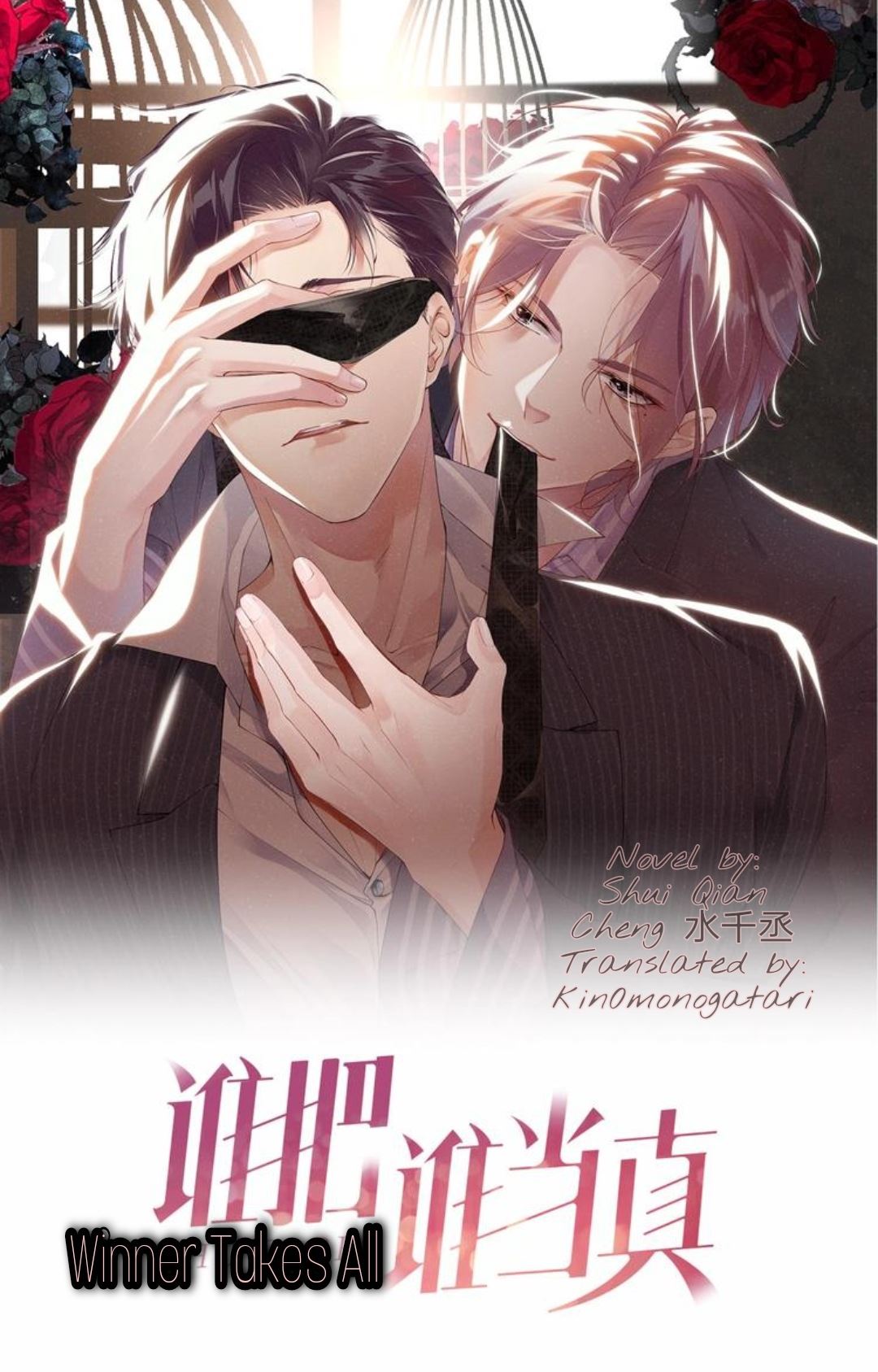
... Read More
Okay so let me just... this whole section hits different. The plot here is doing SO MUCH in like one scene. You've got Luo Yi showing up unannounced after five days instead of three, and the moment he sees Li Shuo with Zhao Jinxin — the tension just snaps. But what I found genuinely clever is how the author structures the revelation. We don't get it all at once. First it's Zhao Jinxin cornering Li Shuo, then Wen Xiaohui losing his absolute mind, then Luo Yi walking in like a ghost from another dimension. Each character's entrance escalates the stakes. And the real plot twist here isn't some big reveal — it's Li Shuo choosing to end it. After everything, he looks Zhao Jinxin in the eye and says 'You disgust me.' Not dramatic. Not theatrical. Just flat. And that's what makes it devastating. The author could've had Li Shuo break down screaming, but he doesn't. He holds onto dignity like it's the last thread keeping him alive. Then the aftermath — Li Shuo walking those two hundred meters to his hotel room — that's the chapter really landing its emotional weight. He prepared a birthday surprise. LEON. For Zhao Jinxin. And all those decorations, all that effort... now it's just going to be someone else's space. The plot here is tight, but it's the quiet moments between the shouting that wreck me.
... Read More
Okay so this scene where Zhao Jinxin says 'You have won' and then whispers 'Now you belong to me'? I literally had to put the book down for a second. Like, what does that even mean? Is he serious? Is this some twisted victory speech or did he actually just crack open and tell the truth? The way Li Shuo reacts is everything. He doesn't understand it. He doesn't even want to understand it. He just opens the door and leaves. That's such a Li Shuo move — refusing to engage with whatever unhinged thing Zhao Jinxin just said because engaging would mean giving it power. But Zhao Jinxin isn't finished. After Li Shuo leaves, he wipes his mouth with his fingertips and whispers it again, softer, like a prayer: "You have won. Now you belong to me." This man is so deeply complicated I can't even. On one hand he's been cruel to Li Shuo — all those manipulations, all that game-playing. But on the other hand, here he is, half-drunk, shoulders slumped, telling his father's friend's son that he was actually happy when Li Shuo came to visit him. That he feels like Li Shuo is afraid of him. That he thinks too much. And Li Shuo? He's been running from this man for chapters and he still can't quite place what he's running from. Is it fear? Or is it something else that terrifies him more? The power dynamic between them has completely flipped and neither of them seems to fully realize it yet. Zhao Jinxin thinks he's the one who won. But who exactly is winning here? And at what cost?
... Read More
There's this underlying current running through the entire scene that I can't shake — the idea that home is simultaneously the most sacred thing you have and the thing most vulnerable to attack. Look at the imagery the author keeps returning to: the half-open door, the scattered toys, the baby falling asleep against a chest, the shared meal around a crowded table. These are images of a family that has BUILT something precious. And then Zhou Jinxing slides those documents across the table and you realize — someone is trying to take THAT away. Not just the land. Not just money. The future Li Shuo planned ('I planned to build a resort for half a year'). The stability Zhou Jinxing and Ding Xiaowei have created. The normalcy of a Tuesday evening with friends over dinner. Zhao Jinxin isn't just a business rival here — he represents the intrusion of calculation into something that should be beyond calculation. The land deal is poison ('this trick is really poisonous' — Zhou Jinxing's own word). It's designed to make people desperate, to make reasonable people do unreasonable things. And the children? They're the ultimate symbol of what's at stake. Lingling, who almost couldn't speak but now greets guests shyly. Xiao Yiyi, caught between being a child and being an uncle. The baby, completely dependent, completely safe for now. These are the reasons people fight. These are the reasons the land matters beyond any financial calculation. 'I looked at the laughter among the family members and his heart' — the passage cuts off right there, but that incomplete thought is the whole theme. Li Shuo's heart is split between gratitude for this warmth and terror that it might all be taken from him.
... Read More
Okay so this chapter is technically about Li Shuo getting sick, but if you read it as a plot device, it's absolutely brilliant. The author uses illness as a narrative accelerant — everything moves faster when someone's feverish. Decisions that would normally take weeks of deliberation happen in hours. Walls that have stood for chapters crumble because someone can't stay awake long enough to maintain them. The structure follows a classic pattern but with a twist: setup (meeting), inciting incident (fever hits), rising action (collapse, carried home, doctor visits), climax (the thank you moment), resolution (wicked smile, “Do you really want me to leave?”). But the twist is that the climax isn't dramatic — it's quiet. A simple thank you instead of a confession or a kiss. The author trusts us to understand that this small moment IS the turning point. What really works for me is how efficiently the author establishes the cause-and-effect chain. Li Shuo drinks with friends -> sleeps poorly -> office smell makes him nauseous -> fever breaks through -> weakness makes him unable to refuse care -> vulnerability leads to honesty. Each beat logically leads to the next, and by the time we're at the emotional climax, we've earned it through a clear causal chain. The pacing also deserves praise. The meeting scenes are slightly disjointed, mirroring Li Shuo's inability to concentrate. Then the rhythm slows as he's carried home and settled into bed. By the time Zhao Jinxin feeds him water, the pace has shifted to something almost meditative. This isn't accidental — the narrative rhythm itself becomes a symptom of Li Shuo's condition, pulling us into his headspace. One thing I noticed: the chapter title is “A Gentleman and a Rascal.” Li Shuo plays the gentleman — polite, composed, thanking his caregiver appropriately. Zhao Jinxin plays the rascal — touching faces, making jokes, peeking at thermometers like a mischievous child. But both roles are performances. The real moment comes when they drop the act and just... exist. Li Shuo admitting he doesn't want to be alone. Zhao Jinxin staying anyway. The plot doesn'T move forward here so much as it deepens. That's sometimes more valuable than advancement.
... Read More
I need to sit down. There is something about Zhao Jinxin that I simultaneously want to shake and hug. This guy hasn't spoken to Li Shuo in two weeks—TWO WEEKS—and when he finally shows up at the airport, he doesn't say 'I'm sorry' or 'I missed you' or literally anything that would make sense as a reconciliation attempt. No. He says 'I miss you so much. Even if Uncle Li doesn't want me, doesn't he want my dick?' And then he KISSES him into a corner like a man possessed. But here's what got me—the transition from that aggressive, almost violent kiss to him burying his face in Li Shuo's neck and asking 'Did you do it with him?' in this small, vulnerable voice. That's not the voice of a predator. That's the voice of someone who's terrified. The kiss was armor. The question was the truth. And Li Shuo, poor sweet Li Shuo, who thought he'd made the mature decision to cut contact, who was bracing himself for a peaceful flight home, gets absolutely wrecked by a guy who refused to let him go. The CP chemistry here is so toxic and yet so painfully real. These two are orbiting each other like broken satellites. Zhao Jinxin pushes and Li Shuo pulls away, but the gravitational pull is clearly mutual. That moment where Li Shuo 'was shocked in his heart' and showed a 'complicated expression' when Zhao Jinxin said he missed him—THAT is the whole relationship in one sentence.
... Read More
I need to talk about the lemon water detail because I think it's doing more thematic work than the author probably even realizes. Li Shuo is drinking something cold — sharp, sour, waking — while Zhao Jinxin immediately swaps it for hot tea. On the surface, it's just a controlling partner move. But symbolically? Li Shuo chose the cold thing. He wanted something that would shock his system awake. And Zhao Jinxin gently, casually, replaces it with warmth. He doesn't ask — he just acts. That's the whole relationship in one beverage swap. The chapter title "Hypocritical" connects to this too. Zhao Jinxin presents as caring (hot tea for a sick stomach) while actually being manipulative. The warmth is a performance. Li Shuo sees right through it in the car ride, but Cheng Sheng's warning makes him waver again at the restaurant. He pauses before saying "we're just having fun." That pause is the theme of the entire novel — the space between what Li Shuo knows and what he admits out loud. And Cheng Sheng himself is kind of a symbol. He's the voice of the community, the friend who knows the gossip, the one who can see clearly because he's not emotionally involved. When he says "who in the Chinese gay community here doesn't know him?" he's representing all the people who watched this disaster unfold from the outside. Li Shuo was warned. Everyone knew. The tragedy isn't that Li Shuo walked into this blind — it's that he saw the signs and chose to drink the hot tea anyway.
... Read More
Let's talk about Han Feiye. This guy carries so much quiet pain under that calm surface. He donates five million to Africa and thinks, 'too late.' Not too late for whom? For himself, probably—to undo something, to make amends. But when Li Shuo says 'you're perfect,' you can see Han Feiye's entire history of feeling inferior crack open. Meanwhile, Zhao Jinxin is playing a completely different game. Changing the caller ID photo to his own bare chest? That's not cute; that's territorial. And the love bites on Li Shuo's neck—that's ownership, plain and simple. What's fascinating is how both men relate to Li Shuo through absence. Han Feiye through years of not being there, Zhao Jinxin through constant, suffocating presence. Li Shuo is caught between someone who left and someone who won't let go. And the worst part? He still feels responsible for both of them. When he says 'seeing you doing well makes me very happy' to Han Feiye, it's genuine. But then he goes back to Zhao Jinxin anyway. That's the real tragedy here—not who loves whom, but who can't escape whom.
... Read More
I need to go back and re-read that seatbelt scene because I think it's the single most important character beat in these chapters. Let me walk through why. Zhao Jinxin pulls Li Shuo to the back row, raises both hands, and smiles. Li Shuo immediately understands and leans over to fasten the belt. This isn't just a practical moment—it's Zhao Jinxin deliberately creating physical proximity after everything that happened with the phone call and the apology. He's testing the waters, seeing how much closeness he can get away with. And Li Shuo, despite everything, complies without hesitation. That tells you everything about where their relationship actually stands. Earlier, when Li Shuo ruffles Zhao Jinxin's hair and calls him persistent, there's this incredibly revealing detail: Zhao Jinxin's eyes 'shone like stars, seeming to glow.' But Li Shuo doesn't notice it because he's called away. Meanwhile, Zhao Jinxin looks back at him 'that seemed ready to devour him.' These two are operating on completely different wavelengths emotionally. Li Shuo gives small gestures of affection and thinks he's being generous; Zhao Jinxin is sitting there processing every micro-interaction like it's a feast. And Li Shuo's offer to help with heat therapy at Qiandao Lake? He says it almost casually, but it's genuinely tender. He's trying to make amends in his own practical way. The relationship between these two is this beautiful disaster of missed signals and overwhelming sincerity colliding. Zhao Jinxin pretends to be a shameless fox demon but gets hurt when Li Shuo yells at him. Li Shuo tries to maintain boundaries but keeps softening. Who else is this dynamic killing you? Because I'm not okay.
... Read More
These chapters (40-44) are paced like a rollercoaster designed by someone who absolutely hates calm moments. Let me trace the rhythm here because it's genuinely impressive. We open with Zhao Jinxin's text barrage—rapid-fire, escalating, almost comedic in its shamelessness. The phone buzzes TWICE, then continuously. The author uses the rhythm of the messages themselves to control pacing. You read faster as the demands escalate from 'send a nude' to 'just your hand.' It's breathless. Then—the phone call. Li Shuo's anger peaks, Zhao Jinxin deflates, the call ends. Silence. The narrative slows down immediately: 'Li Shuo held the phone stiffly, feeling his scalp tingle.' That shift from rapid texts to stillness is deliberate. The author lets you breathe after the intensity. Next, the flying club. The pacing opens up again—more dialogue, more movement, more characters entering the scene. Zhao Rongtian's humor, Mrs. Zhao's warmth, Zhao Jinxin's performative good behavior. But underneath it all, there's this current of guilt and unresolved tension between Li Shuo and Zhao Jinxin. The chapter doesn't rush toward resolution; it lets the awkwardness sit. And the ending—the seatbelt moment—comes almost like a sudden drop after the long climb. One moment they're chatting with the family, the next they're in a confined space with unspoken feelings hanging between them. The transition is seamless. No chapter break needed. Just life happening, emotionally charged and uninterrupted. I stayed up way too late reading this batch. Not complaining.
... Read More
Let me walk through how this chapter builds tension because it's actually really well engineered. It opens mid-conversation — no preamble, no setup. Zhao Jinxin is already asking rapid-fire questions about Li Shuo's mystery man. The pace is breathless from line one, and Li Shuo's internal monologue tells us he's feeling the pressure. Each exchange is a move in a chess game and the reader is right there feeling the 'pawn versus knight' dynamic. Then comes the escalation: Zhao Jinxin makes his physical move, the bathroom confrontation, and suddenly the chapter goes from psychological tension to physical danger. But here's what I love — it doesn't stay at peak intensity. After the bathroom, there's a release. Zhao Jinxin backs off, makes a joke, acts like nothing happened. Li Shuo considers changing seats, weighs the social consequences, and decides not to. The pacing breathes again before landing on that final image of Zhao Jinxin watching him sleep with 'wolf-like desire to conquer.' That ending beat is a cliffhanger wrapped in stillness. It's quiet but it promises violence — emotional or otherwise — and you cannot wait to read the next chapter. The whole chapter is roughly structured as: conversation (rising action) → bathroom (climax) → return to seat (falling action) → final stare (hook). Classic structure but executed with such confidence. One small note: the translator's note and glossary at the end do break immersion slightly, but that's an editorial choice, not a narrative flaw.

Leave a comment

You must be logged in to leave comments. or
