Winner Takes All - Reviews

Winner Takes All
+Add to Custom List
Sort
Add review
... Read More
Okay so this chapter is basically the entire emotional bomb that this novel has been building toward. Let me just say it plainly: Zhao Jinxin has been playing Li Shuo from start to finish. The overheard conversation outside the hospital room is the narrative equivalent of a gut punch, and I love it because the author didn't sugarcoat it. What's brilliant about the plot construction here is that the revelation doesn't come from a dramatic confrontation. Li Shuo is literally standing outside the door, eavesdropping, while Wen Xiaohui is the one who almost kicks it down. That contrast matters. Li Shuo holds himself together while his best friend completely loses it. It tells you everything about who these two people are in one scene. The subplot threads that converge here are insane when you think about it. Cheng Xiu's video, the child, the promise of a 'decent reason' to separate — it's all woven into this one moment. Zhao Jinxin mentions casually that he told Cheng Xiu about the kid, and suddenly the whole conflict with the rival melts into a strategic move rather than a personal confrontation. Cold. Calculated. Perfect. And that ending? 'Don't let him see.' The sentence just... stops. Li Shuo wants to run but can't move. The plot doesn't give us resolution here. It gives us paralysis. And I am here for it.
... Read More
You know what got me? The way Li Shuo is constantly trying to pull his hand away from Zhao Jinxin while they're walking to the car, only for Zhao Jinxin to hold on tighter. It's this whole dance of public discretion versus private affection. And then there's Wen Xiaohui being absolutely shameless about touching Zhao Jinxin's chest — and Li Shuo's reaction to that. He's not actually jealous, but he's afraid Xiaohui won't stop. Then Xiaohui says something like "if you want to take advantage of my boyfriend, wait for me to go to the toilet first" and suddenly Zhao Jinxin lights up at the word "boyfriend." These three have this incredibly natural dynamic. Li Shuo is trying to maintain this tough image in Xiaohui's eyes, but Zhao Jinxin keeps gently protecting him during those awkward conversations about sex and lubricants. The moment where Li Shuo feels his hand being squeezed under the table — that's when I realized Zhao Jinxin isn't just considerate, he's actively curating this space where Li Shuo doesn't have to be vulnerable in front of others. It's beautiful how their relationship operates on these unspoken understandings.
... Read More
Okay so I NEED to talk about this moment. Zhao Jinxin walks in completely unfazed, right? He patrols the living room like he owns the place—which honestly, he kinda does at this point in their mess of a relationship—and his eyes land on everything. The wine bottles, the clothes on the carpet, and then Li Shuo with hickeys on his neck. And that smile. That cold, gloomy smile that made my skin crawl. What struck me most wasn't even the slap. It was what happened BEFORE the slap. Zhao Jinxin throws his wallet on the bed and says to Xiao Qi, "Sorry, you go back first, we still have something to talk about." WITH A SMILE. Like he's buying dinner and someone's in the way. That's the most insulting thing I've ever read and I'm still thinking about it three chapters later. And Xiao Qi—he actually had dignity. He kicked the wallet away and said "I did not sell my body!" and left. I actually yelled at my phone when I read that. Meanwhile Li Shuo is the one apologizing to a stranger while his ex tears his apartment apart. The role reversal is SO sharp. Also, can we talk about how Zhao Jinxin's hand wrapped around Li Shuo's fist? That tiny moment of restraint before everything exploded? He wanted to say something—"Isn't it me that you like?"—and Li Shuo just said "Not anymore."
... Read More
Wen Xiaohui watching Li Shuo talk about Zhao Jinxin is honestly one of the most telling moments in the whole story. Remember that description? "He had never seen Li Shuo show such an expression for anyone, whether it was him or Li Chengxiu." That right there. That's the author saying: this is different. This is the real thing. And Li Shuo doesn't even seem to notice his own expression — he just says "I like him. I am very happy to be with him" like it's the most normal thing in the world. But then compared to Han Feiye? He thought Han Feiye was his lifelong companion but "he didn't worry about gains and losses to such a degree." Okay wow. That comparison hits different. Wen Xiaohui is trying SO hard to protect him though — "A lie is still a lie" — and I get it, I really do. He's been burned by Luo Yi and he sees the pattern. His line "The reason why people are easily deceived is because they initially speculate that others have good intentions" is basically his life motto at this point and it breaks my heart a little. But Li Shuo? He's looking at Zhao Jinxin like he sees something nobody else does. That's either the most beautiful thing or the most dangerous thing depending on how this ends.
... Read More
Something about the repetition of this injury has me genuinely anxious now. Brother pulls wound, wound splits open, brother tries to get out of bed to chase sister-in-law, wound splits again. This is the third or fourth time we've heard about this and I'm starting to worry that the author is setting up a major crisis, not just a temporary setback. The stakes here operate on two levels. On the surface: a birthday ruined, a cancelled movie date, a romantic evening derailed. But underneath: Zhao Jinxin is trapped between his obligation to his family and his desire to be with Li Shuo, and every time he tries to fulfill both, his brother's body betrays him. The real conflict isn't the wound—it's the impossibility of Zhao Jinxin having a normal life while carrying this responsibility. And Li Shuo's response is what kills me. He doesn't push. He doesn't make Zhao Jinxin feel guilty. He just says "It's okay" implicitly through his gentle tone, and then presumably goes back to the secretly decorated hotel room alone. The emotional stakes here are enormous—this is their first birthday together, the anniversary they were both sort of dreading, and it gets torn apart by circumstances neither of them controls. What happens when Li Shuo finds out about the decorations?
... Read More
I need to talk about this concept of fighting poison with poison because it's basically the thesis of the entire novel at this point. Li Shuo explicitly thinks: "He doesn't know how much alcohol he needs to drink to break the bitterness of his heart." What a devastating line. The alcohol IS the poison, and he's drinking more poison to fight the first poison—which is love, or loss, or unrequited longing, or whatever exact flavor of suffering he's experiencing. And then there's the recurring theme of control versus losing control. Wen Xiaohui tells him: "Brother Li, if you really love someone, you will get out of control." Li Shuo secretly breathes a sigh of relief because he thinks he can still control himself. But read the next paragraph again: "Although, in his heart, he actually does not believe in who he will lose control for. After all, he has never experienced it." Wait. He hasn't experienced it YET. That's not confidence, that's ignorance. The author is setting him up to fall so hard. The fever motif is also doing heavy lifting here. Every time Li Shuo gets emotionally overwhelmed, his body reacts—fever returns, weakness sets in. His body knows what his pride won't admit.
... Read More
This is one of those sections where the pacing is deceptively slow until it isn't, and I want to talk about how the author controls the reader's heartbeat. The chapter opens mid-action — Zhao Jinxin is already there, Li Shuo is already extracting himself, they're already walking. No exposition dump, no "previously on" recap. We're dropped into the aftermath of a social collision and we have to figure out what happened just by reading the silences. This is confident writing. The author trusts us to catch up. Then the dinner scene unfolds with what I'd call surgical pacing. Each exchange between Zhao Jinxin and Han Feiye is short — sometimes a single line — and the author lets the silence between lines do the work. Zhao Jinxin offers the cherry. Silence. He offers the cake. Silence. Han Feiye wipes his mouth with a napkin before speaking. That's not just a detail, that's a beat — a deliberate pause that signals he's about to go on the offensive. The Philip Cheung reveal is handled with incredible restraint. Han Feiye says the name. Zhao Jinxin doesn't even remember. Han Feiye presses. Zhao Jinxin deflects with a smile. The escalation is gradual enough that you don't notice the trap closing until it's already shut. And then Li Shuo's internal monologue — that's where the pacing actually accelerates. The prose goes from external observation to dense psychological territory in a single paragraph, and the sentences get shorter, more fragmented, more urgent. "It's all just fucking games to that guy." That period at the end of that line is devastating because everything before it has been building toward it. The transition to the car scene is almost jarringly abrupt, which I think is the point. The restaurant was the performance. The car is where the reality sets in. And then — boom — the explosion memory. The author uses structure itself to make us feel Li Shuo's disorientation.
... Read More
The structure of this chapter is a masterclass in sustained tension. Think about it — twelve hours on a plane. Twelve hours trapped in the same confined space with someone you both love and resent. That's not just a plot device, that's psychological torture designed specifically for the reader. The author starts with an explosion — Li Shuo's fist raised, passengers nervous, the service bell pressed. Immediate conflict. Then instead of resolving it, the tension just… compresses. The two men barely speak for the remaining hours. "Li Shuo spent 12 hours of extreme suffering." That's it. Four words that capture an entire chapter of agony. What's brilliant is how the plot uses silence as a weapon. Zhao Jinxin does all his damage before the conversation even really begins — he's already set events in motion regarding Han Feiye. The rest of the chapter is just Li Shuo processing betrayal in real time, piece by piece. The pacing outside the plane interior is also worth noting. The sea of clouds rolling past the window, the endless twelve hours stretching out. It mirrors Li Shuo's internal state — trapped, unable to move forward or backward, just suspended in this terrible limbo. By the time the plane finally descends, you feel as relieved as he does, and that's when the real drama begins because now he has to face Han Feiye. This is the kind of chapter that makes you forget to eat dinner because you're too invested in watching two people slowly destroy each other with words.
... Read More
There's something deeply symbolic about the entire setting of this chapter. A plane at thirty thousand feet. Stripped of ground support, phone signals, escape routes. Li Shuo is literally and metaphorically grounded — unable to act, unable to reach Han Feiye, unable to do anything except sit and seethe. The confined space of the airplane cabin becomes a pressure cooker for every unresolved emotion between these characters. Twelve hours. No exit. No distractions. Just truth forced to the surface because there's nowhere else to put it. And the washing — Li Shuo splashing cold water on his face in the tiny airplane bathroom, staring at his own reflection, trying to calm himself down. That mirror moment is loaded. He's confronting not just his anger at Zhao Jinxin, but his own complicity, his own history, his own inability to protect the person he cares about. The reflection shows him furious, yes, but also trapped in the same pattern — always reacting, never able to act decisively. Zhao Jinxin's test of Han Feiye also raises uncomfortable questions about trust. What does it mean to "test" someone you claim to love? Is it protection or control? The chapter doesn't give easy answers, which is exactly why it sticks with you. Zhao Jinxin genuinely believes he's doing right by Li Shuo, and that belief is what makes him dangerous. "You can't make a choice for me, even if you care about me, you can't interfere." That line echoes far beyond the page. Because isn't that what love looks like when it's twisted into ownership?
... Read More
I keep coming back to one central question after reading these chapters: what is this story really saying about the relationship between power, visibility, and intimacy? The cameras are the obvious symbol — they represent surveillance, control, the impossibility of privacy in a world where every action is recorded and judged. But they also represent something deeper: the external gaze that turns intimate moments into public transactions. When Li Shuo mentions the cameras, he's not just protecting himself from scandal; he's acknowledging that in their world, nothing is truly private. Even desire is mediated through the lens of reputation and consequence. Then there's the theme of repayment that runs through the entire exchange between Li Shuo and Zhao Jinxin. Zhao Jinxin frames everything in terms of debt and obligation — he saved your father, so you owe me. But Li Shuo reframes it: I didn't do it for repayment. I did it because it was the right thing to do. And yet, he also acknowledges that what they have NOW is itself a form of repayment — his body and presence as currency in a relationship where emotional currency has been devalued. The bombing itself is loaded with meaning. It's random, indiscriminate violence — the ultimate equalizer. A hundred people died, and none of them chose to be there. And yet Li Shuo's father survived while strangers perished. This arbitrary distribution of fate forces both characters to confront what actually matters. In the face of genuine mortality, the petty grievances and social calculations that usually govern their interactions suddenly seem both trivial and inescapable. Zhao Jinxin's inability to articulate his anger is perhaps the most powerful symbol of all. He can negotiate, can scheme, can perform charisma at will — but when confronted with his own unprocessed emotion, he has no language. The man who controls every room he enters is completely powerless in his own heart. And that, I think, is what the story is really about: the gap between who we perform ourselves to be and who we actually are when no one's watching.
... Read More
I want to talk about the atmosphere in this chapter because the author builds it so deliberately and I don't think people are paying enough attention to it. The scene starts in a bedroom at what — late evening? Early morning? — with Li Shuo half-asleep from medicine, the housekeeper having just left. There's this domestic warmth to it that's almost deceptively cozy. The housekeeper covering him with a thin blanket, saying "you'll feel better after resting" — it paints a picture of a man who is sick, vulnerable, being cared for by servants who genuinely worry about him. Li Shuo is not just some cold executive figure. He's someone people look after. Someone who HAS a housekeeper, a home, a life structured enough for staff to notice when he's unwell. Then Zhao Jinxin arrives and the whole atmosphere shifts. The bedroom becomes an intimate space — the bed is BIG (emphasized), the light is DIM, Zhao Jinxin is close enough that his face fills Li Shuo's视野. The physical closeness is palpable. You can feel the heat between them, the weight of Zhao Jinxin's arms, the way Li Shuo's breath catches. And then the medicine scene — this is where the visual direction gets really cinematic. Li Shuo going downstairs for a hot towel, returning with his oversized portable medicine box, setting things up one by one on the bedside table. The alcohol, the cotton, the medicine. Each item placed with intention. Zhao Jinxin watching him with "bright eyes that flickered" — this is the look of someone witnessing something they didn't expect. The dim light matters for the final exchange. "Zhao Jinxin's eyes seemed particularly bright in the dim light, as if they could shine into every hidden corner of one's heart." That's not just description — that's thematic. The darkness strips away pretense. In full light, Zhao Jinxin can perform. In dim light, he asks the real question. In dim light, Li Shuo can't hide behind his composed expression because his body reacts involuntarily. I also want to mention the house — elders already in bed, the housekeeper on the ground floor, the sense that this is a large, wealthy household where people move through rooms unnoticed. This isn't a cramped apartment where everyone hears everything. This is a space of privacy and distance, which makes Zhao Jinxin's decision to invade Li Shuo's bedroom even more significant. He's crossing not just a physical boundary but a social one. The world feels lived-in. The medicine box is too big for a casual traveler. The house has enough space for separate wings. There are layers to this environment that suggest a history between these characters that goes back further than this chapter.
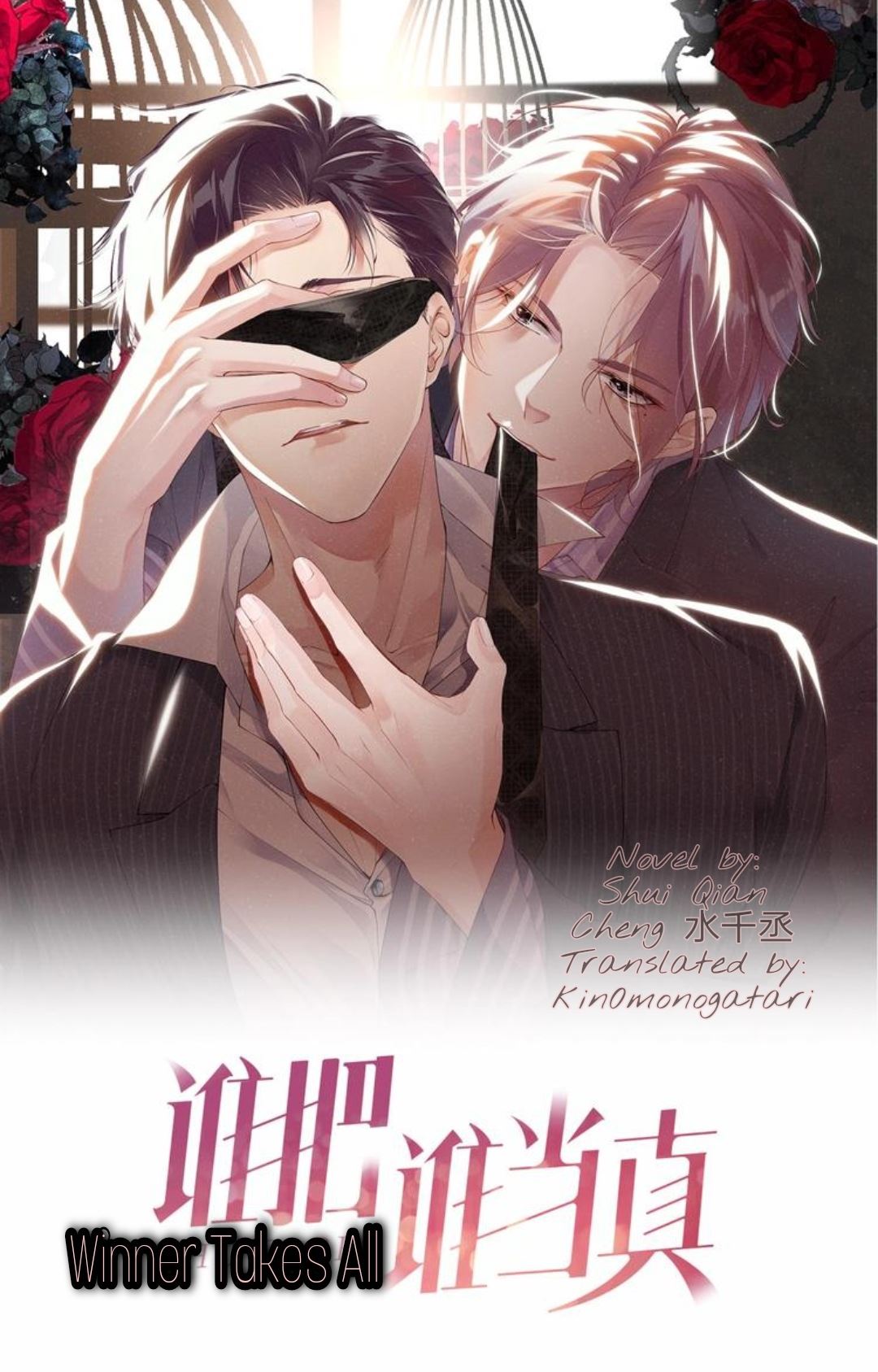
... Read More
Can we just talk about Zhao Jinxin for a second because this character is NOT subtle and I respect that so much. The leg-grabbing scene under the table? Classic Zhao Jinxin. He's provoking Li Shuo, pushing boundaries, doing it in plain sight of everyone's parents, completely unbothered. And Li Shuo — stoic, composed, the guy who 'wouldn't flip a table even after being teased repeatedly' — can't even respond. He just sits there, frozen, because the alternative is making a scene. But then the real moment hits. When Zhao Jinxin says 'I'm the one who should thank you for letting me see your smile,' and kisses him. Not dramatically. Just... softly. Warm lips, light touch. And Li Shuo pushes him away like it's an emergency. But notice: Zhao Jinxin doesn't get angry. Doesn't get disappointed. He just looks at his own lips like he's savoring them, puts his finger in his mouth, and stares at Li Shuo with this 'wild aggressiveness' that the text literally calls 'incredibly alluring.' Then he drops 'Give up on Li Chengxiu' and walks away. That's not a plea. That's a statement of fact. He knows Li Chengxiu's text is coming. He might have even known before the text arrived. Meanwhile Li Shuo — the guy who's been carrying this enormous emotional burden, who hasn't genuinely laughed since 'the incident' — gets that laugh back from a damn dog named Bee. And then loses everything again in the same morning. The tragedy isn't just the breakup text. It's that Li Shuo finally let himself feel something light, something simple, and the universe immediately punished him for it.

Leave a comment

You must be logged in to leave comments. or
