Who Are You Calling a Canary? [Transmigration] - Reviews

Who Are You Calling a Canary? [Transmigration]
+Add to Custom List
Sort
Add review
... Read More
Let me just lay out what's at stake here because this situation is getting dangerously complicated. Po Yinlin — this legendary dagger from the palace treasury — has been stolen. A masked assassin knocked out Shangguan Jie to get it. Shopkeeper Qi (the fence) is now dead. The buyer is dead. The news has leaked. And BOTH Pei Xiting and Shangguan Jie are sitting on information that could destroy them. Pei Xiting was held at dagger-point by the same person who took Po Yinlin. He claims he can't remember the attacker's face but that feels like a strategic omission, not genuine amnesia. He knows something. The way he thinks about the dagger — "the masked guy is worth a lot of money in the underworld" — suggests he's been observing underworld networks, not just surviving an attack. Shangguan Jie is under orders: "if you dare to reveal the news that Po Yinlin was stolen, I will not forgive you." He's answerable to someone higher up. The Crown Prince. The East Palace. This isn't just a theft investigation anymore, it's court politics with blood on its hands. What I find most tense is how isolated everyone is. Pei Xiting can't trust anyone — "I won't trust anyone again, lest I be deceived and fall into a trap." Shangguan Jie is answerable to the Crown Prince but clearly operating with his own agenda. The buyer is dead. The only people who know the full picture are the ones who can't talk about it. And somehow through all this chaos, someone is commissioning paintings under an alias. Who has the resources for that? Who has the connections? I need answers.
... Read More
This chapter is absolutely GREED with identity themes, and I'm here for it. Pei Xiting literally introduces himself as 'Pei Wenjuan'—a false name. He's painting roses while real roses sit outside his window, mirroring reality and art. His mother was a dancer everyone wanted to possess, and now he's someone Fuchuan seems to want to possess or at least understand. The 'jade man' from the classical poem—the beautiful person you wonder if they're coming—is Fuchuan himself, completing the poem and becoming that figure in real life. And then there's the whole thing about art: Fuchuan says his own paintings lack soul because he's too harsh on feelings and desires, which makes his work dead. Meanwhile Pei Xiting paints with life and energy. Is the author suggesting that vulnerability and desire are what make art—and people—truly alive? The rose pairing with crispy fish is such a weird but perfect metaphor too: something beautiful paired with something rough and everyday. That's basically the whole vibe of this story, isn't it? Elegance and danger sitting at the same table.
... Read More
The structural choices in these chapters are really smart, honestly. You start with You Zong and Pei Xiting doing domestic chores — hanging laundry, talking shop — which grounds the story in something warm and routine. Then Pei Xiting mentions the portrait and the fake Ma Bi, and suddenly we're pivoting into investigation mode. Then there's the carriage scene with the Crown Prince, which slows everything down for character moment, and then BAM, you're at the government office with Prefect He conducting a formal reception. The author controls the rhythm by treating every transition like a door opening into a new room, never lingering too long in any one space. The wonton scene is brief but essential — it gives us a glimpse of the world outside the investigation (street food, the Crown Prince's disguised hunger) before plunging back in. And that ending, where Prefect He walks away thinking 'the culprit hasn't been found' while the ferry crossings are guarded? That's a structural bell that tolls forward into the next chapter. The pacing never drags because every scene either reveals character, advances plot, or builds atmosphere — and usually all three at once. It's tight writing.
... Read More
Okay so this whole scene between Official Wang and Wang Yelai is just absolutely brutal in the best way. I cannot stop thinking about the father-son dynamic here—on the surface, a father disciplining his son, right? But then the dad starts laying out this entire backstory about the Crown Prince, and suddenly it's not about discipline at all. It's about survival. The way Official Wang tells this story—it's so layered. He's literally confessing that he was there when the Fifth Prince nailed the Third Prince's limbs to a wild boar, and he says the Emperor looked at him and they exchanged 'a distant look.' A SHARED CALMNESS. Can you imagine being in that moment, watching your Crown Prince tear apart someone's son with five arrows, and your emperor just... watches back? That's not complicity, that's something far more terrifying. It's a blood oath between father and son, a recognition of the monster their prince has become. And then he drops the Pei Xiting line: 'Pei Xiting is now also the Crown Prince's person.' That hits different. Because it means the Wang family, who have been maneuvering against Pei Xiting, have been poking a sleeping dragon. The Crown Prince literally held onto that dead boy—young You, twelve years old, arrow through the throat, pinned to his shoulder—and never forgot. That's the kind of loyalty that terrifies everyone around it. And Pei Xiting stands on a white jade staircase taller than the sky above people like Wang Yelai. That image of the staircase—literal social stratification made physical—is everything.
... Read More
Let me tell you, the stakes in this batch are SO well layered. On the surface, it's about an imperial seal and some treasure rumor. But peel back one layer and it's about political legitimacy — who gets to claim the throne when the current one is killed. And then there's that whisper-quiet threat running underneath everything. The Crown Prince just had an assassination attempt on him, right? Someone broke through his guard, and Yuan Fang casually mentions he killed them "like cutting water melons." One. Man. Came at the Crown Prince, and he was apparently the LEADER of the assassination group. What does that tell you about how dangerous the current situation is? Not good. And then Pei Xiting drops this bomb: "If Your Highness is killed, the East Palace will be without a master, and someone else can take the throne." He says it so casually, like they're discussing the weather. But the subtext is lethal — he's mapping out exactly what happens next if the Crown Prince falls. And the Crown Prince doesn't even flinch. He just asks "Do you want to see this scene?" Like he's already thought about it a thousand times. "Words are like swords, which can save or kill people." This line from the Crown Prince perfectly captures what makes these stakes so terrifying — you don't need an army to take down someone when rumors can do the work. An entire political revolution started from a SINGLE WHISPER back in February. But what really gets me is the Spider Woman anecdote. That's not just backstory, that's a WARNING. Yuan Fang literally telling Pei Xiting that showing affection for the Crown Prince is "seeking death" and then describing how the Crown Prince CRUSHED a beautiful spy's neck like it was nothing? Chilling. Absolutely chilling.
... Read More
'The white clothes burst into blood'—that opening image of Yu Shaoyun's shirt staining red mid-combat is so sharp and clinical. It's the kind of detail that makes you feel the violence without glorifying it. But the rain is really the star of this whole sequence. It's stinging Pei Xiting's face as they run. It's making the Crown Prince's voice muffled and distant. It's turning everything into this blurry, chaotic watercolor where blood and mud and water are all mixing together. When Pei Xiting falls into the mud and it splashes his face, you can literally feel the cold, the grit, the humiliation of it. He's supposed to be this polished, calculating person, and the rain strips all of that away. The most cinematic moment has to be the assassin's neck being crushed. 'It was cold and white, like a ghost hand in the rain, with a kind of terrifying and bizarre beauty to it.' That description is unhinged in the best way. The Crown Prince isn't just strong—he's almost inhuman in this moment, and Pei Xiting registers it as beauty mixed with fear. His heart actually stops and restarts. That's a physical reaction to witnessing something that shouldn't be aesthetically pleasing but is. And then the contrast—after all that chaos, the Crown Prince pulls out a handkerchief to clean his hands. The domesticity of it after the violence is so jarring and effective. He's wiping blood off like he just finished cooking dinner. This is a world where murder is routine and hot springs are the after-action plan.
... Read More
Let's talk about what the eyes represent across this entire exchange because it's not subtle and I respect it. The text mentions Pei Xiting's 'auspicious phoenix eyes'—a specific cultural signifier of beauty and fortune—but also of vulnerability. Qu Zhao wants them. Not metaphorically, not romantically, but literally as ornaments. 'Can I take them by force?' The question hangs there, grotesque and casual. Pei Xiting's response is the thesis statement: 'Of course. I can't stop you.' And then he cries. 'Your tears are so flexible,' Qu Zhao says, and the word choice is devastating—flexible, pliable, adaptable. He's discussing human features as malleable commodities. But here's what transforms the symbolism from literal to thematic: throughout the chapter, eyes are constantly being tracked, avoided, measured, desired. QLL glances at Pei Xiting, looks away, looks back. Zong Rui stares at QLL's face. Qu Zhao studies Pei Xiting's eyes. Pei Jintang's sudden intervention is almost comic, but it's also protective—the brotherly shield against predation. The repeated motif of watching and being watched creates a world where vision is power and vulnerability simultaneously. When Pei Xiting offers to sell his paintings for hundred taels, he's commodifying art; when Qu Zhao threatens to commodify his eyes, he's revealing the logic underlying all transactions in this society. Beauty becomes currency, vulnerability becomes exposure, and the only defense is either power (the prince) or chaos (a bro hitting you in the face). The theme isn't stated—it's performed through the geometry of gazes.
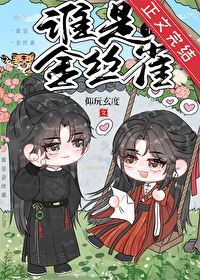
... Read More
'Just doing things for money.' / 'Oh. Bounty hunter?' / 'Just an ordinary person who works hard to make money.' / 'Oh.' — This exchange is one of the funniest things I've read in a while and it's delivered with such flat affect that it catches you off guard. The masked man clearly wants to come across as unremarkable, but everything about his dialogue suggests the opposite. He could be dangerous. He could be noble. He's choosing to be nothing, and Pei Xiting sees right through it. But then there's also this wonderful self-aware humor running through the narration. Pei Xiting lamenting that he's too poor to afford a bodyguard, the line about twenty taels being enough for an ordinary family of six to spend for one or two years — this is a character who can't turn off his modern brain even in an ancient setting. His internal voice is consistent and distinctive. He's witty, slightly cynical, and deeply observant. Even his frustration reads naturally: 'the feeling of being short of money is novel and wonderful' — said absolutely not ironically. The narrative voice itself has this conversational quality, like someone telling you about a book they just read. It doesn't take itself too seriously even when discussing genuinely disturbing subject matter. The author knows when to let the humor breathe and when to pull back. Wang-shi's cruelty is implied rather than shown in this excerpt, which is a smart choice — we don't need to see the full scene to understand what's coming. The dialogue throughout feels lived-in, like these characters have been talking to each other for years even though they've just met.
... Read More
Okay so this chunk of the story is doing a LOT of heavy lifting and I need to talk about it. On one hand, you've got this incredibly tense political maneuvering going on with Pei Jintang versus the principal madam, and on the other, you've got this whole parallel storyline with the Crown Prince and Pei Xiting that seems completely separate but I have a gut feeling it's all connected. That's good storytelling, folks. The author is laying foundations on multiple fronts simultaneously. What really stood out to me though is how the plot twists are being woven into character moments rather than dropping as big "SURPRISE!" events. When the steward casually brings up his concern about the dancing concubine, you're not even prepared for the pivot into something WAY deeper. One second it's gossip, the next second it's: your son might not even love you anymore, is the kind of line that just hits different. And then BAM, we cut to the Crown Prince's courtyard, rainy evening, and suddenly the entire tone shifts. The plot is doing this thing where it uses transitions almost like scene changes in a movie—abrupt but purposeful. I appreciated that the author didn't spend five paragraphs explaining the weather or the location. We just... are there. It's efficient and keeps me turning pages. The subplot of Xiting not being who he used to be—this keeps coming up, whispered about but never directly confirmed. I've been picking at this thread since chapter one and it's going to unravel BIG. The way the plot is hinting without fully revealing is driving me absolutely crazy in the best possible way.
... Read More
I need to talk about atmosphere because this passage is DRENCHED in it - literally and figuratively. The rain keeps coming up as a detail and I think it's doing a lot of heavy lifting here. "The warm touch was inexplicably embarrassing in the quiet yet noisy rainy night." That line stays with me. Quiet yet noisy - that's the exact feeling of a rain night when the drops are constant background sound but everything else feels hushed. The setting creates this cocoon around these two characters while danger circles outside. And the indoor spaces matter too. The round table where tea gets poured, the couch where You Zong reports, the bamboo curtain separating inner and outer chambers. These aren't random props - they're the geometry of power and intimacy. When Pei Xiting lowers that bamboo curtain to cover the Crown Prince's figure, he's literally creating a barrier between safety and exposure. The architecture becomes part of the story. Then there's the contrast with outside threats. The dark courtyard, the dry well in the backyard where Ma Bi's body was found, the corridor where fighting erupts. The well has "two knife wounds" - one on the back, one on the neck. That's not just a crime scene detail; it's the world bleeding into this intimate space. The rain can't wash away what's happening beyond these walls. Even small details build the world: Yu Shaoyun listening outside and clicking his tongue inwardly, You Zong wearing a bamboo hat, the candlelight flickering on the table. These sensory fragments make the setting feel lived-in rather than stagey. You can smell the wet earth, hear the rain drumming, see shadows moving in the candlelight. The world breathes around these characters even when they're focused on each other.
... Read More
The tension in this section is NOT from big action sequences — it's from the suffocating awareness that everyone in every room is calculating survival. Prefect He is the perfect example. He's smiling, offering assistance, making polite conversation, but his internal monologue is screaming: 'If I accidentally offend these two, a single word to His Highness could cost me my official hat.' That's a stakes revelation wrapped in three sentences of bureaucratic pleasantries. Meanwhile, Pei Xiting is in a carriage with the Crown Prince in disguise, knowing full well that Prince Zhao is watching, and he's just casually waving a fan and making philosophical points about overtime. The stakes are escalating on every level — the fake Third Wang is 'within our sights' but apparently not caught, the real Ma Bi is missing, the Rivers and Mountains Scroll is somehow connected to all of this, and now they're diving into old case files in Ningzhou where something clearly went wrong. What keeps me hooked isn't 'will they catch the bad guy' — it's the creeping dread that catching him might unravel something far worse. The author understands that suspense lives in the gap between what characters know and what readers know.
... Read More
Okay so first of all—can we just talk about how Pei Xiting, right in the middle of an assassination attempt, decides to USE it as an opportunity to make a request? He gets his eyes covered by the Crown Prince's belt, hears all the gruesome sounds of people getting killed, and his first thought isn't just terror, it's "can you make it quieter next time?" And then when the Crown Prince doesn't respond fast enough, he literally grabs the man's hand and puts it on his own ears. Like. Sir. This is not a negotiation. This is a hostage situation and you're ordering the hostage-taker to accommodate your comfort. But here's what actually makes this scene work plot-wise—it's the reveal. When they're running away and Pei Xiting pieces together that the Crown Prince is some kind of assassin pro, watching him crush that guy's neck like it was nothing... that's a massive shift. Up until now, Pei Xiting has been positioning himself as someone trying to get close to power, playing a game of strategy. But in this moment, he realizes the actual power is way more visceral and violent than he imagined. And instead of being horrified and running away, he starts calculating how to adapt. "Should I speak frankly now, or pretend not to know?" — this line perfectly captures his character. He doesn't panic. He evaluates. The author also does something clever with pacing here. The fight scene is fast and chaotic, then it cuts to the post-battle walk where everything slows down and becomes almost intimate. That contrast between the brutal action and the quiet conversation afterward is where the real story happens. By the end, the Crown Prince just says "Hot spring" and Pei Xiting immediately finds an umbrella. The power dynamic has shifted, but in a way that feels like progress for both of them.

Leave a comment

You must be logged in to leave comments. or
