Summary

... Read More

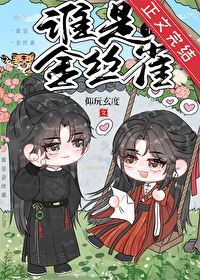
Pei Xiting, a twenty-first-century art student, finishes reading a notorious BL novel titled "Raising," which details the brutal abuse of its protagonist by three powerful men known as the scum gongs group. The story follows Pei Xiting, a weak and beautiful third son of a Guanglu Temple official, who is trapped by Shangguan Jie, the tyrannical Young Marquis. After enduring rape, imprisonment, and mutilation, the original Pei Xiting commits suicide. Upon finishing the book, Pei Xiting suffers a violent physical reaction and collapses. When he awakens, he finds himself in an ancient Chinese setting, physically pinned to a bed by Shangguan Jie, who is attempting to force himself upon him. Pei Xiting realizes he has transmigrated into the body of the novel's victim, retaining his modern knowledge and personality while inhabiting the frail, introverted form of Pei Xiting.

The core conflict centers on Pei Xiting's desperate struggle for survival against Shangguan Jie and the broader threat of the scum gongs group. Shangguan Jie is a martial artist of immense power who views the original Pei Xiting as a substitute for his unrequited love, Pei Jintang. In the original narrative, this substitution leads to the protagonist's destruction. Pei Xiting, however, refuses to accept this fate. Using his acting skills and modern mindset, he initially plays along to survive but quickly devises a plan to escape. During Shangguan Jie's assault, Pei Xiting manages to seize a dagger, Po Yinlin, an imperial weapon, and stabs the Young Marquis in the chest. Just as he prepares to kill Shangguan Jie, a masked assassin bursts in, intercepts the dagger, and steals Po Yinlin from the room, leaving both Pei Xiting and the wounded Shangguan Jie alive but in disarray.

Following this turning point, Pei Xiting recognizes that his only chance for survival lies in allying with someone powerful enough to deter Shangguan Jie. He seeks out Qing Lingling, a singer at Yuanyang Pavilion and the only friend the original Pei Xiting possessed. Pei Xiting reveals the true nature of his predicament and proposes a partnership. He instructs Qing Lingling to publicly denounce him to Shangguan Jie, creating the appearance that their friendship was never genuine. To protect himself further, Pei Xiting uses his skills as a makeup artist to enter the household of Mei Jiang, the Crown Prince’s advisor, where he unexpectedly encounters the Crown Prince himself, Fuchuan. Pei Xiting presents a painting titled "Jade Man Comes" and engages the Crown Prince in conversation about food and art, demonstrating his intelligence and utility. Impressed by his wit and beauty, the Crown Prince accepts Pei Xiting’s services, offering him protection under the guise of employment.

Meanwhile, Shangguan Jie recovers from his wound, furious and confused by Pei Xiting’s change in behavior. The original submissive victim has become sharp, calculating, and independent, which only deepens Shangguan Jie’s obsession. Pei Xiting navigates the dangerous political landscape of the Daye Dynasty, balancing his role as a servant to the Crown Prince while evading the constant surveillance of Shangguan Jie’s men. He begins to plot his eventual escape from Yejing, leveraging his position near the Crown Prince to gather resources and influence. The story establishes a tense dynamic where Pei Xiting must use his wits and charm to survive in a world designed to destroy him, while the Crown Prince watches with interest, sensing that this "bird" has hidden intentions and might be more than just a pretty face.

The narrative shifts from a simple survival horror to a complex political intrigue involving court manipulation and personal agency. Pei Xiting’s modern perspective allows him to see through the novel’s tropes, treating the dangerous situation as a game he intends to win. He rejects the passive victimhood assigned to his character, instead actively seeking leverage against his oppressors. His relationship with Qing Lingling evolves from one-sided pity to a strategic alliance based on mutual survival. As he integrates into the Crown Prince’s circle, Pei Xiting uncovers the deeper machinations of the court, realizing that the Crown Prince is a far more formidable figure than the brief mentions in the original text suggested. The story concludes with Pei Xiting firmly establishing his foothold in the palace, having successfully avoided the worst fate foretold in the book, while the scum gongs group remains unaware that their intended victim has transformed into an unpredictable adversary.

Latest Release
DateGroupRelease
2026-09-26knoxt c131
2026-09-26knoxt c130
2026-09-26knoxt c129
2026-09-26knoxt c128
2026-09-26knoxt c127
2026-09-26knoxt c126
2026-09-26knoxt c125
2026-09-26knoxt c124
2026-09-26knoxt c123
2026-09-26knoxt c122
2026-09-26knoxt c121
2026-09-26knoxt c120

Community Reviews

Rating(3.9 / 5.0, 268votes)
5 stars
80(30%)
4 stars
94(35%)
3 stars
90(34%)
2 stars
4(1%)
1 stars
0(0%)

Popular reviews

... Read More
I keep coming back to that apricot blossom petal landing on the chessboard. The author could have had the crown prince simply say 'no blood today' and moved on, but instead she gives us this image — a fragile, fleeting thing settling onto a game of strategy, and the prince treating it as meaningful. 'It said so.' Whether this is genuine mysticism, a calculated performance, or some combination of both is unclear, and I think that ambiguity is the point. The chess motif runs deep here. The prince is literally playing chess while making decisions about life and death. His subordinate Bai Tang is described as adhering to the principle that 'whatever Your Highness does is reasonable,' which raises the question: is the prince truly wise, or is he just good at surrounding himself with people who will validate whatever he decides? The board is small and controlled; the world outside the pavilion is vast and unpredictable. Yet the prince treats them as connected. Then there's Pei Xiting, who keeps appearing in thresholds and transitions — leaving through back doors, walking along bluestone paths, slipping between rooms. He's described as 'third son,' which in this kind of story usually means someone overlooked, underestimated, existing in the margins. But his margins are where the interesting things happen. The assassins are looking for Po Yinlin, the prince is watching Third Pei from behind a mask, and Pei Xiting himself is navigating toward a flower building to find someone called Qing Lingling. Everyone is looking for something or someone. No one is where they're supposed to be. The title 'Mountain Flower painting' that Pei Xiting uses as a code phrase also feels loaded — flowers appearing throughout this section (apricot blossoms, the 'mountain flowers' painting, the flower building itself) suggest that beauty and danger are deeply intertwined in this world. What does it mean to be both delicate and deadly? That seems to be the question the story is asking.
... Read More
What are the stakes here? On the surface, it seems simple—Pei Xiting wants to rescue Ying Ziyu from a abusive brothel owner. But the stakes are layered like an onion and honestly a bit terrifying. Third Master Bai. That name alone carries weight. He is connected to Duke Wen's Mansion. He has government ties. He is a man who can have someone beaten half to death and resold without consequences. And Pei Xiting is knowingly stepping into opposition with him. The tension in that first scene—the guest recognizing Pei Xiting and immediately questioning whether his subordinate's intelligence was wrong or whether Pei Xiting has been compromised—is not background flavor. It is the setup for a conflict that is going to explode. Ying Ziyu understands this perfectly. 'If you help me, you'll offend someone powerful.' He says it calmly, almost gently, as if he is protecting Pei Xiting rather than warning him. The tragedy is that he has accepted his fate so completely that the idea of resistance has not occurred to him. But Pei Xiting has. And that is where the real conflict lives—not in physical danger, but in the collision between someone who has learned to survive and someone who refuses to accept the rules of survival. The stakes escalate with every line. Pei Xiting offers to pay market price. Ying Ziyu refuses. Pei Xiting persists. And the reader is left wondering: how far will this go? What happens when Third Master Bai finds out? Who is Chun Sheng to all of this, and why is he still kneeling in that room?
... Read More
Can we just talk about how the Crown Prince stares at Pei Xiting's hand like he's trying to decode a secret message? The guy is literally watching him stroke that tiger, admiring his fingers—"pale, slender, and elegant"—and then BAM, there's a cinnabar mole in the center of his palm, and suddenly the sunlight feels too bright. The Crown Prince blinks like he's been hit by something. The prayer beads on his wrist slide down. He looks at Pei Xiting's cheerful face and starts "weighing, judging, and deciding something." This man is NOT okay. He's composed, he's the Crown Prince for heaven's sake, and he's being completely undone by a birthmark on someone's palm. What does that mole mean? Some kind of recognition? A past life thing? Destiny? The author really just dropped a grenade in the middle of a casual afternoon walk and I am HERE for it. And the dynamic between them—Pei Xiting is absolutely fearless around the Crown Prince. Everyone else walks on eggshells, but Pei Xiting basically tells him "you're really adorable" before catching himself. He deliberately acts improper because proper behavior doesn't win favor. And the Crown Prince lets him. You Zong even notes it: "It's not a bad thing, having someone around he can talk to casually." Lu Mang calls them a "pleasing, harmonious sight" which obviously has him writing scandalous fiction somewhere. Classic. What I love is how the Crown Prince considers himself "the dullest man in the world" while Pei Xiting sees something worth chasing in him. That reversal says everything about their dynamic—he gives the Crown Prince permission to just BE himself, unguarded, for once.
... Read More
'Blowing a tune that was hostile to all musicians throughout history, not knowing that the flowers and plants on the mountain wished they could die on the spot.' I AM DEAD. I am genuinely wheezing. This is the single greatest description of bad music in the history of Chinese literature and I will die on this hill. And Eunuch Lai's internal monologue?! 'His Highness is worthy of being the Crown Prince. Even under the influence of this devil's music, he's still motionless. This torture is to temper the state of mind!' AND 'Commander Yu is worthy of being the most favored minister of the East Palace! He has ravaged His Highness's ears to this degree but has not been beaten to death yet.' Eunuch Lai is my spirit animal. He's kneeling there brewing tea while his employer deliberately tortures the Crown Prince's ears, and his entire personality is just quietly judging everyone involved while staying useful enough to survive. THE MAN IS A SURVIVAL MASTERCLASS. But the dialogue between Pei Xiting and the Crown Prince? That's a completely different register. Pei Xiting's lines drip with practiced warmth—'What a fate,' 'little father,' the childlike chin-propping gesture—but the Crown Prince's responses are spare, precise, almost clinical. 'You haven't taken a courtesy name yet; where does the name Wenjuan come from?' That's not small talk. That's an interrogation wrapped in velvet. And Yuan Fang! 'Next time I will bathe three times before I touch you.' 'At least I know that you are dead, so I can find a way to collect your body.' This man has the emotional range of a brick and the loyalty of a wolf, and his dialogue is PERFECT. Every character has a voice so distinct you could read their lines aloud and never confuse them. The author doesn't just write dialogue—they write personalities.
... Read More
The atmosphere in these chapters is absolutely *cinematic* and I need to talk about it. Let's start with the first scene—the bedroom where Pei Xiting undresses the Crown Prince. The lighting here is already doing heavy lifting. You have the glass rosary slipping off Pei Xiting's wrist, the Crown Prince pressing it down and rubbing it as if suppressing something massive. Then—BAM—a lotus chandelier gets blown out with a 'whoosh,' and the world splits between light and darkness while a fierce rainstorm hammers the roof. Pei Xiting looks up at the Crown Prince 'with eyes filled with drizzle, like a demon that appeared from behind the mist at night.' This is not a gentle romance scene. This is charged, almost unhinged. The storm outside mirrors whatever is about to crack open between them. Then we cut to the hot spring and the mood shifts entirely. The rain 'had raged enough and returned to its initial momentum, falling on the roof like small jade beads.' The water is hot, the air is misty, the Crown Prince's 'handsome face with a layer of light rouge smudged by the mist.' Water and steam everywhere—everything is blurred at the edges, boundaries dissolving. Pei Xiting swimming with his black hair 'floating on the water like surging black waves,' droplets tracking down his spine like they're walking a path straight into the pool. The description of his waist dimples as 'a pair of white jade cups' is luxurious without being vulgar. What strikes me is how the physical world keeps mirroring the emotional state. Storm → tension. Jade-bead rain → calm after the storm. Water → intimacy, fluidity, things slipping beneath the surface. This author doesn't just describe settings, they *breathe* them into the characters' psychological lives.
... Read More
The dialogue in these chapters made me laugh out loud more than once. Pei Jintang has this irrepressible energy that comes through in every line he says. 'You really want to paint everywhere you go. Why didn't you have this hobby before?' That teasing jab between brothers feels so real — no script could write that better. And then Pei Xiting responding with deadpan I'm not pretending to be deep. I'm really deep. — absolute perfection. The contrast between Jintangs booming extrovert energy and Xiting's quiet sharpness creates this amazing rhythm. Even the villains sound distinct. Shangguan Jie calling Wang Yelai 'trash' and the cold How does it feel to fall down while walking? exchange between the brothers afterward — thats not generic antagonist dialogue, that person has a voice. And Zong An's quiet I thought he was a docile cat, but I didn't expect this is even more interesting — he speaks less but every word carries weight. The author clearly knows how to let each character sound different without needing narration to tell you whos talking.
See all reviews

Custom lists

See all custom Lists