When Two Alphas Meet, One’s an Omega - Reviews

When Two Alphas Meet, One’s an Omega
+Add to Custom List
Sort
Add review
... Read More
Okay so the author's note literally dropped like a bomb—"From bitter rivals to good buddies! Next step: I take you as my brother and you take me as your wife?!" AND I SCREAMED. Like, I literally yelled at my phone. This chapter was supposed to be fluff and it was, but the FLUFF HIT DIFFERENT. Jian Songyi being useless at washing his hands and demanding Lu Qi Feng feed him potato chips—this is the kind of domestic nonsense that makes me lose my mind in the best way. And then Bai Huai, stone-cold, reading on his bed, slamming his book shut just because these two are being loud and annoying. Classic. The fact that he doesn't even bother engaging with Jian Songyi's complaint afterward—"doesn't want to talk to Omega in the late stage of straight-A cancer"—that's not cruelty, that's affection written in a language only people who've been together through everything understands. Meanwhile the entire student body is losing their collective minds over them walking together in uniform. The collective delusion of 'why don't they just end up together' while Lin Yuanyuan and Zhuo Luo are furiously charting their own conquests—this is the background radiation of every good romance novel. Everyone knows except the people involved. I've read this book enough times to know where it's going and I still can't handle it. Who else is screaming about the author's note? Who else?
... Read More
There are so many symbols packed into these chapters and I want to unpack at least a few. The mountain metaphor — "no room for two Alphas in one mountain" — this is the most obvious one. It's a classic Chinese literary image and the author uses it in a way that's both traditional and subversive. Normally this saying is about dominance and territory. But what if the mountain isn't something you fight over? What if it's something you share? The fact that Jian Songyi invokes this proverb while simultaneously being the one who can't let go suggests he's using tradition to justify something that isn't really about tradition at all. Then there's the cub imagery from Ice Cream Xiaoyuanzi. The fan club president keeps calling Jian Songyi her "cub" and positioning herself as the mother bear. This is funny on the surface but deeply telling underneath. In ABO dynamics, the cub/parent relationship maps onto vulnerability and protection. Jian Songyi is being reduced to something small and helpless — which is exactly what happens to him during differentiation. The fan's fantasy of "he'll beg my cub" is backwards in the most ironic way possible, because it's actually BAIS who becomes the caregiver and JIAN SONGYI who becomes the one being carried. The uniform is another symbol I can't stop thinking about. Bai Huai sends his changed school uniform to Jian Songyi's house. A uniform represents identity, rules, the public self. By sending it, he's sending a piece of himself — literally crossing a boundary between their worlds. It's an act of service disguised as casualness. And Jian Songyi, who values image and propriety above almost everything else, wearing someone else's uniform close to his skin during his most vulnerable moment — that's symbolic of something huge even if neither character would admit it. The differentiation itself is the central metaphor. In ABO fiction, differentiation is never just biological — it's about becoming who you are, losing control, being forced into a body that doesn't match your sense of self. Jian Songyi has spent his whole life being the perfect Alpha: proud, composed, unbeatable. Differentiation strips all of that away. He can't stand. Can't speak. Can't even hold his phone. And in that state of total vulnerability, it's Bai Huai — his rival, the other Alpha, the guy he's been competing with since childhood — who shows up. The story keeps asking: what does it mean to be strong? Is it winning bets? Is it maintaining composure? Or is it showing up at someone's door in the middle of the night when they're burning up?
... Read More
This book has MEANT that line since page one and I am NOT okay. 'It's a beautiful moonlight tonight. It's perfect for domestic violence.' I read that and my stomach dropped because I KNEW what that meant. It meant that later, when they were alone, things would get intense. Not physical violence — well, maybe a little — but emotional violence. The kind where you say things you don't mean because you're terrified of saying the things you DO mean. And then right after that line, we get the car ride. Bai Huai watching Jian Songyi sleep, studying his breathing patterns like a scientist and a person who is quietly falling apart over someone he can't have. He notices that Jian Songyi's differentiation is different from other Alphas he knows — not irritable or aggressive, but lethargic, sick-like. Which is honestly kind of poetic because the boy who appears so sharp and combative is actually the most vulnerable person in the room, and the guy who appears cold and superior is the one paying attention to every detail. The tenderness Bai Huai shows on Indus Road is the most dangerous thing in this entire novel. Because once Jian Songyi sees that version of him — the one who isn't performing cruelty but actually cares — he can't unsee it. And that's why the gossip post triggers him so badly. It's not just about pride. It's about the terrifying realization that the world sees Bai Huai as this untouchable king and he gets to see the person behind the mask, and Jian Songyi doesn't know what that makes them. He retreats into the only language he has: competition, sarcasm, deflection. But I've read those pages five times now and I still can't look away from that wrist grab.
... Read More
Let's talk about how this chapter escalates. It starts in a classroom — maximum domestic, minimum stakes. Someone gets a math problem right, someone else copies the answer in red pen, that's it. Then it moves to the cafeteria line, to an invitation to play basketball, and suddenly we're in a completely different ecosystem. The basketball game itself has escalating tension. First it's just Jian Songyi showing off — 29 to 12 lead after two quarters, toying with defenders like they're slow. Then Huang Fuyi calls a timeout at half-time to reorganize. That's the first warning sign. The opponents stop playing fair. The dunk is the turning point. Jian Songyi goes airborne, lands, and before he can even stand still — elbow to the back. The narrative explicitly calls it out: "This can no longer be regarded as an illegal foul, but an obvious malicious provocation." The rules don't cover this. The referees won't see this. It's violence disguised as sport. And Lu Qi Feng's reaction — charging at the guy, grabbing his collar, shouting "What the hell do you think you are doing?" — that's the moment the conflict shifts from competitive to personal. This is no longer about winning a game. Huang Fuyi crossed a line, he targeted Jian Songyi specifically, and now Lu Qi Feng is involved. The stakes just went from a scoreboard to something much more dangerous. The chapter cuts off right there. Right. There. I am shook.
... Read More
Okay so this chapter is a total reveal drop and I am HERE for it. The whole setup with Bai Yun explaining why Bai Huai came back to Nancheng instead of staying in Beicheng — turns out it wasn't some grand strategic move, it was deeply personal. The grandfather being sick and missing him, the father still in the northwest, the mother heading back to Beicheng... Bai Huai is basically the only one left behind. And the real kicker? His own brother pushed him into politics when he wanted to be a doctor. That's not just a subplot detail, that's the kind of family pressure that makes you re-read the whole earlier part of the book with fresh eyes. Everything Bai Huai has done since chapter one suddenly makes so much more sense. Also the fact that he and his family conspired to bring him back but one person vetoed it — that's a power dynamic worth watching closely. Who has the final say in that family?
... Read More
I need to talk about the mark scene because this is where the entire tension of the novel seems to condense into one moment. Jian Songyi is literally threatening to bite his own tongue off rather than be marked by Bai Huai. That's not a casual threat. That's someone who has drawn a line so hard it's carved into bone. But here's what makes the stakes so interesting—they're not just about physical marking. It's about autonomy. It's about who gets to decide what happens to their own body in a system that keeps trying to decide for them. When Bai Huai touches his gland and Jian Songyi immediately tenses up, that's not just romantic tension. That's a person whose boundaries have been violated before and is now standing guard over every inch of themselves. The inducer incident from the past clearly changed everything, and you can feel it in every exchange. Jian Songyi's refusal isn't about not wanting Bai Huai—it's about never wanting to be that vulnerable again, not under those circumstances. And Bai Huai knows this. That's why he backs off. That's why he says "I won't do anything illegal." He's proving, again and again, that he respects the boundary even when every instinct probably screams the opposite. The hot spring scene waiting outside adds this brilliant layer too—all that noise from Xu Jiaxing contrasting with the intense, quiet power struggle happening inside room 608. Life goes on while two people are having their entire relationship renegotiated behind a closed door.
... Read More
The most devastating line in this entire passage isn't about romance or rivalry. It's comment #83: "My mother told me not to say anything without evidence or insult other genders, but I didn't know until I grew up that not everyone has a mother." This novel keeps circling back to the theme of performed identity versus actual identity, and this comment thread is where that theme gets tested to its breaking point. Jian Songyi performs confidence. Bai Huai performs indifference. The commenters perform expertise. And somewhere beneath all that performance, there are actual vulnerabilities — Jian Songyi's possible Omega nature, Bai Huai's academic struggles, the commenters' desperate need to believe in a perfect love story. The bear in the photo is another symbol I can't shake. Bai Huai holding a bear while looking up at Jian Songyi — is it a childlike gesture? A protective one? Is he holding onto something soft in a world that demands hardness? The stuffed animal becomes a silent witness to everything that hasn't been said out loud between these two. And the group chat name — "Seven Fairies" — maintained against Jian Songyi's wishes but supported by the admin. The reclaiming of supposedly feminine-coded spaces. The novel keeps asking: who gets to define who these people are?
... Read More
Okay so this section hits differently than I expected. Here we are in the middle of what seems like a long-running rivalry, and the author just drops this ridiculous school poll where Bai Huai wins most handsome and Jian Songyi comes in second. Sounds like filler, right? WRONG. This is actually one of the most important turning points in their entire dynamic, and I think the author is deliberately using something superficial—like a popularity contest—to crack open the real tension between these two guys. Because underneath the absurdity of "I lost a beauty pageant" is this devastating moment where Jian Songyi realizes that Bai Huai has outshined him publicly, and worse, that he can't even be mad about it because the reasons are stupid. Then BAM—he makes this huge declaration about not being "worth becoming an Alpha" if he can't beat Bai Huai. And earlier there was that whole thing about differentiation, his body physically struggling. So the plot is running on two tracks here: the external competition for dominance between two Alphas, and the internal biological crisis of Jian Songyi's body breaking down. The author is layering stakes on top of stakes and I am HERE for it. The public humiliation feeds directly into the private desperation. That's not accidental writing, that's craft.
... Read More
"Jian Songyi, believe me. You will always be afraid." I need to sit with that line for a minute. Bai Huai doesn't shout it. He doesn't even raise his voice. He just leans in, rests his chin on his hand, and delivers this like he's stating a weather forecast. And the description of his eyes—phoenix-shaped, darkening, smiling with something ruthless underneath—chills me. This is the moment where the entire power dynamic between them flips on its head. Everyone around them sees two Alphas about to clash. But Bai Huai isn't threatening violence. He's threatening something far more intimate: the knowledge that he SEEES Jian Songyi. Not the champion, not the popular kid, not the fearless Alpha who commands every room. The real one underneath. And Jian Songyi's reaction? He laughs. Not nervous laughter—actual amusement, losing his balance, falling backward, caught mid-air by Bai Huai's arms. That instinctive reach, that split-second decision to hold him instead of let him fall—it's so revealing. Bai Huai pretends indifference all day (stuffing his lunchbox, pretending he didn't see Zhou Luo), but the moment Jian Songyi tips backward, his body moves before his brain can intercept. Then later, Jian Songyi's entire internal monologue about why he'd NEVER be an Omega—strength, leadership, repression, height, abs, fighting ability—reads almost like he's convincing himself. Who is he performing this masculinity for? And why does the mere想象 of being vulnerable, of being the one forced and dominated, make him feel it's "wrong"? These two are so tangled I can barely breathe just writing about them.
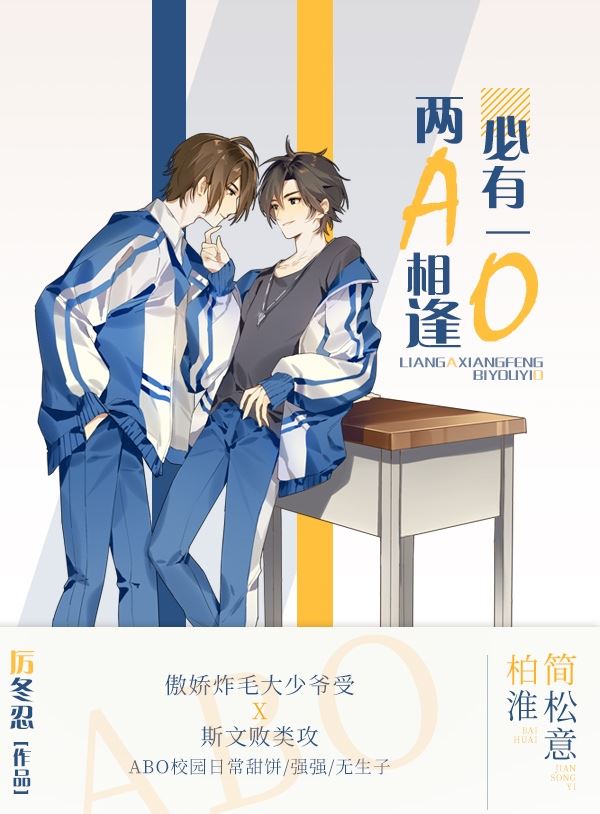
... Read More
I keep coming back to this one moment where Jian Songyi and Bai Huai are literally tied at the waist and neither can figure out how to untie themselves first. The tension is unbearable—not because they don't know the answer, but because they both know it and neither wants to admit it. Bai Huai's line 'why didn't we untie the belt around our arms first before getting up?' hits different when you realize it's not about the task at all. It's about control, about who gets to break the silence first. The backstory drops here too—they were tied together as kids, seven or eight years old, because their grandpas were tired of their fighting. That detail reframes everything. These two have been orbiting each other since childhood, bound by circumstance, forced into proximity, and now that they've differentiated, Jian Songyi is losing his mind over a physical reaction he can't explain. The irony is brutal: the thing he fears most is probably the thing they've both wanted this whole time. And then there's the Lu Qifeng hug test—Jian Songyi deliberately hugging someone else to prove he doesn't feel anything for Alphas, only to feel absolutely nothing. He calls it luck. We call it denial. Lu Qifeng sees right through it though. The guy literally patches together a whole theory about what's going on based on three minutes of body language. Meanwhile Jian Songyi is over there pretending he's not secretly terrified that Bai Huai figured it out too.
... Read More
What makes this scene work on a conflict level is that the stakes operate on three different frequencies simultaneously and the author never lets you forget any of them. On the surface: two Alphas are chatting outside a bathroom stall where an Alpha and an Omega are locked in a compromising position. If discovered, it's social ruin for both of them—especially Jian Songyi, who's already hiding the fact that he's an Omega. That's external stakes. But the real stakes are internal, and they're what make this unforgettable. Jian Songyi promised himself he would not accept being marked. He's spent however many chapters building this wall of proud willpower, and here he is—hugging an Alpha closely, waiting for something he can't name, ears turning red every time Bai Huai looks at him. The conflict isn't just 'will they or won't they,' it's 'Jian Songyi doesn't even know what HE wants and that terrifies him more than anything.' And Bai Huai? He's torn between being protective and being predatory. His internal monologue reveals this perfectly: 'I can't tell whether Jian Songyi is torturing himself or he is supposed to be torturing me.' That line is the thesis of their entire relationship. The stakes escalate subtly throughout—first it's survival (don't get caught), then it's dignity (I'm not actually aroused), then it's identity (what am I even allowed to want now?), and finally it's commitment (the 'last time' comment implies there won't be a last time, which is either a promise or a threat). The tension never drops below a simmer. Even when the teachers leave and the physical danger passes, the emotional stakes immediately ramp up with that devastating final line about 'things can only happen and be tolerated thrice.' The author has built this to a point of no return and we ALL know it.
... Read More
Every object in this chapter is carrying meaning, and I want to focus on two of them because they bookend the entire emotional arc. The first is the inflatable soft pillow that has leaked its air. This is the object that causes everything. Jian Songyi's pillow fails him in the night, and so he migrates to the only comfortable surface available: Bai Huai's thigh. The pillow represents everything that is supposed to support him and consistently fails. It leaks. It deflates. It cannot hold shape. And Jian Songyi, who has spent his whole life managing his omega nature, who has pulled back his gender consciousness and confronted the fact of what he is, cannot even maintain a piece of furniture. The imagery is almost too precise to be accidental. The second symbol is the hallway that Lu Qi Feng blocks. While Jian Songyi sleeps, while he is most vulnerable, the entire school world is held at bay. No students pass through. No one interrupts. Bai Huai sits perfectly still, arm hanging upon his leg as if it is natural, as if this is the most ordinary thing in the world. But it is not ordinary. It is sacred. The blocked hallway is the author's way of saying: this moment does not belong to the public. This moment belongs only to the two of them, even though neither of them will name what it is. And then there is the mosquito repellent, which I cannot stop thinking about. Zhuo Luo gives it all away. He gives the entire make-up bag full of protection to someone who does not even understand the delicate life of an omega. He is being bitten alive and handing over his defenses with a smile. That is the central symbol of this entire relationship: giving your protection to the person who does not know they need it, because love is not about receiving safety, it is about becoming unsafe for someone else.

Leave a comment

You must be logged in to leave comments. or
