West out of Yumen - Reviews

West out of Yumen
+Add to Custom List
Sort
Add review
... Read More
I have to laugh out loud at Fei Tang's dialogue in this batch because the author clearly understands that not every character needs to be profound and some of the best writing comes from the ones who refuse to be. Let me just quote a few gems because I cannot contain myself. Fei Tang on the off-road drivers: Come on, what does the Forest Bureau have to do with desert matters? Did I come all this way for nothing? THIS MAN IS A VIBE. He hears a loophole about sneaking in before dawn and immediately treats it like he is about to pull off the heist of the century. And then his confrontation with Chang Dong through the car radio: Sister Yexi, isn't Dong Ge acting like a dictator? He doesn't let us have fun, stops when he wants, but doesn't listen to anyone's opinion! The convoy follows the lead car - if he goes I have to go, if he stops I have to stop! He is literally reporting his leader's driving behavior to the wrong person like a disgruntled employee filing a complaint with HR. Then he remembers the Black Camellia incident and shouts repeat offender! Like he is building a case. Meanwhile Ye Liuxi's dialogue is this perfectly calibrated dry warmth. Speak. Two words. That's all she gives Fei Tang before launching into her Chang Dong psychoanalysis. And Chang Dong himself - how many lines does he have in these chapters? Yes. Let's go. We have a permit. That's it. The man communicates in brevity and it works because every word carries weight. When he finally does open up about the weathering fortress, it's in a quiet moment with Ye Liuxi, not in any dramatic confession scene. The dialogue distribution itself tells you everything about power dynamics in this group. Fei Tang yaps. Ye Liuxi observes. Chang Dong acts and barely speaks. And somehow the balance is perfect because without Fei Tang's noise the solemnity would crush you, and without Ye Liuxi's translations none of us would understand what the silence means.
... Read More
I need to talk about Ye Liuxi because she is genuinely one of the most refreshingly real characters I've encountered in a long time. Here's a woman planning to cross one of the most dangerous deserts in the world and her immediate, unshakeable concern is whether she's getting value for her money. "This is a bit wasteful... Maybe I should go through the ticket gate twice, go in once, come out, and then go back in." CHANG DONG'S RESPONSE: "What's the point of doing that?" Her response: "It would make me feel better." I literally laughed out loud. This isn't just comic relief — it's character-building in the most efficient way possible. We immediately understand that Ye Liuxi comes from a background where every yuan counts, where 40 yuan isn't pocket change, it's two medium green-skinned pears or half a pot of dumpling filling or three or four baths at a public bathhouse. She's not being cheap for the sake of it; she's operating from a place of genuine financial anxiety, and the text makes you feel that weight. And then there's the whole "spend money like water" exchange. Chang Dong's bafflement at her misunderstanding of the phrase is so perfectly captured. She says "Give me money, and I'll spend it" with this confident energy, and you can just feel him staring at her like she's speaking another language. It's funny but also kind of touching — she's trying to assert that she's not some poor person who can't contribute, even as her actions suggest the opposite. Their dynamic feels genuinely complicated and layered.
... Read More
The dialogue in these chapters is a masterclass in what people don't say. Every line is loaded, every pause heavy. Take the very first exchange: 'Shouldn't a person be punctual?' / 'Shouldn't a person be honest?' That's not an argument; that's a treaty written in code. They're not actually talking about time or truth—they're negotiating power. And the beauty is that neither character sounds like the other. Ye Liuxi's voice is fluid, adaptive, always circling back to charm or deflection. Even her apologies feel tactical. 'This is my fault, I'm really sorry, I didn't do it on purpose'—it rolls off the tongue like she's practiced it. But then she drops the real one, quiet and low: 'I was afraid it would scare you.' That's the voice that slips through. Chang Dong's side is all staccato, factual, devastating in its simplicity. 'There's no beacon tower.' 'No gas barrel marker.' 'Have I made myself clear enough?' He doesn't yell. He doesn't need to. His voice is a scalpel. And the narration itself has this sharp, almost cinematic quality—short sentences, abrupt cuts, little asides that feel like director's commentary. The opera lyrics quoted inside the scene aren't just decoration; they're commentary track. When the singer wails about fleeing through desolate countryside, you're not just hearing a song—you're hearing Ye Liuxi's internal monologue set to music. And Fei Tang's dialogue? Minimal, nervous, full of those frozen smiles. He exists mostly in reactions, which makes him the perfect foil—his fear highlights her intensity, his obedience contrasts her defiance. The author lets silence do as much work as words. That moment when she closes the door gently and just stands there? No dialogue. Just the click of the latch and the curl of her fingers. Sometimes the most powerful lines are the ones never spoken. This isn't just good writing; it's psychologically precise.
... Read More
Okay I need to just sit with this moment for a second because it is actually so good and I don't even know where to start. Ye Liuxi asks Chang Dong to pull over and pretend she's just hot, but we all know what's happening. He turns to look at her, she notices stubble, she thinks about what it would feel like against her neck — prickly, maddening — and then she immediately gets flustered and runs outside to fan herself. Like literally the car becomes unendurable the second she realizes she's thinking about his face. And the author doesn't even explain it directly, right? It's all in the body language. The hair adjustment. The fingers brushing warm skin near her ear. The quick fix to cover it up. This is such a delicate, real moment. Two people who are clearly something to each other but aren't allowed to be, stuck in a car in the middle of nowhere, and the smallest thing — his chin, his stubble — undoes her completely. Then Fei Tang yells from the back window about the heat and she throws a stone at him. Classic deflection energy. And Ding Liu pulls up in that perfect yellow duck hair clip and white sweater like she walked off a completely different set, all to deliver one line to Chang Dong: "Why didn't you stop this morning?" and we see Ye Liuxi's entire internal system short-circuit again. She climbs back in and he waits for her to buckle up before driving. That detail got me. He notices everything. He just doesn't make it obvious. I re-read that whole sequence three times. Three. Because it's so understated and so devastating in the best way.
... Read More
Okay so this section is honestly where the plot tension starts building in a way that made me sit up straighter. There are two threads running simultaneously and I love how they feed each other. The first is the physical journey planning — heading west through Yardang formations, sand ridges, Ghost City, skirting the Kumtag Desert into Lop Nur. This isn't a casual road trip; it's the real deal, as the text itself says, and that looming destination creates this constant background hum of danger. But the more interesting plot engine here is the Fei Tang / Ye Liuxi situation. Fei Tang is clearly onto something — or at least pretending to be — when he circles around the agate with the animal head, dropping hints about its Persian-Central Asian origins and its astronomical value. The fact that Ye Liuxi herself initiated the question is what sells it. She has the artifact. He knows it. And Chang Dong, who's been watching all this like a hawk, drops this absolutely perfect line: "Coincidences happen once at most. Any more than that is intentional." That single line recontextualizes everything we've seen of Fei Tang's behavior. It's not paranoia — it's pattern recognition. And the scene underneath the car? Brilliant. Chang Dong literally goes below the surface while giving his warning, and Fei Tang is stuck holding a flashlight, exposed. I kept waiting for something worse to happen between them. Meanwhile, the subplot about money and equipment fees is a quieter but equally sharp tension — Ye Liuxi defending herself about paying, the whole "spend money like water" misunderstanding, it all adds up to a team dynamic that's more fragile than anyone's letting on.
... Read More
I know this isn't a romance novel and I'm not here to force-read romance into everything, but the dynamic between Liu Qi and Shen Gun deserves attention because it's genuinely warm. There's something really sweet about their arrangement. Liu Qi, who clearly isn't much for people—dropping his things and heading straight out to hunt snakes—and Shen Gun, this eccentric notebook-carrying maniac who needs an audience for his stories. Liu Qi forces him to perform every night. "Tell me a tale." And Shen Gun lights up at the notion of teaching. You can almost see the grin behind his scholarly pretensions. The moment that made me actually chuckle was when Shen Gun started calling him "Liu-er" instead of "friend." The narrative notes how it sounds like addressing a hostess at a wine bar, and Liu Qi wants to get mad but decides against it because why argue with a lunatic? This tiny escalation in their friendship—the shift from formal to familiar—feels so real. That's how actual friendships develop, through these small, slightly ridiculous moments of intimacy. And the ending of this section, where Shen Gun gets all philosophical about Emperor Wu meeting the Queen Mother of the West and storing treasure for a future dynasty... Liu Qi just sits there listening in the dark desert, and there's this strange tenderness to it. Two outsiders in a hostile world, finding comfort in each other's company and shared wonder. It's not dramatic or overstated. It's just... nice. The kind of quiet character moment that stays with you.
... Read More
I need to talk about the car scene. Just the car scene. It's maybe thirty lines of text and it completely wrecked me. Ye Liuxi is bored. BORED. And instead of just scrolling on her phone or whatever, she starts teasing Chang Dong. 'All you do is carve, carve, carve.' 'Your eyesight must be failing.' 'You don't have many friends, do you?' It sounds mean. It sounds like she's pushing him away. But then she draws a scorpion on her own face — right beside her eye — and shows it to him. And he doesn't notice the gesture. He doesn't notice that she painted something on her face for him. He notices the ARTISTIC TECHNICAL DETAIL. 'The tail should have a hooked stinger. Extend it a bit longer.' And she hands him the pencil. She lets HIM draw on her face. 'He lowered his head and saw her long lashes curl up, moist at the roots.' That line. That single line. Everything. The intimacy of it. The liquid eyeliner brush saturated with ink, requiring a steady hand, her lashes right there beneath his focus — this is not a scene about romance. This is a scene about two people who communicate through everything EXCEPT words. And somehow that's more intimate than any confession. Then the knock on the window. Fei Tang's voice cutting through the moment like a guillotine. And suddenly they're back in a dangerous desert with ancient tombs and unknown enemies. The spell breaks. But that image of the scorpion on her face, trembling with her blink — I can't stop thinking about it.
... Read More
There's a line that just sits in my chest like a stone: "No matter how many times he dies, he can't atone for that." Ding Zhou saying this about Chang Dong—the man who caused eighteen deaths by insisting on his own judgment in the desert—feels almost cruel at first. But the novel keeps pulling the rug. Chang Dong didn't just fail as a guide. He failed because of love. Desert rose stones. A proposal. The most human motivation possible, and it killed everyone. That's the real tragedy the book is circling: there's no formula for how to measure a crime against grief, and no amount of self-destruction balances the scale. The shadow puppet motif is doing heavy lifting here. Chang Dong spends his remaining months learning to manipulate lifeless figures—making them run, stand, flip, attack. Characters that move only when someone else pulls the strings. Meanwhile, his own life has been controlled by forces far larger than him: the desert, public outrage, guilt, the memory of the woman he wanted to propose to. Ding Zhou, the puppeteer, loses his successor and passes the tradition into silence. And Ye Liuxi—her name literally means "six thorns"—arrives like a force that can't be explained. The nested envelope with no postage, no origin, containing something that makes a man who's already lived through hell lose his grip on reality. Is she supernatural? A messenger? Or just someone who sees patterns other people miss? The book refuses to clarify, and that ambiguity is the whole point. Some things in life can't be addressed—only carried.
... Read More
Okay can we just talk about Ye Liuxi for a second because THIS WOMAN. The conversation around the soup pot is genuinely one of the most chilling and compelling character moments I've read in ages. Let me set the scene: they're camping in this completely alien landscape, she's injured, her wound is bleeding, and instead of complaining she just... brushes it off. Then drops this bomb. "Dangerous is fine. I've already died once. Now I'm using a borrowed life to see the world... Aren't you the same?" Bro. She woke up from a hanging. Someone PUT her there. And her entire response is basically: this is a gift, I'm going to use it, and if the truth is dangerous, so what, I'm already dead. What's fascinating is how this reshapes everything about her character. Earlier in the chapter you get this moment where she notices her wound bleeding and deliberately hides it from Chang Dong because "he'd just scold her for climbing with an injury." That's not weakness — that's this fierce, almost stubborn independence. She doesn't want to be managed or protected. She wants to be left alone to deal with her own messes. And then Chang Dong's reaction! He falls silent. Not because he doesn't know what to say, but because he *realizes* something: she's reached a level of enlightenment and detachment he hasn't. The text literally says: "Chang Dong fell silent, realizing he hadn't reached her level of enlightenment and detachment. But there was something curious about her attitude: what kind of environment had shaped such a personality?" I NEED TO KNOW WHAT HAPPENED TO HER. The author is teasing something huge here — this isn't just a backstory reveal waiting to happen, it's the CORE of who she is. She didn't just survive death; she made peace with it on her own terms. And the dynamic with Chang Dong? He's clearly worried about her (hence the scolding thing), but he can't fix this. He's traveling alongside someone who has fundamentally transcended ordinary survival instincts. That creates this tension — he wants to protect her, but she doesn't want protecting. She wants the truth. And she's perfectly willing to walk into danger to get it. Their partnership feels less like a team and more like two people who are bound by something larger than themselves, neither fully understanding the other, but both committed to the same impossible quest. Also the part where she says her enemies are the ones who should be anxious, not her? Chef's kiss. The person behind all this is playing a long game, and she's just... eating the bait deliberately, like a cat letting the mouse think it's winning.
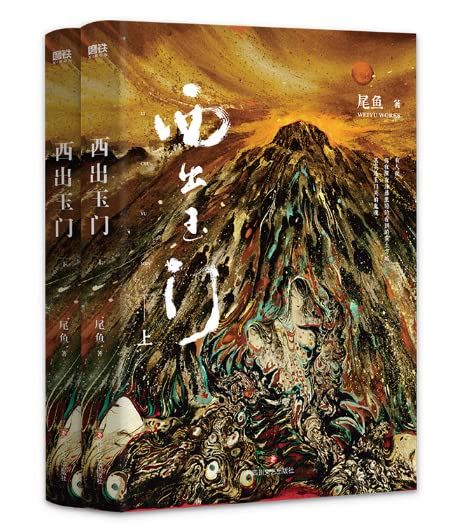
... Read More
Okay so here is the thing about this whole Yumen Pass sequence that keeps bugging me in the best possible way. On the surface it's just travelogue fluff, right? They visit a historical site, some tourists ask questions, the guide shrugs, everyone moves on. But look closer and the whole subplot about whether the real Yumen Pass has been found is basically a mirror for what Chang Dong is going through. The guide says it was identified by an 'adventurer and archaeological thief' in 1907 digging up Han bamboo slips. That's such a dirty origin story for something so sacred. And then Chang Dong's theory that the fortress might have just... weathered away. Became a sand dune. Been swept into the sky by a storm. I literally got chills reading that. Because isn't that exactly what's happening to Chang Dong's past? The real thing is gone, what's left is a shadow, a fortress-shaped pile of sand that everyone pretends is the real deal. And Ye Liuxi nails it when she asks if a sandstorm carrying all that dust would somehow resemble a fortress. Terrifying. Romantic. Magnificent. She can't find the word and neither can I. Meanwhile the permit drama at Yardang Ghost City is just... efficient plot machinery. Chang Dong has a permit, obviously. Of course he does. The readers who were worried get that satisfying relief, and Fei Tang gets to yap about it for five more minutes. Classic Misle structure: small moment, big thematic resonance, character revelation disguised as sightseeing.
... Read More
Okay so I need to talk about how the author completely subverts the whole 'secret notebook' setup. For literally the entire chapter, we're reading this like: Fei Tang is snooping through Ye Liuxi's stuff, he finds the agate, he's plotting whatever scheme he's got going, and Ye Liuxi is the one hiding something. She's the one with the mysteries. Classic setup, right? Then the very last paragraph hits us with Chang Dong sitting there with HIS OWN NOTEBOOK and the first line reads 'All-natural, no plastic surgery.' What??? It's Ye Liuxi who's been hiding secrets the whole time and Chang Dong has been documenting her?? This completely flips the power dynamic. Up to this point we've been reading from an angle where Ye Liuxi is the mysterious one and Chang Dong is the guarded guide, but now it turns out he's been tracking her, observing her, writing down things about her. That line 'All-natural, no plastic surgery' is either him being genuinely casual about something or it's a code of some kind—I genuinely don't know which is more terrifying. And honestly both are equally good. The author really understands how to withhold information and then drop it at exactly the right moment. You finish that paragraph and your brain is just screaming. This is the kind of ending that makes you immediately open the next chapter even though it's 2 AM.
... Read More
Okay so can we just talk about Ye Liuxi for a second because this woman is absolutely terrifying in the best way possible. When Fei Tang walks in all bruised and battered, her first instinct isn't soft comfort—it's to go teach him how to not be stupid. I love that. She scolds him like a disappointed grandmother while simultaneously being ready to dismantle anyone who wronged her people. The dynamic between her and Chang Dong is equally fascinating—they move together like a well-oiled machine, finishing each other's sentences and reading the same room. And Liu Qi! This old snake of a man who knows everyone from opera troupes to grave robbers to snake catchers in Lop Nor—he's clearly the elder statesman of this underworld, dispensing wisdom while sipping tea. The way he tested Ye Liuxi by bringing up her past (three fingers lost, highway robberies, warnings issued) showed me he's been watching, calculating, respecting. He didn't threaten her—he acknowledged her ruthlessness. That's power moving through the scene.

Leave a comment

You must be logged in to leave comments. or
