West out of Yumen - Reviews

West out of Yumen
+Add to Custom List
Sort
Add review
... Read More
Let me just say this: the way the author structures these chapters is genuinely brilliant. You have the frame narrative of Liu Qi and Shen Gun traveling, and then nested inside it, Shen Gun tells the legend of the ghost camel caravan—and it works on so many levels. The opening hooks you immediately with the survival-of-the-fittest world they're in, the encounters full of ulterior motives. Then it slows down for the journey north, which feels right because these are desert crossings—you absorb that rhythm. The parting ways at Hami depression is a neat structural beat that gives us breathing room before diving into the village scenes. But the real pacing masterstroke is the ghost camel story itself. Shen Gun starts casually—does your know Emperor Wu of Han?—and then he builds it layer by layer. First the basic setup of the nine mysterious travelers, then the detail about no shadows, then the cowhide figures, then the sandstorm sequence where the merchant follows them. Each revelation escalates the unease without ever breaking the rhythm of a campfire tale. The author knows exactly when to pause and when to accelerate, and the final image of the caravan vanishing into thin air at night had me genuinely startled. What I also appreciate is that the chapter doesn't overstay its welcome. It ends on a note that makes you desperate for more—the explanation is deliberately left ambiguous, and the text cuts off right as Shen Gun says "Chinese folklore is truly a treasure trove." I literally sat there staring at my phone like what do I do now.
... Read More
I'm obsessed with how the author builds TWO distinct worlds that keep bleeding into each other. First, we've got this grimy, claustrophobic city atmosphere—the elevator, the lipstick application, the way Sunny unbuttons two buttons like it's some kind of performance. It feels real, lived-in, sweaty. Then BOOM, we cut to Chang Dong's dream, and suddenly we're in the Taklamakan Desert. Golden sand, red willows anchoring dunes, absolute silence. No people, no sound. The contrast is brutal and beautiful. And it's not just decorative either—that dream sequence is doing heavy lifting. We later learn about Dragon City Yadan, the salt-white soil, the glass bottles strung as wind chimes at a campsite. This landscape is EVERYWHERE. It's haunting. The way Ye Liuxi stands in sunlight, eating melon, looking like she could be anyone's harmless neighbor while clearly being part of something darker? That scene is pure cinema. Nine out of ten people would think she's harmless. That single line tells us everything about this world—everyone's wearing masks, everyone's playing a role. The visual of Kong Yang's crimson dress “floating in the wind” against that white desert backdrop? I'm still thinking about it days later.
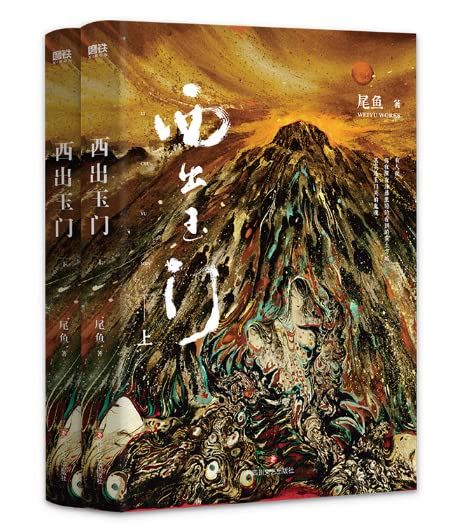
... Read More
Okay so the night scene with Ye Liuxi going outside is where things first get interesting. She's shivering, uneasy, looking at those Yadan mounds in the dark—and you can just feel it. Something's watching. But the real plot move is what comes AFTER that moment. Hui Ba casually asks if anyone saw anything strange, and everyone jokes it's just rats or weird shadows. Classic misdirection! The author makes us think it was nothing, right? And then Fei Tang overhears the conversation about the burial rug fragment worth eight thousand. That's the hook. It's subtle, almost accidental, but it shifts everything. The robbery plot was one thing, but now there's clearly something buried here that's worth actual money. And Chang Dong's warning to Fei Tang about the road to Hami? That's the second plot pivot. He's giving him a way out, which means Chang Dong knows exactly how dangerous this is. I'm just sitting here wondering if Fei Tang will take it or if he'll stick with the crew and pay the price. The pacing here is so deliberate—slow burn, quiet conversations, then suddenly you realize the ground has shifted under you.
... Read More
I need to talk about how the author structures the coffin reveals because this is genuinely good pacing work. First coffin: we get the blood-soaked earth, bodies unearthed by hand, the grotesque mask of clotted blood and sand. Immediate visceral impact. Then we move — drive further, new yardang, the car stunt (breather/comedic relief), THEN the second coffin reveal. The Emperor Wu and Madam Li story paints a picture so vivid I could see it like a painting. Han Dynasty. Emotional, romantic, sorrowful. Then the sky darkens. Murky yellowish dimness. And right when we're settling into the historical observation, Fei Tang screams 'Ming Dynasty!' and BOOM — another era, another coffin, another tonal shift. The pacing between these two reveals is what kills me. The author lets us breathe after the car crash stunt, lets Ding Liu take a selfie (COMEDY RELIEF IN THE DESERT), lets us appreciate the Han coffin's beauty, and THEN — 'the sky had darkened.' Fei Tang's legs tremble. The atmosphere physically changes. And then Ye Liuxi opens it and we get the Ming Dynasty payoff. But what really got me was the transition AFTER the Ming coffin discovery. Just when we should be processing 'wait, two different dynasties?' the author pivots to Chang Dong and Ye Liuxi's quiet conversation about the people INSIDE the pass. It goes from archaeological mystery to worldbuilding speculation seamlessly. The chapter essentially moves: bodies → Han coffin → car stunt comedy → Ming coffin → existential dread about what's inside the pass. That's a LOT of information packed into what should've been one chapter, and it never feels rushed because each beat gets its own breathing room. The cliffhanger ending with Fei Tang blurted something out and the text cuts off? Chef's kiss.
... Read More
'It looks like a road, with shadow puppet coffin mounds on either side.' Ye Liuxi showing Fei Tang that drone photo and him immediately connecting it to the Sima Road at Qianling Mausoleum — this scene gave me actual chills. The way Fei Tang visualizes those shadow puppets standing upright transforming into 'Shadow Wengzhong' lining a burial road... it's grotesque and brilliant all at once. And Chang Dong's practical counter-question: "Stone Wengzhong statues make sense. Stone is durable... But shadow puppet Wengzhong, wearing fabric clothes and standing there — could they even last a year?" That's the author being genius right there. Chang Dong grounds the horror in practicality, and Fei Tang's reply — "That's why they're placed in coffins and buried with earthen mounds" — takes the absurdity and makes it terrifyingly logical. These things were preserved. They were meant to last. And if they're still there after all this time... Then Yumen Pass might not be a pass at all. It might be an enormous tomb. And the whole road leading to it, lined with rows of shadow puppets in coffins, stretches out into the Gobi like some forgotten imperial burial complex swallowed by sand. I kept imagining that image — hundreds of wooden coffin mounds on both sides of a road in the middle of nowhere, dawn light casting long shadows, the wind howling like it always does in this story. The way the author builds this world doesn't rely on exposition dumps. It's all in these small moments where characters connect dots and the reader realizes the implications before anyone says them out loud.
... Read More
The group chat messages are doing SO much heavy lifting in this chapter and I am obsessed. On the surface it's just digital noise—warnings, sighs, a cancellation notice. But strip away the emoji energy and what you get is absolute dread: magnetic interference killing navigation, five cars separated in a sandstorm, two went MISSING, and the local who knew every inch of this desert like his own pulse is dead or gone. "Zhao Ziyun, the King of Lop Nur, the living map." Said with such reverence in past tense that my stomach dropped. Who is he to Chang Dong? Is he dead? Has he disappeared? The author won't tell us, and honestly that's the smarter choice. The unknown is scarier. So now you have Meng Jingu—a man who LIED about weather conditions to secure a luxury contract—trapped out here with six people who are about to learn that jaw-dropping photos have a body count. His crew threw the contract in his face. They wanted "places no one else has been" and now they're paying for it with their nerves if not their lives. And Chang Dong? He's the only one left who can read this desert without machines. That's not a superpower—that's a death sentence wrapped in responsibility. Every person in that area is looking at him to lead them home. What happens when even HE can't navigate this?
... Read More
I am literally still processing this scene where Ye Liuxi reaches out and stops the zipper. The whole chapter builds this incredible tension between her and Chang Dong—starting from when he carries her after the injury, the way he just silently supports her without making it weird, and then all night she's watching him craft this shadow puppet by the fire like some domestic moment from another life. She thinks he'd be an old folk artist when he gets older. She's letting herself see him as a person, not just a guide. And then the sandstorm comes and he closes the tent flap and she asks about Kong Yang and he walks away. That's when she grabs the zipper. Her fingers through the metal teeth. I got chills. This woman doesn't beg, she doesn't negotiate, she literally physically stops him from leaving. And then her line: 'You're the left leg and I'm the right leg.' It's such a Ye Liuxi thing to say—practical, weirdly poetic in its own blunt way, and absolutely devastating because it means she needs him and she knows it. Chang Dong's response is so brutal. 'Then you go first.' He's throwing her own demand back at her face. They're both terrified of being the one who reveals everything first. The fact that she then tosses him her notebook thinking SHE holds all the cards while HE has his own notebook ready to flip the whole thing on its head—THIS is the kind of emotional storytelling that got me obsessed with this book in the first place.
... Read More
Can we just talk about how CHILL and manipulative Ye Liuxi is in this scene? She's sitting there cutting melon like she's hosting a brunch while basically hostage-taking Chang Dong into a journey into the desert. 'It's not hard to find a guide into Lop Nor, but you won't find another person who knows where Kong Yang's body is.' That's not a suggestion—that's a velvet-gloved threat wrapped in a smile. And then the whole fake-drop thing? She deliberately lets the watermelon slice fall, watches him instinctively reach for it, and THEN drops it on his hand. She's physically toyed with him and made it seem casual. This woman is not someone you want crossing. But here's what gets me—she also says she lives in her car. So she's independently resourceful, knows the desert routes, has information nobody else has, AND she's doing this while staying in her vehicle instead of the hotel? The power dynamic here is so skewed toward her that it's almost funny. He's the one who needs answers, and she's the one dangling them. What's your take on whether she's actually helping him or setting him up for something worse?
... Read More
The stakes in this passage operate on so many levels simultaneously and that's what makes it genuinely tense. On the surface level: they're in a desert, digging up mysterious coffins, and the environment is actively reacting. The sky darkening isn't just atmospheric — it's a threat. Chang Dong says 'seems like they don't like this coffin being opened' and suddenly you're wondering: who is 'they'? What happens if they DO like it? The question hangs there unanswered and it's perfect. On the character level, Fei Tang's internal conflict is the most visceral. He's terrified — his legs are trembling, he remembers some promise he made, and yet he's holding onto that coffin with white-knuckled grip. 'Desperate to reclaim value' after failing to read the ancient script, he literally throws himself into the physical labor. This is a man who is scared out of his mind and choosing to stay anyway. That's the kind of bravery that matters in a story because it's not the absence of fear — it's the decision despite it. Ding Liu's fearlessness is a different flavor entirely. She's recording a selfie video. She's jealous AND ashamed of Fei Tang's courage because she doesn't feel the same fear. Is she brave or just oblivious? The text won't tell us, and that ambiguity is deliberate. But the biggest stakes are the ones Chang Dong and Ye Liuxi are discussing quietly while the others grow impatient. 'Not just people — an entire world.' The idea that inside the pass, there are people living across different eras simultaneously, with resources so scarce that a broken bowl gets repaired instead of replaced, where objects from the 1950s sit beside 1980s cameras — this isn't just a mystery to solve anymore. This is a civilization. And Chang Dong is suggesting that whatever connection exists between the pass and the outside world is 'a thin thread, a fragile current.' What happens if that thread breaks? What happens if they find the source? What happens when the people inside the pass become aware that someone on the outside is watching? These are the questions that keep you reading, and the author isn't even trying very hard to make you care — they're just placing the facts in front of you and trusting you'll feel the weight.
... Read More
Ye Liuxi leaning against a housekeeping trolley like it's a luxury car is my favorite description in this entire batch. I cannot stop thinking about it. She has this entire energy where she takes whatever situation she's in and she COMMANDS it. Even doing laundry as a side gig doesn't make her look desperate - it makes her look like she's running something. 'Talent doesn't stay buried, no matter where it is' - she literally said that about herself while cleaning hotel rooms. But the thing I keep coming back to is how Chang Dong actually SEEs her. When he looks at her watching the washing machine and notices that same expression she had when she was making soup - those are the moments that tell you everything. He's been watching her watch things. He notices the patterns. And she noticed his sketchbook. Not just glanced at it - she actually saw the detailed route maps, the question marks, the careful analysis. She recognized the meticulous mind behind the work. Two people who actually observe each other instead of just performing around each other. Fei Tang still hasn't come back. 'Probably struck it rich.' She says it so casually but I swear there's something under there.
... Read More
Let me just say it: they decided to retreat. After everything — the nights in the desert, nearly dying, Ye Liuxi's blood being used to summon Yumen Pass — Chang Dong's first move is to pull back and regroup. "We need some rest." "We'd need to prepare some tools before heading back." This is huge. Previously, these two have been charging forward into danger like there's no tomorrow. Now Chang Dong is deliberately choosing caution. And Ye Liuxi doesn't argue. She just asks about her car and starts budgeting for Hami. But here's the thing that keeps me up at night — the chapter ends with Chang Dong and Ye Liuxi glancing at each other with the same thought: if this is a Sima Road, Yumen Pass might be a tomb. A tomb is not something you walk into lightly. It's a place of death, of ancient power, of things that were buried for reasons. And yet. And yet. They're going back. Chang Dong just hasn't said it out loud yet, but we all know it. The question isn't whether they'll return to Bailongdui. It's when, and what will it cost them this time. Ye Liuxi's blood is the key — and she knows it. "Even blood donors get compensation." She's already priced in her own danger. The stakes just escalated from 'survive the desert' to 'what is inside an ancient tomb that appeared through blood magic,' and the author has the characters acting almost normal about it while driving toward Hami. That contrast — ordinary conversations about hotel costs and meat dinners against the backdrop of impending supernatural exploration — is what makes this book so good.
... Read More
"Even in puppet carving, you're a snob, huh?" That right there. That is Ye Liuxi's entire personality compressed into a single sentence delivered while someone is literally showing her their hobby. She doesn't need to be cruel—she just needs to be accurate, and the accuracy hits like a knife. And Chang Dong's response? 'Well, carving a delicate farmhand from rough leather wouldn't look right either.' He's not deflecting. He's not getting mad. He's AGREEING with her observation and extending it. This is two people who have stopped performing for each other. The narrative voice during the shadow puppet explanation is also doing something really interesting. It's almost clinical—'No two pieces are the same. Some are fair and smooth, while others are dark and coarse'—but then it immediately undercuts that with Ye Liuxi's voice: 'So you're saying everything has to be dismembered first? Ruthless.' The contrast between Chang Dong's precise, methodical way of describing something and Ye Liuxi's blunt, almost violent interpretation of it is comedic gold. Then there's the Fei Tang exchange: 'Don't worry. If I ever need your help, you'd only have to deliver to the entrance.' This line is doing triple duty—it's practical (he knows the routes), it's affectionate (she's keeping him in the circle), and it's a tiny threat (you WILL come back, whether you want to or not). The author never lets any character speak the same way twice. Chang Dong explains things like he's mapping a diagram. Ye Liuxi cuts through everything with surgical precision. Fei Tang stammers and trails off. Each voice is instantly recognizable. This is the kind of dialogue writing that makes you want to re-read every conversation.

Leave a comment

You must be logged in to leave comments. or
