Under the Beast’s Realm - Reviews

Under the Beast’s Realm
+Add to Custom List
Sort
Add review
... Read More
The Friedrich-Leonard relationship is absolutely the emotional backbone here, and it's devastating. They're described as brothers, having been through everything together. But now Friedrich is furious — not just because Leonard killed his unit and got cursed, but because Leonard married his sister without telling him, weaponizing the marriage as both protection and coercion. And Leonard? He's already lost himself. The text says it clearly: 'the monster inside him finally breaking free.' He knows what he's doing is wrong — 'If anything, Leonard should have treated the sister Friedrich left behind with the deepest care and respect' — but the curse is rewriting his instincts. What's terrifying is that part of him isn't fighting it as hard as he should. When he looks at Valetta crying, his mind goes blank. Not with tenderness, but with something darker that he fights against. Then there's Daniel, who gets shut down fast. 'Message received.' His disappointment flickers across his face when Friedrich says a 'decent man' must be found for Valetta. We get the sense that Daniel had his own designs, and Friedrich just drew a line in blood. The worst relationship is probably Leonard-Valetta. She hates him because he killed Friedrich. He's terrified of himself because of the curse. They're trapped in a room together, married on paper, with no way out. And the reader just sits there screaming internally.
... Read More
So Leonard just hands Friedrich a lifted suspension document and drops the bomb that his sister was molested in the marketplace, right there? This is the moment everything crystallizes for me. The author is playing a long con across multiple layers: first you have the political machination — the Count of Dampierré selling off his own niece to the lecherous Crown Prince Joseph — then the forced marriage, then Leonard's curse eating him alive. Three separate strings being pulled at once. What's clever is how the plot treats Valetta as both victim and pivot. She's not just a MacGuffin being passed between men; every character's motivation revolves around controlling her, but she's also the one who discovers the pen and decides to arm herself. That moment when she locks the door and tucks the ballpoint into her clothes — the plot finally gives her a sliver of agency. She can't win physically, but she won't be entirely helpless. And then Leonard's scene with Tobias, where the 'cure' turns out to be something that would require physical intimacy with the very woman he's supposed to protect. That's not just dramatic irony; it's the author deliberately constructing a trap with no clean exit. Every solution introduces a worse problem. I love that. It makes you want to keep turning pages just to see what happens next. Also — the detail that all unused rooms are locked and the steward has lost the key? That's not lazy writing. That's someone deliberately eliminating escape routes. The whole setting becomes a pressure cooker. Brilliant.
... Read More
The way the author handles the flashback before diving into the wedding night is something I need to talk about. We open with Valetta crumbling, sinking deeper into the mire, and then Leonard appears. The tension builds quickly — he's tall, he doesn't leave, he locks the door metaphorically by just refusing to move. The pacing in that first section is tight, almost claustrophobic. Every line adds pressure. Then — Bam — we're suddenly before Friedrich died. Eighteen-year-old Valetta, bright and laughing, buying strawberries. The shift is so sharp it nearly gave me whiplash, and that's exactly why it works. The author uses that brightness to make the return to the storeroom feel even darker. You feel the loss of that innocence viscerally because we just spent time in it. But here's what I appreciated most: the flashback doesn't linger. It's efficient. We get the key emotional beats — Friedrich's warnings, the house with the apple tree, the market day, the village harassment — and then it cuts back. No dragging. No unnecessary exposition. The author trusts us to connect the dots. The pacing within the wedding night scene itself is also worth noting. It moves from psychological dread to physical confrontation to something almost tender with the blood on the sheets, and then resolves into this quiet, aching stillness. Leonard pretending to sleep while Valetta stays awake all night — that final beat is where the real horror lives. Not in violence but in the silence after. The chapter ends on that unresolved tension and I immediately wanted to turn the page.
... Read More
I am not okay. I repeat: I am NOT OKAY. Let me just... let me just get this out before I collapse. There are three moments in these chapters that have completely wrecked me and they hit in this order that I need to explain: First—the carriage ride. The text says "It had rained that day too — just like today." Do you understand what this parallel structure does? It drags us BACK to the moment of trauma without ever showing it. We get fragments: "Why was it only you?" "He died because of you." The metallic scent of blood. Her throat feeling ripped open. Four years of this memory compounding, and ALL of it is carried on the sound of rain against the carriage roof. I swear I could hear that rain. Second—Friedrich's promise. "Just wait. When I return from this campaign..." The ellipsis does SO MUCH work there. It's everything unsaid, everything promised, everything that will never be delivered. And Valetta's internal voice—"The promise you made that day was one you were never meant to keep." That line absolutely shattered me. It's so gentle and so devastating. And third—the vomiting. Like, the author has her drink champagne to calm her nerves and of COURSE it makes it worse and she runs into the garden and bends over among the bushes and what strikes me most is how PHYSICAL this grief is. It's not metaphorical. Her body is rejecting the world. The orange sunset reflecting in the fountain water, the music drifting like a lullaby, the creeping fatigue making her head foggy—this is trauma in a body. Not in a mind, in a BODY. Then Irmina blurts out that Leonard is cursed, and Valetta's first thought isn't schadenfreude. It's hope. "She wanted it to be true, but she didn't believe it." She would PREFER him to be suffering. And yet when she finally confronts him—when he's standing there, transformed, afraid, asking if THIS finally eases her hatred—she can't do it. The emotional journey in these eight chapters is: rage → grief → disgust → something she can't name yet. I'm so emotionally compromised right now.
... Read More
The internal conflict here is devastating because Valetta's entire identity has been built around survival and loss. The text literally says her life can be summed up in a single word and then spends the next few paragraphs making sure we understand exactly what that means. Mother at two. Father at ten. Brother at eighteen. Each death a new layer of grief she had to learn to carry, and now Friedrich — the last one, the one who was supposed to be her anchor, the one who promised her a happy home — is gone because of Leonard. But the external stakes are rising right alongside her emotional ones. She's trapped in a fraudulent marriage. She's being taken to an estate run by a cursed man who physically intimidates everyone around him including his own knights. The Count Dampierre incident shows that other nobles will lay hands on her and Leonard's reaction — murderous, immediate — means this isn't over. She's caught between people who want to use her and a husband who may or may not be dangerous. What makes this work is that the author never lets us forget what Valetta stands to lose. When she's lying on Leonard's bed, the text describes the heavy curtains, the luxurious furniture, the fine carpets — this is a gilded cage and she knows it. Her only escape route was running away, and we already know that won't work. The stakes keep climbing because every door closes while the walls literally close in around her. That final locked door click? That's the sound of her world narrowing to a point.
... Read More
"Very well then… In the name of the Divine, I now pronounce you man and wife!" Okay wait, the priest heard her shaking her head NO, heard her cry out, and still just went for it? Who gives a priest the authority to override a bride who is actively refusing? The whole scene plays like some kind of dark parody of wedding ceremonies. She literally couldn't even say the vows—shook her head, barely coherent—but somehow that's not enough to stop the show. This isn't a marriage, it's a hostile takeover dressed up in ceremonial robes. The real plot twist though isn't the forced marriage itself—that's standard isekai/romance trope fare. It's the layers of deception beneath it. Friedrich is dead. Irmina took his place as Eric Rigius's bride, and Valetta got Leonard Carnies as her 'compensation.' Her own uncle and aunt orchestrated this swap. They fed her lies, exploited her grief, and locked her in a storeroom like an animal. The Dampierres aren't just cruel—they're calculated. Count Dampierre says it himself: she's grateful just to be Grand Duchess, as if that's something to be thankful for when you've had your entire life stolen from you. What's fascinating is how the political backdrop amplifies the personal betrayal. Leonard Carnies is basically a living legend—dragon slayer, rules the North, so powerful that even the Emperor tried to get him killed through a suicidal mission. Marrying Valetta to him wasn't just about securing a position; it was about trading a girl she didn't care for to gain favor with one of the most powerful men in the Empire. The marriage was always going to be void, but in this world, void doesn't matter when the priest has already spoken and the Knights are applauding.
... Read More
Okay so I need to talk about this line about the hundred thousand. That was the moment everything flipped for me. I went from reading a weird tense wedding night scene to realizing this entire situation was a transaction. A million Berks. An absurd, astronomical sum. The author just dropped that like it was nothing but it completely recontextualized everything that came before. Think about it. Valetta thought she was some kind of reluctant bride, maybe cursed, maybe special in some mystical way. But no — she was a prized broodmare and a potential cure, bought because she was useful. Her uncle pocketed the money. Friedrich had been fighting for her guardianship, slaying dragons, trying to build a life away from the Count's estate. And somehow the Irpman family still ended up selling her. That narrative thread about Friedrich buying their modest two-storey house, the apple tree outside the window, the vegetable garden he tended — all of that was leading to this moment where none of it mattered because she was still just currency to everyone else. And Leonard's reaction? He knew. He staged the whole thing with his blood on the sheets to make it look like the marriage was consummated. Not because he wanted to sleep with her — he literally said he had no desire to sleep with a woman who cries before anything begins. The tension between what the Empire expects and what actually happened creates this whole layer of deception that I find myself turning over in my head. Is he protecting her? Is he protecting himself? Is he mocking the whole tradition? The flashback structure before the wedding night scene also worked well — showing Valetta at eighteen, laughing with Friedrich, buying strawberries at market, the village boys flirting, Jack misunderstanding her look. It made me care about who she was before she became a commodity. Then snap back to the storeroom and suddenly all that warmth is gone. That structural choice hit hard.
... Read More
"His face sank between the exposed front of her chest." Bro. The man went from 'you should learn respect' to literally pinning her down in the same sequence. I need a minute. But here's what's fascinating — and I don't mean this as an excuse, God no — the text itself gives us this amazing detail right after he leaves. He sees the bruises on her pale skin. Not from the fever. From HIS hands. And his reaction isn't 'good, I showed her.' It's this pained expression, pressing his hand to his eyes, walking out into silence. The chapter even says: 'Even then, even in his shame, he wanted to touch her.' That's the whole tragic equation right there. And then we get the flashback and it's almost cruel how soft he was in that first meeting. He caught her ribbon, tried to hide his pounding heart, said 'it's nothing' when she thanked him. The boy who caught that ribbon is not the man who tore her dress. But they're the same person. That's what makes Leonard so terrifying and so compelling. The Valetta-Friedrich dynamic meanwhile is giving me everything. Friedrich taking a two-month suspension so his sister wouldn't have to deal with rumors? That's the kind of brotherly love that makes you want to scream. And his immediate reaction when he walks in — slapping Daniel's hand away, growling at his colleagues — it's protective to the point of violence. He's a hero of the Empire, sure, but he's also a fiercely guarded sibling. What I'm left wondering: does Leonard know about Friedrich now? Does he know Valetta has this protective older brother who would absolutely destroy him? Because that's a ticking time bomb waiting to go off.
... Read More
Okay, I need a moment. The sheer audacity of what the Dampierres pulled is honestly impressive in the most twisted way possible. They literally scheduled both weddings for the same day, at the same hour, then swapped the grooms while Valetta was completely in the dark. Let me just — let me breathe. Here is the thing that keeps rattling around in my head: this wasn't some impulsive scheme. The text drops subtle breadcrumbs everywhere and I missed half of them on first read. Laura mentioning Irmina's wedding while flustered? The Count and Countess dressing up not for Valetta but to avoid gossip? The knights stationed at the cathedral entrance under the pretense of security? These aren't background details — they are the plot's own way of whispering, "hey, something is off here." And then the reveal. Valetta walking down the aisle expecting Eric Rigius and finding Leonard Carnies — "a monster" as the Countess had gleefully put it — standing where her supposed fiancé should be. The timing is absolutely brutal. She already feels the weight of walking alone, already misreads her uncle's absence as disapproval rather than betrayal, already steeling herself for the least painful version of this day. And then BAM. The groom she feared most is the man she's being forced to marry. What struck me most is how the narrative structure mirrors Valetta's own confusion. We learn about the swap at basically the same moment she does. The reader and the protagonist are both dropped into the horror simultaneously. That shared vulnerability is rare and powerful. The author doesn't give us an omniscient advantage — we are trapped in Valetta's perspective just like she is trapped in that chapel. Also worth noting: the complete absence of the Rigius family from the ceremony is such a clean plot move by the Dampierres. No witnesses who might recognize the switch, no one to vouch for Eric Rigius actually being there. It's coldly efficient manipulation.
... Read More
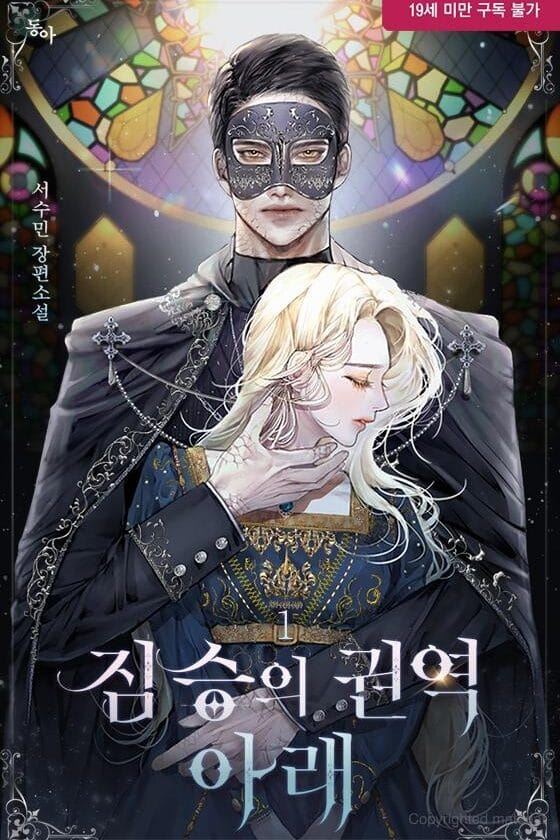
I need to talk about Leonard because this man is written in a way that keeps making me simultaneously terrified for Valetta and weirdly invested in whatever twisted thing exists between them. The physical descriptions alone are enough — scale-like textures on his face, slit pupils visible through the mask, his massive frame casting shadows, his voice described as a predator's hiss. The text literally says walking toward her felt like being trapped under the paw of a beast. And yet, and here's the thing that haunts me, earlier moments between them were warm. The memory flashes briefly when he warns her name but sounds almost gentle, and she has these warm recollections before her expression hardens again. But let's be real — grabbing a woman who just found out her brother died saving YOU and hauling her into your bedroom while locking the door behind you is NOT okay, and the text doesn't shy away from making that uncomfortable. Valetta's terror is palpable. She's trembling, she's flailing, her small hands have zero effect on him. The power imbalance isn't just physical, it's existential — she's a girl who lost everyone she ever loved being thrust into a life she never wanted with a man whose humanity is literally slipping away. And then there's Friedrich, who exists only in memory but who absolutely owns every emotional scene he's in. He took her hand when she was humiliated, he defended her honor, he promised her happiness, and then he died. Every time Leonard appears, Friedrich's ghost is there with him, and that triangulation of grief-love-resentment is going to make their dynamic unreadable for chapters to come.
... Read More
Let's talk about what Valetta actually stands to lose here, because the stakes are horrifyingly concrete. She's not just 'trapped in a bad marriage'—she's been completely stripped of agency in every direction. Her fiancé is dead. Her cousin stole his place. Her uncle and aunt sold her to a man she despises for political gain. Her maid mocks her suffering. When she tries to run, her uncle blocks the only exit and threatens to sell her into prostitution if she resists. The stakes aren't abstract—they're survival, dignity, and the basic right to choose your own life. The external conflict is obvious: Valetta vs. her family, Valetta vs. Leonard, Valetta vs. a legal system that says a priest's words override a bride's consent. But the internal conflict is where this really burns. She's torn between rage and despair, between fighting and giving up. When she tells Laura to pack and come north, there's a moment of power—she IS the Duchess now, she CAN give orders. But it's hollow. She's weaponizing the very position that was thrust on her as punishment. The satisfaction is immediate and fleeting. What keeps the tension razor-sharp is the uncertainty. Can she file for annulment? Will the court even hear her? What happens when she's forced to meet Leonard? The author understands that suspense doesn't come from knowing what will happen—it comes from knowing something terrible will happen and having no idea when or how. The final image of Valetta alone in a dark room, whispering to a ghost, is devastating precisely because we know this is only the beginning.
... Read More
I need to talk about the scene where Leonard watches Valetta cry and his own reaction terrifies him. The author writes it like this: 'Then his gaze fell on her shoulders, which trembled slightly, and at that moment his mind went blank — so blank that it felt as if something inside him was being ripped open mercilessly.' That line. That single sentence. It captures everything. The curse is a dragon's instinct — predatory, overwhelming, rewriting his humanity. But there's still something inside him that flinches at her pain. The 'blankness' isn't just loss of control; it's the sound of his human self being torn apart from the inside. He doesn't attack her in this moment. He sighs. He tries to reason with her. There's still a man in there fighting to surface. But then you flip to Valetta's perspective and it's even worse. She's alone in a castle she doesn't understand, with the man who destroyed her family, and she's holding a ballpoint pen like it's a sword. 'Her fingertips trembled at the thought of actually attacking someone.' She's not a warrior. She's a girl who wanted a sweet, gentle marriage and a warm home, and now she's calculating whether she can stab a dragon slayer in the ribs. The tragedy is that both of them are victims here. Leonard didn't choose the curse. Valetta didn't choose to be married off to the man who killed her brother. And yet they're the ones who have to live with the consequences together.

Leave a comment

You must be logged in to leave comments. or
