Under the Beast’s Realm - Reviews

Under the Beast’s Realm
+Add to Custom List
Sort
Add review
... Read More
I need to talk about Friedrich because honestly he is everywhere in this passage even though he's dead. Every emotional beat in these chapters is filtered through his absence. Valetta's nervousness before the wedding? She imagines walking down the aisle with him. His voice, half-joking, saying he doesn't know how he'll keep from crying on her wedding day — that line absolutely destroyed me. It's the kind of detail that makes you realize she had something real with him, something tender and layered, and now it's gone and replaced by this nightmare. And then there's Irmina, of course. The sisterly goodbye where she offers Valetta a book she doesn't need as a "wedding gift" while internally celebrating that Valetta is about to marry a cursed monster — I felt physically ill reading that. The contrast between Irmina's sweet words and her vicious thoughts is the sharpest kind of betrayal because it comes wrapped in the language of love. "I hope you'll always be happy" — said while mentally vomiting at the idea of Valetta sharing a bed with Leonard. But the moment that genuinely broke me was when Valetta confronts Leonard at the altar. She says she'd rather jump off a cliff than marry him. And underneath all that terror and anger, there's this quieter grief — she's grieving the life she thought she was walking toward. The wedding she imagined with Eric. The family she thought she had. The future that was supposed to be her escape from all this pain. What gutted me most though was her internal monologue at the end: "They had lived together for over ten years — she had thought of them as family in her own way." Ten years. A decade of pretending the Dampierres cared about her, of finding small moments of belonging, and none of it was real. That isn't just betrayal — that is the collapse of an entire emotional foundation. I actually had to put the book down for a second.
... Read More
Okay so the revelation that Friedrich died saving Leonard completely shatters Valetta's world and honestly it's the kind of plot bomb that makes you immediately want to re-read everything leading up to this moment. Because now you realize the author has been quietly setting this up the whole time — we see Friedrich's memory of him defending Valetta against Irmina, whispering that she'd build the happiest home, then BAM, he's dead because of Leonard. The irony is absolutely brutal. And then there's the fake marriage plot — Valetta was supposed to marry Eric Rigius, not Leonard. That's been hanging over her the entire journey and now it all crashes down when she's screaming at Leonard that her husband was supposed to be someone else. The narrative keeps layering deceptions on top of deceptions, and every time I thought I understood what was happening, the ground shifted again. What's interesting too is Leonard's motivation for forcing the marriage despite everything. He asked her for help with his curse, then arranged a wedding — does he actually want her as a wife, or is this purely transactional? The text refuses to clarify, which is either masterful misdirection or frustrating ambiguity depending on your mood. But the scene where he hoists her over his shoulder like a sack of flour after she declares she'd rather bite her tongue and die — that's the kind of moment that forces you to keep turning pages because you literally cannot know where this goes from here.
... Read More
I keep thinking about Friedrich's warnings. "If someone asks for a glass of water, don't just open the door. And if they offer you an apple, don't eat it — ever." He was rattling this off while lacing his leather shoes, dramatic as always, making her laugh. That scene before his death is so tender and it makes everything that follows hurt more. The relationship between Friedrich and Valetta is the emotional backbone of this whole passage. He was twenty-two, not exactly a full adult himself, but he took on the role of protector because their family fell from grace. He joined dragon-slaying expeditions hoping to make a fortune so she could live like a proper noble lady. He bought their house without debt. He warned her about poisoned apples like she was his child even though they were only four years apart. And then there's Leonard — this man who shows up on wedding night with a candle, tall as the door itself, broad-shouldered, scars across his torso, golden eyes that shift between predator and something unreadable. Valetta felt like a deer caught in claws. The power dynamic is so extreme it's almost suffocating to read. But here's what I can't figure out: when he bit his finger and smeared the blood on the sheets, was that protection or manipulation? He claimed no desire to sleep with a crying woman, yet he also didn't let her go. He laid beside her and pretended to sleep while she stayed awake all night terrified he might change his mind. The CP chemistry between them is... complicated. Not sweet, not straightforward. It's built on fear and transaction and something Leonard won't name. And Valetta's defiance — even while trembling, even with her eyes shut and tears rolling down, she didn't look away. That alone piqued his interest. Their dynamic feels like two people who are both trapped, one by blood and gold and the other by whatever curse haunts him.
... Read More
Leonard's voice in this section is cold, clipped, and painfully aware of himself. Listen to this exchange: 'I thought you'd come straight here after your arrival, but you took longer than expected!' 'Just tell me the conclusion.' Two sentences. One is eager, almost boyish. The other is a man who hasn't slept in days and is running on pure desperation. Tobias is described as having a 'round face' and 'youthful appearance' and his dialogue matches — he's cheerful, he beams, he explains his reasoning. Leonard doesn't want reasoning. He wants the answer. The contrast between them says everything about their dynamic: Tobias is the innocent researcher, Leonard is the broken man who funds him out of necessity. But the line that wrecked me is Leonard to Valetta: 'We are husband and wife. It's only natural for a married couple to share the same bed under the same blanket.' Said in a 'cold, dry voice.' Not with lust. Not with aggression. Just... stating a fact. As if the marriage itself justifies everything. That's more horrifying than any threat. And Valetta's reply — 'I never swore to be your wife. I never agreed to take you as my husband!' — is raw, trembling, but she doesn't cry. She fights back with words because she has nothing else. Her dialogue shifts from negotiation ('just give me any room') to defiance ('this is my room') to barely-contained terror. You hear her shrinking in real time.
... Read More
Okay I need to talk about this uncle and I'm honestly still shaking. The way Valetta gets cornered in that alley by those thugs and then later dragged into the courthouse by her own UNCLE… it makes me want to throw the book across the room. He's a COUNT. He has power, status, influence. And yet somehow all that power is used to crush the one person he's supposed to protect. That scene where he hits her — not her face, but "only those parts of her body that could be covered by clothing" — this is a man who knows exactly how much damage he can do without leaving visible proof. That's not just abuse, that's calculation. And the worst part? Valetta realizes it too. She doesn't fight back when he's hitting her, she just takes it. Not because she's weak, but because she's been broken down so thoroughly that even her body has forgotten how to fight. But then she DOES find her voice at the end. When she tells her aunt: "I hope your beloved Irmina ends up unhappy." And she keeps going. She doesn't stop. She literally spells out that she wants Irmina to suffer exactly as much as Valetta suffered, that she wants the guilt to eat them alive. That line about her parents watching from heaven — I chills. She's not just threatening them, she's cursing their bloodline with the weight of generational grief.
... Read More
Okay so I need to talk about this ending moment because I am STILL recovering from it. Valetta has spent four YEARS hating Leonard Carnies. Four years of seething, of questioning why she survived and Friedrich didn't, of believing he manipulated her brother into that fatal mission. She storms out to find him, not to forgive him but probably to tell him off one last time—and then she sees the mask, sees the fear in his eyes, sees him literally bare his cursed face and WAIT FOR IT. "I don't see anything cursed about you." Four words. FOUR. That's all it takes to undo every single thing I thought I understood about their dynamic. Think about what just happened: Leonard has been through absolute hell. He's been physically transformed into something grotesque—snake skin, slitted pupils—and instead of lashing out or being defensive, he BARELY whispers, "If surviving is a curse... then what sin have I committed to walk alone in it?" He's not asking for absolution. He's genuinely confused. He thinks SHE would be satisfied seeing him suffer, and when she isn't, it completely destabilizes him. And Valetta—sweet, furious, broken Valetta—had every opportunity to seize this moment. To gloat. To say "look at what you made me feel." Instead she looks at a MONSTER and says he's not cursed. I keep replaying this in my head. The way the text sets it up: "He expected her to grin, her eyes to glitter, her lips to curl into that silent, mocking smile." The author makes us believe she'll do it. Makes US believe she'll do it. And then she doesn't. This changes everything. Not just their relationship but the entire trajectory of this story. I need to know what happens next immediately.
... Read More
The atmosphere in these chapters is relentlessly oppressive, and I mean that in the best way possible. Let me paint you the picture: Leonard splashing cold water on his face after seeing Valetta, going up to the west tower where the northern air freezes his scalp, the red sunset getting swallowed by darkness, then moonlight hitting the ground and making his shadow look like a monster. That last detail — his shadow looking like a monster under moonlight — is one of the most chilling images I've read in a while. It's not visual horror; it's existential horror. The thing watching him from the ground isn't his shadow anymore. It's the beast. The castle itself feels like a character. Every corridor is freezing. Every room is locked. The steward can't hear properly and pretends not to. There are no safe spaces — not even bedrooms. Valetta retreats to Leonard's room hoping to barricade herself in, and he breaks the doorknob to get in. The architecture is designed to trap you. There's nowhere to hide. And the capital city — rumored beauties, a lecherous crown prince, marketplace assaults. This world operates on the principle that women are commodities and power determines who gets to trade them. The Count of Dampierré is literally shopping for a buyer for his niece. That's not background detail; that's the social operating system of this world, and it makes everything that happens to Valetta feel terrifyingly plausible.
... Read More
There's this one moment that haunts me. After Leonard stops, after he pulls away from her, the narrative lingers on something almost clinical: the bruises on her pale skin. Dark marks stained her white flesh. They weren't from her fever — they were from him. His grip on her wrists, her waist, her knees. The author didn't even need dialogue here. Just description. Just facts. And it destroyed me somehow. Because earlier in the scene, there's this line that plays over in my head: 'She knew instinctively — if their gaze broke, the hunt would begin.' This isn't romance. This is predation dressed up in golden eyes and possessive declarations. And yet — and this is the awful truth of it — Valetta doesn't fully resist. She screams 'stop,' yes, but her body goes weak, unresponsive. Part of her is paralysed by fear, but there's also something else happening that she herself doesn't understand. The moment that actually made me emotional, though, isn't the bedroom scene at all. It's Friedrich's line: 'If something serious happened to a family member, who wouldn't be willing to take a hit for them?' Said so casually, like it was the most normal thing in the world. That's the kind of love that doesn't need dramatics. It just exists. And then there's Valetta, sobbing on the wooden floor, tears falling like large raindrops, convinced it's all her fault. 'It was because of me.' The guilt — god, the guilt. She's been through trauma from Jack, from Friedrich's suspension, and now this forced encounter with Leonard, and she's absorbing all of it like it's her fault. I'm not okay. None of us are.
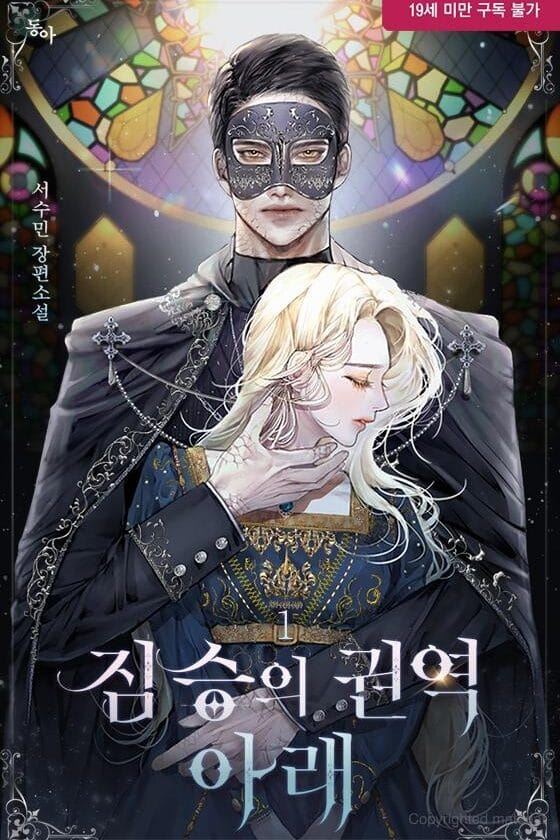
... Read More
The symbolism in this chapter is layered and honestly a little uncomfortable to unpack, which I suppose is the point. Golden eyes come up again and again. Leonard's 'cold, boiling golden eyes' — the word 'boiling' is doing heavy lifting there. It's not warm gold. It's molten. Destructive. The same gold that caught Valetta's ribbon in the flashback is now the color of something starving. There's a continuity of imagery that suggests this hunger was always there, even in that innocent first meeting. The white ribbon. That opening image — her hair 'flying through the air like a dandelion seed' — it's fragile, transient, beautiful. A ribbon ties something together; it also marks identity. When Leonard catches it, he's literally grabbing onto the thing that connects him to her. Nowhere near as forceful as what happens later, but the precedent is set: he takes what catches his eye. Then there's the white sheet. Valetta wraps it around herself after Leonard leaves, trying to cover her body — trying to restore some boundary, some sense of self. He tears it away. The sheet as innocence, as protection, as the thin line between dignity and violation. He removes it. And the deepest symbol: the name. 'Valetta Irpman.' Learning her surname is how Leonard truly sees her — not as a stranger, not as a conquest, but as family. As Friedrich's sister. As someone who belongs to a different world, a different loyalty. The marriage contract bridges these two worlds violently, but the real collision is already happening inside Leonard's chest. The book is asking: can love exist where power is this imbalanced? Can attraction survive when the beginning is built on force? I don't have answers. I just have a lot of feelings.
... Read More
There are three symbols in these chapters that keep circling back and I can't stop thinking about them. The mask. Leonard literally wears one — Tobias describes him as 'now masked' when he visits the tower. But the mask is also metaphorical. He can't show his true face to anyone because his curse makes him monstrous. Valetta sees his golden beastly eyes and breaks down. The mask is both protection and prison. And when he looks in the mirror, he 'couldn't really recognise himself, felt as if he were wearing a mask' — so even the mask has become a mask now. Identity has dissolved completely. The pen. Valetta finds a fountain pen with a sharp nib and decides to stab Leonard with it. A writing instrument — a tool for creating, for recording, for expressing — repurposed as a weapon. The ultimate symbol of her situation: she has no voice, no power, no allies. All she has is something from Leonard's desk, turned against him. It's pathetic and heroic at the same time. And the most haunting symbol: the shadow. 'In the moonlight, Leonard's shadow stretching across the ground looked like a monster to him.' A shadow is supposed to be faithful — it follows you everywhere, it proves you exist. But his shadow has betrayed him. It no longer matches his body. It has become something alien. That's the curse in a single image: not just the transformation of flesh, but the betrayal of your own reflection.
... Read More
This section hits like a freight train and I mean that in the absolute best way possible. The author does something really smart here — they open with the alley confrontation, which is tense but relatively contained. You get the thuggish harassment, the rescue by Leonard, the whole dramatic hair-tie moment that gives you that fluttery feeling. It's slow-burn romantic tension. Then they take you to the morning after, the quiet car ride, the internal monologue where Valetta is mentally preparing herself. You think maybe — maybe — something good is about to happen. She's going to get an annulment. She's going to start over. The carriage ride feels almost peaceful, even if her mind is racing. And then—BAM. The uncle appears. Behind her. Hand over her mouth. The tone shifts so violently that I actually had to put the book down for a second. The courtroom scene is brutal in its pacing because it doesn't let up. No respite. No comedic relief. Just escalation after escalation. The reader is right there with Valetta, suffocating, and the prose mirrors that suffocation — shorter sentences, fragmented thoughts, the raw desperation of "mmph mmph" sounds. What I love most is how the chapter ends on Leonard's warning rather than Valetta's departure. It reframes everything. The emotional core shifts from victimhood to the beginning of something else — alliance, partnership, shared culpability. That final image of the carriage door closing while Leonard stares at the Count… cinematic. Just cinematic.
... Read More
There are scenes in this passage that hit with cinematic intensity and I can't stop thinking about them. The rain scene where Valetta learns about Friedrich's death is one of those moments — the text says the rain hits her face like a punishment and I swear I could feel that. It's not just weather, it's emotional atmosphere made physical. Her staggering, her voice barely audible over the downpour, Leonard's bloodshot eyes behind those words — it's a fully realized sensory experience. Ah-was it the world that was falling, or was it me? That line alone does so much work. Then you have the Carnies estate arrival scene which reads like a gothic painting coming to life. The knights unloading luggage, the servants peering from windows, Laura's nervous murmurs — it's a whole world populated by people who are all afraid of their master but respect him anyway because he's the hero who saved the Empire. The estate itself feels ancient and imposing, and the staff's reaction to Leonard's curse — mourning his fall from grace — tells us something about who he was before he became this scaled, slitted-pupiled creature. And the final bedroom scene! Heavy curtains, luxurious furniture, fine carpets, the lock clicking shut. Every detail reinforces that this is Leonard's domain, his territory, and Valetta has been brought into it against her will. The visual of him carelessly tossing his jacket aside while advancing on her one step at a time, his golden eyes burning cold, the shadow swallowing her whole — it's horror-romance imagery at its most effective. The author clearly understands that atmosphere isn't decoration, it's weaponized emotion.

Leave a comment

You must be logged in to leave comments. or
