Under the Beast’s Realm - Reviews

Under the Beast’s Realm
+Add to Custom List
Sort
Add review
... Read More
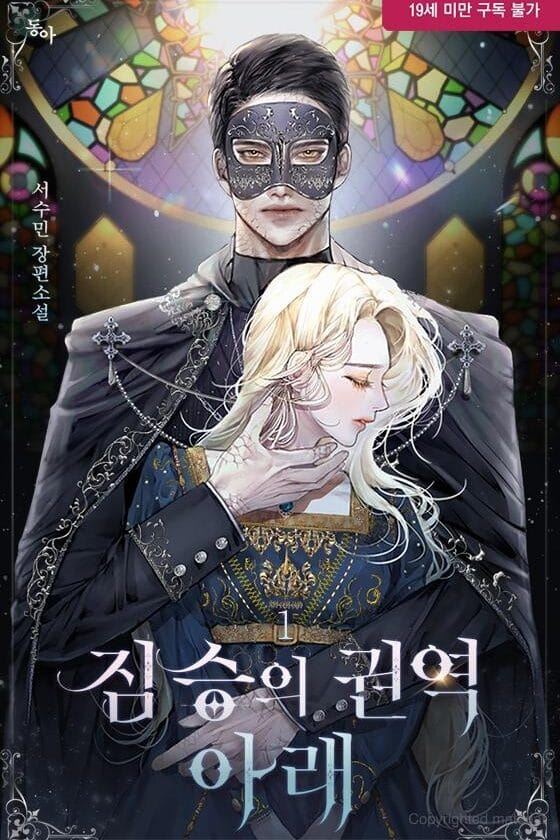
I need to talk about how this author constructs scenes because the visual storytelling here is INSANE. Let me start with the opening image: Valetta standing in a hallway with no carriage available, looking at Irmina's outdated dresses like they're mocking her. The text says the dress was "tight at the bust and loose at the waist, having been tailored to fit Irmina's figure." This single detail does so much—worldbuilding through clothing. We understand the power dynamic (Valetta has to borrow from her tormentor), the economic reality (no carriages available means money is tight even for nobility), and the seasonal context (ball season, spring) all without a single expository paragraph. Then there's the ballroom scene—which, funnily enough, we barely SEE. The author is deliberately keeping it off-screen, filtering everything through Valetta's overwhelmed senses. The whispers about her being Friedrich's sister, the champagne making her sick, Irmina's performative concern while shooting daggers at Eric Rigius. We understand this entire social ecosystem through fragments. But the garden scene—OH the garden scene. "The gentle stream of water reflected the orange glow of the sunset." This is cinema-level imagery. Sunset, water, music drifting on a spring breeze, footsteps that make no sound on the garden path. It's almost peaceful, which makes the physical breakdown that follows even more jarring. And the final encounter—Leonard's carriage described as "as magnificent as any used by the royal family, decorated with ivory accents" while Valetta arrived in a shabby hired ride. The class tension is VISUAL. Then the mask. The slow removal. The description of his face—"skin that of a snake, pupils slit, face no longer that of man or beast, but that of a monster." The author weaponizes the grotesque here, and then immediately undercuts it with Valetta's soft, devastating line. Every setting in this passage serves the emotional arc. Nothing is decorative.
... Read More
I literally could not breathe during the carriage scene. The author just drops you into this moment where Valetta is sobbing uncontrollably on the floor while her uncle threatens to sell her to a brothel and he's saying all these things — "You should be grateful" — like she should feel THANKFUL for being sold to someone worse? And then the sheer silence after that when she finally speaks those words to her aunt… the way the prose just holds space for that moment, lets you feel every single thing Valetta is holding inside. And Leonard. Oh god, Leonard. He's been this mysterious figure the whole time and now we're getting these glimpses — him staying beside the bed overnight, watching her with these golden eyes that "darkened with unspoken weight." The fact that he acknowledges he's also a villain in this. "You and I — we're both villains who twisted Valetta's life beyond repair." I'm not okay. That's one of the most honest lines in this entire book. He doesn't get to be the hero here. He got played too, but that doesn't make him any less responsible for what happens next. I keep thinking about what Valetta's dream was — just a warm home, a loving partner. That's ALL she wanted. Not power. Not status. Just… love. And she got married through deception, almost violated, beaten by family, and sent away to a man she barely knows. My heart genuinely aches for her.
... Read More
The author opens this batch with a wedding ceremony that's already falling apart and never lets up. It's like riding a rollercoaster where someone keeps pulling you back up instead of letting you down. The ceremony itself is chaos—rioting noise, a sweating priest, a bride who can't speak, thunderous applause drowning out objections. Then suddenly, silence. Valetta alone in a carriage, thinking. That breath of calm is immediately shattered by her burst from the carriage to confront her aunt and uncle. Another burst of anger, another confrontation, another descent into helplessness. The pacing through Laura's scene is brilliant, by the way. Laura enters pretending to help—bath water, hair combing—and slowly, methodically, reveals her cruelty. First it's subtle: the unnecessary mention of the bridal chamber tradition. Then it escalates: mocking Valetta's situation, describing Leonard's face, enjoying her pain. Valetta goes from catatonic grief to cold fury to decisive action in a span of maybe three paragraphs. The shift is jarring because it's supposed to be. This isn't a victim who stays a victim—she's cornered and cornered animals bite. Then the escape attempt. Quick, desperate, one hope after another: get out → encounter uncle → try to reason → get slapped → dragged → locked in a windowless room. The scene transitions are almost breathless, mirroring Valetta's own panic. And the ending—no dramatic rescue, no last-minute reprieve. Just the sound of a lock clicking shut and Valetta's forehead against cold wood. The author doesn't give us relief. Good. Neither does Valetta deserve right now.
... Read More
Let me just say — the atmosphere in the cathedral scene is MASTERCLASS level worldbuilding through environmental storytelling. The author could have just written "the wedding was tense" and moved on. Instead we get knights in formal uniforms lining the entrance, creating a military perimeter around what should be a joyous occasion. The festive atmosphere is replaced by something stiff and threatening. These aren't celebratory guards — they are containment. Valetta noticing her aunt and uncle's household servants lingering at the entrance like sentries is a detail that turns a wedding into a prison break scenario. Then there is the bride's waiting room — completely empty except for a maid placed there in advance. No guests from the Rigius side. No familiar faces. Just silence and unease, which makes the space feel cavernous and wrong. The text specifically notes Valetta wondering if all weddings are like this, and the answer is clearly no — that's what makes it so isolating. I also want to talk about the visual contrast between the two brides that the author sets up. Irmina in her diamond-studded gown, the most beautiful in the world, preparing for her real wedding. Valetta in the plain dress, looking back at her reflection with something fragile and melancholy about her appearance. The mirror scene is haunting — she sees herself looking beautiful but pitiful, and the reader feels that dissonance in their bones. And Leonard's entrance — the heavy footsteps, the overwhelming shadow, the deep growling voice described as sounding more like a beast than a man. The masked face with snake-like skin visible beneath it. Every sensory detail builds toward this image of him as something monstrous, which makes Valetta's terror completely justified. The setting itself seems to conspire against her.
... Read More
I need to talk about the structural mirroring in this chapter because it's honestly one of the most deliberate pieces of writing I've read recently. The chapter opens with Leonard pinning Valetta down. It ends with him running out of the room into silence. Between those two bookends, we get the flashback to their first meeting — which is framed almost identically. He reaches for her (catches her ribbon). She reacts with shy gratitude. He tries to play it cool. The only difference is the emotion: in the first meeting, his heart pounds from attraction. In the bedroom scene, it pounds from something darker, more consuming. And then there's the name. 'Valetta Irpman.' That's the third pivot point. Up until this chapter, she's just 'Valetta' — his wife, his problem, his obsession. But Friedrich's sister. That changes the geometry of everything. It means Leonard now has a family tie he can't run from. It means Friedrich exists in this story as a living, breathing threat. And it means the forced marriage isn't just about duty or status — it's about connecting two people who were always destined to collide. The door slamming shut at the end is practically a period at the end of a sentence that hasn't finished being written. Leonard leaves. Valetta cries. Friedrich returns home sweaty and furious. The pieces are all moving, and the board is getting crowded. I came for the tension. I stayed because the plotting is genuinely sharp.
... Read More
I hate Friedrich. I know he's dead and I know that's not fair, but Valetta's screaming it from the rooftop and honestly? Same. "Friedrich… I hate you so much." That line hit me like a truck. Because it's not really hatred—it's the rawest form of abandonment. He died and left her alone in a world where every adult around her proved they could be monsters. Her uncle slaps her. Her aunt pretends nothing happened. Laura gloats over her misery. And Friedrich—the one person who was supposed to be hers—is just… gone. The Friedrich flashbacks are the emotional backbone of this entire mess. We never get to see their relationship directly, only the absence he left behind. But every detail tells us everything. They worked in the kitchen together. He chopped firewood. She scrubbed dishes. They were treated like servants despite being nobility. He protected her by being near her. That's love language, friends. Not grand declarations but shared suffering and quiet loyalty. And then she's handed to Leonard Carnies—a man whose face is hidden under a mask, whose skin is described in Laura's vicious gossip as disgusting, beastly. The contrast is almost cruel. Friedrich, who was warm and present and chose to stand beside her in the dirt, vs. Leonard, who is essentially a force of nature wrapped in gold and violence. Valetta doesn't know Leonard yet, but the reader can already see this is going to be complicated. She hates him right now. She'll probably hate him for a while. And then… well, we all know how these stories go, don't we?
... Read More
Okay so this chapter is wild. The main scene — you know, the one where Leonard basically corners Valetta on the bed — ends with him realizing what he's done, seeing those bruises on her skin, and literally bolting out of the room. And then BAM, flashback to their first meeting. Not just any first meeting either, but the one where she reveals she's Friedrich's sister. That's when the author really nails it — Leonard says to himself, 'Valetta. Valetta Irpman.' He learns her last name in that moment, and suddenly everything clicks. Their first encounter wasn't random. She wasn't some stranger he was attracted to — she was his friend's sister all along. The flashback structure here is so deliberate. We just finished a scene that felt almost violent in its intensity, and then it cuts to something that should be sweet — sunlight, a floating ribbon, shy eyes, a quiet 'thank you for catching my ribbon.' And yet… does it feel innocent now? I kept rethinking it. Because we know what happens later. We know Leonard will become this dominant, overwhelming force in her life. The contrast between that golden afternoon and what we just witnessed is honestly kind of devastating. Also — side note — the Friedrich reveal completely recontextualizes everything. He got suspended for beating up Jack, who tried to assault Valetta, and he took the fall rather than let rumors spread. That's not just character-building for Friedrich, that's a plot bomb. It explains why Leonard is now tied to her family, why the marriage contract exists, and why the tension between them has always been there simmering under the surface. The plot is moving fast but I can't complain because every reveal lands so hard.
... Read More
Can we talk about how Leonard communicates through what he DOESN'T say? Most of the time he's just… present. Stepping in front of Valetta in the alley, disarming the guy before it even registers, picking up her hair tie like it's nothing. His dialogue is spare, economical. "Are you alright?" — three words, maximum authority. "Don't go around drawing weapons so carelessly. With skills like yours, you'll only get a surcharge for insolence." That's Leonard in one sentence: efficient, slightly dry, effortlessly dominant. But his real voice comes out in the aftermath. When he tells the Count and Countess: "You and I — we're both villains who twisted Valetta's life beyond repair." That's not someone who hides behind grand gestures. That's someone who looks directly at his own complicity and names it. The weight of those words is staggering because Leonard is a Grand Duke. A man who could dismiss this entire conversation. But he doesn't. He leans into the uncomfortable truth. Meanwhile, Valetta's uncle? Absolutely delicious villain dialogue. "You should be grateful that I made someone like you — who has nothing but bloodline to her name — the Grand Duchess of Carnies." This man genuinely believes he's doing Valetta a favor. The entitlement radiates off every sentence. And then the Countess — fake tears, hand on her back, all performance. Her dialogue doesn't even appear in this excerpt because she doesn't need to speak. Her actions are the dialogue. "Patted her gently on the back" — and Valetta feels a SHIVER. The author trusts the reader to read between the lines here, and it works beautifully.
... Read More
There is a layer of symbolism in this passage that got me thinking long after I finished reading. The book Irmina gives Valetta — "Academic Journals in Advanced Archaic Language" — is probably the most devastating gift in literary history. Irmina explicitly says she bought it just to decorate her study and never needed it. It is worthless to her. And yet she offers it to Valetta as a wedding present while smiling with those crescent eyes full of pity. Why pity? Because Irmina knows Valetta is about to be exiled to the northern territories of the Carnies, far away from everything she knows. The book is not a gift — it is a farewell token for someone being sent into darkness. But here is where it gets richer: Valetta, bless her pure heart, accepts it with genuine gratitude. She doesn't see the contempt beneath the gesture. She thinks her cousin is being kind. The book becomes a symbol of everything wrong with the Dampierre household — the exploitation of Valetta's goodness, the way cruelty is disguised as generosity, the systematic erosion of her ability to trust. The wedding dress itself is another symbol worth examining. Irmina deliberately avoids taking the dress Eric gave Valetta because accepting it would hurt her pride — she found something prettier. So the dress stays behind, a relic of a connection to Eric that the Dampierres are now using to trap Valetta. The dress represents the genuine affection Eric once showed her, now weaponized against her. And Leonard's mask — oh god, the mask. Throughout the chapters leading up to this, his monstrous appearance has been a barrier between them. Now at the altar, the mask becomes the final layer of deception. He is not just hiding his face — he is hiding his true intentions, his role in this conspiracy. The mask is the thesis of the entire story: nothing is what it appears to be.
... Read More
Let's talk about how this chapter is constructed because the pacing is genuinely masterful and I need to appreciate it. We open mid-confrontation. No setup, no warning — Leonard is already on top of Valetta, the tension is already at eleven, and we're right in the visceral heat of the moment. The prose is urgent, almost breathless. Short sentences. Sharp sounds. 'Mm!' 'Huh!' 'Stop it!' Then — the turning point. Valetta apologizes through tears. 'I'm sorry for hitting you. So please stop.' And Leonard comes back to himself. The shift is so abrupt it's jarring. One second he's drowning in desire, the next he's staring at bruises on her skin like he's seeing a crime scene. He gets up, dresses, leaves. No explanation. No closure. Just the sound of her sobs following him into silence. And THEN — and this is the genius move — the chapter cuts to the flashback. Their first meeting. Sunlight. A dandelion-seed ribbon. Shy blue eyes. Everything is soft, slow, almost dreamlike. The reader's heart rate goes from sprint to walk. The emotional whiplash is real. But here's what I think is the real structural play: the flashback isn't just nostalgia. It's dramatic irony. We know how this story ends — or at least, where it's going. And watching Leonard as a slightly awkward guy who just wants to hide his pounding heart makes everything that follows so much heavier. Every gentle moment now carries the weight of what's coming. The chapter ends on a cliffhanger of sorts — Friedrich's entrance, his anger, the revealed truth about the suspension — and I was absolutely floored. The pacing never lets you breathe, but in the best way possible.
... Read More
I want to talk about how the author methodically eliminates every possible exit strategy for Valetta, and the sheer claustrophobia of that narrative choice. Let's walk through it. She arrives at the cathedral and the first red flag is the knights — armed men at a wedding? Already the stakes feel higher than they should. Then she learns her uncle won't walk her down the aisle. She rationalizes this, telling herself it's because he disapproves of her choice of Eric, which somehow makes it more bearable. Bad first instinct — she should have known. Then the groom's side is completely absent. No Rigius family. No noble allies. No one who would vouch for her or question the proceedings. She interprets this as social rejection rather than deliberate isolation, which is the most tragic misread possible. And then the reveal. Leonard Carnies. The man she has every reason to fear and resent. At this point the reader is screaming because we understand what Valetta is beginning to understand — this is a trap. But here is where the stakes become truly suffocating: Valetta realizes that even if she refuses right now, in the chapel, surrounded by hundreds of people, she has nowhere to go. The Dampierre servants are guarding the exits. Refusing means social ruin in the capital's circles — she would be cast out from both families with no support network. The text makes this calculation clear through her internal monologue: "If I refused to marry here in the chapel, she wouldn't just be cast out of House Dampierre — she'd be completely ruined." What makes this conflict so effective is that the author has built a corner so tight that every choice leads to disaster. Marry Leonard and lose her autonomy. Refuse and lose her future. The tension isn't just about whether she will say yes — it's about what kind of survival strategy she will develop when every door is locked. And that single tear running down her cheek? That is the sound of a character realizing the ground beneath her has been removed entirely.
... Read More
The part where she sobbed quietly and just stared at him with sad defiance — I had to put the book down. Her body was shaking violently, she could barely breathe, and yet she didn't look away. That moment of raw human dignity in the face of total powerlessness wrecked me. And then Leonard's reaction: he scoffed and began unbuttoning her dress from top to bottom. But he didn't finish. He bit his own finger, smeared blood on the sheets, and then just... sat beside her and feigned sleep. She stayed awake all night, terrified, until someone came to unlock the door in the morning. The loneliness of that image — a young woman alone in a cold storeroom, crying silently, listening to her new husband breathe beside her pretending to be asleep — it haunts me. What makes it worse is knowing Friedrich. The flashback showed her buying three hundred Berks' worth of strawberries because she and her brother both loved jam. The village boy offering to carry her groceries. The way she smiled shyly. This was a girl who laughed easily, who liked chamomile tea, who wanted to become a healer despite the hardship. And now she's waking up next to a man who owns her, surrounded by shadows, with no escape. The emotional beat where she whispered "I'd rather die" and Leonard replied "Even if you're going to die, you might as well make the marriage worth something first" — I literally gasped. It's so cold and yet there's something almost practical about it. Like he's acknowledging the transaction while also giving her a sliver of agency. Or maybe he's just being cynical. I'm not sure which hurts more.

Leave a comment

You must be logged in to leave comments. or
