There’s a Beauty [Ancient Wear Modern] - Reviews

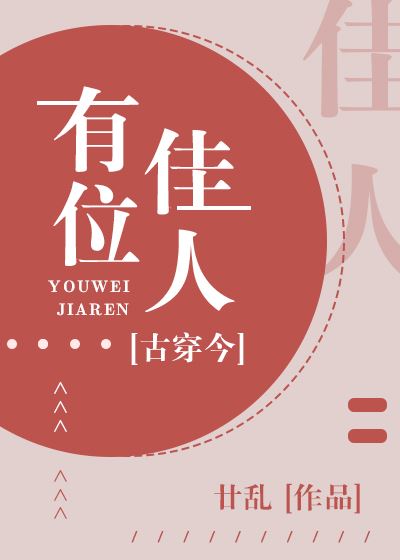
There’s a Beauty [Ancient Wear Modern]
+Add to Custom List
Sort
Add review
... Read More
There's a symbol in this passage that I can't stop thinking about, and it's the fire door. A fire door. That's what Shen Yuhan is being led toward—the guy says "when you get down, he will take you to escape from this unfair wedding." An escape route disguised as an emergency exit. The imagery is almost too perfect: a door meant for urgent departure, used here to lure someone away from their own wedding. It's a threshold, and Shen Yuhan stands on both sides of it and chooses the wrong one (or the right one, depending on how you read it). But the deeper symbol is the wedding itself. This isn't a union—it's a seizure. "Robbed countless beauties from small countries." Shen Yuhan was never asked. The mother-in-law has bodyguards on rotation. He's dressed like a "clay doll." This is a marriage that looks like celebration from the outside but functions as captivity from within. And yet—here's the thing that keeps me up at night—Shen Yuhan chooses to return. He could have gone with the escape guy. He had the momentum, the fear, the plausible deniability of a confused newcomer. Instead he runs BACK toward the man everyone warns him about. Is this submission? Or is it the first real choice he's made in this entire world? The text refuses to tell us, and I think that's deliberate. Shan Qihuan may be a captor, but he's also the only person in this story who hasn't tried to use Shen Yuhan for something. He pins enemies to walls. He doesn't pin Shen Yuhan. "If he likes me, why would he pick me up today?" The question hangs in the air like smoke after a fire.
... Read More
The recurring motif of food in this passage is doing something subtle but significant. Steak represents more than a meal—it symbolizes access, privilege, and the ability to provide. Shen Yuhan, who comes from a world where beef is rare and precious, has never experienced this luxury. When Shan Qihuan promises to take him to eat steak the next day, he's not just offering dinner. He's offering inclusion into a world Shen Yuhan doesn't belong to, an act of care that simultaneously highlights their difference. The old duck soup mentioned in the glossary, the light home-cooked meal prepared because Shen Yuhan has a cold, the fruit cut and offered after lunch—all of these small acts of service form a language of care that runs parallel to the spoken dialogue. In a relationship where words have failed ('mutual non-interference'), food becomes the medium through which affection is expressed. But there's also a power dimension. Shan Qihuan, the one with resources and stability, provides. Shen Yuhan, the newcomer, receives. This dynamic mirrors the larger theme of displacement and belonging. Who feeds whom? Who takes care of whom? These questions echo beyond the domestic scene into the broader relationship. The pine fragrance on Shan Qihuan's body is another symbolic thread—nature carried into the modern home, a scent that anchors Shen Yuhan even as his mind races with suspicion. It's intimate, personal, and unchangeable, unlike the verbal promises that seem to be failing him.
... Read More
I need to talk about this scene with Auntie Wang bringing tea because it's so perfectly crafted. There's something haunting about domestic normalcy being juxtaposed with emotional devastation. Shen Yuhan is sitting on a sofa in his own home, looking listless, and Auntie Wang brings him freshly brewed wolfberry tea. The warmth of that gesture, the care in making tea every day because 'Mr. Shan heard the doctor say you have qi deficiency'—it's these small domestic details that make the world feel so real. The tea isn't just a prop; it's a symbol of the caring relationship that Shen Yuhan is now questioning. Someone thought to make him something healthy every single day. Someone noticed his health concerns and acted on them. And now he's sitting there, pale and hollow, wondering if any of that sincerity was real. The contrast between the warm, careful日常 of their married life and the cold, calculated conspiracy happening around them is devastating. Then we cut to this coffee shop scene with Shan Qiyun and Andy, and the atmosphere shifts completely. It's all bitter coffee and impatient questions and haggard faces. The author uses the setting to reflect the emotional temperature—cold, harsh, transactional. There's no warmth here, no care, just manipulation and power plays. And finally, we get this brief glimpse of Shan Qihuan in America, wrapping his coat tightly because the temperature dropped. There's something almost poetic about being far away from home, feeling the chill, probably thinking about returning to his husband, completely unaware that the home he's returning to is being poisoned. These three scenes—domestic warmth, cold conspiracy, distant longing—create a world that feels layered and alive.
... Read More
"Honey, it's yours." Three words. That's all it took for me to literally pause and stare at my phone screen. Not because it's some earth-shattering romantic gesture, but because of HOW natural it sounds coming out of Shen Yuhan's mouth. Like he's been calling Shan Qihuan that his whole life and it just... belongs there. Jiang Ruolin immediately felt the envy though — you could see it radiating off the page. He touches Wen Yan's thigh and asks, when are YOU going to call me that in front of friends? And Wen Yan's response? Pure comedy gold. He mouths GUN. Just straight-up curses him. I nearly spit out my drink. But seriously, the contrast between these two couples is everything. Shen Yuhan puts Shan Qihuan first — asks his opinion on everything, makes tea for him with this serene focus, calls him pet names without a trace of performative sweetness. Meanwhile Jiang Ruolin and Wen Yan's dynamic is like... chaos theory. Jiang Ruolin wants the public devotion but Wen Yan gives him the silent middle finger instead. It's almost unfair how differently these two relationships operate, even though both couples are clearly committed. I just keep waiting for Wen Yan to soften toward Shen Yuhan in some way that mirrors how Shen Yuhan treasures Shan Qihuan. There's something quietly hopeful about that symmetry.
... Read More
Can we talk about how masterfully this author handles Shan Qihuan's jealousy? It's not explosive or dramatic—it's so painfully realistic. He takes Shen Yuhan home “affectionately fast” and later is “always staring at his lips,” but instead of just saying ‘I'm jealous,' he goes all insincere with ‘Why should I be angry?' That single line cracked me open. The author even has Wen Yan casually remark ‘If I didn't know you, I think I'd want to marry him' about Shen Yuhan, and Jiang Ruolin dragging the person inside ‘as if facing a formidable enemy' while lecturing about ‘dangerous ideas.' I literally gasped. Everyone's handling this domestic moment differently—Wen Yan genuinely adores Shen Yuhan, Jiang Ruolin is possessive but playful, and Shan Qihuan is quietly unraveling. The fact that Shen Yuhan notices his husband's mood shift because ‘he is still considered other man' tells us everything about how emotionally intelligent he is. And then that ending! ‘There's something on your face… lower your head' is basically the oldest trick in the book and Shan Qihuan absolutely nailed it. Five stars for emotional honesty.
... Read More
I keep coming back to this one detail: Shan Tianfeng calmly drinking his ginseng soup while his family tears each other apart at the table. Have you ever noticed how the author uses food as a perfect contrast to the chaos around it? First it's casual talk about which meat is delicious, which dishes are fresh—who eats like their life depends on it while everyone else is plotting murder. That transition from innocuous small talk to '狗咬狗一嘴毛' is handled so smoothly. It's like the author whispers 'oh this is just a normal family dinner, nothing to worry about' and then BOOM, suddenly we're watching a soap opera with higher stakes than Game of Thrones.
... Read More
The wonton isn't just food. It's a symbol for everything Shen Yuhan has lost and can never truly return to. The original stall is gone. The owners are dead. His grandmother is dead. The world has moved on a thousand years. But the name survives—'auspicious wonton' exists somewhere in the modern world, just not the same one. That's the theme right there: continuity and loss existing simultaneously. There's also something about the Body Rites excerpt that got copied. '天下为公'—the world belongs to all. And Shen Yuhan is someone who belongs to two worlds now, neither fully his. He can eat wontons in the modern setting but he'll never taste the original again. The past is a flavor you can remember but never replicate. Even the bed scene is symbolic on a deeper level. Two bodies sharing warmth but not intimacy—that's the transmigration experience itself. Shen Yuhan is physically present but emotionally suspended between timelines, between identities, between who he was and who he's becoming. The unresolved physical tension mirrors the unresolved temporal tension. He doesn't quite fit in this era, and that loneliness is woven through every scene, even the happy ones.
... Read More
This chapter is a breathing exercise, honestly. Like, the author literally takes you from maximum chaos to maximum calm and back again, and does it without ever feeling jarring. We open mid-crisis. Shen Yuhan is being hustled into a monk's quarters by someone telling him to wait for security to sort things out. There's implied danger, implied pursuers, the whole nine yards. But then—and this is the brilliant part—the scene just... settles. He sits down. There's a Go board. The tea is still warm. And suddenly you're not in a thriller anymore, you're in a meditation retreat. The Go game itself becomes the pacing mechanism. Each move is a beat, a moment of quiet tension that's nothing like the external tension. Shen Yuhan is considering where to place a stone, and the author makes you feel the weight of that decision. It's domestic, almost mundane, and that's exactly why it works. After whatever panic is happening outside, this is the narrative equivalent of a deep breath. Then the phone rings. And oh, the timing is *chef's kiss*. Just as you've settled into the rhythm of the game, just as the chapter has convinced you that everything is calm, the phone shatters the peace. But even the phone call doesn't spike the tension the way you'd expect—Shan Qihuan is worried, yes, but he's also competent. He's got bodyguards en route. He's already planning donations to the temple. The panic is there, but it's contained, managed, like a fire that's being put out room by room. And the ending! The chaos at the temple 'finally cleared' after an hour or two, people forming circles outside because they heard about a celebrity. The chapter doesn't end on a cliffhanger or a dramatic revelation—it ends on the image of a crowd, oblivious and fascinated, circling something they'll never understand. Perfect bookend to a chapter that moved from personal, intimate calm to public, chaotic spectacle. The author knows exactly when to slow down and when to let things breathe. Most writers would have kept the tension cranked to eleven the entire time. This one knows that a story needs to exhale.
... Read More
'Don't you know I'm famous? I'm an actor with my own traffic.' I laughed out loud at this. Absolutely cracked up. Because Shan Qixin says it with such complete sincerity, touching his face like he's genuinely wounded that his brother's husband might not know. And Shen Yuhan's response? 'So you are quite famous, you are also a famous actor.' Deadpan. Flat. Like he's confirming that the sky is blue. Their dialogue throughout this chapter is effortlessly natural, and I think the secret is that they speak in completely different frequencies. Shan Qixin is all performative energy—explanations, justifications, self-deprecation, then sudden panic. Shen Yuhan is surgical. Three words. Done. 'Okay.' 'You're right to think so.' 'It doesn't matter.' But here's what makes it work: neither voice feels like a cartoon. Shan Qixin's chatter isn't annoying because it's grounded in genuine anxiety—he's a celebrity who's been trained by his manager to hide from crowds, and his panic feels authentic, not comedic. And Shen Yuhan's brevity isn't coldness; it's the kind of calm that comes from someone who's faced worse situations (being watched by passersby because of his family name) and simply decided that most problems are solvable with patience. The exchange about the peace charm is also delightful: 'Sister-in-law, let's go quickly, we've been discovered!' 'What has been discovered? I haven't asked for a peace charm yet.' This is comedy gold written through pure dialogue. Two people who are fundamentally experiencing the same situation in completely different emotional registers, and the humor comes from the gap between them. Shan Qixin's line 'You won't lose a piece of meat even if they look at you more, and it'll also show your affinity for them' is also peak character voice. That's not just dialogue—that's a whole worldview in one sentence.
... Read More
Okay, I need to address the elephant in the room: we know something terrible happened. We know Shan Qixin caused a scene at Baiyun Temple that required security guards and an emergency plan. We know people were blocking entrances, taking photos, creating a public spectacle. And we know Shen Yuhan had to be hidden in a monk's living quarters to escape it all. But we don't know WHY. And that not-knowing is what makes this chapter so taut. The author refuses to explain the central conflict, and instead focuses on the aftermath—the quiet moments between crises, the phone calls, the Go games. It's a bold choice because it means the reader is constantly operating without full information, and that creates a low-grade anxiety that never quite goes away. Shen Yuhan's stakes are personal and immediate: he's in danger, he's separated from his husband, he's hiding in an unfamiliar place. But the stakes feel even higher because of what we don't see. Who is Shan Qixin, and why is she causing this kind of chaos? What did she do? Is she a threat to Shen Yuhan, or is she herself in some kind of trouble that's spilling over? The text gives us glimpses—Shan Qixin is described as a 'modern person' who 'has her own solution'—but the author won't hand us the full picture yet. Shan Qihuan's stakes are different but equally real. He's clearly in a position of power (bodyguards, the ability to organize rescues, the composure to think about temple donations mid-crisis), but he's also visibly distressed. The fact that he could tell from his husband's voice that he wasn't crying is touching, but it also means he was listening with the intensity of someone who has every reason to be afraid of losing control. The tension between the public chaos outside and the private calm inside the temple is the conflict engine of this chapter. On one side: paparazzi, crowds, a celebrity incident, security protocols. On the other: two men playing Go in silence, a phone call between husbands, the soft clack of stones. Both sides are tense in completely different ways. The outside conflict is loud and immediate; the inside conflict is quiet and accumulative. And the author is clearly building toward a collision between these two worlds. I'm not sure what happens next, but I know one thing: when that collision comes, it's going to change everything. The Go game will be over, the tea will be cold, and Shen Yuhan will have to face whatever he's been running from. Until then, I'm here for the suspense.
... Read More
Let me just say this upfront: if this author can't write cool dialogue, nobody can. Shan Qihuan's line about correcting the organizer - 'Let me correct you, it's not copying, it's stealing the painting' - is peak character writing. Not just because it's a good zinger (though it absolutely is), but because it reveals something about how he thinks. He's precise. He doesn't accept sloppy language when it matters. 'Copying' is civil; 'stealing' is criminal. One word difference and the entire legal landscape shifts. The organizer's voice is equally distinct - that desperate 'Mr. Huang has been cooperating with us for a number of years, is there some kind of misunderstanding?' energy. You can hear the guy sweating through the prose. And Huang Quan himself? 'Don't slander me... you need evidence!' except his palms are already sweating. The contrast between what he says and what his body does is chef's kiss. But the real genius is how sparse some of the best dialogue is. Shan Qihuan asking 'Are you Huang Quan?' and getting a guilty-sounding 'I am' back - that's it. Three words and we know everything about Huang Quan's moral compass. Meanwhile Shan Qihuan asks about the painting subject like he's making casual conversation before dropping the entire case. The narrative voice itself is worth noting too. It's observant without being overwritten, and those bracketed Chinese phrases that got translated are actually kinda funny in context. The whole thing reads like someone who knows exactly when to let dialogue carry the weight and when to step back.
... Read More
I need to talk about how this passage uses silence as dialogue. The actual spoken words are sparse — maybe two or three direct quotes — but the entire emotional weight lives in what Shan Qihuan doesn't say and what Shen Yuhan is too broken to articulate. Look at Shan Qihuan's internal monologue. He tells himself he did the right thing: "he thought it would be good for Shen Yuhan to cry this time, he wouldn't have to cry because of his words in the future." That's rationalization dressed as compassion. He's constructing a narrative where his cruelty is actually kindness, and the fact that he has to tell himself this so repeatedly tells you everything. He knows, deep down, that he hurt her. He just can't admit it out loud — not even to himself, really. Meanwhile Shen Yuhan's interior voice is devastating in its clarity. "He's been treating him like his husband, but he actually made him sad like this." One sentence. No drama, no theatrical pain — just the quiet recognition of betrayal by someone she trusted. And then: "But who can he blame? Blame God?" The rhetorical question that goes nowhere. There's no one to blame. Not really. That's the point. The narration itself has this gorgeous dual consciousness — we're constantly shifting between two people who are desperately trying to read each other and failing. Shan Qihuan interprets her crying as delicate behavior; she interprets his coldness as proof she was never seen. Neither is wrong. Both are incomplete. That's not bad writing — that's the whole story.

Leave a comment

You must be logged in to leave comments. or
