There’s a Beauty [Ancient Wear Modern] - Reviews

There’s a Beauty [Ancient Wear Modern]
+Add to Custom List
Sort
Add review
... Read More
Okay, I need to just sit with this for a second because the way this chapter drops the 'Mo Zhu' reveal is actually kind of masterful in its restraint. No dramatic music, no confrontation — just Shen Yuhan murmuring a name in his sleep and Shan Qihuan's entire energy shifting. The author doesn't even make it a big deal in the moment. Shan Qihuan asks 'Who am I?' and gets 'Husband?' — and then what? He just... lets it go? For now. That's the plot hook that's going to explode later, I'm telling you. Also, the whole cafeteria sequence is such a quiet setup. Shen Yuhan wandering through this corporate world that's completely foreign to him, people taking photos of him like he's some celebrity, calling him 'the boss's wife' — it paints this picture of him being both adored and completely out of his depth. And then he flashes back to Qi Kingdom and compares takeout to what they had back then. Little worldbuilding threads everywhere. The structural choice to have this chapter end mid-thought — 'In fact, Shen Yuhan had just fallen asleep' — that cut-off is so deliberate. It feels like the author is saying: we're not done here. This unresolved tension is the whole point.
... Read More
There's something quietly devastating about how this passage handles the whole transmigration premise. We get used to the genre throwing protagonists into new worlds with quips and quick adaptation, but Shen Yuhan here feels the weight of every single day. He's not just physically displaced — his entire moral and cultural framework is alien to this environment. Modern people take openness and freedom for granted because they were born into it. For him, it's not liberation, it's a kind of existential exile. And the cruelest twist? He can't even go back. Death was the doorway once, but what if it doesn't work again? I keep coming back to one line that hits differently each time: "he has already died once, he doesn't care if he dies one more time." This isn't edgelord angst — it's the logic of a man who has lost his entire world and sees no bridge back. The modern setting isn't just backdrop; it's an active force of erasure. His family is dead. His name belongs to someone else. Even his grief is unauthorized in a world that moves on too fast. The recurring motif of doors and thresholds keeps showing up — the balcony door he opens at night, the threshold between worlds he crossed once and might cross again. Each one is a moment of decision, and right now every door leads somewhere he doesn't want to go. That's not just plot structure, that's philosophy. What makes this work is that the author never lets us forget the cost of the premise. Every beautiful thing about this modern world is filtered through his inability to belong in it. The freedom others enjoy is the very thing that isolates him.
... Read More
I am SO over Shan Qihuan's ability to suppress his emotions. Like, the man is a statue. 'Shan Qihuan has always been this kind of person, he does not show his emotions too much.' Read that and then WATCH him hold fire in his heart, literally unable to suppress it, shake Shen Yuhan awake, demand to know who he is — and then just... dissipate when Shen Yuhan calls him 'Husband' half-asleep? This man is suffering and he won't even let himself suffer properly. And the worst part? 'Forget it, he didn't have the right to care, there is still Shan Qiyun hanging around in front of him, it has nothing to do with him.' WHO IS SHAN QIYUN?! OKAY I need answers and I need them NOW. The text drops this name like it's nothing but my brain is already running wild. Is she a rival? A past love? A literal ghost from his history? The fact that her mere existence is cited as the reason Shan Qihuan can't pursue this jealousy tells me everything I need to know about the power dynamics in this relationship. Meanwhile Shen Yuhan is over here being adorably clueless — smiling at random female employees, getting lost in translation about takeout, falling asleep on his husband's bed like it's the most normal thing in the world. The contrast between his peaceful ignorance and Shan Qihuan's internal earthquake is both hilarious and heartbreaking.
... Read More
I want to talk about how the author uses physical space to tell the story. The bedroom in these chapters is everything. It's where Shen Yuhan curls up under a quilt like a turtle, where he cries alone, where Shan Qihuan enters and somehow makes the space feel different just by being in it. The image of Shan Qihuan pulling down the quilt—"You won't be able to breathe if you're smothered"—is both practical care and symbolic. The quilt is his barrier, his armor, and Shan Qihuan removes it without asking permission. Then the morning sequence: Shen Yuhan's forehead resting on Shan Qihuan's shoulder, warm breath on the neck, the tactile details are so specific they almost hurt. The author writes: "Shen Yuhan was a little afraid to move, Shan Qihuan's head was directly resting on Shen Yuhan's neck, and the warm breath blew on his neck, which was a little itchy." That word "itchy"—it's so ordinary, so imperfect, and it makes the whole scene feel REAL. This isn't a romance novel where everything is soft and golden. This is a body, a neck, an itch, a half-asleep tangle of limbs. The living room scene downstairs is painted in a completely different register—stiff, formal, full of social performance. Red envelopes. Polite formulas. The contrast between the bedroom (truth) and the living room (pretense) is the architectural spine of these chapters.
... Read More
Here's the thing that got me about this chapter—there's no explosion, no villain, no dramatic threat. And yet I was genuinely invested in whether Shen Yuhan would succeed or fail. Because the stakes here are SO personal. If he can't integrate, he's isolated. If he fails at this social moment, he might never feel like he belongs in this world at all. The text makes this clear when it says he entered his husband's life quietly, and that the gathering "narrowed the distance between the three of them." That narrowing IS the conflict resolution. Every successful interaction is a victory. Every moment of understanding is a triumph. And Shen Yuhan's internal stakes are even higher than we realize. He's not just trying to make friends—he's trying to prove to himself that he can navigate this modern world without losing who he is. The Lei cha offer is his gamble: if he shares his culture and they accept it, then maybe he doesn't have to choose between his past and his present. Wen Yan being immediately drawn to him raises the stakes further—now there's someone who sees him and likes what they see, which means Shen Yuhan has something to lose. He's not just surviving; he's starting to have real connections. And that makes everything riskier, more meaningful, more worth fighting for. The chapter ends on this note of growing stakes, and I was already desperate to see what happens when they actually get to taste the Lei cha.
... Read More
Okay so the tea room scene is JUST *chef's kiss* for atmosphere. You have these four people sitting around, and the whole setting feels so alive. Jiang Ruolin filling the teapot, Wen Yan pouring out old leaves and adding new ones—their steps are "quite random," which is such a specific, mundane detail that makes the whole scene feel REAL. This isn't some grand dramatic event; it's just four people having tea and catching up, and somehow that makes it feel MORE immersive. The contrast between Shen Yuhan's world and the modern setting is built into the very fabric of the scene. When he talks about Lei cha, it's not just dialogue—it's a cultural artifact being passed between two worlds. The narrator even goes into this little aside about how Lei cha is also a dish, comparing it to Japanese chazuke! That worldbuilding detail is SO satisfying because it grounds the fantasy element in real cultural practice. And the Old Master Jiang slipping out to play Go and then leaving space for the young people? That's such a specific Chinese family dynamic that just makes the whole environment feel lived-in. The elders do their thing, the young people get their moment. It's domestic, it's warm, it's exactly the kind of scene that makes you want to just sit in that tea room yourself.
... Read More
I need to talk about Shen Yuhan and Shan Qihuan because WOW. This chapter is absolutely dripping with couple energy and I am not okay. First of all, the way Shen Yuhan feeds Shan Qihuan pastries and fruits like a little spouse? The fact that he offers the remaining short ribs to him even though he knows his husband doesn't like sour sauce? And then Shan Qihuan eating from his bowl like it's the most normal thing in the world? I SCREAMED. This man is so domestically competent and so deeply in love it actually hurts. But what really got me was Shan Qihuan's internal monologue about those bright eyes. "His eyes were bright when he smiled, it seemed as if there was only him in his eyes, which was very satisfying." SHAN QIHUAN IS SO DOWN BAD AND I LOVE IT FOR HIM. The way he catches himself thinking about that good luck face thing? The way he has to shake off unorthodox thoughts? This man is completely whipped and he knows it. And Shen Yuhan! The man who played Go with a complete stranger out of pity and accidentally made his husband's business life better? He's so casually powerful without even realizing it. "Hurry up and eat, or you'll get cold again" - this husband energy is unmatched. And then OBEDIENTLY waiting in the private room like a good boy while Shan Qihuan handles business? The trust between these two is so healthy it makes me want to cry. Their dynamic is perfect. He takes care of him, he protects him, they share food like it's some intimate ritual, and neither of them even notices how obviously devoted they are to each other. They're just... existing together, and it's the cutest thing I've ever seen.
... Read More
Okay so I need to talk about this phone call scene because it is SO much more than just 'he called to check in.' Let me set the scene first: Shen Yuhan is hiding in a monk's living quarters, he's playing Go with an abbot, and then his phone rings. And what does Shan Qihuan do? He doesn't ask 'what happened' or 'who did this' or even 'are you okay' in any normal way—he just blasts through the door of the conversation with: "Shen Yuhan, where are you now? Are you injured?" That is not a casual check-in. That is someone whose entire body went into panic mode the second they couldn't find him. And then—the absolute worst part, the best part—Shen Yuhan moves his phone camera and accidentally shows Abbot Yipin's face, and Shan Qihuan (who can't see the screen, by the way) STILL manages to be polite. He says thank you to a stranger his husband was just playing board games with, while presumably holding together an entire crisis on the other end. The man is juggling a full-blown temple incident AND maintaining basic human decency in the same breath. I cannot. But here's what really got me: the narrator tells us Shan Qihuan could tell from his voice alone that Shen Yuhan wasn't crying. Not aggrieved, not pitiful. And Shan Qihuan immediately felt less worried. That's not just love—that's two people who have been together so long they can read each other's emotional state through vocal tone alone. That's terrifyingly intimate. And the ring detail! Abbot Yipin notices the diamond ring and connects the dots: this young man is married, looks happy, and his partner dropped everything to find him. Meanwhile, Shan Qihuan remembers that Shen Yuhan's new phone uses HIS email account, so he can track his location. A little stalker? Maybe. Or maybe just a husband who was scared senseless and needed to know his wife was safe. I'm firmly in the 'just a loving husband' camp here, thank you very much. The whole dynamic between them—how Shan Qihuan shifts from panicked worry to organized problem-solver (sending bodyguards, offering to donate to the temple, coordinating with Qixin's number) while Shen Yuhan stays oddly calm, almost serene in a temple playing Go—it paints two people who are deeply devoted but express it in completely different languages. One plans rescue missions; the other sends you to find the right move on a Go board. I love it.
... Read More
Okay so this whole section is basically one big tension spiral and I NEED to talk about it. Shen Yuhan gets whisked away from his room on wedding day, told he's going to greet guests, but nope—literally dragged down a corridor toward a fire door by some guy claiming to be on his side. The guy says: "Don't you want to see Brother Qiyun?" and my immediate reaction was, wait, WHO is this Qiyun person and WHY do they have people pulling guests off wedding corridors? Then the best part—Shen Yuhan, this guy who just arrived in a completely unfamiliar world two days ago, drops the single most devastating line in the entire passage: "If he likes me, why would he pick me up today?" Because obviously, if someone genuinely wanted to rescue you, you'd have days to prepare, not be intercepted mid-wedding while wearing a suit you didn't choose. The logic is so clean it cut. And then—he runs. He actually RUNS back toward the wedding. Toward the guy he just agreed to marry. After everything, after the fear, he chooses to go back to Shan Qihuan instead of riding off into the sunset with a mystery benefactor. That is such a complicated character moment. He's not being naive, he's making a calculated choice. And the fact that he bumps right into Shan Qihuan right after? That's not coincidence writing, that's fate wearing a disguise. I literally screamed at my Kindle.
... Read More
This chapter starts with shoes. Not just any shoes—'the only pair that can be worn outside.' I know that sounds like a minor detail but hear me out. Shen Yuhan's entire existence in this world has been defined by what he lacks. No dowry. No modern clothes knowledge. Only one pair of shoes for the outside world. Every item Shan Qihuan buys him—multiple pairs of shoes, a carved jade seal—is a physical manifestation of belonging. The jade seal is especially significant because in traditional contexts, seals represent identity, authority, and permanence. Shan Qihuan is literally giving him something that marks him as HIS in the most institutional way possible. And the dowry comment! 'Isn't it because I don't have a dowry?' Shen Yuhan whispering this like it's the explanation for every deprivation in his life. Shan Qihuan's response—'Fine, I'll buy it for you'—works on so many levels. He's buying the shoes, yes, but he's also buying the symbolic position Shen Yuhan deserves. A dowry isn't just money; it's family acknowledgment. By offering to provide it, Shan Qihuan is saying: you will never be without recognition again. Then there's the old street versus the mall. They go to the old street first for the jade—tradition, culture, history—then to the mall for modern shoes. Shen Yuhan is being integrated into BOTH worlds simultaneously. He's not abandoning his past; he's being given tools to navigate his present. But the deepest symbol might be the hand-holding. In a world where Shen Yuhan was raised with 'deep-rooted concepts of guarding oneself for others,' physically displaying affection in public is radical. Every time he holds Shan Qihuan's hand, he's rejecting twenty years of conditioned restraint. The warmth of that hand—he notices it's warm—is the physical proof that he's safe now. That he can stop performing virtue and just... exist.
... Read More
The Four Treasures of the Study, brush and ink and paper and inkstone, have been symbols of scholarly refinement in Chinese culture for over a thousand years, and their presence in this chapter is absolutely loaded with meaning. Shen Yuhan is a man who has been displaced, who grew up in a mansion and lost it, who is now trying to establish a new center of gravity in someone else house, and what does he reach for first? The tools of a cultured man, the instruments of a life he is rebuilding stroke by stroke. But the real symbol here is the notebook, the WeChat contact named Wife that occupies the first position in Shan Qihuan list. It is a label that should mean something fixed and clear, and yet Shan Qihuan clicks on it, considers deleting it, hesitates, and finally does not change it. The nickname sits there like an unanswered question, like a contract that has not been signed but also has not been torn up. Forget it, let us see what else Shen Yuhan wants to do to him first, he thinks, and that conditional tolerance becomes the theme of the entire chapter. The study room itself functions as a powerful symbol too. It is second floor, it is relatively empty, and it belongs to a house that is not the Shen family but is the home he and Shan Qihuan share. The text says seeing the familiar stationery he has a little sense of belonging, and that word little is doing so much heavy lifting. A little belonging, not a lot, not enough to be comfortable, but enough to start unpacking. And underneath all of this there is the question of what gets preserved and what gets lost. Those treasures he brought out of the mansion back then, he is afraid they were all destroyed by bandits. The physical objects are gone or unknown, but the practice remains, the knowledge of how to choose good paper, how to hold a brush, how to arrange a desk, and that is the kind of inheritance that cannot be looted.
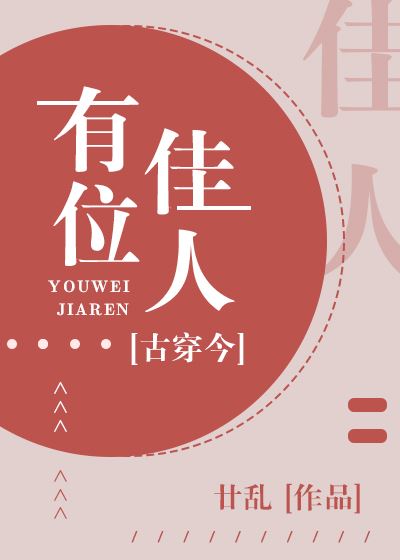
... Read More
There's this one image I can't shake — two guys who look completely out of place walking down a crowded modern street. They just came from a banquet, wearing thick coats, overly expensive looks, standing out like sore thumbs against the backdrop of an old street with uneven road surfaces and traffic police. The author really leans into this visual dissonance. "Although there are many pedestrians and shops, the ground was clean, and there is still traffic police on duty at the crowded intersection ahead." This is Shen Yuhan's perspective filtering through his ancient worldview. He's absorbing everything — the uniforms, the organization, the sheer normalcy of it all. For someone who came from a world of war and factional divides, this mundane modern scene must feel almost surreal. The traffic police officer gets a second look. Shen Yuhan thinks he's good-looking. Shan Qihuan gets jealous over a traffic cop. THIS is the level of domestic comedy gold I didn't know I needed. The author juxtaposes these grand themes — transmigration, political philosophy, the weight of two worlds — with the most ordinary, relatable couple bickering energy. It grounds the whole narrative in something tender and real. And that dimly lit alley leading to the wonton shop? The worn-out menu board? The parents working feverishly behind the counter? The scene feels lived-in. You can smell the soup broth. It's not just a backdrop — it's an active participant in the story's emotional arc.

Leave a comment

You must be logged in to leave comments. or
