There’s a Beauty [Ancient Wear Modern] - Reviews

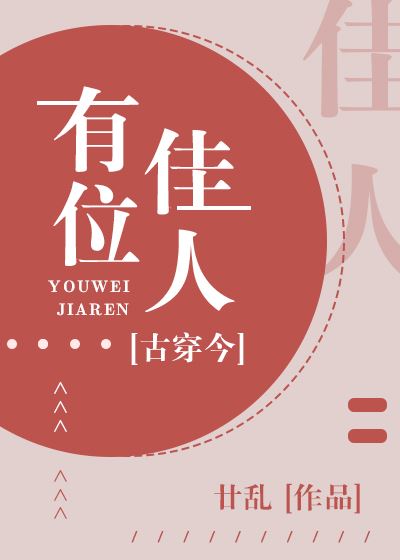
There’s a Beauty [Ancient Wear Modern]
+Add to Custom List
Sort
Add review
... Read More
Everyone talks about transmigration novels as wish-fulfillment fantasies, and sure, on the surface this could be read that way. A powerful ancient noble gets dropped into a modern body and suddenly has everything at his fingertips. But the more I sat with these chapters, the more I felt like the author is actually using the premise to ask something much messier: what does identity mean when your past self is someone else entirely? Shen Yuhan is literally living inside the corpse of another person's life. The original Shen Yuhan had relationships, grudges, loves, debts—all of it still echoes in the people around him. When he shows up at the Calligraphy and Painting Association, he's not just being judged on his own merits. People are projecting all this history onto him, and he has to navigate a life he didn't live while being treated as if he should already know how to live it. That's not just plot convenience. That's the actual thematic spine of the thing. And the Shan family itself—this sprawling, complicated web of wives and children, half-siblings and inherited expectations—feels like a microcosm of something larger. Power isn't just held by the patriarch. It leaks everywhere. It moves through bloodlines and marriages and secrets. The genealogy chart the translator included isn't worldbuilding decoration; it's a map of the actual forces shaping every character's choices. Even the name 'Yifang Jushi'—One Corner Hermit—feels significant. Someone who positioned himself as detached and observant in his previous life, and now has to navigate a world where detachment is impossible. You can't step outside a story you're already inside. There's depth here if you're willing to sit with it.
... Read More
So these chapters hit different because everything feels calm on the surface but there's this undercurrent of... something. Shan Qihuan at the gathering, all composed and in control, yet internally he's spiraling a bit. The plot here isn't doing anything explosive, but that's what makes it good. The reveal that his face was in entertainment headlines because he was protecting Shen Yuhan in a video — that's a classic slow-burn setup. You can feel the author playing 4D chess with information. We don't know everything yet, and honestly? That's how you keep me turning pages. What struck me most is the side conversation with Liu Tan about the 'extramarital affair' rumors. The fact that people around Shan Qihuan are casually speculating about this while he's just sitting there like 'I'm not even a celebrity, let them write whatever' — it shows how detached he is from public perception, but also how protective he is without making a huge deal out of it. The plot is quietly building toward something. I have a feeling the 'buzz' Liu Tan mentions is just the calm before everything explodes.
... Read More
Okay so first of all CAN WE TALK about how the author transitions from "let's go have a nice date" to straight-up horror movie territory in TWO PARAGRAPHS? One minute they're all cute and holding pinkies, the next Shen Yuhan is sweating bullets because there are fortune-telling masters sitting around like a pack of hungry wolves, and their faces look like "dried orange peel." The imagery just hits DIFFERENT. And the contrast when they finally burst out of that alley into the snack street — "it was very quiet inside the alley, but there was a lot of traffic outside the alley, as if they were two different worlds" — that line is chef's kiss. The author basically used the alley as a literal threshold, and I love that. It's not just bad navigation, it's like the universe briefly tested whether our protagonists were ready for the modern world, and Shen Yuhan wasn't. The snack street itself is painted in this hungry, overwhelming sensory detail — long queues for century-old heritage roasted pig trotters, the smell of barbecue floating through the air, so many things to see and try that Shen Yuhan wishes he had ten stomachs and ten legs. It's this incredibly vivid picture of everyday modern life that feels so normal to everyone ELSE but is completely extraordinary to him. The worldbuilding here is doing double duty: it's showing us the setting while simultaneously reinforcing how isolated and sheltered Shen Yuhan's been his whole life. The ordinary becomes magical through his eyes.
... Read More
Okay so I need to talk about this mother-son moment because honestly it wrecked me and I wasn't expecting it at all. You've got Marquis of Zhongyong's Madam holding her ger's slender hand, both of them crying, and she's just pouring out everything she knows into him like she's trying to cram a lifetime of advice into maybe five minutes before he's gone forever. "No matter what happens, you must remember to protect yourself" — and then immediately follows up with "after that, you can take care of your husband, raise your children, and be the mistress of the house." BRO. She's sending her son off to a peace marriage with a known cruel pervert ruler and her last words are basically "survive first, then be a good wife." The patriarchy hits different when it's your actual mother telling you this. And then the bracelet scene?? She just suddenly panics and shoves this jade bracelet on his wrist — a family heirloom from HIS maternal grandmother, of all things. "It didn't come with birth, it won't follow you in death" — which is such a poetic way of saying this is the only thing I can give you that won't weigh you down. Like she knows exactly how doomed this situation is and she's trying to leave him something tangible. He even pushes back at first! "Mother should take it with her." Sweet kid still trying to protect his mom even while being dragged into a political marriage. I literally got chills. What really gets me is the quiet desperation in their voices. There's no big dramatic screaming match — just a mother and son who clearly love each other deeply, standing in a decorated mansion that's somehow the quietest place on earth because everyone's too scared to make noise. The contrast between all those lanterns and colorful decorations outside and this intimate, devastating goodbye inside? Chef's kiss. Also the fact that he keeps calling her "Mother" with such genuine devotion while knowing he might never see her again... I'm not okay.
... Read More
Okay I need to talk about THIS moment because it wrecked me. So Shen Yuhan teaches himself how to add Shan Qihuan on WeChat ALL BY HIMSELF, right? Lin Meng had helped him earlier, but this time it's different — this is the first friend he truly added on his own, and it's his husband. And then he can't even figure out the input method properly and accidentally types "Wife7老婆" as the note. NOT Shan Qihuan typing it. NOT Shen Yuhan carefully choosing the perfect term. It just... happens. His fingers fumble it in. And Shan Qihuan sees it. And that tiny, almost accidental moment of tenderness between two people who are technically strangers bound by marriage? I cannot. The note definition literally explains it: wife, waifu, wifey, honey, dear — all those layers packed into one clumsy auto-filled word. Shen Yuhan isn't even trying to be romantic, he's just half-asleep and tipsy and his thumb hits the wrong thing, but it's MORE honest than any deliberate sweet phrase could ever be. Meanwhile Shan Qihuan doesn't correct him or make a big deal out of it. He just... accepts it. That's the whole relationship dynamic right there. Shen Yuhan is this fiercely independent person who refuses to depend on anyone, who learned to survive alone, and yet here he is, clumsily naming his husband "wife" in a phone contact. And Shan Qihuan, cold on the outside, protective color and all, lets it happen. Doesn't pull away. Doesn't mock him. Just lets Shen Yuhan have this small, accidental intimacy. I swear the author didn't even need to write a single romantic scene — just two paragraphs about a WeChat contact name and I'm over here emotional. Also? Shan Qihuan changes the note to call Shen Yuhan "Husband" SYH. That's him claiming the role, you guys. He's saying yes to this, quietly and officially.
... Read More
okay the dialogue in these chapters is genuinely funny and i need to address it. the way these two talk to each other is so natural, so couple-y in that specific way where affection is expressed through mild teasing and practical concern rather than poetry. "Husband, can you hold my hand to sleep?" / "Can't." / "I'm a little afraid of the long worm I saw this afternoon, just hold them for a while." this exchange is a masterpiece of romantic comedy timing. she asks, he refuses, she immediately negotiates with a fabricated excuse, and he folds. you can literally hear the smile in her voice and the reluctant fondness in his. the translator even caught the cultural flavor with "This flirtatious little vixen" as an internal thought—that's not in the original dialogue but it captures the tone perfectly. and then the flower scene: "Isn't it dirty?" / "What?" / "Don't suck it with your mouth, it's dirty. Go into the living room, and wait for me to come down." he sounds scolding but he's already moving to get the medical kit. the gap between his words and his actions IS the joke and the romance simultaneously. that's skilled writing. the dialogue isn't just conveying information, it's performing character. shen yuhan's internal voice is also distinct—she's more observant, more willing to name what she's feeling, while he communicates almost entirely through what he does rather than what he says. the contrast between their narrative voices keeps the dual POV fresh instead of blending into one generic narrator tone.
... Read More
The idiom that keeps echoing through this whole chapter is 井水不犯河水—"well water not interfering with river water." It's invoked when Shan Qihuan is thinking about his promise to Shen Yuhan that they'd stay separate, that they'd each have their own lives. But the beautiful irony is that this is exactly what's NOT happening. He's spending his Saturday morning waiting outside a music classroom. He's staying home instead of seeing friends. He's being asked to play husband in a piano room at noon. The well water is flooding into the river whether the characters want it to or not. Then there's Shen Yuhan in front of the mirror, touching his ears, considering whether to grow his hair back long. In his past life he kept it short because it was practical—hard to dry otherwise. Now he has a hair dryer and can keep it long again. But the real question isn't about convenience, it's about identity. Who is he now versus who he was? The earrings, the sportswear, the consideration of long hair—it's all him trying on versions of himself the way he tries on the role of "husband." And then there's the piano lesson itself, where he knows the Yaoqin but can't read a pentatonic scale. Two musical worlds, two notations, neither one translating cleanly into the other. That's the whole novel in a nutshell, really. People carrying different internal languages, trying to find a way to speak the same one.
... Read More
I keep coming back to the imagery in this chapter and I think the red wedding bed deserves its own analysis. It appears twice — first when Shan Qihuan collapses onto it drunk, and then when he wakes up alone on it. The color red is never explicitly described as symbolic in the text, but it's THERE every time. The brightness of it. The emptiness after someone leaves. When Shen Yuhan wakes up and realizes Shan Qihuan is gone, the bed is still there, still red, but now it belongs to one person instead of two. And then the next morning, Shan Qihuan wakes up in the SAME bed and the first thing he notices is "the bright red bed again." The repetition of "again" is doing heavy lifting here. It's not just setting description — it's emotional geography. This bed has become the physical space where their relationship is being negotiated, hour by hour. There's also the bathroom/shower motif running through this entire sequence. Shen Yuhan showers, gets out, finds Shan Qihuan asleep. Shan Qihuan went to bed WITHOUT showering the first night (obviously), and the next morning he goes back to his own room specifically to shower and change before leaving. The act of cleaning himself, of preparing to face the world again. It's such a small detail but it tells us everything about how这两个男人 are processing their new reality differently. One sinks into rest, the other into routine. The worldbuilding here isn't about grand descriptions of palaces or magical systems — it's about how a room, a bed, a bathroom becomes charged with meaning through proximity and silence.
... Read More
I need to be honest — the entire car ride scene had me melting. Like, think about it. Here's this guy who just scared an entire roomful of people with a single word, who commands respect and fear, and the second the door closes and it's just him and Shan Qihuan, he becomes this sweet, slightly trembling person who wants comfort. And Shan Qihuan — he teases him, he pretends to refuse, but he pulls him into his arms without any real resistance. That's love language right there. The fact that Shen Yuhan doesn't even understand what 'feudal superstition' means and decides to just keep it in his mind and ask Siri later shows how much he TRUSTS his husband to explain things to him. He doesn't feel the need to appear knowledgeable or composed around him. And then they're off to the temple to properly worship ancestors together — that's not just a plot point, that's INTIMATE. Two people from very different worlds, going to do something meaningful together. That's the kind of domesticity that hits different.
... Read More
Let me just say this chapter's pacing is absolutely razor-sharp. The author builds this entire slow-burn sequence: Shen Yuhan getting ready, working up the nerve, walking downstairs, the long conversation-without-getting-to-the-point dynamic between the two men, the physical proximity, the unbuttoning of the suit... and then BAM. Phone call. Liu Tan popping up like 'Are you still going out for a drink?' at the most perfectly tense moment. It's the kind of timing that could be annoying if it weren't executed so well, because honestly? That's how life works. You build up months of romantic tension and then your buddy texts at the worst second. But what I appreciate is how the author uses this interruption not as a cheap joke but as a structural pivot. Shan Qihuan's response — cheerfully saying 'I won't go' while watching Shen Yuhan's flushed ears — shows that something has already shifted. The date didn't happen, but the connection did. The chapter ends on this note of quiet transformation rather than comedic anticlimax, which is a smarter writing choice than I expected.
... Read More
I'll be honest — this chapter doesn't have traditional conflict. No villains, no dramatic reveals, no one's life is in danger. And you know what? That's kind of revolutionary for this genre. The 'stakes' here are emotional: can Shen Yuhan fully accept how much Shan Qihuan has done for him? Can he let himself be happy in this strange new world? The tension is subtle but real. When Shen Yuhan sees the cats and his 'hidden unhappiness vanishes like smoke and clouds' — that phrase hit me hard. Because it implies he WAS carrying something before. Something heavy. And the cats, this ridiculous elaborate surprise, literally dissolve it. But the question lingers: what was he carrying? And will it come back? There's also the quiet tension of Shan Qihuan's health. He puts on a mask but still enters the room. He's enduring discomfort for someone else's happiness. That's a kind of stakes too — not life-or-death, but deeply personal. Every time he chooses to stay in that cat room despite his allergies, it's a small drama of devotion. The chapter builds its emotional payoff through accumulation rather than crisis. Employee rumors, the elevator ride, the robot greeting, the glass door, the cats, the names, the laughter — each beat adds weight until Shen Yuhan is genuinely, completely happy in that room. And that ending, him petting cat after cat while the staff treats him like an emperor? That's the climax. Not a bang, but a purr. Which is honestly more powerful in its own way.
... Read More
I need to talk about how lonely this all feels, even though nothing outwardly tragic is happening. Shen Yuhan is alone in a villa, being watched by servants who report to his future husband's family, with no way to contact anyone from his old life. The text says 'to not know what course to take; not know whom to turn to' and that line just sits with me. He's watching other people live their lives through a TV screen—couples kissing on bridges, families cooking together—and he has none of that. The romantic dramas are Sister Jiao's favorite, not his, which adds another layer of displacement. He's consuming stories about human connection while having zero connection himself. And then there's the wedding. Just the word 'wedding' repeated and the casual mention that 'money will make the devil turn the millstones' paints this picture of a transactional marriage that's already been arranged. He's not even given the option to refuse. The emotional weight of that is heavy, even though the prose never gets dramatic about it. He just... accepts it. That quiet acceptance is somehow more painful than any screaming match could be.

Leave a comment

You must be logged in to leave comments. or
