There’s a Beauty [Ancient Wear Modern] - Reviews

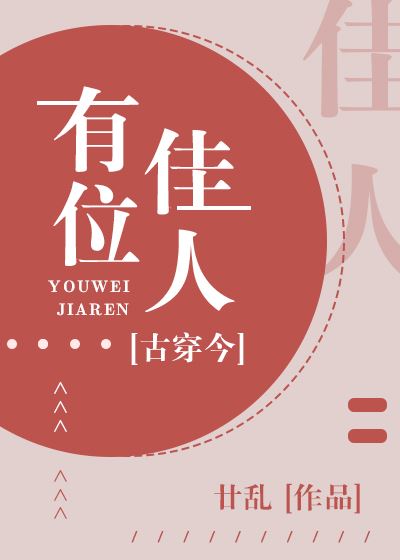
There’s a Beauty [Ancient Wear Modern]
+Add to Custom List
Sort
Add review
... Read More
The sensory details in this passage are doing so much heavy lifting I barely want to point at them individually because they work as a system. Start with temperature: the balcony is cold, he doesn't put on a coat, the kitchen is presumably colder still. Cold is the dominant mood here — not just weather, but emotional temperature. Shen Yuhan is a man frozen in time, physically warm but emotionally in permafrost. Then there's the light — or the lack of it. "Pitch black" on the stairs. A night light that "wasn't bright." Shadows everywhere, and the shadows are where the real action happens. Both characters are navigating darkness, literally and figuratively. Shan Qihuan can barely see what's happening next door but hears everything. Shen Yuhan moves through his own apartment like a ghost, barefoot, unlit, purposeful. The apartment itself feels like a character. Two units sharing a wall, close enough to hear crying and footsteps, far enough that neither person acts on what they hear. That architectural intimacy-without-connection is the whole relationship in miniature. Modern architecture designed for privacy becomes a mechanism for isolation. He can hear her cry and choose not to enter. She can plan her death and he won't know until it's too late. And the sounds — the crying that builds, then stops. The bare feet on the floor. The balcony door opening. The stairs. Every sound is a thread pulling us tighter. By the time he reaches the kitchen, I can feel the knife before I even see it.
... Read More
Let me just say—Shen Yuhan is WILDLY interesting as a character, and this chapter peeled back so much of him in one go. Like, he's this guy who literally doesn't belong in modern high school culture, doesn't understand what his husband's old classmates are talking about (company management??), and yet he slides into the room with this PERFECTLY calibrated smile. "The angle of his smile was very precise." That line hit me HARD. This is someone who is constantly performing, constantly calculating how to not embarrass his husband or his family. But then he does something SO unexpected—he offers to make Lei cha for them. And honestly? That's when I knew he was genuinely trying to connect, not just play the part. He's not just surviving in this new world; he's actively building bridges. And Shan Qihuan's vanity! The text literally says his vanity was "extremely satisfied" when he saw the amazement in his old classmate's eyes. Poor Shen Yuhan, adopted as a showpiece, but also—and this is what got me—he doesn't seem to resent it. He wants to make his husband proud. That's soft, okay? That's really soft underneath all the calculated politeness. Then there's Wen Yan. Shen Yuhan is OBSESSED with figuring out Wen Yan and Jiang Ruolin's dynamic because it doesn't match his understanding of relationships. "Wasn't this just a relationship between a man and a man?" Like, he's genuinely confused by modern gender expressions in relationships, and that confusion is so endearing coming from someone who comes from a completely different cultural framework. Wen Yan instantly takes a shine to him too—says he found Shen Yuhan attractive at first sight and can't believe Shan Qihuan got so lucky. I love that mutual warmth already forming.
... Read More
Okay, so I have to talk about this plot twist in chapter 170-174 because it completely shifted my understanding of Shan Qihuan's character. This whole arc started with Shen Yuhan getting sick—low fever, 38 degrees—but the real story isn't the illness at all. It's what happened the night before, and the author doesn't even tell us directly! All we know is that Shen Yuhan drew a knife to his own wrist, and Shan Qihuan was terrified. The author is so clever about how they drip-feed this information. First, there's the mundane moment with the auntie almost panicking about a 'thief' because all the knives were tipped over—that's foreshadowing! Then later, after Shen Yuhan gets the injection, Shan Qihuan goes to ask Liang Min about psychological issues related to suicidal tendencies. And the cherry on top? At the very end, Shan Qihuan decides to work from home AND asks the auntie to put away all the knives in the house. Whoa. The author doesn't dramatize the knife scene at all but instead shows us the aftermath through these small, chilling details. That tells me everything about Shan Qihuan—he's a man who usually controls everything with money and authority, but this one incident broke him. He's genuinely afraid now. The plot structure here is fascinating because it operates on two levels: the surface story of someone being sick and cared for, and the deeper, unspoken story of what nearly destroyed them both last night. The tension never drops after that reveal. I spent the whole chapter holding my breath.
... Read More
What I find fascinating about this chapter is how it manages to feel like nothing happened while actually establishing so much ground. The structure moves through these distinct scenes — the car ride, arriving home, the morning revelation, the next day manager visit — and each one operates at a different temperature. The car scene is warm and slightly comedic with the balloon negotiation. The home arrival shifts into exposition mode with the suit borrowing and the actor income discussion. Then that quiet morning moment hits different because it is so brief and unannounced. It just appears and then disappears and you are left processing what it means. The Zuo Rong section kicks the pace back up into comedic chaos with the water splash and the internal panic. The author clearly understands that pacing is not about keeping everything at maximum intensity but about varying the emotional frequency so the reader never gets bored. Some moments linger, some rush by, and the transitions feel natural rather than forced. The ending with Zuo Rong awkwardly responding to an apology he does not feel he deserves is a perfect button on the whole chapter — it leaves you with this sense of domestic equilibrium restored after temporary disruption.
... Read More
I love how the author paints this family gathering in one sweeping paragraph. Most men playing mahjong, older women either chatting or openly at war, people splitting into factions based on who likes whom. It feels SO real, like any Chinese family reunion where everyone's performing happiness while actually keeping score. Then Shen Yuhan and Shan Qihuan walk in and EVERYONE notices—which makes sense because Shen Yuhan was deliberately dressed up, new shoes, looking like a 'modern man.' The visual contrast between him and this traditional household is delicious. And the housekeeper directing them to the tea room instead of the main living area? That tiny detail tells you everything about hierarchy and who has power in this house. The wind direction matters—Shen Yuhan positions himself downwind so his husband can hear the conversation, which is such a specific, sensory detail. I can literally see this scene: the wind blowing, Shen Yuhan glancing back constantly, Shan Qiyun's fist clenching, the whole thing playing out like a tense theater piece with an audience of judgmental relatives just waiting for drama. The author doesn't over-describe it, but every detail chosen serves the mood. Cold wind, cold relationships, and a husband who's watching everything with those smiling eyes.
... Read More
'Husband, I asked Auntie Wang to stew chicken soup with matsutake mushrooms.' Just one word and Shan Qihuan's entire defense system crashes. The book describes it perfectly—he 'froze,' all his sarcastic remarks 'strangled in the cradle.' And it's not even delivered dramatically, it's just... gentle. Soft. Shen Yuhan didn't yell or perform, he just said it like it was the most natural thing in the world. There's this Chinese saying in the text: 'don't hit a smiling person' and honestly Shan Qihuan is so done for. He's trying SO HARD to maintain this cold boss exterior but you can see every single wall crumbling. What got me though was that moment with the briefcase. When Shen Yuhan takes it from him, the narration says Shan Qihuan felt 'a little uncomfortable, but also seemed to be very comfortable, he had never experienced being taken care of like this before.' That's not a guy who's immune to romance—that's a guy who's STARVED for it. He's building up this narrative that Shen Yuhan is manipulating him, but what if some of this is actually real? What if Shen Yuhan's being genuinely kind AND Shan Qihuan is just so lonely that he can't tell the difference anymore? That would be devastating in the best way.
... Read More
I keep thinking about Shan Qihuan and how effortlessly he slides into that easy conversation with the junior sister. 'We talk to each other without reserve'—and this is the key line that makes everything ache. Shen Yuhan notices it immediately. He's watched his husband talk to Jiang Ruolin and Wen Yan, and this relaxed, genuine smile never shows up with them. Only here, with this woman who shares his professional history. What's interesting is that Shan Qihuan isn't portrayed as a villain. He's just... oblivious. He holds the door for the junior sister, invites her to lunch, doesn't even notice his own husband standing ten feet behind him. The tragedy isn't betrayal, it's neglect dressed as normalcy. Then there's Shen Yuhan, and I don't know whether to root for him or panic for him. He's so self-aware, so painfully observant, that he sees every threat before it happens. 'He only listened briefly'—he knows he's inadequate, and instead of fighting it, he just folds inward. The down jacket swallowing half his face is such a visual metaphor. He's trying to make himself smaller, invisible, and it's not working. But that ending—his husband grabbing his wrist, asking why he made no sound—there's something there. Shan Qihuan noticed. Even in that moment, even surrounded by someone else, he knew. I just hope Shen Yuhan believes it.
... Read More
I need to talk about this garden scene because it's genuinely one of the most beautiful moments in these chapters. So Shen Yuhan and Wen Yan go to the restroom together, end up walking through the garden, and they just... talk. Really talk. Shen Yuhan knows every plant name like he's enumerating family treasures, and Wen Yan, the actual architectural designer who helped renovate the place, is just sitting there getting amazed by this man who has zero pretensions about himself. And Shen Yuhan doesn't either — he admires Wen Yan's career honestly, says something like "it's great that you have a career of your own, and can make money to support yourself" and I just... this man is so genuine it hurts. Then the leaf falls. Of course the leaf falls. Wen Yan brushes it off Shen Yuhan's hair and they're standing there under a camellia tree, talking and laughing, and from the window Shan Qihuan and Jiang Ruolin watch them like it's some kind of painting. The narrator literally calls them "a couple of immortals" and I'm over here experiencing a completely different kind of emotion because now I'm wondering what Shan Qihuan is actually thinking as he watches this. Is he happy for them? Is something else going on? The friendship between these two men feels so pure and unforced. There's no competition, no hidden agenda visible on the surface. Just two guys who happen to connect over plants and architecture and old houses. I wish there was more of this in the story.
... Read More
I need to address the dialogue because most stories fail here, but this one doesn't. The conversations between Shen Yuhan and Shan Qihuan feel real precisely because they're not doing what dialogue is supposed to do. They're not explaining plot. They're not delivering exposition. They're just... talking, but underneath every line, there's a current of meaning that the reader picks up without being told. Look at this exchange: "Did you write it?" "Ah, my writing is average, make you laugh." The first line is pure surprise—Shan Qihuan actually thought Shen Yuhan might have hired someone or copied it. The second line is pure deflection—Shen Yuhan doesn't want to seem like he's showing off. But neither character calls each other out on it. They just move forward. And then: "You're being humble." "Write one and have a look?" The shift is immediate—from modesty to invitation, from distance to closeness. The author gives each character a distinct voice. Shen Yuhan speaks softly, cautiously, always aware of consequences. Shan Qihuan speaks directly, confidently, but learns to modulate when he realizes his words matter. There's also the external dialogue—Ding Quan's casual teasing about "little friends," Mu Gen's flat refusal. These interruptions ground the scene in a larger world, remind us that not everyone understands these relationships the way the protagonists do. One of my favorite touches is how the author uses physical objects to carry dialogue. The brush, the ink stone, the Xuan paper—they become proxies for emotion. When Shen Yuhan takes away his writing and spreads another piece of paper, he's not just handing over supplies; he's saying: let me see you try. When he grinds ink, he's not just preparing tools; he's offering presence. The dialogue works because it trusts the reader to hear what isn't said. Every conversation is layered with history, fear, hope, and the quiet determination to keep going. That's how real couples talk. Not with perfect speeches, but with careful, meaningful exchanges that reveal everything by seeming to reveal nothing.
... Read More
'Who are you to me?' — I can't stop replaying those three words in my head. In the context of this story, that line is absolutely brutal because Shen Yuhan is using Shan Qihuan's own words against him. An hour and a half ago, Shan Qihuan said they wouldn't interfere with each other's lives anymore, and Shen Yuhan immediately latched onto that as proof that he doesn't matter. The way the author structures this reversal is masterful. And then Shen Yuhan's voice being hoarse from crying all night but still sharp enough to wound — that's characterization through physical detail, not exposition. What I love most is how Shan Qihuan's voice softens. He goes from furious to gentle in a moment, squatting down to wipe tears with his sleeve. His dialogue shifts from 'What do you think you're doing?' to 'If you accidentally cut yourself and bleed, you will die.' The switch from anger to genuine fear in his words tells us everything we need to know about what he's feeling. Meanwhile Shen Yuhan's response is almost childlike — he curls up, covers his ears, acts as if he can't hear him. The dialogue here does so much emotional labor without ever breaking into melodrama.
... Read More
Okay so let me just say — this chapter is a MASTERCLASS in tension. The whole scene starts with Shen Yuhan calling and saying 'husband' on the phone, and you already KNOW something is coming. And then it happens. He actually kisses him. But here's the thing that made me spit out my tea — he KEEPS GOING even after the kiss gets interrupted by his own guilt. He walks away, listens at the door like a total creep (lol), then comes BACK in. The plot didn't give me a single breath. One minute they're practically making out and the next Shen Yuhan is sobbing into a pillow because someone pushed him away. And the worst part? I completely understand why Shan Qihuan did it. That line about not wanting to be a substitute for Shan Qiyun hit me like a truck. But does that make what he did to Shen Yuhan any less cruel? I'm still mad at him and I'm not even sure why — maybe because he cares too much to do the easy thing.
... Read More
Let me just appreciate how this chapter moves. It opens at full volume — Shen Yuhan screaming on the floor, snake transformation, pure chaos. Then it settles into this warm domesticity with the TV channel changing, the bickering, the physical closeness on the sofa. And then it drops us into a quiet memory sequence — the rainy autumn in Qi Kingdom, the golden tiger cat sleeping by the charcoal brazier. The shift from present-day panic to nostalgic stillness is jarring in the best way. It's like the chapter takes a deep breath. Then back to the present, Shen Yuhan painting, the lost seal, the rainstorm outside finally easing up, and that abrupt ending that cuts off mid-sentence. The pacing here is deliberate and confident. The author doesn't rush the romantic moments — we linger on Shen Yuhan's cold forehead pressed against Shan Qihuan's chest, the shower gel fragrance, the way he pulls his hand away. These small beats matter. And the transition into the Qi Kingdom memory feels earned because the fear from the movie triggered a deeper anxiety — what if he forgets his past? What if he loses himself in this modern life? That emotional trigger justifies the flashback. The chapter ends on rain diminishing and an unfinished sentence, which creates this perfect ambient tension. Not a bang, but a fade-out. I sat with that for a while.

Leave a comment

You must be logged in to leave comments. or
