There’s a Beauty [Ancient Wear Modern] - Reviews

There’s a Beauty [Ancient Wear Modern]
+Add to Custom List
Sort
Add review
... Read More
The dialogue in these chapters is deceptively simple and I love it for that. Take the opening exchange: 'Eating so little? Even the little birds eat more than you.' 'But the birds eat bugs.' And then Shan Qihuan's breath stagnates because this man has absolutely no sense of humor. That's such a specific character beat—Shen Yuhan taking everything literally, not because he's stupid, but because his world has trained him to read words at face value. Meanwhile Shan Qihuan's voice throughout is this weird blend of authority and exasperation. He's always telling Shen Yuhan what to do ('Eat it.' 'Have another one.') but then immediately capitulating ('Okay fine, just one then'). The email account confusion is also peak comedic timing—the translator somehow rendered 'email account' as 'fuel tank account' which is hilarious but also kind of sad when you think about how isolated Shen Yuhan has been. He genuinely doesn't know basic modern things. And his response—'Since Husband bought me a mobile phone, why don't I use yours?'—is either brilliantly manipulative or genuinely naive, and the fact that we can't tell which is what makes the dialogue so good.
... Read More
OK so the author does something really clever here with the banquet setting. It's a self-service affair — all guests can move around freely, food on long tables, no assigned seating. But the social dynamics are MORE rigid than any formal dinner ever could be. Think about it: Shen Yuhan walks in and immediately gravitates toward the periphery. He picks a seat to the side. He reads a magazine. He doesn't touch the food. Meanwhile the two women on the nearby sofa start whispering the second he sits down — pulling out phones, typing something. That's not coincidence, that's a surveillance state in cocktail dresses. Then Qi Mingqing herself — the host's daughter — breaks away from her circle to directly confront Shen Yuhan with a loaded question about Huang Yingxuan. Of course she does. Of course the powerful figure shows up to interrogate the newcomer. The physical layout mirrors the social hierarchy perfectly: the main floor for networking and posturing, the downstairs lounge for people like Shen Yuhan who are tolerated but not quite accepted. And Qi Mingjie? He's caught in between — forced to play host for his grandfather's benefit, clearly out of his element, watching Shan Qihuan handle it all with ease. The author never describes a single detail of the food or decor. We only know what the characters *don't* interact with. That's how you show a world through absence.
... Read More
The stakes in this chapter are SO high and the author makes you feel every single one of them. Let's inventory what could go wrong: 1. The wedding itself could be exposed as a farce — Shan Qihuan doesn't even want this, Shen Yuhan is clearly emotionally entangled with someone else, and the Third Madam is one wrong move away from having a coronary. 2. Shen Yuhan's behavior is a live bomb. He's acting calm, but he's also physically clinging to Shan Qihuan the entire time. What if he snaps? What if he says something? What if Shan Qiyun decides to push back instead of ignoring him? 3. The family's reputation — 'how will the Old Master think of me' — this isn't just about embarrassment, it's about power and influence in their social world. 4. And underneath all of that, there's Shen Yuhan's own survival. That pig cage detail isn't just world-building, it's a threat. In this world, women who break rules get DROWNED. Shen Yuhan is playing a dangerous game and everyone knows it. The tension peaks in that moment when Shan Qiyun walks in. The narration explicitly tells us 'everyone was very nervous, fearing that Shen Yuhan would suddenly pounce on the man.' The author doesn't even try to hide the suspense — we're ALL waiting for the explosion. And it doesn't come. That's what makes it worse. The tension doesn't release, it just... freezes. Shen Yuhan says nothing, does nothing, and everyone is left sitting in this awful silence wondering what's going on inside his head. I have so many questions and I need to know what happens next immediately.
... Read More
The stakes in this excerpt are RELentless and I am living for it. Let me break down the layers because there are SO MANY. At the highest level, you've got a kingdom in freefall. Qi Kingdom just lost a war, lost a city, lost population — and the empress dowager is so desperate she's using a human being as currency to buy two years of peace. The old emperor is too dim-sighted to stop her. The country has "no longer had the surname Qi" — meaning the ruling family has effectively been usurped from within. This isn't just background flavor; this is the engine driving everything. Then at the personal level, Shen Yuhan is trapped. He's a ger — which in this world seems to carry specific social weight — described as "the First Ger in the Capital," incredibly beautiful, with suitors lining up from East to West City. And he gets traded like property to a "cruel old pervert" ruler. The text makes it clear he has zero agency here. His mother knows it. The narrator knows it. We know it. And that helplessness is what makes the bandit attack feel almost like a twisted mercy — at least death would be faster than whatever waits for him in Chu. But then the bandits themselves introduce a new layer of conflict. Is this random violence or is someone targeting the procession? The text says "a group of people rushed out of the forest" — which could be ordinary bandits or could be... something more. Given the political instability, this feels like it could be connected to the broader conflict. Are enemies of Chu intercepting the marriage procession? Or is it just chaos in a failing state? And then — the cliff. Life or death. He's thrown from the carriage, body hurting everywhere, and his LAST THOUGHT is "if I died, I would not have to marry the ruler of the Chu Kingdom." That's not just fear — that's a person who would PREFER DEATH over the alternative. The stakes have never been higher and they keep escalating.
... Read More
Let's talk about how the author gives each character a distinct way of speaking, because honestly it's impressive how quickly you can tell who's talking. Andy the designer has this very specific energy—professional but performative, the whole 'orchid fingers raised' bit combined with rapid-fire fashion advice. He's clearly used to dealing with difficult clients and has polished his mannerisms to handle them. 'You won't be outdone by the guests' is such a casual, almost flippant thing to say in what should be a serious consultation. It reveals everything about this world's social dynamics in one line. Meanwhile Shen Yuhan's dialogue is notably minimal. 'I have no problem.' 'No objection, it's fine.' He's observing, listening, learning. His few lines are functional, careful, economical. Every word he speaks is a choice. And that silence speaks volumes about his situation—he can't afford to reveal that he doesn't belong here. Sister Jiao barely speaks at all in this excerpt, but her silence is also deliberate. She communicates externally through reports to the Third Madam but with Shen Yuhan she's strictly transactional. The fact that she never questions him, never gossips to his face, creates this uncomfortable dynamic where he has no one to actually talk to.
... Read More
What I love about the dialogue here is how each character has a distinct voice and how their speech patterns reveal their relationship. Shan Qihuan's lines are clipped when he's worried ('Where are you?') but soften immediately into care ('isn't it cold outside?'). He doesn't do long speeches—he acts through gestures and short sentences. Shen Yuhan, on the other hand, is more descriptive and explanatory. He sets the scene for Shan Qihuan on the phone, he narrates his own situation, he thinks through his decisions out loud. When he says 'I'll come back after I finish this set' and then explains why (respect for the old gentleman), you hear a person who processes verbally. The banter between them is minimal but potent—there's no forced comedy, just the natural rhythm of people who know each other well. And Mr. Jiang's voice is totally different: warm, slightly theatrical, generous with his language ('I won't bother you anymore, go eat your lunch'). The author doesn't make every character sound the same, which is something so many writers fail at. Even the narration has personality—that bit about 'following good advice as naturally as a river follows its course' when Shen Yuhan agrees to visit Mr. Jiang next time? That's the narrator winking at us. Classic.
... Read More
This is the section that had me completely shook. Let me be clear—the author never actually shows us the knife scene. We don't get the dramatic confrontation, the blood, the tears, any of it. What we get is the aftermath, and somehow that's far more terrifying. Think about the stakes here. Shen Yuhan, who is already displaced from his original world (Qi Kingdom), who clearly has psychological trauma (his nightmare about being chased by bandits wanting to make him a 'mistress of the fort' is deeply telling), reached a point where he looked at his own wrist with a knife. Not at someone else. Himself. That is an incredibly low point, and the fact that it happened off-page makes it feel even more real and urgent. Shan Qihuan's fear is palpable. Remember this detail: 'Shan Qihuan was still frightened by the scene where he drew a knife on his wrist last night.' The word 'frightened'—not worried, not concerned, but frightened. He's terrified of losing Shen Yuhan. And then the ending action—putting away all the knives—tells us he's now living in a state of hyper-vigilance. Every sharp object in the house is a potential threat. The external conflict is straightforward: Shen Yuhan is sick and physically vulnerable. But the internal conflict is what grips you. Shen Yuhan carries trauma from another world, has trust issues with Shan Qihuan after whatever argument happened last night, and is literally fighting with himself. Shan Qihuan is trying to be there for him but clearly doesn't know how. Neither of them can find the right words. That gap between loving someone and knowing how to help them when they're at their lowest—that's the real stakes here. And I was NOT okay with it.
... Read More
The stakes in this sequence are deceptively simple but deeply personal. On the surface, it's a confrontation with bullies from the past—Huang Shang and Ning Zhe seeking revenge for past humiliations. But the genius is in how the author makes you feel the weight of what Shen Yuhan stands to lose. It's not just about physical harm; it's about social death. 'Take a video of Shen Yuhan apologizing... let everyone know that he has bullied me!' This is reputation destruction in the digital age. The conflict is externalized through the planned public humiliation, but it's rooted in internalized shame. Shen Yuhan's decision to bring Shan Qihuan as 'foreign aid' is both courageous and terrifying—he's exposing his husband to this drama, escalating the situation. The stalemate that ends the chapter is perfect because it raises the stakes without resolving them. Who will blink first? What was the history between Shen Yuhan and Ning Zhe? The author maintains tension by making the threat feel immediate and plausible. You're not just reading about a fictional conflict; you're feeling the anxiety of being targeted, of having your past come back to haunt you in the most public way possible. The personal is political, and the political is deeply personal.
... Read More
Let me just say this line out loud: 'Beautiful junior sister: ... Handsome brother, what are you looking at me for?' I literally laughed out loud. The author has this incredible ability to write dialogue that feels so natural and then puncture the tension with something absolutely deadpan. Shen Yuhan comes in all dramatic from the elevator incident, gives this whole explanation about the mistress being dragged and beaten, and the camera just CUTS to Ning Qiong standing there like a confused NPC while the narrator drops this comedic bit. The introductions scene is also really well done. 'This is my junior sister from college, Ning Qiong' versus 'Ning Qiong, this is my partner, Shen Yuhan, we just got married'—you can hear the different energy in those two introductions. One is casual, the other is almost performative, like Shan Qihuan is deliberately marking territory. And Shen Yuhan's response of 'Hello' while still being half-led by the hand says so much without saying anything. The dialogue between Shan Qihuan and Shen Yuhan has this easy rhythm. Short exchanges, practical stuff mixed with tender gestures. 'Are you going to have a meeting?' / 'There is still half an hour' / 'Okay.' / *gently rests hand on back of husband's hand*. That last beat is pure dialogue-driven storytelling. No words needed. The action IS the dialogue. Shen Yuhan's internal monologue when he's writing in the office is where the voice really shines though. 'Alas, he may not be able to reach Ning Qiong's height in this life.' The dramatic register shift from modern anxiety to something almost classical in its despair. The author knows exactly when to let the narrator breathe and when to let characters speak.
... Read More
Snow appears and never lands in these chapters. That absence is the theme. Shen Yuhan wants to see snow. He's thought about it constantly—Qi Kingdom had thick winters, the Shen family held snow banquets annually, he would invite friends to the small courtyard for tea and snacks. But Jiangcheng, apparently, doesn't snow this year. The weather drops to zero, the forecast promises nothing, and Shen Yuhan looks out the car window "filled with anticipation" for something that may never arrive. Is the snow a symbol of lost time? Of a past life he can't access? Of warmth that exists but remains out of reach? Or is it simpler than that—just winter, just cold, just the human need to witness beauty that doesn't serve any purpose other than to be witnessed? Then there's the capital. Shan Qihuan is going to Beijing for four days, and Shen Yuhan's eyes show "a little bit of longing." He has studied the geography of this new world. He knows how many provinces exist. He understands that the capital is "equivalent to the capital where he lived back then." But he has never been. He doesn't know what it's like. The capital becomes a symbol of all the experiences that belong to his future self but haven't happened yet—the unvisited places, the unwritten chapters, the version of himself that will arrive there without knowing how to feel. The sunroom operates on the same symbolic frequency. It's empty now, waiting for tea tables and zafu cushions and weekend visitors and winter evenings with snow against the glass. It's a space that exists only in imagination until someone furnishes it with hope. Shen Yuhan is furnishing it. Even the hand warmer—a copper object, possibly traditional, possibly modern—carries symbolic weight. It's warmth you carry. Warmth you transfer. Warmth that exists between hands, never quite in one place or the other. Shan Qihuan takes it, uses it, returns it. The gesture completes a circuit. And then there's the banquet itself, the formal gathering where Shen Yuhan becomes "dazzling" for the first time. What does dazzling mean in this context? It's not just appearance—it's recognition. It's being seen by people who previously looked through him. The theme here seems to be about visibility: who gets to be seen, who chooses to look, and what happens when the camera finally focuses on someone who has spent years in shadow. I think about the ending, that incomplete sentence about Jiang Ruolin, and how even broken syntax can carry thematic meaning. The story cuts off before the sensation is fully described—leaving us with the sense that impact is always slightly beyond our grasp, like snow that hasn't yet fallen.
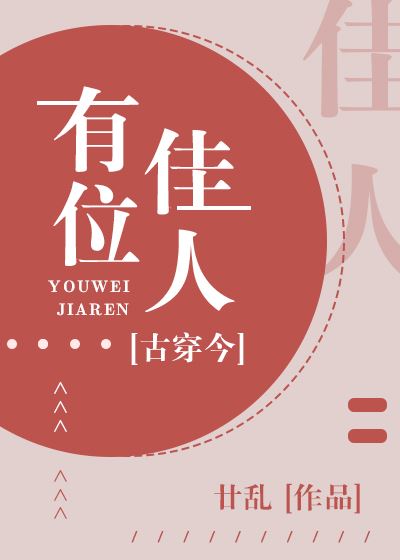
... Read More
I need to talk about this for a bit because I am SHOOK. So Shan Qihuan and Shen Yuhan are newlyweds — legally husband and wife, same shower gel scent, sleeping in the same bed — and yet there's this entire third person between them who doesn't even have to be in the room to destroy the moment. Can we just appreciate how perfectly the author built this triangle without showing us a single word from Shan Qiyun? His presence is felt in every pause, every hesitation, every time Shan Qihuan pulls away. And Shen Yuhan... oh god, Shen Yuhan. He literally says 'husband' after being kissed like it's the most natural thing in the world. He's the one who wanted this marriage but now he's the one crying under a quilt because his husband can't handle it. Meanwhile Shan Qihuan is standing outside the door like a ghost haunting his own life. The way they both want something but can't have it because of a past that wasn't even their fault? That's not just drama, that's literary-level emotional violence and I am HERE for it.
... Read More
Okay, let's talk about Shen Yuhan because my heart is breaking for him. This guy is literally sitting there trying to hold himself together while his entire world is being questioned. The line about him being a 'proper wife' and feeling his position is 'in imminent danger' just wrecked me. He's not some insecure person randomly lashing out—he's been told his husband has a reputation, and now he's questioning everything. His face turning pale, his absent-minded responses to Auntie Wang, his苦笑 when he thinks Andy is lying to protect him. The author writes his emotional state so vividly. And then there's Auntie Wang, who I unexpectedly fell for. She's not just a random servant character—she steps up when she sees her employer hurting and says something meaningful: 'I have never seen Mr. Shan bring any bad people home.' This is someone who has observed their relationship from the outside for years, and she's actually more confident in their marriage than Shen Yuhan is right now. Her quiet devotion to making him wolfberry tea because 'Mr. Shan asked me to'—that detail absolutely killed me. It shows that their life together has been built on small, consistent acts of care, not grand gestures. But Shan Qiyun? This guy is pure poison. The way he sits there in a coffee shop, dark circles under his eyes, sipping bitter coffee like he's the main character of some tragic romance novel. He genuinely believes Shen Yuhan should be attracted to HIM instead of his own brother. The entitlement is unreal. And that line where he says 'Shen Yuhan won't doubt you, he doesn't have that kind of brain'—that is some next-level manipulative trash. He's not just planning to destroy a marriage; he's planning to destroy it by targeting someone's intelligence and trust. The tragedy here is that Shan Qihuan has no idea any of this is happening. He's out there working, probably thinking about coming home early, completely unaware that someone is systematically dismantling his most important relationship.

Leave a comment

You must be logged in to leave comments. or
