The Villain Loaded My System - Reviews

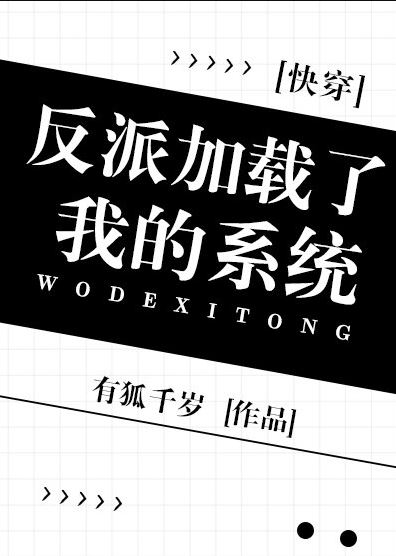
The Villain Loaded My System
+Add to Custom List
Sort
Add review
... Read More
Okay I need to sit with this for a minute because the Ji Chen / Gu Xiyu ending of this arc absolutely wrecked me. Like, I thought I was prepared for a dramatic confrontation or whatever, but no—Ji Chen just feeds Gu Xiyu poisoned tea and holds him while he dies and actually calls it love. The line that killed me: "I cannot accept that after I leave, you may have new relationships and new contacts with other people." That is not devotion. That is possession dressed up as romance. And the worst part? Gu Xiyu, in his last conscious moments, doesn't even have the energy to be fully angry. He's just... resigned. "He really couldn't think of anyone besides the mission target Ji Chen, who could give him a reason to stay here and deal with him in this way." That's the most heartbreaking sentence in this entire chapter. It's not fear. It's not hatred. It's GRIEF. He's mourning the fact that the only person who ever made him feel like he belonged to something was the person who literally ended him. "Even if I die, I will take you away." Cold as ice. Soft voice. Indifferent tone. That contrast between how gently he says it and what he's actually doing is so viscerally unsettling. And then—cut to—Gu Xiyu WAKING UP ALIVE in a hospital bed with a totally different mother hugging him. The tonal whiplash is insane. One moment you're crying over a murdered protagonist, the next you're reading about a gambler dad who sold his kid for 100k. My heart literally could not keep up.
... Read More
Okay so I need to talk about Gu Xiyu because this man is fascinating and I am already obsessed with the layered way he's written. He's this cold, efficient commander who cleans himself up methodically after a brutal mission, looks in the mirror, and just... accepts that his eyes are different colors like it's no big deal. 'The man in the mirror was white and pure, with dark brown slightly curly hair. The two eyes were of different colors and the one on the right was much lighter.' And then he casually notes it's the same as the original him. That detail about the original him—so he's not just inhabiting a body, he's replacing someone, and the physical traits match. That's kind of eerie when you think about it. But what really got me is the dynamic between him and the Administration. The director literally leverages something personal against him—a box he's been requesting for years. 'That box is very important to you, isn't it?' The man basically says: do this suicide mission or lose whatever that box represents. And Gu Xiyu's response is this tiny fluctuation in his expression, that's it. No dramatic speech, no resistance. Just silence and then acceptance. This is a man who has been bargaining with cosmic powers for something he deeply wants, and he's willing to walk into a world where a Great Demon King fragment is running around. And then—plot twist—he meets the target and the system accidentally bonds to the wrong person. The chaos in the control room versus Gu Xiyu's calm demeanor in that cafe is such a contrast. He's ordering iced Americano in the middle of winter like nothing's wrong while his entire operational setup just imploded somewhere across dimensions. I'm already wondering what this target looks like and whether he's going to be the one person who can actually stand toe-to-toe with someone like Gu Xiyu.
... Read More
"Habit is a terrible thing." That line. That single sentence. I read it and immediately had to put the book down and breathe for a second. Because it's about so many things at once. Gu Xiyu has developed habits in this new life — sitting beside Lu Ziqing while he does homework, listening to his voice through headphones, accepting the head taps without correction. But it's also about Lu Ziqing carrying his father's voice in his head, that cruel 'you only know how to do unsuccessful things' echoing every time he picks up a controller. And it's about the president whose voice and mannerisms are now ghostly overlaps with Lu Ziqing's. The gaming session scene is where the emotional chemistry between them really peaks. Lu Ziqing saying 'which treasure do you want? I will find it' in that voice through headphones — it's intimate and playful and devastating all at the same time. And then Gu Xiyu's innocent question destroys everything because he doesn't understand that for Lu Ziqing, gaming isn't just a hobby, it's the one thing his father told him was worthless. The fan message about the 'interstellar executive costume' is such a perfect contrast too — this lighthearted celebrity obligation crashing into a deeply emotional moment. Gu Xiyu's eyes startle. He can barely hold his own life together while everyone else needs something from him. This story keeps finding ways to make my heart ache.
... Read More
I keep thinking about those bags of cosplay clothes. They weren't even opened properly—just sealed with layers of tape, sitting in the corner like a metaphor for suppressed self. Marshmallow mentions them, and suddenly the whole narrative about 'performance' clicks into place. Gu Xiyu is playing a role (the tutor, the guardian, the system operator), Lu Ziqing is performing rebellious indifference, and the bureau is outsourcing elimination through academic metrics. Who are these people when the cameras are off? The heterochromia isn't just a physical quirk; it's a symbol of fractured perception—two eyes, two truths, one person struggling to see himself clearly. And the game rankings, the roasting teammates, the 'bravery' that looks like incompetence—all of it mirrors the real‑world stakes: perform poorly, get eliminated. Perform well, buy time. The workbook itself becomes a talisman; blank pages represent unspent potential, while filled‑in answers are proof of existence. Even the system's 'Ahhhhhh???' is symbolic—modern communication reducing existential crisis to a meme. What's the deeper question here? Can you change a target's risk value without changing their soul? And if Gu Xiyu succeeds in pushing Lu Ziqing into the top 100, has he saved him or trapped him in a new kind of performance? The story keeps circling that line.
... Read More
This is the moment everything changed. Not because of a plot twist or a revelation, but because Gu Xiyu made a choice that cost him. The system asked him: "Ji Chen or repairing the world line — which is more important?" And without hesitation, he answered. If Ji Chen kills Ji Zixuan and causes the world to collapse, his weapon won't hesitate to face him. He literally chose the greater good over obedience. And the system punished him for it. The electric current through his body wasn't just physical pain — it was the price of free will. First-level punishment for a first offense. The text explicitly says the degree increases with each defiance. Which means every time he chooses himself, it gets worse. And he STILL chose himself. I kept thinking about what he stood to lose. Ji Chen's wrath. The system's escalating punishment. The possibility that he'd never see Fu Nian again, or that the hard drive content could destroy everything. But he went anyway. Dragging his body through potholed streets, avoiding cameras, slipping out from under Ji Chen's surveillance like smoke. The stakes have never been clearer. This isn't about business anymore. It's not even really about Ji Zixuan at this point. It's about whether Gu Xiyu gets to decide his own loyalties. And the fact that he left a NOTE for Ji Chen — casual, almost dismissive — says everything about how far he's already come. He's not afraid of the consequences anymore. He's running toward them.
... Read More
The plot here is doing something really clever—on the surface it reads like a standard arranged marriage story where Gu Xiyu marries into a powerful family, but underneath there's this whole parallel storyline about risk values and system missions that completely reframes everything. When Gu Xiyu comes home and his parents barely flinch at the news that he married "President Ji" instead of the originally intended Chen Jin, it seems like a quiet domestic scene. But then you realize his parents actually saw the marriage certificate and are just... fine with it? That contrast between what should be dramatic and what actually happens is the author's signature move. The side mission reveal is the real plot jackpot though. A countdown timer, a business magnate party next Sunday, and a scheme against the heroine Lei Xixi who's now called Cheng Qianqian? The story is layering multiple threads: Gu Xiyu's growing relationship with Ji Chen, the mysterious system guiding his actions, and an impending social event that could derail everything. And the fact that Gu Xiyu chooses to protect the heroine's reputation even though it means missing a chance to damage Ji Chen's—that's not just plot progression, it's character-defining. The author keeps making us question whether Gu Xiyu is following the system or finding his own moral compass somewhere in between.
... Read More
There are three objects in this chapter that function as symbols and I can't stop thinking about them. The RED ROSE — Gu Xiyu offers this saying sorry, but it's also the first genuinely selfless gesture between them. It's small, it's simple, and Ji Chen accepts it like it's the most valuable thing in the world. Then there's the USB DRIVE still hidden in Gu Xiyu's pocket. That's the ghost of his mission haunting every tender moment. He can't fully be present because he's still carrying proof of the Great Demon King's crimes. And the FRAUDSTER — this man who told Gu Xun and Xu Caiting their son was cursed to kill his own family. The symbolism is almost too on-the-nose but it WORKS. A fortune teller who destroyed a family through fabricated destiny, and now Gu Xiyu is actively REWRITING that destiny by bringing his parents face-to-face with the source of their pain. The fraudster's skeletal, broken appearance contrasts with the authority Gu Xiyu now holds — who is really the prisoner now?
... Read More
"Baby, this suit looks so beautiful on you." —and I nearly threw my phone across the room. This man. This absolute menace. He shows up in a car, drops the pet name like it's nothing, and Gu Xiyu's first instinct is to get out and smash his face in. I LOVE IT. I love that Gu Xiyu is NOT softened by any of this. He's sitting there, wearing a suit that cost more than a million, being paraded around like a prized possession, and his internal monologue is just pure, unfiltered resistance. But here's the thing that got me—the eavesdropping gadgets moment. Ji Chen sees Gu Xiyu about to make a move and silently signals: there are listening devices. This is actually protective. In that instant, the mask slips and we see that Ji Chen is aware of the surveillance around them, that he's operating in a world where intimacy is dangerous and words can be weaponized. He could have just... ignored Gu Xiyu's anger. Instead he warned him. And then the car conversation—pure psychological warfare. Ji Chen asking if Gu Xiyu missed him, demanding a kiss, then internally mocking him for being "really soft" (referring to his lips). The narrator's voice here is SO sharp. And Gu Xiyu's response—"Why would he want to mess with this pig?" This isn't just dislike. This is calculated contempt. He's preserving his own dignity by refusing to engage on an emotional level. Meanwhile back at the villa, Gu Xun is beaming about how his son-in-law will save the family business, completely unaware that his son is internally dreading this exact outcome. Gu Xiyu remembers Ji Chen telling Lin Fangru he'd never interfere with Gu family matters. So the father's hopes are built on a promise that was already conditional. The tragedy of it all. What I find most interesting is how Ji Chen watches Gu Xiyu walk away from him toward the food without looking back. Does that sting? Probably. But he lets him go. There's a strange tenderness in controlling someone and also letting them wander, as long as they stay in your periphery.
... Read More
Okay let's talk about dialogue because this author knows how to make characters speak like actual human beings with actual personalities behind their words. The line that wrecked me was Lu Ziqing asking Gu Xiyu: "Do you think you are my dad?" After being beaten half to death. That is such a specific, razor-wire moment of defiance. It's not a plea. It's not anger. It's this cold, almost clinical challenge that says: you think you've won something by helping me? You think you've earned respect? And Gu Xiyu's response—just sitting there with seven dots of silence—perfectly captures someone who's been caught off guard by their own situation. He didn't expect that question. He didn't expect the kid to have that kind of bite. The ellipses do so much heavy lifting here. Then there's Lu Ziqing's voice description: "his voice was very mature and low, with a cold voice, giving people the feeling of a cold spring flowing through a mountain stream." I love this. The author isn't just telling us he sounds scary—they're giving us a sensory experience of his voice. Cold, deliberate, beautiful in a dangerous way. That's how you write voice. Even the minor characters have distinct speech patterns. The system talks in exclamation marks and urgency: "Host, Fighting!!!" Xie Chunhua speaks in gentle reassurances and worry. Gu Xiyu himself is measured and calm, even when he's about to beat up a high school gang. "I'm hungry and don't want to fight anymore"—said after thoroughly dismantling someone. That contrast between what he says and what he just did is darkly funny and very telling about his character. The dialogue never feels like exposition. Every line reveals something about who's speaking and what they want. Even the unlit cigarette detail—"He didn't know if this guy was too lazy or just wanted to pretend to be handsome"—is basically internal monologue dressed as observation, and it gives us Gu Xiyu's voice filtering the world through dry, slightly amused commentary.
... Read More
The dialogue in these chapters is doing SO much heavy lifting while pretending to do nothing at all. The dinner scene is a masterclass in subtext. Ji Chen asks 'Did you make these yourself?' ready to compliment, and Gu Xiyu lies: 'No, I ordered a takeaway.' And then the narrator tells us 'He was trying to uphold the attitude of not talking at all.' The silence at that table is deafening. Ji Chen is the one who's absent-minded instead—which is hilarious because he's clearly the one with the most unspoken thoughts. And then there's the parent interaction. Gu Xun can't decide whether to call him 'Mr. Ji' or just 'Ji Chen'—'His mouth opened and closed for a long time but couldn't finish the sentence.' That one detail tells you everything about power dynamics, respect, and social anxiety. Ji Chen's line about gifts being 'for Xiyu' not 'wastage' is delivered with this fake casualness that masks possessiveness so well. The dialogue between these two men always feels like a dance where neither wants to admit they're following the same choreography.
... Read More
I need a moment. The original owner's diary entry about Fu Nian destroyed me in the quietest possible way. There's no dramatic confession, no grand gesture—just a boy who watched another boy become the best version of himself and decided to keep that admiration locked away forever. "Fu Nian was like a distant moonlight to him." This single line carries the weight of an entire unspoken love story. The original owner went from being a student given up by teachers to someone who passed the entrance exam—all because Fu Nian believed in him enough to play basketball with him, to be his friend. And he never told anyone. Never even hinted at it. Just kept it as quiet as that hidden diary under the bed. And now Gu Xiyu has to process all of this. He reads it, falls silent, and then makes this practical decision that somehow also feels deeply human: 'To a certain extent... this marriage of his was not the bad choice.' Like, yeah, the original owner married Ji Zixuan instead of pursuing his feelings, and maybe that was the safe option—but safe doesn't mean right, does it? The system's little interjections keep grounding me though. 'The target's risk value has been detected to increase' and then when Gu Xiyu complains about Fu Nian being annoying, the system replies 'I feel so too.' I wheezed. In the middle of all this emotional heaviness, the system just being dramatically sympathetic? Iconic behavior.
... Read More
Let me just sit with the fact that Gu Xiyu's house literally caught on fire while he was at work and his mother claims she forgot to turn off the gas despite not having the habit of boiling water at home. That is not an accident. That is not even suspicious — that is a flag so big it could be seen from space. And Ji Chen, the man who supposedly suspects Gu Xiyu of betrayal, is the one who sent people to "monitor" him on the way home. Monitor him, yes, but also protect him? Because the second they arrive and discover the fire, everything shifts. Now Gu Xiyu has nowhere to go, no belongings, no home — and his father is already moving in like a vulture circling wreckage, grabbing his son's hand and crying about how Gu Xiyu is the only support left. The stakes here are layered in the best way. On the surface, there's the corporate espionage investigation — did Gu Xiyu leak secrets from Fengming? But underneath that, someone is actively trying to destroy Gu Xiyu's life. First his reputation at work, then his family's financial stability, and now his home. What's next? The Gu family is being systematically picked apart and Gu Xiyu is caught between his suspicious boss who might actually be protecting him and a family that may or may not be complicit in whatever is happening. And Ji Chen sitting on Gu Xiyu's sofa, claiming he lives there now, with freshly cooked meals and tableware set for two — is he really just hiding out? Or is he positioning himself closer to the truth? The tension between "I believe you" and the investigation is eating this man alive and I love watching him try to hold both thoughts at once.

Leave a comment

You must be logged in to leave comments. or
