The Villain Loaded My System - Reviews

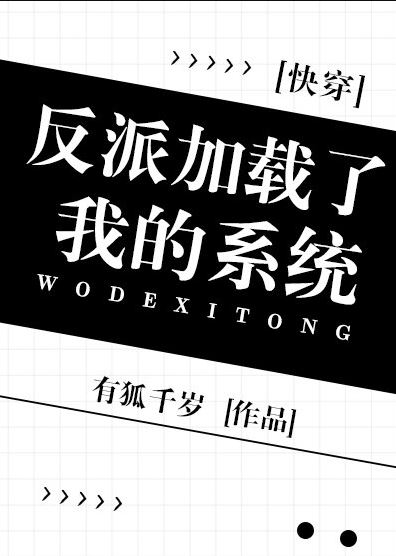
The Villain Loaded My System
+Add to Custom List
Sort
Add review
... Read More
Okay so here's the thing that genuinely surprised me about this opening — it's not what you'd expect from a system-transmigration story. Everyone talks about the combat scenes and the mission stakes, but I found myself way more moved by the moment after the fighting stops. After Gu Xiyu beats those three men, he doesn't stand there triumphant or broody. No. He turns around, leans against the wall, and throws up. I literally had to pause and reread that. It's such a small detail but it says everything — this body isn't his anymore, his soul and this vessel are still figuring out how to coexist, and even though his instincts kicked in automatically, his body is still rebelling. There's something so lonely about that image: a guy who just fought for his life, alone in a dark alley, nauseous and disoriented. And then there's the system voice — a loli? Really? That tonal whiplash from the grim alleyway violence to "your little cute smart system is not online yet~" honestly made me laugh out loud. It gives the whole thing a weird texture — this cold, mechanical world with these bizarrely childish elements interspersed. What's interesting is the emotional undertow beneath all the action setup. Gu Xiyu isn't some eager hero thrust into adventure. He wakes up confused, in pain, surrounded by dead bodies, and just... tries to figure out where he is. There's no dramatic awakening music, no dramatic monologue. Just a guy trying to breathe through the dizziness while his body learns to trust him again.
... Read More
Okay so let me just say this first — Lu Ziqing blurts out "The apron looks very nice on your body. It would have looked even better if there were no extra clothes underneath" and literally BREAKS Gu Xiyu's spoon. Not a dramatic gasp, not a shout — an iron spoon snapped in half. That is the most Gu Xiyu thing that has ever happened in this entire story and I am not okay. But here's what actually got me about these two: their whole dynamic is built on this weird power reversal. Lu Ziqing is supposed to be the "bad student," the bully, the one who takes what he wants. But from the very first scene where he's obediently doing homework because Gu Xiyu casually said a few nice words, something flips. He hates it. He literally thinks "I must get back the losses I have suffered from Gu Xiyu sooner or later." And yet he can't stop himself. That's not obsession, that's something deeper and more complicated. Then on the bus, when that guy in the suit reaches for Gu Xiyu and Gu Xiyu goes cold — literally whispers "Touch me again and you won't have a hand anymore" — and Lu Ziqing's first instinct is to grab his waist to steady him when the bus brakes. His body moves before his brain does. He's blushing black as the bottom of the pot. And Gu Xiyu? Gu Xiyu internally mocks him and tells the system "It doesn't seem to be very big" about whatever physical reaction just happened between them. The audacity. What makes these characters work isn't the romance tropes — it's that they're both genuinely confused by their own behavior. Lu Ziqing puts on this act of being a great school bully but can't even show up to class on time without Gu Xiyu's "leadership." Gu Xiyu claims he doesn't compromise for others (separate dish, obviously) but is wearing an apron making porridge at 7am. They're both pretending to be something they're not, and the pretense is crumbling in the most ordinary moments. I keep coming back to that bus scene where Lu Ziqing whispers in Gu Xiyu's ear "Is my little mom that good, so a man would rather touch you than a beautiful woman?" — he's testing him. Probing. And Gu Xiyu doesn't even dignify it with a response, just walks away. That silence is louder than any confession ever could be.
... Read More
"This section completely wrecked me. I went back and read it three times because the escalation was so quiet." It starts with a video game. Five kills against a guy who sent 'Hehe, good game.' That's the external conflict distilled: prove yourself in a digital arena where strangers will mock your rank. Then it pivots to the internal—Gu Xiyu recognizing that Lu Ziqing isn't failing because he can't; he's failing because no one ever praised his success, so he stopped trying. The stakes aren't abstract. The bureau is sending people to eliminate him. Risk value is at 60. Ten points can be shaved off if Gu Xiyu hits the top‑100 goal. That's survival vs. obscurity. The author never states the elimination threat directly in this scene, but it hangs over every line like a guillotine. Lu Ziqing's conflict is twofold: pride versus fear, independence versus the desperate need for acknowledgment. When he finally says 'I'll do it,' he's not surrendering—he's accepting a bet. Gu Xiyu offers attention; Lu Ziqing offers compliance. The tension doesn't drop; it concentrates. Every solved equation raises the stakes because improvement means the bureau might notice, and notice means more attention, and attention means more risk. Where does this end? When the grades hit top 100 and the risk value plummets? Or when one of them realizes they've become addicted to the game?
... Read More
The opening of this chapter is pure chaos and I mean that in the best way. We start with a muffled grunt, a body hitting the ground, and a thin tall boy asking politely if anyone has a knife. POLITELY. Like he's at a dinner party, not fighting for his life. Then the blond boss guy comes in all big and threatening, hands on hips, listing all the ways he could kill Gu Xiyu — and Gu Xiyu just watches them all come at him like it's nothing. The action choreography here is surprisingly vivid for the translation. The detail about them all showing knives simultaneously while Gu Xiyu only needs ONE to cut his rope — that contrast between their chaos and his precision is everything. And then the arm dislocation scene? 'I'll show you something interesting' said quietly while twisting a man's arm until it pops back in with a PA sound? I actually laughed out loud. The blond guy's '??? OHHo' reaction tells me the translator had fun with this too lmao. And then Lan Yue walks out of the cabin interior CLAPPING HIS HANDS. Like he just walked into a theater performance and he's the audience. The escalation from 'kidnappers beating someone up' to 'billionaire CEO emerging from shadows' is so clean. The setting itself — this remote wooden house, the darkness, the hidden cabin interior — it all feels like a thriller set piece that could easily be a film scene. The fact that dozens of underground fighters couldn't handle one guy who apparently looks incapable of fighting? That's great visual storytelling — the contrast between appearance and reality.
... Read More
'Wait for me to go back and deal with it.' That line from Ji Chen hit me so hard. He basically knows someone is framing Gu Xiyu but he can't clear his name on the phone. The stakes have escalated from 'maybe there's a mole in the company' to 'my husband is about to be arrested for corporate espionage' in the span of like three paragraphs, and the author just left him hanging with that phone call. Let's talk about what everyone stands to lose here. Gu Xiyu literally just got back to work after whatever the hell happened at the hotel. He was trying to be normal, do his job, ignore his annoying system — and now he's being treated as a criminal by his own boss's boss. Director Li came in ready to arrest someone and ended up cornering the one person he absolutely couldn't touch. That's embarrassing on a professional level AND dangerous for Gu Xiyu's reputation. But the real tension isn't just about whether Gu Xiyu will be cleared — it's about WHO set him up. Someone deliberately leaked the bid information AND made sure the work code traced back to him. This is calculated. This is personal. The fact that Ji Chen recognized it as a frame job immediately tells me this isn't over. And Gu Xiyu's internal conflict with the system? ''YOU SAY IT AGAIN!!!!'' The man is stressed, accused of being a traitor, and his own system is being deliberately obtuse. ''I can only monitor the situation of the panel. I cannot directly detect and see the changes in your surroundings.'' So even his built-in advantage is limited right when he needs it most. The stakes keep climbing and the author isn't letting up. What happens when Ji Chen gets back? What does President Lan actually know about Gu Xiyu? I need answers NOW.
... Read More
Okay so let me just say this part with Ji Chen where he realizes he's not the protagonist of this world had me absolutely SHOOK. Like, read it again. He goes from being a guy who just wanted answers about the spy situation to suddenly having this entire existential crisis about his existence being a ladder for someone else? And then his response? Never surrender. That line hit hard because it reframes everything we thought we knew about his character. He's not just fighting villains or conspiracies, he's fighting the narrative itself. And speaking of conspiracy layers — the reveal that Liyang Group AND LS Company were both behind the He Rong operation was such a clean double-twist. The author could've stopped at one company but no, went further. Then Gu Xiyu goes off on his own holiday adventure to find Hao Zi, which feels like a deliberate pacing break before the explosion back at the Ji family home. Smart structure. The Tianhai-Fengming cooperation collapse subplot is also weaving in nicely. Gu Xiyu connects dots here — every company connected to Fengming is being targeted. That's not coincidence, that's a strategy. And then right after he returns and walks into the Ji family hallway full of relatives attacking Ji Zixuan... the chapter just ends on that cliffhanger with the uncle stepping in. The villain protecting Ji Zixuan? I need to know what his real endgame is.
... Read More
Okay so this moment where Ji Chen accidentally sends the unedited message to Jin Ke? I swear I dropped my phone. Like, read it again. He was talking to Gu Xiyu, all soft and gentle, and his hand literally shook and he hit send on a message about plotting against Gu Xiyu's family. And then he tried to withdraw it but Jin Ke already replied 'Okay' — and Ji Chen's own follow-up message said he'd suppress the news of their marriage until the contract is signed. That is SO much damage in two lines. But what gets me is Gu Xiyu's side of it. The text says 'he could somewhat detect the darkness in Ji Chen's eyes' and then later 'that unspeakable familiarity flashed in his heart.' Like he FEELS something is off but can't quite name it. And then the system hands him this ridiculous 'make the target happy' mission right after. The author is playing with dramatic irony so hard here — we know Ji Chen is planning to screw over Gu Xiyu, Gu Xiyu's system just told him to make Ji Chen HAPPY, and Ji Chen literally can't stop himself from betraying him even while their eyes meet. I need to know if Gu Xiyu finds out about this message. I genuinely cannot sleep.
... Read More
"Little mom, wait, and that arrogant enemy will take you to fly." I am not okay. I am absolutely not okay with how cute and weird and layered this dynamic is. Lu Ziqing calls him 'Little mom' — this rebellious teenage boy who refuses to do homework, who has this sharp edge to him — and yet he's the one tapping Gu Xiyu's head, guiding him through the game, proudly showing off his awards. But here's what got me: after Lu Ziqing leaves, Gu Xiyu is alone in his room and the text says 'The remaining temperature and touch on the top of the head were so strangely familiar.' THAT'S THE MOMENT. That's when the whole chapter shifts from comedy to something deeper. Gu Xiyu realizes that even across worlds, even with a completely different body, the mission target is STILL the mission target. The feelings are the same. The touch is the same. Then the headphone scene — Lu Ziqing's deep voice, that 'seemingly non-existent current,' and Gu Xiyu almost forgetting he's not talking to the president he remembers. The relationship between these two has this strange gravity. Lu Ziqing's whole personality — the sharp tongue, the hidden vulnerability, the way he gets defensive about his father's words — it's all laid bare in this one chapter. And Gu Xiyu, who claimed a 'Buddhist mentality' about everything else, is the one who can't stop thinking about a head tap.
... Read More
Let me start with the suit. A set of clothes costing more than a million. Xu Caiting's exclamation about the price isn't just worldbuilding—it's the first symbol of what Gu Xiyu has become. He is being dressed up, curated, presented. The suit is beautiful. It is also a costume for a role he didn't choose. When Ji Chen says it looks beautiful on him, is he complimenting the fabric or the package? Both, probably. Both. Then there's the encrypted folder. Gu Xiyu trying passwords, his system ignorant of everything. This is such a precise metaphor for his position in this marriage—he's been given access to a life (the villa, the events, the status) but no password to understand it. He's an inhabitant who can't read the walls. The eavesdropping gadgets Ji Chen points out are another layer. In a world where conversations are monitored and private moments are surveilled, authenticity becomes impossible. Every touch, every word between these two is potentially performative. Even Gu Xiyu's hatred might be partly genuine and partly adapted—how do you know the difference when you've never had a private thought in this relationship? But the richest symbol is Lei Xixi / Cheng Qianqian. Who is she? Why does Gu Xiyu immediately scan the room for her? The text says she's now Cheng Qianqian, as if naming itself has transformed her. She stands alone in a corner, eating cake like a hamster, nervous and uncomfortable—until Fu Nian finds her. She's performing normalcy in a space where everyone is performing something. The white dress matches the venue's aesthetic but makes her invisible rather than visible. She's both seen and unseen, just like Gu Xiyu. The Si Ji Hotel itself—with its willful exclusivity, its refusal to serve those without the right ID—mirrors the entire social ecosystem of this story. Status is the only currency. Money alone gets you nowhere. And Gu Xiyu, wearing borrowed wealth and a borrowed name, is simultaneously inside and outside this world. He has the suit but not the key. What is this story really about, beneath the romance and the schemes? I think it's about the violence of being known by other people's definitions of you. Everyone in this chapter has a label—son-in-law, legal partner, family member, junior, businessman—and none of them are the person underneath. The question is whether Gu Xiyu will stay encrypted forever or finally crack his own code.
... Read More
There's a whole layer of symbolism hiding in plain sight in these chapters and I keep coming back to it. The latte art. A little tiger, gradually forming, then CRACKING open at the worst possible moment. What is this telling us? That carefully constructed images of ourselves — our calm routine, our composed exterior — can shatter in seconds when someone decides to dig up the past. And Gu Xiyu just stares at the ruined design. He doesn't fix it. He doesn't try again. He just pushes it toward Ji Chen like, take it or leave it. That's not just about coffee, that's about everything he's carrying. Then there's the love letter itself — tucked behind a photo in a handmade album. Hidden in plain sight. The original owner spent time making something beautiful and then hid his true feelings inside it, somewhere only someone looking really carefully would find it. And now Gu Xiyu has to live with the consequences of someone else's secret confession. The theme of inherited emotions, of carrying feelings that aren't yours but somehow become yours anyway — that's running through everything. And Ji Chen's biscuits. Let me not over-explain that one but hear me out — he's eating something sweet and caramel-covered while walking into the most awkward moment possible, making crunchy sounds that break the tension only to recreate it. Something sweet, something brittle, something that makes noise when you bite into it. Coincidence? I think not. The risk value mechanic is interesting too — numbers measuring how close someone is to losing control. 80. 79. 78. These tiny decrements representing tiny shifts in power dynamics. The system treats human emotion like data and somehow that makes it feel even more real, because that's how it actually is when you're in the middle of it — you can quantify your panic but you can't stop it.
... Read More
Okay so I need to talk about this plot reveal because my jaw literally hit the floor. Gu Xiyu thought he was going back to play some little delicate wife role AGAIN but nope—this time he's the STEPdad to the big bad Lu Ziqing. Like, the system basically just served him up on a platter. And honestly? I love it. The last world, this guy poisoned him without warning, and now he gets punished by becoming his dad? That's some delicious cosmic justice right there. But here's what's actually messing with my head—the system says Lu Ziqing's risk value is 60, and if things go dark, he's gonna ruin Xu Chengxuan AND kill him, leading to the collapse of the whole world. So Gu Xiyu's mission is to stop this kid from becoming a full-blown villain. But watching how he already defeated Lu Ziqing in that fight on the basketball court... that boy didn't take it lying down. He kept getting up. Keep saying 'come again.' That's not someone who's going to be easily molded or saved, you know? I also need to address the plot structure around here. The author gives us the system explanation upfront—which is a bit of an info dump, sure—but then immediately pivots into action. Gu Xiyu waking up, the doctor being shocked that he's alive after his heart stopped, and then BOOM, he's heading into the real world. The pacing is actually really tight. There's no long winded section about adjusting to the new world; he's just thrown in and immediately has to navigate both family dynamics and street-level conflict. That's good storytelling discipline. The system sets the stakes, his family life sets the emotional anchor, and the basketball court scene proves that the plot is already moving faster than anyone expected. Can't wait to see how this stepdad situation unfolds.
... Read More
'The little tiger's design that had gradually formed on the surface of the latte cracked open.' I need everyone to pause and appreciate what just happened here. Gu Xiyu was making latte art. A LITTLE TIGER. He spent time on this, he was focused, his heart was calm — and then Fu Nian walks in and that fragile little design CRACKS. That is not a coincidence. That is the author telling us everything about Gu Xiyu's emotional state in one visual metaphor and I am HERE for it. But let's talk about what actually broke my heart in this passage. Fu Nian saying he found the love letter tucked behind a photo in a handmade album. Handmade. He MADE that album for someone and behind a photo he hid his feelings. And the original owner never mentioned it. Never. So Gu Xiyu (the current soul in this body) is sitting there processing someone else's unrequited love like it's his own inheritance. That's... that's a lot to carry. And then Ji Chen. God, Ji Chen. He shows up eating biscuits, hears everything, and instead of getting angry or dramatic, he just... starts talking about wedding suits. "So that they don't think I abducted you from some small village." He's deflecting. He's clearly affected by what he heard but he wraps it in sarcasm and money and tailored clothing. And Gu Xiyu sees right through it — calls him out on hoping to catch him in adultery. Ji Chen doesn't even deny it. That glimmer of pity in his eyes? That's the most honest thing he's shown all chapter. He's playing a game but he's not cold about it. He actually cares and it's making him miserable. I can feel it.

Leave a comment

You must be logged in to leave comments. or
