The Sworn Enemy Became Love Struck - Reviews

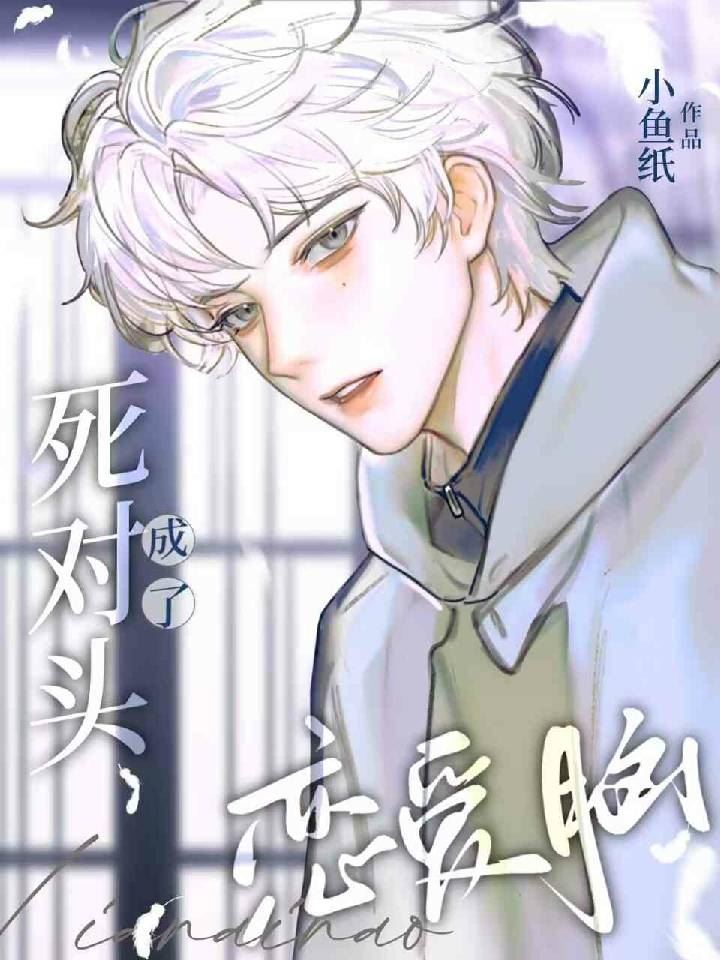
The Sworn Enemy Became Love Struck
+Add to Custom List
Sort
Add review
... Read More
This sequence is absolutely relentless and I mean that as the highest compliment. Let's map it out real quick because the pacing is genuinely impressive. We open mid-confusion — Zhuang Wu wakes up and immediately the text dumps us into the sensory overload of a classroom full of people he hasn't seen in seven years. No slow exposition. No "what is happening" monologue. Just: he's there, everyone's there, Hu Jianlong is lecturing, and the blackboard says 2012. Boom. You're in it. Then we cut to after class. He's already made his decision. No hesitation arc, no three-day brooding montage. The text says "After class and after Zhuang Wu made up his mind" — one phrase, and we're already watching him write the love letter. This is a guy who moves fast when he's decided something, and honestly? It matches his personality perfectly. He's an actor, he's used to jumping into scenes, he doesn't do prolonged emotional delays. The middle section — the whole day of him being a "deer that had lost its sense of direction" — is basically a breath held. Four paragraphs doing the work of a full chapter in another book. And then the evening self-study. This is where the tension actually kicks in, because we know something is coming and neither character knows exactly what. Qin Qiyue packing slowly is such a brilliant little beat. Every reader knows what that means — he's waiting. He's been waiting all day. And then Zhuang Wu just blurts out the confession in front of everyone. The pacing here is almost comically fast, which makes it feel authentic. Real confessions don't happen with perfect timing. They happen when your brain short-circuits. And then the alley scene. The pursuit. The Gege. The breakdown. All of it flows so naturally, like one long exhale after holding your breath for forty pages. I didn't want to stop reading once they left the school gates. And the chapter ends on that perfect unresolved note with Qin Qiyue saying "Okay, I know you like me, but I don't accept it" and then just... trailing off. The ellipsis is doing heavy lifting there. What comes next?? I need to know right now.
... Read More
Let's talk about stakes for a second because this passage quietly raises them to stratospheric levels. Zhuang Wu isn't just chasing a crush—he's fighting for survival in a universe where the rules have already killed him once. In the previous life, he got stabbed by a sasaeng fan right before things could work out with Qin Qiyue. He died with regret. Now he's given a second chance, and every day he spends failing to make Qin Qiyue feel something is a day closer to repeating that ending. The external stakes are clear: if he doesn't make Qin Qiyue fall in love with him, he loses everything again. But the internal stakes are what get me. Zhuang Wu has always defined himself through this pursuit. He was an 18th-tier actor who became a nobody's biggest hater because his entire identity was tied to Qin Qiyue. Now he says "now I've lost that identity too"—what does that mean if not that without this goal, he doesn't know who he is? And Qin Qiyue? His stake is equally high but invisible. He's hiding behind indifference while carrying a knitted scarf in his suitcase. The gap between what he shows and what he keeps is where the real suspense lives.
... Read More
There's something almost cinematic about how this batch frames its key scenes. Let me walk through them. First, the hot pot restaurant. Winter. Cold outside, steaming spicy broth inside. The contrast alone sets the mood—warmth and spice, comfort food, a casual date setting that suddenly becomes charged when two random girls approach Qin Qiyue. The narrator notes that the hot pot was so spicy Qin Qiyue's eyes turned red at the corners. Is that the chili or something else? Probably both. Zhuang Wu watching his reaction instead of the girls is a tiny detail that speaks volumes. Then they step outside into heavy snow. Zhuang Wu is underdressed (on purpose, to manipulate Qin Qiyue's sympathy), shivering, and Qin Qiyue offers his coat. What follows is this deeply intimate moment—Qin Qiyue carrying Zhuang Wu through falling snow, wrapped in his own coat, faces close enough to kiss. The world outside has shrunk to just the two of them, the cold wind, and the sound of footsteps on snow. The atmosphere in these scenes is doing so much heavy lifting. The temperature dropping throughout the week mirrors the emotional temperature between them. Snow = isolation, intimacy, a blank slate. Hot pot = warmth, spice, something shared. Both settings force proximity. And that ending shot—Wen Jia on the sofa, attention NOT on the TV, waiting for Zhuang Wu to come back—this is the author teasing us with a new thread. We were just in this deeply personal snow moment, and now suddenly there's someone else in Zhuang Wu's home life. The scene shift is jarring in a good way, like the camera just panned away from an intimate close-up to a wide shot of a completely different room.
... Read More
Oh my god, Zhuang Wu is such a chaotic little gremlin and I love him for it. Like, the sheer audacity of him messaging Qin Qiyue with that 'Without you, nothing I do is meaningful' line — that is straight-up emotional blackmail and he knows it, and Qin Qiyue FALLS FOR IT every single time. The dynamic here is so deliciously unhealthy and I'm obsessed. But then something shifts on the pirate ship, right? When Zhuang Wu actually yells that his seatbelt broke, Qin Qiyue doesn't hesitate. He doesn't think about his own comfort or make a witty remark — he just grabs Zhuang Wu and holds him down with 'a lot of strength.' And that line 'He only knew that he must not let anything happen to Zhuang Wu!' — this isn't the guy who replies to text messages three minutes late because he's 'busy.' This is someone who would literally throw his body over Zhuang Wu at forty feet in the air without a second thought. And yet, what's hilarious is that Zhuang Wu is playing this character the whole time. He's an actor — he fakes being scared on the roller coaster, then fakes being unable to walk so Qin Qiyue will drag him around like a sack of potatoes. The fact that he genuinely panicked on the pirate ship is almost ironic. His performance became real fear at the worst possible moment.
... Read More
I cannot with Zhuang Wu's dialogue. The man says things and I am SHOOK. Every. Single. Time. Listen to this: 'Gege, I'll sweep with you' — seemingly innocent, right? Wrong. Because two paragraphs later he drops 'Thank you, Gege, for allowing me to spend more time in the same space with you.' Bro. BRO. I literally laughed out loud and then immediately covered my face. This guy has absolutely zero shame and I respect it. And Qin Qiyue's responses are perfect contrast. He's all '...' and 'Let go' and 'Can you stop being such a pervert?' while clearly melting on the inside. The blush on his ears detail is doing SO much work here. The author never lets Qin Qiyue admit anything emotionally, which makes his silence speak louder than words ever could. There's also Zhang Qi's completely unhinged internal monologue about 'Ji Zhixian trying to sow discord' and then his self-correction about 'Zhuang Wu approaching you to irritate Ji Zhixian.' It's hilarious background noise that makes the world feel alive. Random classmates having full dramatic storylines in their heads? Chef's kiss. The dialogue here ranges from Zhuang Wu's shameless flirting to Qin Qiyue's deadpan deflections to Zhang Qi's overthinking. Three completely distinct voices. No one sounds the same. That's rare.
... Read More
The dialogue in this chapter is deceptively simple and I keep coming back to it because every line is doing triple duty. Take this exchange: "Gege, why have you become more and more indifferent recently?" "Busy." That's it. That's the whole conversation. Two lines. And the second line tells you everything about Qin Qiyue's character — he doesn't know how to name what he's feeling so he collapses it into a single syllable. Zhuang Wu's follow-up — "Yes, yes, everything is more important than me" — is so painfully accurate it hurts. He's not wrong. Studies ARE more important. Exams ARE pressing. But what he's really saying is "you don't have time for ME." And then there's the under-table conversation where Zhuang Wu drops the most devastating line of the chapter completely casually: "I was thinking that maybe we will be like uncle and auntie in the future, but the difference is that we won't have children and it'll be just the two of us." He just proposed a lifetime together between bites of cake and nobody at the table knew except the person it was directed at. And Qin Qiyue's response was to blush and pull away. The dialogue here is so restrained and honest at the same time — these two say the truest things to each other while wrapping them in jokes and excuses.
... Read More
Okay, let me just — what did I just read?! The plot in these first four chapters is doing some serious acrobatics. We start with what seems like a pretty standard showbiz romance setup: two actors, a drama called Train Chamber, public CP culture, fans going wild online. But then BAM — a violent interruption by a deranged fan, and suddenly the protagonist wakes up in his HIGH SCHOOL CLASSROOM seven years in the past. That is not a small tonal pivot. That is a full genre shift disguised as a chapter ending. The structure here is fascinating because it deliberately sets you up to think you're reading one kind of story — the sweet, slightly angsty actor romance — and then yanks the rug out completely. The stabbing scene is brutal and shocks the reader right along with Zhuang Wu. And then waking up to chalk being thrown at your head? That's the kind of opening that makes you immediately want to flip to chapter five. I'm genuinely curious about the mechanics of this time shift. Did Zhuang Wu actually travel back, or is he dreaming? Is this a rebirth trope common in Chinese web novels, or something else entirely? The fact that his homeroom teacher from seven years ago is still there suggests the former. Either way, this is a plot that refuses to sit still.
... Read More
There are so many symbols in these chapters that the author uses without ever announcing them outright, and that is what makes re-reading this book endlessly rewarding. The couple outfits are the most obvious one—the kitten and the fox, sky blue and gray and silver, two halves that belong together but are sold as separate pieces. Zhuang Wu wants them. Qin Qiyue buys them. Neither of them says what they actually mean. The scarf is even more layered. Zhuang Wu knit it himself—it is ugly, as Lin Mengyu points out, but it is also a gift made with time and patience and care. Qin Qiyue wears it almost every day after that. When he says 'It's not very pretty, but it's free and the quality is pretty good,' he is telling the truth in the most elaborate way possible—he's defending the gift while simultaneously minimizing its emotional weight, because admitting it matters would mean admitting something he isn't ready to name. And then the red envelope at the end. In Chinese culture, a red envelope is a gesture of blessing and goodwill, usually given by elders to younger people. But here, Qin Qiyue—someone the same age, someone who has spent these chapters carefully maintaining emotional distance—gives him one. It is both traditional and deeply subversive. The winter setting itself is symbolic: everything is cold on the surface, but beneath it there is warmth waiting to be uncovered. The story keeps asking the same question in different ways—what are we willing to do without saying anything about it? The outfit purchase, the daily scarf, the red envelope—these are all actions that say what the characters cannot yet say out loud.
... Read More
Okay so the monthly exam is the obvious plot device here, but what I love is how it simultaneously does THREE things at once. First, it creates physical distance—Zhuang Wu is devastated when he learns his exam room is nowhere near Qin Qiyue's. Second, it exposes his academic weakness in a brutal way, especially during the English paper where he just stares at questions in a daze. And third—and this is the brilliant part—it forces Qin Qiyue to reveal something vulnerable too. When Zhuang Wu asks how he did and Qin Qiyue says 'not very good,' that's the first crack in his perfect-student armor. The author doesn't lean hard into drama, just drops it in almost casually. But it matters. Because now both of them are in the same emotional space—disappointed, frustrated—rather than just the usual chase dynamic. I keep wondering if this is the turning point where their relationship shifts from one-sided pursuit to something more mutual. The pacing between chapters is also interesting: there's a lull after the heart gesture scene, then BAM, exam room assignment, then another slow walk home, then the exam itself. It breathes. It doesn't rush. That's why it works.
... Read More
Okay so hear me out—the plot structure in these chapters is doing some serious heavy lifting and most people will completely miss it because they're too busy fawning over the romance. Let me break down why this is actually smart storytelling. First, the narrative architecture here is built around a time-skip mechanism. Seven years apart. They were sworn enemies. Now they're... this. That's not just flavor text, that's the entire engine of the plot. Every interaction between them is filtered through that knowledge, and the author knows it. The dinner scene, the morning waiting, the school—each one is a test of whether the past can be rewritten or whether it'll always drag them back. The inciting incident of this arc is clearly Zhuang Wu's confession at Qin Qiyue's door: "I like you. Can't I stay with you for a while longer?" But here's the thing—what makes it work is that Qin Qiyue doesn't just reject him casually. He delivers this cold, definitive line: "No matter how much time passes, I still won't accept it." That's not a plot hole, that's CHARACTER-DRIVEN conflict. And it sets up the central tension perfectly—Zhuang Wu isn't going to give up, and Qin Qiyue isn't going to budge. Both are stubborn. That's a recipe for either great drama or painful grinding, and right now the author is walking that tightrope. The morning waiting scene is structurally brilliant too. Zhuang Wu waking up early—something he NEVER did in high school—shows us his transformation without a single exposition dump. The author trusts the reader to connect the dots. That's good craft. But I do have a concern. The pacing between the dinner scene and the school scene feels slightly rushed. We go from a fairly intimate (if awkward) dinner to the next morning almost instantly. I want more breathing room between these beats. Right now it's a little breathless, and while that mirrors Zhuang Wu's energy, Qin Qiyue's side gets compressed. I wonder if future chapters will expand on his internal experience or if we're stuck entirely in Zhuang Wu's POV. Also—Xu Zhong. The rival who appeared briefly in the exercise field scene. He was introduced with contempt, zero dialogue, just a look. That's a classic setup. The author is planting a conflict seed. I'm betting money something happens between them soon. What do you think—red herring or genuine threat? Honestly, the plot is holding together well. The emotional logic is sound even when the romance moves fast. Keep reading.
... Read More
Okay so this entire arc since the love letter fiasco has been building toward this moment and I am NOT okay. Zhuang Wu writes a public love letter, gets blamed by his parents, tries to make amends with Qin Qiyue — and then the Mid-Autumn dinner scene absolutely detonates. The plot structure here is genius because it creates this fake-out: we think the tension is resolved because they're suddenly having a family dinner together, right? Like, 'okay fine, they're becoming friends.' But no. It's a trap. Every single dish Zhuang Wu cooks, he has to announce 'I made this,' which is both endearing and infuriating, and then the shrimp peeling? That's the knife twist. He's being so sweet, so performative in front of Qin Qiyue's parents, and Qin Qiyue is trapped — forced to eat, forced to pretend, forced to smile. And then THE SPILL. ''his hand suddenly slipped towards Zhuang Wu in an unnatural way, and all the shrimps and oil in the bowl spilled onto Zhuang Wu's head.'' This isn't an accident. The narration literally calls him a 'top actor' and says he 'pretended that he was careless.' This is premeditated, cold-blooded, beautiful revenge. The plot here layers social expectation (the family dinner) against personal grievance (the love letter incident) and the explosion is completely satisfying. Zhuang Wu even plays along instead of exposing him — 'It's okay Qiyue-Gege, be careful next time.' The irony is unbearable and I loved every second.
... Read More
Okay can we just talk about Qin Qiyue for a second because THIS MAN is literally fighting a losing battle and he KNOWS it. Every time he says he wants to push Zhuang Wu away, what actually happens is the exact opposite—he hugs back, he carries Zhuang Wu, he FEEDS HIM MEDICINE like some sort of extremely reluctant caretaker. The text literally says he 'had no choice but to hug Zhuang Wu back' which is both hilarious and kind of devastating if you think about it. He's trying so hard to be the bad guy, the cold rejector, but his body keeps betraying him. And that moment when his hand reaches out to touch Zhuang Wu's hair and then he SNAPS out of it like 'WHAT AM I DOING'—bro is genuinely confused by his own actions at this point. The fact that Zhuang Wu calls him out on blushing is the cherry on top. Qin Qiyue can lie about everything else but his face? His face is a radio transmitting pure betrayal. I love how the author wrote this because it's not some grand romantic gesture—it's these tiny, almost accidental moments of kindness that pile up and make it impossible for either of them to pretend this is just enemy territory anymore.

Leave a comment

You must be logged in to leave comments. or
