The Sworn Enemy Became Love Struck - Reviews

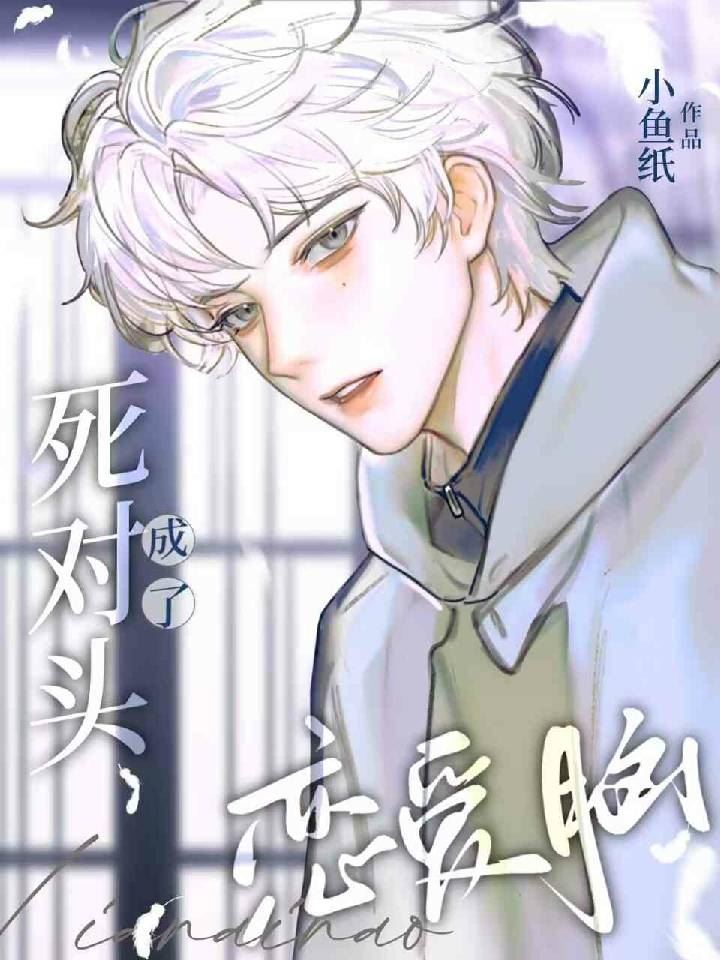
The Sworn Enemy Became Love Struck
+Add to Custom List
Sort
Add review
... Read More
Okay so let me just start by saying—I have never, ever encountered a character combination like this before and I am HERE FOR IT. Xu Zhong is probably the funniest antagonist the author has ever written. Just… stand there, try to be mean, get absolutely ignored. Qin Qiyue doesn't even yell at him, doesn't slam doors, just picks up a broom and sweeps in total silence while Xu Zhong's entire worldview collapses. I literally wheezed. The guy goes from "you can't make me stay" to sweeping alongside him without a single argument. That is next-level emotional control, man. But Zhuang Wu—that's the real thing. This kid has been reborn or time-traveled or whatever and he KNOWS what's coming. He knows Qin Qiyue will eventually fall for him in the original timeline, but right now, right here, Qin Qiyue despises him. And yet he keeps showing up. Not because he's oblivious, but because he's fully aware and doing it anyway. The moment that got me the most: when Qin Qiyue puts his hand over Zhuang Wu's mouth and Zhuang Wu's face goes from warm to cold in one second. That physical touch—so casual from Qin Qiyue's side, so devastating from Zhuang Wu's. He's thinking about their past life where they were already together, and Qin Qiyue is living in a present where he can't even stand being near him. The gap between those two experiences is just… god. And yet Zhuang Wu bounces back. Immediately. Wraps it in flattery and shameless persistence. That's not just stubbornness—that's love that has been tempered by knowing what the future holds.
... Read More
Let's talk about what's actually at stake because this isn't just a cute推拉story — there's real emotional risk woven through every interaction. Zhuang Wu is investing genuine effort into someone who has repeatedly told him he wants nothing to do with him. The stakes for him are vulnerability: every approach could end in another rejection, another 'Keep dreaming,' another empty seat. Yet he keeps going back. Why? Because the alternative — accepting that Qiyue doesn't want him — is apparently worse than the humiliation of persistence. For Qiyue, the stakes are different but equally real. He's being squeezed from multiple directions: his own discomfort with the attention, his mother's expectations, and increasingly, his own confusion about why he keeps giving in. When he says 'Whoever Zhuang Wu loves is none of his business,' he's trying to establish emotional distance as a defense mechanism. But then he texts back 'Okay' to walking together. The conflict isn't resolved — it's just been postponed. The highest-tension moment is probably when Qiyue processes the news that Zhuang Wu cried. His entire physical response — silence, the closed door, the muttered 'Fuck' — shows that this has cracked something open. He thought he was just dealing with an annoying classmate. Turns out he made someone actually hurt. That's a moral stake now, not just a social one. And the cram school subplot adds another dimension: Zhuang Wu is changing his own life to align with Qiyue's, which raises the question of whether this persistence is romantic devotion or something more complicated. Either way, the stakes have never been higher for either character.
... Read More
Let me tell you why this scarf matters more than any romantic confession in this entire book. A scarf is intimate in a way that flowers or chocolates are not. You wrap it around someone's neck. It touches their skin. It stays with them through winter, layer by layer, day after day. Every time Qin Qiyue puts it on, he'll feel Zhuang Wu's hands in his memory. It's a garment of warmth gifted in the coldest season — and this book has been obsessed with temperature throughout. Cold classrooms, cold wind, bodies pressed together for heat. The scarf is the physical manifestation of Zhuang Wu's desire to protect and be close to Qin Qiyue. But here's the deeper layer: Zhuang Wu isn't good at knitting. Wen Jia taught him reluctantly. The result is ugly. And yet he spent nights awake finishing it anyway. That's the whole theme right there — love isn't about perfection, it's about the effort, the sleepless nights, the willingness to try something you're bad at because the recipient matters more than the result. Qin Qiyue calling it ugly is his version of being touched. His deflection IS his acceptance. The one bed in the hotel room is another symbol worth noting. One bed forces proximity — it removes the illusion of boundaries. It's the physical space where pretense can no longer be maintained. The hot spring that follows adds another layer: water, steam, vulnerability, the removal of barriers. These settings aren't accidental. They're orchestrating a world where characters can't hide anymore. And Zhuang Wu's final line before leaving — "I look forward to travelling with you" — how casual it sounds on the surface but underneath it carries the weight of someone who just gave away a piece of his heart and is pretending it's no big deal.
... Read More
The dialogue in these chapters is absolutely vicious and I love it. Qin Qiyue's voice is so distinct—short sentences, no filler, no softening. "Am I your pet dog that you can summon and dismiss at will?" That's not just sarcasm, that's a full personality reveal in one line. He doesn't do rounds of small talk. He doesn't pretend. And when he delivers the rejection, it's not dramatic shouting—it's casual, almost bored: "Just because. I simply don't want to sit at the same table with you. There's no other reason. Don't ask." The cruelty is in the plainness. Zhuang Wu's voice is the perfect contrast—lots of questions, lots of movement, always circling back. "Why why why why…" and then Qin Qiyue shuts him up with a hand over his mouth and the dialogue just—stops. That moment of physical silence between two walls of words is chef's kiss. And the exchange about whether Qin Qiyue is paying attention to him now? "I never paid attention to whether you were playing around or not before." / "Then how about now, are you paying attention to me?" / "No." Three lines. Three lines and the entire power dynamic of their relationship is laid bare. Zhuang Wu trying to negotiate affection, Qin Qiyue refusing to even pretend. And Zhuang Wu still smiling. I've read many romantic comedy dialogues. This one doesn't laugh at the pain—it lets the pain be the joke.
... Read More
The dialogue in these chapters is honestly one of those things that just works. I don't usually comment on it separately but I had to stop and appreciate how different these two sound even when they're just trading basic lines. Zhuang Wu's voice is this chaotic mix of desperation and performance. He says things like "Starting today, I will pursue you" with this formal, almost declarative energy — and then immediately after, he's down in the alley going "Sad your ass!" and "Gege, I really like you." His dialogue bounces between theatrical declaration and raw, unfiltered panic. It's not inconsistent character writing — it's a guy who literally IS an actor, whose instinct is to perform even when he's being genuinely vulnerable. That moment where he uses his acting skills in the alley but the text emphasizes his words are serious? That's such a nuanced characterization through dialogue alone. Qin Qiyue is all sharp edges and controlled irritation. "What?" "Have you gone crazy?" "This joke you made is not even funny." "Fine. Then tell me, why do you like me? Didn't you hate me before?" Every line is clipped, efficient, slightly annoyed. But here's the thing — his dialogue subtly shifts too. By the end, when he's asking for a reason, there's this tiny crack in the armor. He could've just walked away. He could've told Zhuang Wu to leave him alone. Instead he asks WHY. And that question, delivered in his usual blunt style, is somehow the most vulnerable thing he says all chapter. The exchange where Zhuang Wu gives his terribly reasoned explanation and Qin Qiyue responds with "Zhuang Wu, don't you think your reason is too far-fetched?" and then Zhuang Wu immediately concedes and pivots to "Because liking someone doesn't need any reason" — that back-and-forth is chef's kiss. It feels so real. That's how actual conversations go when someone is desperately trying to explain something they can't properly articulate. And the dialogue tags are minimal. No excess. The author trusts the words to carry the scene. That's a mark of confidence in the writing.
... Read More
Okay so I need to talk about how Zhuang Wu basically weaponized a mom complaint to achieve his goals and honestly I am HERE for it. The whole sequence where he goes to Qin Qiyue's house, acts all wronged in front of Lin Mengyu, and carefully engineers a situation where the mom becomes his proxy enforcer — that is next-level social maneuvering. He pretends to be teary-eyed, says the iconic line about Qiyue-Gege hating him so much, and then plays it safe by telling his mom not to blame Qiyue (while clearly wanting exactly that to happen). When Lin Mengyu immediately believes him and orders Qiyue to walk with him daily, Zhuang Wu goes home and celebrates like he won the lottery. And then the text exchange at the end — [Haze: Gege, why did you leave first today?] — he's already texting him like nothing happened, testing the waters, and Qiyue's forced response of 'Okay' is the softest surrender ever. Zhuang Wu rolls on his bed satisfied. Meanwhile he also signs up for cram school, which we know is partly a genuine self-improvement move but also another structural way to keep inserting himself into Qiyue's daily life. The plot structure here is so smart because every obstacle gets circumvented rather than confronted directly. Qiyue avoids him? Fine, I'll make your mom make you stay with me. Qiyue says he doesn't like him? Fine, I'll text anyway and wait for the inevitable妥协. It's a slow burn built on persistence and strategic emotional manipulation, and I respect the commitment.
... Read More
I need to talk about how the author builds atmosphere in these chapters because honestly it is so subtle and effective. We start in a clothing shop window—sky blue and gray and silver couple outfits with a kitten on one and a fox on the other—and that single detail does so much work. The author doesn't just describe the clothes, they describe Zhuang Wu standing there for a long time, unable to move, and the entire aisle between him and the display case becomes this enormous emotional distance. That is scene-building at its finest. Then we shift to the hotel common area where the group hangs out, and Lin Mengyu immediately spots the scarf. The contrast between that cold shop window and the warm crowded hotel room is what makes this story feel like a real place. And then the New Year's Eve dinner—a large table, adults chatting, forced smiles, Wen Jia looking unhappy—and you can literally feel the tension thickening in the room. The author keeps the physical details grounded (short arms that can't reach dishes, the sound of Qin Qiyue's laugh, the red envelope being stuffed into a hand) so even though this is a character-driven romance, the world always feels solid and real underneath. The snowy winter setting isn't just backdrop, it is practically a character. Every cold moment outside mirrors the emotional frost between these two. And that final scene—grabbing a wrist in the dark hallway, pressing a red envelope into someone's palm—feels like the most intimate moment in the entire book, all because the author spent time making us feel the space between them.
... Read More
The flooding in this story isn't just background drama—it's doing SO much thematic work. Remember when Wen Jia asks “Why are you going to the company when it's so dangerous?” and the reply is about urgency, about obligation. That's the world they live in. Obligation over safety. Duty over comfort. And their community survives only because it's on higher ground—everyone else floods, but they're spared. That's privilege, that's luck, that's fragility. Then Zhuang Wu is walking back, exhausted, and steps on a plastic bag. Falls into a puddle. Covered in mud. The universe is basically saying: you messed up the notebook, now get messy. Karmic poetry. And he even laughs at himself—“It was retribution.” That self-awareness, that acceptance of consequence, that's character growth right there. But the real scene magic is when Qin Qiyue appears with an umbrella. The image of him standing over Zhuang Wu, providing shelter while Zhuang Wu is squatted in the rain, trying to hide how messy he looks—that's cinematic. The power dynamic shifts: Qin Qiyue becomes the protector, but Zhuang Wu's shame about his appearance makes him want to cover up. And then Qin Qiyue sees through it, calls him out (“You usually like to show off your presence in front of me”), and offers warmth literally AND figuratively. The rain, the cold, the wet clothes—it all mirrors the emotional chill between them that's now melting.
... Read More
Okay so let's talk about Zhuang Wu following Qin Qiyue home. Like. Really. I am not a person who gets emotionally affected by fiction. I read romance novels like it's my job and I don't get butterflies or whatever. But this? This scene where he just… keeps following him? Into the dark? And then drops the Gege line like it's absolutely nothing casual?? "Gege, I really like you." And then right after, "And please, treat my love well, will you?" I stopped the book for a full two minutes. Just stared at the screen. My heart was actually racing. Because here's the thing — Zhuang Wu is an actor, sure, his expression is acting, but the text literally says his words are serious. He spent all day crafting this love letter, spraying perfume on the envelope like some high school boy from a drama, and then Qin Qiyue kicks it to the ground and walks away. And Zhuang Wu still follows him. Still performs. Still pleads. What gets me most is how vulnerable this makes him. He's already admitted his feelings publicly in front of the whole classroom, which was basically social suicide at that point, and then he's out here begging in an alley like it's his last card. The fact that he calls him Gege — that specific word choice feels so loaded, so intimate, like he's reaching for something he lost seven years ago and can't quite name. And Qin Qiyue's reaction?? "Fine. Then tell me, why do you like me? Didn't you hate me before?" That question hit different. Because underneath the annoyance, there's this tiny thread of wanting to believe it. He's asking for a reason because part of him hopes there isn't one — hopes it's just something irrational and sudden and real. I keep thinking about that perfume detail. He asked a classmate for perfume and sprayed the envelope. That's not something you do when you're half-heartedly playing around. That's someone who is genuinely, desperately trying to make this moment beautiful. And then having it fall to the ground unopened. I nearly cried. How does a love letter going to the floor in an alley feel like one of the most devastating romantic moments I've ever read about?
... Read More
So this chapter is basically one long setup for THAT final line, isn't it? Let me trace how the author builds toward "So you like me, and him, too." It starts small — Zhuang Wu asking Qin Qiyue to teach him basketball, getting shot down immediately, and then just... hanging around anyway. Watching. That's the plot engine right there: Zhuang Wu can't stop orbiting Qin Qiyue even when he's explicitly told to go play by himself. Then the ball incident happens — Zhuang Wu accidentally hits Ji Zhixian on the head. On paper it's a minor, almost comedic moment. But narratively it's doing heavy lifting: it's the physical manifestation of Zhuang Wu's awkwardness in every space Qin Qiyue occupies. He shows up for Qin Qiyue, he doesn't know how to play, and he hurts the one person who actually wants to spend time with him. The irony is almost painful. After that, Qin Qiyue's mood shifts visibly. He throws the ball to someone else mid-game and says "I'm done" — walking out because two people left the court together. That's not subtle. That's a plot-level emotional reveal disguised as a basketball tantrum. And then the classroom confrontation. Qin Qiyue sitting in Zhuang Wu's seat while Zhuang Wu sits with Ji Zhixian — the seating arrangement itself is symbolism. Zhuang Wu chooses to stay near Ji Zhixian, and Qin Qiyue lets him. The silence is louder than any argument. Then the cafeteria scene adds another layer. Zhuang Wu can't eat with Qin Qiyue normally because Qin Qiyue doesn't want to eat with him. But today he goes with Ji Zhixian. And Qin Qiyue's response? "The lunch bell hasn't rung yet, there's no need for you to come back yet." Translation: why did you leave my presence? Why do you need permission to exist near me? And finally, the relationship question. "What's our relationship?" "Friend." The word hangs in the air like a confession. And then — BAM — "So you like me, and him, too." The chapter structure is basically a slow squeeze. Every scene compresses the tension a little more until the final line cracks everything open. It's not complex plotting, but it's effective. The author trusts the reader to feel the weight of each interaction rather than spelling it out. But here's what I want to think about: is Qin Qiyue actually accusing Zhuang Wu of liking Ji Zhixian, or is he projecting his own insecurity? Because the subtext keeps whispering that maybe Qin Qiyue is the one who likes both of them, and he's trying to force Zhuang Wu into a corner where he has to choose... or confess everything.
... Read More
This chapter does something really interesting with its settings. It starts at an amusement park—which should be bright, loud, joyous—and turns it into something CLOSE TO HELL. Not metaphorically. Actually. The text doesn't spend much time describing the rides or the lights, but the DANGER itself becomes the setting's defining feature. After that, everything shifts. The barbecue stall on the roadside is where things get Cinematic. No dining chairs. Wooden tables maybe. Street noise. Qin Qiyue standing there holding skewers while carrying Zhuang Wu on his back, and Zhuang Wu eating like it's totally normal. This is NOT a romantic novel proper scene—this is REAL. This is someone who just nearly died stopping to eat street food because his friend insisted. It grounds the whole thing in something surprisingly ordinary and therefore MORE powerful. And the final image—Qin Qiyue at Zhuang Wu's door, still carrying him, hesitating before knocking because he's worried about what Wen Jia might think. The threshold moment. The doorway between public and private, between 'I saved you' and 'now what.' I kept imagining this like a film frame: night, streetlights, one person standing stiffly on a doorstep with another person draped over his back. Pure visual storytelling.
... Read More
I need to talk about these two because oh my god. The slow burn between them is absolutely lethal. Let me set the scene: they're at the wrap party for their drama, everyone's drunk on success, and Zhuang Wu is internally doing the equivalent of running through a thousand different ways to confess. He's sitting there thinking, tonight's the night, I've had enough courage from this alcohol. And then — and then — Qin Qiyue literally takes HIS hand first. "Zhuang'er." That nickname alone. Who gave him permission to be that cute. And then the confession: "I like you." Not some dramatic Hollywood monologue, just quiet, genuine, and delivered while his hands are apparently shaking because the narration says he was nervous too. They both wanted to say it. They both were about to say it. THIS IS THE KIND OF SCENE THAT MAKES YOU PUNCH YOUR PILLOW. But let's also talk about the contrast — the fanatical stalker behind the tree, phone in one hand scrolling toxic comments, knife in the other. That character absolutely unhinged. The fact that she'd been lurking, watching, building up to something violent over what she perceived as her idol betraying some imagined purity — that's deeply unsettling and raises real questions about obsession culture in fandom spaces. Dark stuff wrapped around a love story that felt so tender right before it.

Leave a comment

You must be logged in to leave comments. or
