The Sworn Enemy Became Love Struck - Reviews

The Sworn Enemy Became Love Struck
+Add to Custom List
Sort
Add review
... Read More
There is a recurring symbolic architecture in this chapter that transforms ordinary school life into something richer. Hu Jianlong's lecture about math problems—'just a matter of changing a number or making a detour'—becomes an unwitting commentary on Zhuang Wu and Qin Qiyue's relationship. The teacher asks 'Will you also not recognize your parents just because they changed their clothes or their shoes?' but the question applies equally to Zhuang Wu wondering if Qin Qiyue's occasional coldness means he doesn't care. The symbol of waiting runs through the entire chapter. Xu Zhong refuses to leave until cleaning is done, forcing Zhuang Wu to wait. Qin Qiyue initially seems to leave without Zhuang Wu, but then returns to wait. The ultimate symbolic gesture is Qin Qiyue sitting on a chair while Zhuang Wu sweeps—he enters Zhuang Wu's world of responsibility and obligation rather than demanding special treatment. Even the text messages become symbolic objects: phones vibrating under desks, screens displaying tiny revelations, the glow of messages as modern candlelight. The self-reflection Zhuang Wu was punished to write parallels the emotional self-reflection both boys are undergoing. The chapter suggests that love, like math, requires seeing past surface changes to recognize what remains constant underneath.
... Read More
What I find genuinely compelling about this chapter is that there's conflict everywhere, but nobody's actually fighting. It's a war of attrition fought with guilt trips and side-eye and strategic crying. Zhuang Wu's goal is simple — spend time with Qin Qiyue. But the stakes are higher than he lets on. He mentions enrolling in cram school as a backup plan, which means he's thinking ahead, planning for rejection. He's not just being clingy — he's building a case for why he deserves Qin Qiyue's time. Qin Qiyue's conflict is more internal. He genuinely doesn't want to deal with this but also can't bring himself to fully shut Zhuang Wu out. Every time he says no, the narrative proves him wrong. The mother's presence adds external pressure, but the real tension is between what Qin Qiyue says and what he does. And the stakes compound when we see the exam results. This isn't just about homework anymore — Zhuang Wu is measuring his future boyfriend's academic performance like it's some kind of validation. 'First in Mathematics and Chemistry' — he's not just proud for Qin Qiyue, he's claiming ownership of those achievements. The beautiful tragedy of this whole setup is that both of them are playing a game where losing means admitting you care. Qin Qiyue keeps yielding despite himself. Zhuang Wu keeps pressing despite the rejections. And neither of them will say the obvious thing out loud.
... Read More
Beneath the surface of what appears to be a showbiz romance with a time-travel twist, I'm picking up some really interesting thematic threads about identity, performance, and second chances. The concept of 'Train Chamber' — a drama they filmed together — feels symbolically loaded. A train car is a confined space where strangers become intimately acquainted, bound together on a fixed route with no exit until the journey ends. Is their relationship the same? Two people trapped in proximity, performing roles both on screen and off, until something real breaks through? Then there's the mirror motif — quite literally, with the Weibo comments reflecting public perception versus private reality. The CP fans see sweetness; the toxic fan sees betrayal. Neither side fully sees Zhuang Wu or Qin Qiyue as actual human beings. The novel seems deeply aware of how online culture distorts and flattens real relationships into content. And the rebirth element? That's the biggest thematic statement of all. Zhuang Wu dying and waking up in his younger body suggests the idea that love — real, vulnerable, courageous love — is worth risking everything for, even if you have to live it twice. The theme of a second chance isn't just a plot device here; it feels like the author is asking: what would you do differently if you knew how things ended?
... Read More
There's a recurring image in these chapters that I can't shake: Zhuang Wu's scarf. It's not just a gift — it's a symbol of everything he can't say out loud. He knits it through sleepless nights, sacrificing his health, his grades, his routine, all to create something warm and tangible for someone who doesn't yet know he wants it. The scarf represents labor of love in its purest form. It's quiet devotion made physical — loop after loop, night after night, while everyone else is studying for exams or playing basketball. Zhuang Wu is building something to wrap around Qin Qiyue, and the symbolism is almost painfully literal. He wants to be close. He wants to provide warmth. He wants to be useful to the person he loves. Then there's the sleep motif, which runs counter to the scarf in an interesting way. Zhuang Wu can't stay awake for his studies but somehow finds the energy to stay up late crafting. Qin Qiyue pretends not to care during the day but secretly moves closer to Zhuang Wu when he thinks no one's watching. Sleep becomes the state where truth slips out — both characters are most honest when they're half-aware, when their defenses are down. "I'll have no problem teaching you, but you won't have time to sleep again if you don't sleep now." Qin Qiyue's dialogue is full of these double meanings — practical advice that's actually care disguised as logic. The whole novel seems to operate on this frequency: love expressed through logistics, affection hidden in obligation. Even the physical education class setting works symbolically. This is supposed to be about competition, athleticism, performance — everything external and visible. But Qin Qiyue chooses to sit on the bench instead, choosing stillness over spectacle, presence over achievement. He's done performing for the crowd. Now he just wants to be near Zhuang Wu. The deeper message here, I think, is about the languages we speak when we're afraid to use our native tongue. Both boys are fluent in gesture and sacrifice but mute when it comes to direct confession. And that silence — that beautiful, aching silence — is where the real story lives.
... Read More
Okay so let me just say — the sheer AUDACITY of Zhuang Wu is honestly impressive. This kid shows up at Qin Qiyue's door with BREAKFAST and homework like he's plotting a heist, not asking for math help. And you know what? It WORKS. He spends the whole morning manipulating his way into tutoring time AND getting invited to lunch. That's not just persistence — that's strategic genius wrapped in a cute package. The whole scene plays out like a slow-motion con. First the fake hurt about his bad grades, then the guilt trip about Qin Qiyue being 'the best,' then the dramatic exit attempt when Qin Qiyue tries to shut him down. Every move is calculated. He even pre-planned which questions to ask because he knew he couldn't realistically go through ALL of them. Smart kid. But here's the thing that actually stuck with me — Lin Mengyu. She's basically the puppet master in the background, totally unaware that she's enabling all of this. 'How could he not want to, right Qiyue?' she says when pushing for the lunch. Meanwhile Qin Qiyue is just... trapped. He wanted Zhuang Wu gone before the morning was over and ended up giving up his entire day. And then the chapter cuts to exam results and we get this little line: 'After all, this was the result of his future boyfriend.' HA. Zhuang Wu was literally watching those rankings like they were some kind of trophy. This plot isn't just about studying — it's about someone strategically inserting himself into another person's life, one breakfast at a time.
... Read More
The tension in these chapters is INSANE and I need everyone to understand that the conflict here isn't some big dramatic event—it's microscopic and devastating. It's in the micro-moments. Zhuang Wu asks a question. Qin Qiyue doesn't answer immediately. Zhuang Wu waits. That silence IS the conflict. That's where the stakes live. Look at the Ji Zhixian triangle setup too—Zhuang Wu's old friend is now making moves, offering to help with homework, positioned himself as the reliable alternative. And Qin Qiyue? He watches Zhuang Wu walk PAST him to go to Ji Zhixian. 'Qin Qiyue's eyelashes trembled slightly, but he said nothing.' That eyelash detail. That's not nothing. That's everything. The stakes just skyrocketed without a single word being spoken about it. Then the whole cold bench sequence—Zhuang Wu is scheming the entire time. He's calculating, deliberate, and Qin Qiyue keeps catching on but never pushing away. When Zhuang Wu finally hugs him and Qin Qiyue says 'Let go,' he doesn't actually let go. The stakes here are emotional survival. Both of them are walking this razor wire between wanting connection and being terrified of it. And the reader? We're holding our breath the entire way.
... Read More
There's something so cinematic about how this story frames its intimacy. Think about the visual language: two boys walking home after evening self-study, the implicit darkness of the walk, the way Qin Qiyue angles his body to avoid being seen with Zhuang Wu while simultaneously hoping he's noticed. Then the wall scene—kabedon framing, close enough to feel breathing, the camera of the reader's mind zooming in on lips and then pulling back. It's directed like a K-drama or a Chinese BL adaptation. But what makes it work isn't just the imagery, it's the domestic texture around it. Lin Mengyu lingering at doorways like a ghost. The phone messages exchanged after dark—"Goodnight, Gege" / "Mn, goodnight"—that tiny exchange that feels like a secret conversation between two people who can't say anything out loud. The author grounds every emotional beat in a physical space: the walk home, the doorway, the bed where Qin Qiyue can't sleep, the door that opens to reveal Zhuang Wu in pajamas holding breakfast. These aren't abstract feelings—they're anchored in rooms and streets and doors. The world feels lived-in because every gesture happens somewhere specific, and you can picture exactly where everything takes place. That's skill.
... Read More
There's a scene in these chapters where Zhuang Wu waits outside Qin Qiyue's door at 5:30 AM and I had to pause and just... absorb it. "With a sleepy face, Zhuang Wu stood at the door of Qin Qiyue's house waiting for Qin Qiyue to go out. Because he got up too late before and had never encountered Qin Qiyue before, he had no idea of the exact time when Qin Qiyue would go out even until now." This is such a small, quiet moment but it painted the entire picture. Seven years of not knowing someone's schedule, and now he's willing to sacrifice sleep to catch a glimpse of them. The specificity of "even until now"—as in, despite all these attempts, he still hasn't figured it out—tells us this is an ongoing struggle, not a one-time event. The worldbuilding here is in the accumulation of small details. The school scene is another one that lands visually. Five-fifty morning exercises on the sports field, students lining up, the physical spacing between Zhuang Wu and Qin Qiyue—"several people between them." The author keeps using distance as a motif. Physical distance, social distance, emotional distance. It's all there in the blocking of the scene. And the contrast between Zhuang Wu and Qin Qiyue during the run is pure visual storytelling. Zhuang Wu barely breathes hard because, well, he's a fitness-conscious entertainment industry person who graduated seven years ago. Qin Qiyue is genuinely winded. But Zhuang Wu hides it, then deliberately acts weak later. The author is giving us two versions of the same body—one honest, one performative—and asking us to figure out which one is real. The classroom itself feels lived-in but understated. Morning self-study, sleepy students, the cafeteria after. It's a normal high school setting, and that normalcy is what makes the emotional intensity around it feel even sharper. Everything is ordinary except for what's happening between these two characters. One detail I keep coming back to: the oil on Zhuang Wu's hair. It started as a domestic accident during dinner, spread larger the more Qin Qiyue tried to help, and became the excuse for Zhuang Wu to stay inside. It's such a stupid, mundane detail but it became the entire catalyst for the chapter. That's good scene design—taking something trivial and making it meaningful through character action.
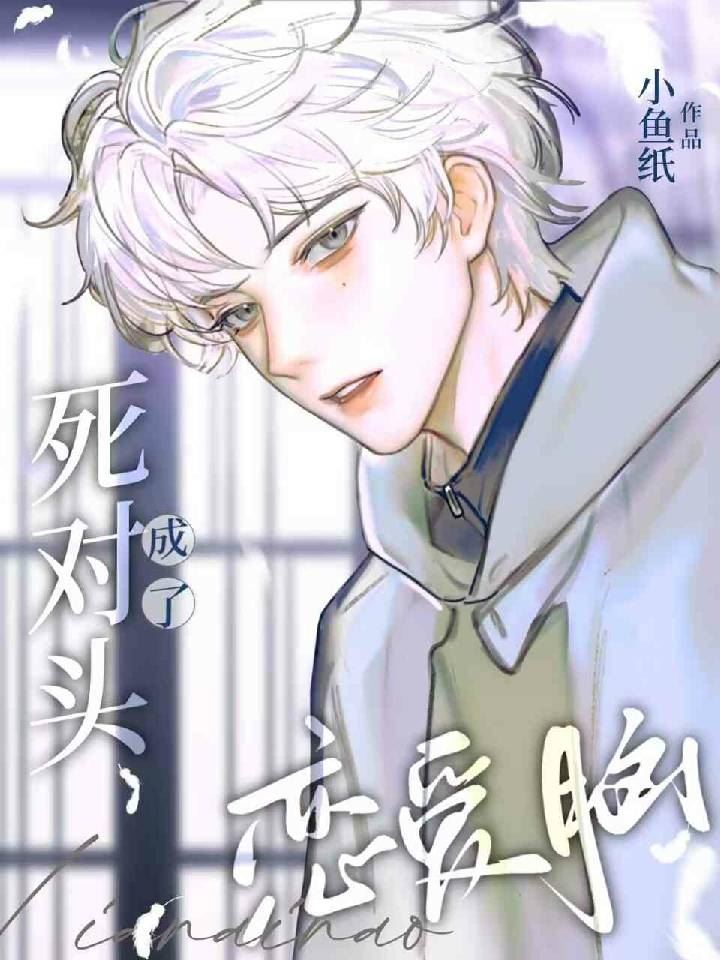
... Read More
The conflict in this batch isn't some big external event—there's no villain, no battle, no world-threatening stakes. The stakes are SMALLER and somehow MORE INTENSE. It's about two people who want the same thing but are fighting themselves instead of each other. Zhuang Wu's external conflict is simple: convince Qin Qiyue to reciprocate his feelings. But the REAL conflict is internal—for BOTH of them. Qin Qiyue is trapped between his past life memories (where he was the pursuer, where things presumably went wrong) and his present feelings (which are clearly growing despite his best efforts to suppress them). Every time he says "I have never liked you," he's fighting his own heart. The stakes for him are enormous: if he admits his feelings and loses Zhuang Wu, he loses everything. So he stays silent, stays cold, stays defensive. Zhuang Wu's conflict is different but equally tense. He KNOWS Qin Qiyue has feelings. He's stated it outright. But knowing and being told are two different things. Every denial from Qin Qiyue is a small rejection, and Zhuang Wu keeps absorbing them. The risk he's taking is emotional devastation—if he keeps pursuing and Qin Qiyue NEVER comes around, what then? The hot pot scene with the two girls is actually a microcosm of their entire conflict. An external threat appears, and instead of Qin Qiyue handling it, Zhuang Wu steps in and claims him. But afterward, Zhuang Wu is upset—not because he's jealous of the girls, but because Qin Qiyue seemed HAPPY to be approached. That's the core wound: Zhuang Wu fears he's not enough, that Qin Qiyue would rather have anyone else. And Qin Qiyue? He can't tell Zhuang Wu the truth because he's afraid of misunderstanding, of crossing a line, of ruining whatever fragile dynamic they currently have. So he stays silent. The silence IS the conflict. The stakes keep rising because neither person is willing to be the first to truly break through. And that's what makes every scene feel like walking on glass.
... Read More
The setting details in these chapters are surprisingly effective for a school-life story. There's the classroom dynamic during self-study—the students are so used to canceling PE for exam prep that they actually prefer it because the PE teacher is apparently a total devil. Little worldbuilding touches like that make the school feel lived-in, not just a generic backdrop. But the real standout scene is the walk home through the alley at night. Moonlight, the two of them walking side by side, Zhuang Wu pestering Qin Qiyue about exam rooms and what kind of boys he likes. The transition from public space (classroom) to semi-private (the alley) mirrors how their interactions shift—the alley feels like the one place where Qin Qiyue can't quite maintain his cool facade. Another visual moment I keep coming back to: Zhuang Wu catching Qin Qiyue's eye during class, making the heart shape, and watching him visibly fluster while trying to force himself to concentrate on homework. You can literally see Qin Qiyue's internal short-circuit in that scene. The author doesn't describe much in terms of physical environment beyond the essential—rooms, seats, the alley, doors closing—but those minimal details land because they're tied to emotion. The door clicking shut at the end is almost a period at the end of a sentence: Qin Qiyue retreating back into solitude after those few minutes in the alley.
... Read More
Okay so Zhuang Wu drops the line 'You saved the rest of my life. You're my savior. Don't worry, I will repay you with my own body' and honestly I just… what??? From danger-stricken victim to shamelessly flirty in THREE SECONDS. This character does not know how to play it cool and I am HERE for it. But the real moment for me wasn't even the cheeky stuff—it was earlier, when Qin Qiyue grabs his wrist and just STRIDES forward. No words. Just pure, almost violent urgency. And then the deliberate release of the hand. THE DELIBERATE release. Like, bro you JUST held his wrist for dear life and now you're acting like touching him is a crime?? And he turns his head away BLUSHING while walking faster?? I literally screamed at my phone. And then the carrying scene—Qin Qiyue half-kneeling in compromise, accepting that he's going to carry this ridiculously stubborn person home. That image of him walking through the streets at night, burden and all, felt SO tender even though neither of them would admit it out loud. The line that wrecked me though: 'I like you the most, and only you.' Whispered near his ear like it's a secret. But it wasn't whispered because it was shameful—it was whispered like it was the most important thing he needed Qin Qiyue to carry along with his body. And Qin Qiyue absolutely did not know how to process it, which is honestly the most realistic reaction ever.
... Read More
The plot progression in these chapters is actually really clever because on the surface nothing happens — no grand revelations, no dramatic confrontations — but everything shifts underneath. Zhuang Wu gets sick, Qin Qiyue takes care of him, and suddenly the power dynamic has tilted. Before this, Qin Qiyue could maintain the position of annoyed tolerate-but-doesnt-want-to-admit-anything. After feeding him medicine and being hugged? He's off balance. Then we get the messaging sequence and it's masterful tension-building. Zhuang Wu sends "Good night, Gege. I have a feeling I'll see you in my dream" and Qin Qiyue literally can't sleep because he's overthinking whether to reply. The author doesn't need action scenes here — the conflict is entirely internal and it's more gripping than any fight scene. Zhuang Wu then reads his typing indicator and fires back even MORE provocation. This man is a warrior. A chaotic, flirtatious warrior. And the dream sequence at the end?! Zhuang Wu falls asleep and DREAMS that Qin Qiyue confesses. Whether this is prophetic or just wishful thinking is left deliciously ambiguous. Then the very next paragraphs show the real-world consequences — Zhuang Wu showing up every day for tutoring, and when Qin Qiyue finally snaps and says "What obligation do I have to explain problems to you?" that's the moment the plot actually moves forward. The rejection breeds a new complication: Ji Zhixian steps in, and Qin Qiyue's silent pen-clenching tells us everything about where his true feelings lie. The author is playing 4D chess with this plot.

Leave a comment

You must be logged in to leave comments. or
