The Sworn Enemy Became Love Struck - Reviews

The Sworn Enemy Became Love Struck
+Add to Custom List
Sort
Add review
... Read More
I need to talk about the hair scene because my entire body went through something. "After hesitating for a while, Qin Qiyue rubbed Zhuang Wu's hair lightly. It's quite soft. The corners of his lips curled up imperceptibly, then he withdrew his hand and continued listening to the class." Let me just sit with that for a moment. Qin Qiyue — who earlier was calculating how to move closer to Zhuang Wu without getting caught — hesitates. He HESITATES. And then he does it anyway. The softness of Zhuang Wu's hair, the invisible curl of his lips, the immediate withdrawal back to 'just studying' mode. This man is fighting himself in the most silent, devastating way possible and I am WRECKED. And the way Zhuang Wu operates too — "Do I need a reason not to play today?" Qin Qiyue asks, and the reader feels that vulnerability like a physical punch. This isn't the aloof top student anymore. This is a boy who showed up to sit on a bench instead of playing basketball because his entire world shifted when he saw the person he likes laughing with someone else. Then there's the scarf. Zhuang Wu is starving himself, falling asleep in class, barely keeping his eyes open — all to knit something for Qin Qiyue before winter break. When Qin Qiyue notices and presses his head down to rest, saying "I'll tutor you when you've had a good sleep," and Zhuang Wu mumbles "Gege, it's great to have you here" with his face buried in his arms... I actually had to put the book down for a second. The CP energy between these two is absurd. They're both so terrible at communicating but so incredibly honest with their actions. Every glance, every accidental touch, every withheld confession is louder than any words ever could be. And I am absolutely here for it.
... Read More
Qin Qiyue is one of my favorite contradictions in fiction and this chapter absolutely proves it. Here's this guy who pretends nothing happened, who says he's not scared, who barely looks at Zhuang Wu during study sessions — but the SECOND Zhuang Wu lets go of his hand in the elevator, Qin Qiyue literally asks "Why are you moving away?" with a dissatisfied tone. The man is SO transparent and thinks nobody notices. They all notice. WE notice. But the part that really wrecked me was Qin Qiyue's internal monologue after Zhuang Wu made that comment about them growing old together — "Didn't it just give Zhuang Wu a chance to tease himself?" He regrets asking. He asks, Zhuang Wu answers with something devastatingly tender, and Qin Qiyue's entire world shifts but he can only respond by blushing and pulling away. That push-pull dynamic is everything. Zhuang Wu is the one initiating, the one risking rejection, the one whose hand sneaks under the table first. And Qin Qiyue? He creates distance physically but never emotionally. Every time Zhuang Wu touches him, he moves his hand but doesn't pull away entirely. The fact that he's doing practice problems all semester as a way to avoid having conversations with the person he likes? That's not indifference. That's terror.
... Read More
I need to address the pacing here because chapters 7 through 10 move like a freight train and I have no complaints. Chapter 7 opens with the confession — intimate, quiet, almost tender. We're outside an apartment building at night. Two people. One love letter. The prose slows down, the dialogue breathes, and we get this moment of vulnerability from Zhuang Wu that feels raw and unguarded. Then Qin Qiyue closes the door and everything seems to shut down. Reader expectation: things will cool off. Maybe Zhuang Wu gives up. Maybe they have a quiet moment later. Wrong. Chapter 8 opens the next day with the love letter being READ ALOUD in class. Boom. The private becomes public in a single scene transition. The pacing here is deliberately jarring — we go from nighttime intimacy to daytime humiliation with zero buffer. And then the fight? It erupts almost immediately after, triggered by Xu Zhong's escalation. By the time the teacher shows up and sentences them to self-reflections, we've covered confession, rejection, exposure, violence, and punishment in what amounts to a few pages. But here's the thing: it never feels rushed because each beat has weight. The trash-can retrieval scene acts as a miniature breather between the confession and the classroom explosion. It's a quiet moment of quiet character revelation that gives the reader a second to process before the next wave hits. The structure is essentially: vulnerability → secret tenderness → public destruction. And the chapter ends with them walking back to class after punishment, which is a perfect transitional beat. It doesn't resolve anything but it gives us a moment to breathe before whatever comes next.
... Read More
"这段我真的反复看了五遍" No wait, that's not English. Let me start over because apparently my brain is mixing languages today. Okay. THE DIALOGUE. I need to dedicate an entire note to how good the dialogue is in these chapters because it is genuinely impressive and I don't say that lightly. Zhuang Wu's voice is instantly distinguishable. He switches registers constantly—playful, pitiful, defiant, casual—and each shift feels earned, not arbitrary. When he says "Gege, wait" he's being genuinely anxious. When he says "I was kidding. My hand isn't swollen" he's being deliberately provocative. The author gives him a vocabulary of escalation: tease, withdraw, press, pretend hurt, confess. It's a playbook and Zhuang Wu is executing it flawlessly. Qin Qiyue's voice is his opposite—terse, cold, almost mechanical. "What are you standing here for?" "Don't make trouble for no reason." "No matter how much time passes, I still won't accept it." These aren't just rejections; they're boundary-setting statements delivered with zero emotional leakage. The silence between his lines is as important as the lines themselves. But the most interesting dialogue happens when characters talk PAST each other. Like when Zhuang Wu asks about the swollen finger and Qin Qiyue responds with genuine concern, and then Zhuang Wu immediately undercuts it. They're having two different conversations simultaneously—one about care, one about power—and the reader sees both. That's skilled dialogue writing. The narrative voice also deserves mention. It's close third-person, predominantly following Zhuang Wu's perspective, but it doesn't stay trapped in his head. It观察s Qin Qiyue's reactions—the "slightly irregular breathing," the way his "sleepiness disappeared instantly"—with the eye of someone who's hyper-attentive to every detail. That's not neutral narration; that's NAVEL-GAZING disguised as objectivity, and it's perfect for this story. Some lines that hit me specifically: "Seven years ago, when he and Qin Qiyue were sworn enemies, he wanted to stay as far away from Qin Qiyue as possible, but now his thoughts were completely the opposite of before." That's not dialogue—that's narration—but it reads like dialogue almost. It's conversational, immediate, like Zhuang Wu is telling us this as an afterthought. The author's prose style is doing a lot of this kind of work: making internal reflection feel like spoken thought. I also appreciate that the dialogue never feels EXPLANATORY. Characters don't tell us how they feel; they show us through what they say and what they refuse to say. The restraint is what makes it powerful.
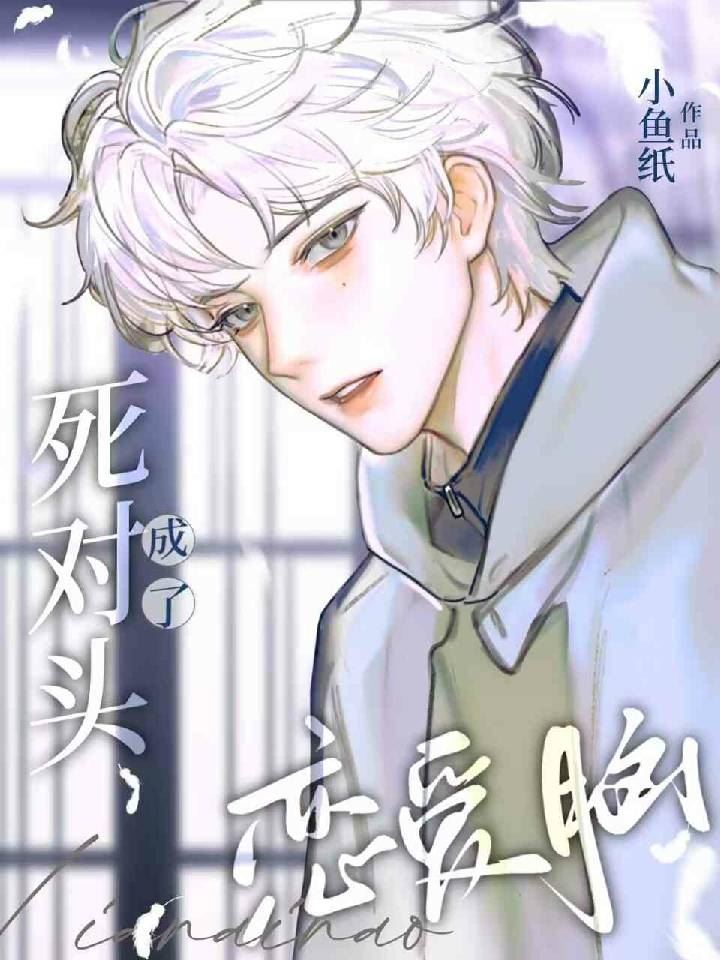
... Read More
I need to talk about the bet scene because I am NOT okay. Zhuang Wu literally leans in, closes the distance until they're almost touching, and says "Let's bet on how long it will take for you to fall in love with me." Okay first of all — HOW is someone this smooth in a rebirth novel. This guy got sent back in time and instead of becoming a genius or getting revenge or whatever, his entire motivation is just "I want to sit next to this person." And Qin Qiyue's response is so good. He could've brushed it off, ignored it, whatever. But no — he enters the frame like "Okay, then I'll bet on how long you can keep pretending." They're essentially competing on who can be the colder one and I am LIVING for it. But here's what wrecked me: Zhuang Wu's line right after — "If you insist on saying that I am pretending to like you, then, Gege, I might just pretend for the rest of my life." That's not playful anymore. That's him seeing the wall Qin Qiyue built and basically saying "fine, I'll play along if that's what you need." The tenderness in that sacrifice absolutely destroyed me. He'd rather pretend forever than push Qin Qiyue into something he's not ready for.
... Read More
Okay so the weather shift in these chapters is honestly chef's kiss. First, you've got the thunder rolling in during evening self-study and suddenly the whole atmosphere changes. The author doesn't just say 'it rained'—they describe it as the first rain after the change of seasons, heavy enough to pool water on the ground. That detail about the flooding roads from Zhuang Wu's third year of high school? Super effective worldbuilding because it grounds the setting in a lived-in reality. We're not just in a generic school; we're in a place where weather actually matters, where classes can get suspended, where you have to think about umbrellas. But the real masterpiece is the porch bench scene. The school has mostly emptied out, it's cold, and the rain just won't stop. Two boys sitting on a bench, waiting for weather that isn't going anywhere. There's this one line that gets me every time: 'He thought Zhuang Wu was so happy because he brought an umbrella. But indeed, he should have known that Zhuang Wu's thinking process was different from others.' The whole scene is built around misdirection—the reader expects romantic tension to resolve in one direction, and the author pivots beautifully. It's so cinematic too, like a Japanese drama frame: grey sky, rain hitting the concrete, two silhouettes on a narrow bench. I genuinely felt the chill reading this. Makes me want to re-read that whole sequence again, you know?
... Read More
"Zhuang Wu clenched his palms." Four words. That's it. That is the entire emotional climax of these chapters compressed into one physical gesture. Let me unpack why this destroys me every time I reread it. Zhuang Wu has been doing this dance for what seems like forever—bringing things, trying to get close, rehearsing conversations in his head, convincing himself that persistence will eventually crack Qin Qiyue open. In his previous life, apparently it worked. Qin Qiyue fell for him. But this life? This life is still early days, and every gift gets passed to a stranger. The specific pain here isn't rejection—that would hurt differently. The pain is invisibility. Qin Qiyue doesn't even process the gift as coming from Zhuang Wu specifically; it's just an object to be redistributed. And Zhuang Wu watches it happen from behind, burning with a gaze he can't quite control. The romantic tension between them is suffocating because it's entirely one-sided right now, yet the reader knows something Zhuang Wu can't fully act on: he remembers a future where this changes. That knowledge makes every small interaction agonizing because he's playing a long game he can't reveal. I also felt this deeply with the quiet scene of him daydreaming in Chinese class, eyes drifting to Qin Qiyue who never notices. That asymmetry—him watching, being watched, never seeing himself seen—is the core emotional frequency of this whole story.
... Read More
Okay so can we just talk about how absolutely devastating the notebook is as a symbol? Like, Zhuang Wu opens it thinking it's just some boring stuff, but it turns out to be years of Qin Qiyue's carefully constructed dreams and ambitions. The thing is — the notebook literally gets ruined by water. Pages stuck together, ink blurred beyond recognition. You'd have to press your face against the paper to read it. And isn't that exactly what their relationship is? Everything important is there, but it's been soaked through and warped and you can barely make it out anymore. And Zhuang Wu's reaction? He doesn't just feel bad — he actually REWRITES the entire thing by hand. Late at night, hands sore, eyes half-closed. This kid who spent years building a fake anti-fan account on Weibo because he was jealous... suddenly understands that Qin Qiyue worked FOR all of this. All those years he thought were luck. All those years he looked down on. Gone in one reading. The yellowing cover, the fountain pen ink — these details matter because they show time passing. Qin Qiyue didn't become a top-tier actor overnight. He planned this. He wrote it down. And Zhuang Wu, the guy who mocked him for it, is now the one sacrificing his sleep to preserve those dreams. The notebook isn't just a prop. It's a mirror. What does it reflect back at each of them?
... Read More
This book is obsessed with the concept of proximity and how it transforms meaning. Zhuang Wu's entire motivation has shifted across his two lifetimes. In the first one, he pursued Qin Qiyue shamelessly, got publicly scolded by netizens, and then had a revelation. He decided to change tactics—to disgust Qin Qiyue in ways that wouldn't attract criticism. But something changed. "So no matter how Qin Qiyue treated him at that time, even if he treated him like air, Zhuang Wu wasn't sad." He didn't care. And now? Now every word cuts. The deskmate arrangement becomes this tiny symbol for everything they can't have—physical closeness, shared space, the daily intimacy of sitting side by side. Qin Qiyue saying "I don't want to sit at the same table with you" is simultaneously a rejection and an admission that their proximity matters enough to refuse deliberately. There's also the broom. Qin Qiyue picking it up instead of walking away. Staying in the space Zhuang Wu asked him to leave. Not out of forgiveness, but out of sheer refusal to be controlled. The sweeping is both submission and rebellion at the same time—which is exactly what this whole relationship is. And the door at the end. Closed. Separating them physically but not ending anything emotionally. The fact that it's described as "neither light nor heavy" suggests this isn't final—it's just where they are right now.
... Read More
The atmospheric details in this passage are doing so much heavy lifting and I need to appreciate them. Everything takes place in winter—cold air, flushed faces, the bite of cold outside the hotel. The temperature is basically a third character in this scene. Zhuang Wu's face is red from cold, Qin Qiyue's scarf is bundled in a suitcase, and the cold outside mirrors the coldness Qin Qiyue is projecting inside. The environment is reflecting everything they're not saying out loud. The bedroom scene has this claustrophobic intimacy to it—two people trapped in a small space, one blocking the exit, the physical proximity forced by accidents rather than choice. Then they move outside into the vast cold of Luo City, and the shopping malls being open (because it's not New Year's yet) gives this fleeting sense of normalcy that contrasts so sharply with the emotional chaos underneath. Normal people go shopping for scarves. These two are fighting for their lives over whether someone kept a gift or threw it away. "Your face is frozen red, how can you not be cold?" — Zhuang Wu's logic is simple and relentless. He notices everything about Qin Qiyue. That's the most romantic thing I've read all week and I'm not embarrassed to say it.
... Read More
The pacing in these chapters is absolutelychef's kiss. It starts slow and atmospheric — the hot spring, the water temperature, the deliberate distance between the two leads. You can literally feel the tension building from that first line where Qin Qiyue keeps putting space between them and Zhuang Wu keeps closing it. Then the dinner scene acts as this pressure cooker — forced drinking, lowering inhibitions, the adults being totally present but also essentially absent. It's all setup, but it never feels like setup because the author keeps slipping in these tiny charged moments. And then BOOM — the elevator scene. One minute they're walking separately, the next Qin Qiyue is grabbing his hand and asking to be carried. The escalation from there is relentless but never rushed. He carries him upstairs, pins him on the sofa, passes out, then the morning after hits like a ton of bricks. Each beat lands exactly where it needs to. The chapter ends on that unresolved note with Zhuang Wu accusingly listing what Qin Qiyue supposedly did — the cliffhanger is perfect because we have zero closure on whether he remembers, whether he's lying, or whether this changes everything between them. I immediately wanted to flip to the next chapter. The author knows EXACTLY how to keep you hooked.
... Read More
Okay, I need to talk about this scene where Qin Qiyue ends up carrying Zhuang Wu on his back through the snow. Like... Zhuang Wu comes up with this whole elaborate scheme—hey, you give me your coat, I'll ride on your back, we both stay warm—and somehow Qin Qiyue just... agrees. No resistance. No dramatic pause. He just bends down and carries him. And then the narrative tells us Zhuang Wu is rubbing his head against Qin Qiyue's cheek, faces close enough to kiss if Qin Qiyue just turned his head. But he keeps turning away. Why? Because he likes it and he's terrified of it at the same time. This is the most revealing character moment in the entire batch. Qin Qiyue has been playing this careful game of denial—telling Zhuang Wu "I have never liked you" to his face, acting indifferent, maintaining distance. But his BODY betrays him every single time. He notices Zhuang Wu shivering from the cold and immediately wants to give him his coat. He carries him all the way home. Hequestions himself internally: "Does he really not like Zhuang Wu? It's impossible." Meanwhile Zhuang Wu is reading him like an open book. He notices the coldness, he calls it out, he pushes anyway. "I know you definitely have some feelings for me, but I don't know why you won't admit it." That line hit me hard. Zhuang Wu isn't naive—he SEE'S what's happening. He's just choosing to keep going anyway. The previous life context makes this even more layered. In Qin Qiyue's past life, HE was the one pestering Zhuang Wu. Now the roles are reversed, and honestly? I think that's what's really scaring him. Admitting feelings means being vulnerable again, and he's already been burned.

Leave a comment

You must be logged in to leave comments. or
