The Original Male Protagonist Started to Become Obsessed - Reviews

The Original Male Protagonist Started to Become Obsessed
+Add to Custom List
Sort
Add review
... Read More
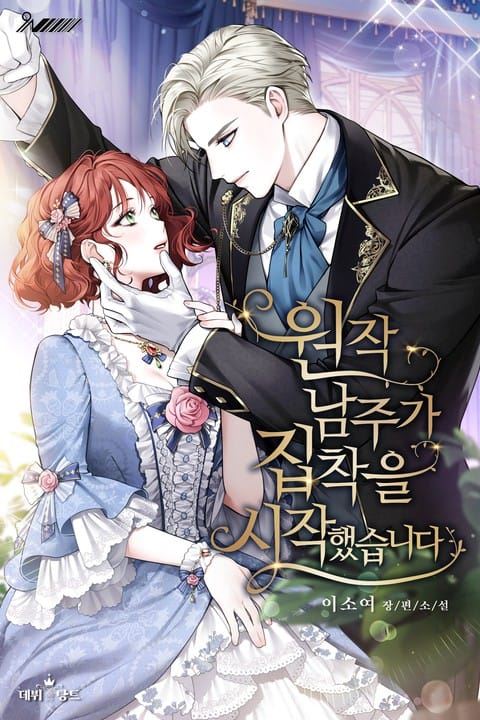
The stakes in this premise are absolutely brutal and I love it. On the surface, Evelyn just needs to stay away from Rashid and let the original plot play out. Simple, right? Wrong. Because Rashid is now proposing to HER instead of the actual heroine. Every time he gets closer, the timeline shifts. The original story's events are destabilizing. If she successfully redirects him toward Lady Violet, does that mean she has to watch him love someone else? Does that mean she goes back to her original world? Or does changing the plot have consequences she hasn't considered? The internal conflict is equally intense. Evelyn KNOWS that the original Evelyn died for loving Rashid. She swore never to fall for him. But he's not the same Rashid from the book anymore—he's sharper, more aware, and he's choosing HER. The danger isn't just that she'll repeat the original character's fate. The danger is that she's starting to feel something she doesn't want to feel, and if she does, the book's logic might force her back toward that same ending regardless of what she decides. And then there's the external threat looming: the assassination attempt on Rashid that the original story hinted at. Evelyn knows a killer is coming—the one who will ultimately stab him. But she also knows that in the original timeline, SHE was the one who did it. Was it really her? Or was the original Evelyn manipulated? Now she's walking around this man who wants to marry her while carrying the secret that she's supposed to be his murderess. Every interaction is a minefield. The physical stakes are real too—she HAS the ability to kill him. One blow to the heart. The power is dormant but terrifying. She's the most dangerous person in the room and she doesn't even want to use it. That's some serious dramatic tension right there.
... Read More
I need to discuss what this story is actually about, because on the surface it's a romance with time travel elements, but dig one inch deeper and it becomes something far more troubling. Let's start with the dragon. Everyone keeps saying it, but have you actually considered what it means? Rashid is described as 'the living jewel of the empire' - beautiful, rare, coveted. But he's also a beast. A creature of legend. And Evelyn possesses the power to 'pierce the heart of the dragon.' This isn't just a cool combat ability; it's the central metaphor for the entire narrative. The dragon must be killed. The beautiful, charismatic, dangerous man must be destroyed. And the woman who loves him will do it. The tea cup scene is where this symbolism becomes unbearable. Rashid pressing his lips to the porcelain where her fingers touched it - that's not romantic, readers. That's vampiric. That's consumption. He's absorbing what she leaves behind because he can't tolerate absence. And the tea goes cold while he stares at it. Time stops for him when she's gone. But she's already planning her escape. Now let's talk about Veronica. A mystical cat who guards the bedroom door and only answers to her master? That's not comic relief. That's a symbol of the barrier between Evelyn and true intimacy. She can get close, but she can't access him. The cat knows she's temporary. The cat knows she's already failing. And the harbor! Port Borten, fifty years outdated, controlled by economic leverage rather than military force - this is the empire itself. Old infrastructure, maintained by money and deals, barely holding together beneath the surface. Rashid's power comes from building new systems, while the old systems crumble. Is that why Evelyn is drawn to him? Because beneath his dragon nature he's creating something new? Or because she's drawn to the same destructive creativity that will eventually destroy her? The childhood flashback is where all this symbolism converges. Eight-year-old Rashid climbs trees and demands affection. He doesn't know how to ask; he only knows how to take. And ten-year-old Evelyn promises to be kinder, thinking she can rewrite fate through small kindnesses. The author is showing us that love without understanding is just another form of possession. That taming a dragon doesn't make him less dangerous; it makes him more attached. Every beautiful image in this story is also a threat. Every moment of tenderness contains the seed of betrayal. That's the theme. That's the wound. The dragon doesn't die because he was never alive. And Evelyn will kill something that was always a reflection of herself.
... Read More
Let's talk about what's actually at risk here because the stakes in these chapters are多层-layered in ways that keep me up at night. On the surface level, Evelyn's conflict is straightforward: she wants to quit her job and leave the duke's household before the original plot consumes her. She's prepared her exit strategy. She even asked her friend Tory to help find new employment. But Rashid has now blocked that path. "Do you think I'll let you leave?"—that line redefines EVERYTHING. The conflict shifts from external (navigating noble society, avoiding the plot's tragedy) to interpersonal (a man who won't let her go). But the real stakes are deeper. Evelyn is a woman from a fallen noble family who has survived by being invisible and pragmatic. She's worked three years as a secretary, endured gossip, maintained her dignity while eating peanut cookies alone at her desk. She built a life on the premise that she doesn't belong in this world of balls and romance novels. And now someone—someone with the power to destroy her or protect her—is looking at her like she's something worth keeping. That terrifies her more than any scandal could. Because if she lets herself want this, and then loses it, she won't just be a background character anymore. She'll be someone who had something and lost it. And Evelyn Berge has spent her whole adult life making sure she never has anything she can lose. Meanwhile, Rashid's stakes are different but equally dangerous. He's using her as a shield from his mother, the Empress, but his behavior suggests he's developing real feelings he can't control. If he loses her, he loses both his protection AND something he didn't know he wanted. That's a double stake that could make him reckless. The Imperial Ball is coming, and I have a very bad feeling about what happens when the Empress discovers the truth.
... Read More
I need to talk about the most fascinating character dynamic I've encountered in forever because the author absolutely murdered me here. Adult Evelyn claims she harbors no personal feelings for Rashid. Says it three times! Thrice! And yet - AND YET - she's internally spiraling about whether he's looking at her with anything other than amusement when she mentions jealousy. The cognitive dissonance is SO thick you could cut it with a knife. This woman is lying to herself with the precision of a master swordsperson. But let's go deeper. Little eight-year-old Rashid? Oh, he's already showing us who he is. When Lady Mariware rejects him, he doesn't cry. He climbs a tree and demands Evelyn be kind to him. Translation: he wants affection, but the only language he knows is dominance and entitlement. 'Maybe you want a little more affection?' Evelyn asks, and he turns crimson. The boy understands exactly what he's feeling and is terrified of it. Here's what breaks my heart: Evelyn sees this and thinks SHE can fix him. She's projecting her adult knowledge onto a child who will either break her or break himself. And that kiss? When he jumps into her arms and kisses her suddenly? That's not romance, folks. That's possession. That's a dragon claiming what he considers his. She panics internally while outwardly accepting it. And THEN she sighs and accepts her fate. The tragedy is written into those two lines. Meanwhile, adult Evelyn still hasn't processed that kiss from eight years ago. She's still flustered, still confused, still trying to maintain professional boundaries while standing in a bathroom catching glimpses of sculpted abs. Nothing has changed! She's trapped in the same pattern! And Rashid - oh, brilliant Rashid. The scene where he watches her leave, stares at her teacup, and presses his lips to the porcelain where her fingers touched it? That's not the cold duke from the novel. That's someone who's been quietly observing, testing, waiting. He knows she's different now. He knows something has shifted. And he's enjoying it. Their relationship isn't love story; it's a chess game where both players think they're winning, but the board was built for a third outcome entirely. Honestly, I'm emotionally compromised and I need to lie down.
... Read More
'I've known you for fifteen years, but I'm always amazed by your survival skills.' — this line alone should be framed. Rashid's dialogue is one of the most entertaining things in this book. Every sentence he speaks is calibrated, whether he's dismantling a count during negotiations or subtly asserting ownership over his secretary. He calls Evelyn's tea 'truly terrible' in front of a nobleman, then immediately follows it up by personally serving her tea and saying it's good enough only for him. That's not just flirtation, that's psychological warfare disguised as politeness. And the best part? Evelyn matches him blow for blow. Her line about billing for overtime separately and demanding a bonus because 'bonuses make competent employees even more competent' is the kind of dialogue that makes you want to cheer. She's not playing the shy maiden role at all — she's a woman who has survived fifteen years of being tormented by this man and is still standing, still negotiating, still quoting his own words back at him. The banter between them has this razor-sharp quality where nothing is ever just what it seems. Even 'Would you like some more tea?' at the end isn't just a polite offer — it's loaded with everything they've never said directly. Meanwhile the side characters like Count Kalante sound appropriately stuffy and dismissive, which makes the contrast with Evelyn and Rashid's dynamics even sharper. The author clearly understands that dialogue isn't just about what characters say, it's about what they're NOT saying.
... Read More
There's something really well done about how this story builds its atmosphere through small, mundane details that somehow make the whole world feel lived-in. The Egenhart ducal estate isn't described with sweeping architectural paragraphs—I get it from textures: the lace-trimmed sleeve of Cecilia's expensive dress brushing against Evelyn's plain work uniform, the lukewarm tea Robert brings, the stacks of paperwork on Evelyn's desk, the sounds of footsteps echoing down the hallway. These are the details that make it feel like a real place where people actually live and work, not just a backdrop for romance. And the office scene with Adelio bursting in, the butler pretending not to see anything while staring at the ceiling, the vast empty space where Evelyn's laughter bounces around like an echo—that's cinematic without being overwrought. The author trusts the reader to feel the weight of these spaces through action and gesture rather than exposition.
... Read More
Okay so I need to process this. The bathtub scene earlier? Rashid completely lost it over something petty—Evelyn brought up Alto—and then got flustered because SHE blushed, not because he expected her to. That's such a stupidly cute detail. He's this towering Duke who commands armies but can't handle his childhood friend looking embarrassed. And then... oh my god. The hallway scene. He literally says 'even if the world ends tomorrow, I would never see you as a woman'—which is clearly him being dramatic and flustered himself—but then immediately after, Adelio bursts in with the WHOLE SCANDAL that Evelyn is his mistress and Rashid doesn't laugh like everyone else does. He just goes dead calm and asks if it's so amusing. The tension is unbearable and I am SCREAMING. They both say they have zero romantic feelings for each other but the narrative is absolutely oozing with the opposite energy. Every time I think they're going to admit something, they double down on denial. Classic. My heart can't take this slow burn.
... Read More
I love how this chapter handled the Lady Cecilia situation. On paper, she's the jealous ex-girling-it-very-aggressively, but honestly? The author doesn't waste time making her a sympathetic figure. She shows up screaming, accuses Evelyn of everything from stealing her man to being a gold-digger, and the worst part is she was literally USING Rashid to get into the imperial ball because she had a crush on the Crown Prince. That twist came out of nowhere and completely reframed everything. She wasn't even faithful to her feelings—for Rashid OR for Cairen, she was just playing games. And Rashid's response was surgical: he laid out the whole truth in front of everyone, publicly exposing her two-timing while staying cold and dignified. Meanwhile Evelyn's just standing there like 'well she brought it on herself' and going back to her paperwork. The pacing here is really tight—anger, revelation, resolution, all within a few pages, and then BAM, the next scene drops the mistress scandal like a bomb. This author knows how to chain conflicts without letting the reader breathe.
... Read More
I literally gasped when Cairen offered his hand first. Let me explain why this mattered so much. Here's Evelyn — legs killing her from those heels, emotionally drained from the Empress interrogation, standing on palace stairs trembling. Cairen, the Crown Prince, the 'Black Lion,' offers his scarred swordsman hand with genuine concern. His smile drops immediately when he sees her state. This is a man who notices things. Then Rashid shoves him aside. Flaming platinum hair, marble-white hand, and this line — 'You've always been weak around this time of year.' That's not just helpful. That's intimate knowledge. That's someone who has watched Evelyn closely for years, who remembers small details about her body, her health, her patterns. The hand-holding moment is everything. Evelyn takes Cairen's hand first — she hesitates but reaches for it. Then Rashid intervenes and she takes HIS hand without hesitation. Not because she prefers him romantically in that moment, but because the history between them carries weight that Cairen simply cannot match. Cairen is new. Rashid is known. And that exchange between the two men? 'Did you come running, worried something might have happened?' / 'I am Lady Evelyn Berge's employer. Naturally, I must fulfill my duty.' Duty. He says duty. But his grip on her hand is 'too firm for Evelyn to break free.' One calls himself employer. The other just acts. Who do you think wins?
... Read More
The stakes in this batch aren't screaming; they're whispering. And that's how you know it's serious. On the surface, the conflict is low-key social maneuvering: a duke rejecting a suitor, a rival lady fuming into the night, a secretary complaining about lace. But underneath? Everything is hanging by a thread. We get a glimpse of the financial rot in House Berge—sugar requires ‘days of consideration,' beef is a luxury, and a snack basket from the duke could feed a modest family for a month. Then, in a single paragraph, that rot gets a price tag. Ten thousand gold. A promissory note. The barony's estate as collateral. All handed over in a dimly lit tavern by a figure whose only identifying feature is a ‘strong scent of roses'—echoing Melissa's perfume, but here it doesn't signal wealth, it signals predation. The mustached man's promise is chillingly casual: ‘I'll make sure Lady Evelyn Berge and Duke Egenhart both get a taste of bitter defeat.' This isn't a villain monologuing; it's business. The conflict has shifted from romantic jealousy to existential survival. And the most terrifying part? Evelyn is completely unaware. She's still fretting about whether her dance steps will bruise his toes, not realizing someone is actively trading her family's legacy for gold. Rashid, meanwhile, is playing a longer game—rejecting Melissa publicly while perhaps quietly moving pieces on a board Evelyn can't even see. The tension isn't in whether they'll kiss at the ball; it's in whether there'll be a ball, a barony, or a future at all. Every polite conversation is a minefield. Every gift is a lever. And the reader is sitting there, gripping the book, waiting for the other shoe to drop. It drops in Chapter 67, wrapped in the quiet rustle of a promissory note.
... Read More
Can we just talk about Evelyn's hair? Fifteen years. FIFTEEN YEARS she's held onto the memory of Rashid calling her curls ‘like a carrot.' That's not a grudge; that's a monument. And yet, she cuts her hair anyway. Because convenience. Because she's practical. Because she never once thought she needed to impress anyone—especially not him. But here's the thing that wrecked me: every single time he looks at her, really looks at her, it's these tiny, furious corrections. The card criticizing her outdated lace. The dance instructor he sends to ‘ensure the safety of my toes.' The way he physically blocks Melissa's view of Evelyn's hair like a dragon guarding treasure. He's building this elaborate, expensive architecture of care around her while insisting he ‘absolutely does not see her as a woman.' Meanwhile, Evelyn's sitting there doing arithmetic about her age and declining fortunes, completely missing that the most powerful man in the empire is trying to speak her language through tailors and tutors. The moment that got me wasn't dramatic. It was later, when she's buried in paperwork and remembering his reaction to the bob. He'd frowned. Just a wrinkle between his brows. But she remembers it. Why? Because in this relationship, everything is a crime scene and a love letter at the same time. Their history is written in these micro-expressions—a childhood insult that became a shorthand for decades of watching each other grow up. I need them to just say one true thing. One sentence that isn't wrapped in political necessity or sarcastic courtesy. Until then, I'm overhere emotionally suffocating.
... Read More
Let me tell you something about this author's plotting that actually got under my skin in the best way possible. The timeline jumping? Genius move that most writers would botch, but here it lands like a thunderclap. We open with adult Evelyn watching Rashid casually dismantle his relationship with Lady Cecilia, then BAM - we're thrown back to when they were eight and ten years old. That structural choice isn't decorative; it's the entire thesis of the novel. The author is screaming at us that nothing is what it seems, that personalities can be rewritten (or so she tells herself), and that fate is a cruel joke played on people who think they can outsmart it. The plot twist here is subtle but devastating: Evelyn believes she's the one changing things. She's not. She's just a different version of the same girl who'll end up with blood on her hands. Remember when young Rashid jumps from that tree and kisses her without warning? And she thinks, 'If I can tame this violent little duke like this, maybe I can rewrite the original story'? Oh, honey. No. You absolutely cannot. What strikes me most is how the author plants the dragon motif everywhere and never lets us forget it. Rashid IS a dragon. Not metaphorically in any weak sense - actually, literally, through that cat Veronica. The beast beneath the beautiful face. And Evelyn keeps thinking she can domesticate him. Classic hubris. The subplot with the harbor development at Port Borten is genius worldbuilding too. Three sentences about an economy, and suddenly we understand why this man is powerful enough to dominate every room. It's not just wealth; it's infrastructure, control over trade routes, leverage over mayors. The author doesn't waste a single word. And that ending? Walking in on him bathing? Perfect comedic timing masking the real horror: she's still here. Still vulnerable. Still exactly where she was supposed to be all along. This story doesn't just play with you; it marries you, has your children, and then murders them in front of your eyes. Brilliant work.

Leave a comment

You must be logged in to leave comments. or
