The Original Male Protagonist Started to Become Obsessed - Reviews

The Original Male Protagonist Started to Become Obsessed
+Add to Custom List
Sort
Add review
... Read More
Okay, so I need to talk about Rashid absolutely losing it and storming the main palace because of Evelyn. Like, this man walks right past the guards, takes three or four steps at a time, and flings open the door like he owns the place. It's the kind of moment that makes me slam the book down and go back to re-read it. But what's interesting is how the plot keeps threading the needle between Evelyn's professional life and this royal mess she's tangled into. Remember how she was just trying to do her job? Now she's being summoned by the Empress, pressured about marriage, dodging both Rashid and the Crown Prince simultaneously. The causality chain is beautiful here — Evelyn didn't ask for any of this, but every attempt she makes to stay neutral only pulls her deeper into the current. And that scene with Princess Angelina interrupting? Genius plotting. The Empress is laying down the law, tension is at its peak, and then this ten-year-old bursts in demanding Rashid not marry some nobodaddy. It's both funny and devastating at the same time — the girl is a pawn too, just as trapped as Evelyn, except she doesn't even know she's trapped yet. The plot doesn't give Evelyn any room to breathe, and that's what makes it so gripping.
... Read More
Okay, so this batch is doing that thing where it lulls you into warmth and then immediately slips you a knife. On the surface, it's all buttery grace notes—the snack basket overflowing with beef and grapes, Rashid's painfully formal card about ‘trends being an unpredictable factor' (Rashid, darling, you absolute legend), Madame D'Eve coming to polish your dancing feet. It feels domestic. Safe. Then you remember this is a world where political marriage is a currency and a duke can ‘accidentally' buy you a wedding gown while simultaneously critiquing your fashion sense. The real plot twist here isn't the shadowy figure in the black veil handing over a promissory note for ten thousand gold—it's how seamlessly the author swaps emotional tenderness for cold calculation. One moment Evelyn's pouting about lace frills, the next she's bargaining with a mustached man in an alley that smells like sin. And Melissa! Please. This woman hears a rumor that the Duke's ‘special purpose' involves protecting someone, immediately assumes it's a cover story, and tries to re-enter the market like it's a job fair. Rashid's response—‘I don't take kindly to those who so transparently try to use me'—is so dry it could crack stone. But the masterstroke? Evelyn doesn't even know she's the prize. She's just standing there, bobbed hair and all, while people maneuver around her like she's a chessboard. The tension isn't in sword fights; it's in the silence after Rashid says ‘My relationship with Lady Melissa is already over.' Does he feel the need to explain? Is he worried she'll misinterpret? Or is he just… tired? I love that the plot never stops breathing, even when everyone's breathing the same stale air of roses and ambition.
... Read More
Let me just say this about Evelyn: she is genuinely one of the most interesting protagonists I've read recently. When Cecilia came in and started hurling every cruel accusation a noble society could produce, Evelyn didn't even flinch. She compared her to a Maltese dog internally and everything. That level of composure isn't just discipline—it's someone who has survived worse social cruelty and simply refuses to give it power. But then Adelio mentions the 'mistress' rumor and she just... loses it. She laughs for THREE MINUTES straight. Not a polite noblewoman laugh, an actual 'puhhahaha clutching my stomach' laugh. And Rashid—this man who doesn't even crack a smile when facing down nobles, when confronting traitors—can't find anything funny about the mistress rumor. The contrast is everything. He takes the scandal completely seriously while she finds it hilarious. That gap between them says more than any confession scene ever could.
... Read More
Okay, can we just talk about how the author weaponizes time in these chapters? Because that structure was absolutely lethal. Chapter fourteen opens with adult Evelyn. High tension, existing history, immediate conflict about Cecilia. Then chapter fifteen hits us with a full flashback to their childhood - and I mean FULL. Like, thirty pages of eight-year-old drama that we could easily skip but DON'T want to because it's SO much fun. Then chapter sixteen snaps us back to present day with an urgent telegram, a mystical cat guard, and a bathroom invasion. Do you understand what the author did here? THREE COMPLETELY DIFFERENT TONES IN FOURTEEN CHAPTERS and somehow it all flows like water. Let's break down the scene transitions though, because this is craft-level stuff. The Cecilia conversation ends with Evelyn leaving, and we get Rashid alone with his teacup. Quiet. Intimate. Haunting. Then immediate cut to COCKEREL SOUNDS and Evelyn's headache. That whiplash is intentional - the author is showing us that Evelyn's world is chaos while Rashid's is controlled darkness, and neither of them knows how to exist in the same space. The pacing of the childhood flashback is masterful too. We start mid-protest (tree climbing!), work through their negotiation, build to that kiss moment, and then drop the narrator's omniscient warning like a bomb: 'She had been under a delusion.' Right there. Just three sentences of narrator voice that shatter everything we thought we were reading. The author isn't just telling us this story; they're foreshadowing its failure from the inside. And the present-day sections? Tension so thick you need a knife to cut through it. The Port Borten telegram creates urgency - we NEED to know what happens next - and then Veronica the cat blocks the hallway like a furry bouncer. The delay is torture. The author KNOWS we're desperate to reach the bedroom, and they make us wait. And when Evelyn finally bursts in? Empty bed. Water sounds. BAM. Bath scene. The cliffhanger ending isn't dramatic - it's almost mundane. 'Splash. Moist scent. She turns. Eye contact.' But it works because we've been marinating in tension for three chapters and that sudden shift from bureaucracy to bathing is the emotional equivalent of dropping someone off a cliff. This author doesn't write scenes; they build pressure chambers.
... Read More
'Carrot. You look like a carrot.' A carrot. With a butterfly decoration. That's what the most powerful man in the Empire called her at age eight, and then he TUGGED her hair like she was a dog. I cannot stop thinking about this scene. The image of young Evelyn standing there in her carefully prepared dress—all that family hope stitched into every thread—while this marble-skinned little duke-in-training just casually destroys her with two words and then physically yanks her hair. And her reaction?! She finds a porcelain set worth 'several hundred gold' and KICKS HIM. A KICK. To a royal heir. My girl did NOT come to play. The sensory details in this novel are really something though. The description of Rashid's appearance—'platinum-blond hair gleamed, eyes shone like the deep blue sea,' 'as beautiful as a doll meticulously crafted by a master artisan'—it paints this almost unreal picture of him even as a child. He's described like a sculpture, like something carved rather than born. Which honestly tracks with the dragon blood reveal later. There's an inhuman quality to his beauty that the worldbuilding reinforces constantly. His house descended from actual dragons, his blood makes him 'inhuman' in strength and status. It's a world where nobility literally has mythical lineage, and the visual language of the book keeps reinforcing that gulf between him and everyone else. The contrast between the opulent Egenhart estate and Evelyn's 'fallen' barony family, the meager funds stretched thin for that one dress, the servants who know better than to let dangerous items near the young master—it all builds this vivid hierarchy of a world where your bloodline determines your entire existence. I can absolutely see the movie version.
... Read More
The sensory contrast in these chapters is aggressive, and I'm here for it. You start in a drawing room so steeped in the ‘overpowering scent of artificial roses' that you can practically gag. It's a smell designed to overwhelm, to announce Lady Melissa Pruden's arrival like a perfume bomb. Then—cut to Arzen Street. A back alley ‘infamous throughout the capital.' The lighting is ‘dim,' the tavern probably hasn't seen sunlight since the previous century, and the air carries the distinct aroma of desperation and cheap whiskey. And in the middle of that, this woman in a pitch-black veil, her face hidden, dropping coins on a table. The worldbuilding isn't in exposition dumps; it's in the geography of scent and shadow. But then the author drags you right back into the glittering belly of the beast: the department store jewelry shop. Suddenly we're talking about ‘Eastern Mine No. 2' rubies, ‘consistency in color,' the manager beaming with satisfaction. It's a cathedral of commerce, where every gemstone is a status symbol and every necklace a political statement. The contrast is surgical. The same empire that polishes rubies for noble ladies also lets a barony's estate be mortgaged for ten thousand gold in a place where ‘thunk' is the sound of a leather pouch hitting wood. What kills me is how the settings reflect power. Rashid's drawing room is all cold marble and controlled atmosphere; he reclines, he watches, he dismisses. Melissa's roses are a costume—loud, cloying, designed to mask something brittle. And Evelyn? Her world is documents, dust, and ‘neutral colors that don't stain easily.' She's built herself a fortress of practicality in a city made of facades. I swear, if I could step into this novel, I'd spend all my time running my hands along the velvet sofas and then immediately washing them in the alley water.
... Read More
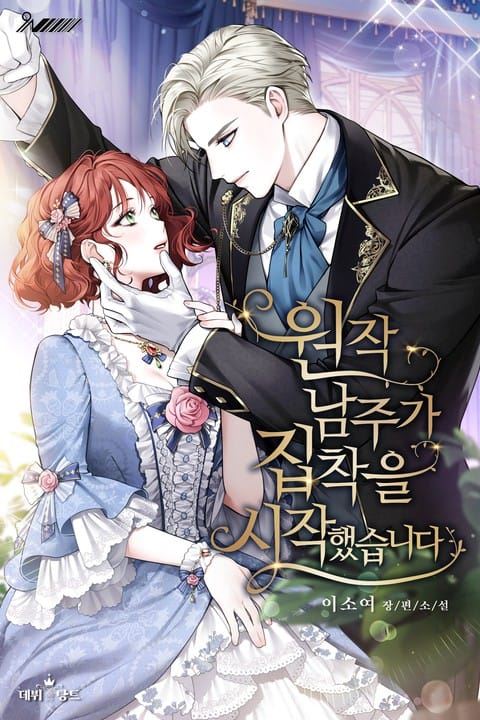
Okay so here's the thing that had me absolutely losing it in the first chapter. Evelyn is a transmigrator—reincarnated into a novel she read as an office worker back in her old life. And guess who she got stuck as? Not the heroine. Not even some random extra. SHE'S EVELYN BERGE. The woman who STABS THE MALE LEAD in the heart before his wedding. That's right. The execution-by-gallows plot. She knows exactly how this ends. And Rashid—the Duke, the so-called 'Living Jewel of the Empire'—is on his THIRD PROPOSAL. Three. Times. He keeps getting rejected and somehow he's not catching on. This is either him being stupid or him being genuinely persistent, and honestly I need to know which one because it changes everything about how I read this. The whole setup is brilliant because Evelyn isn't just trying to survive—she's actively trying to play matchmaker for Rashid and the actual heroine, Lady Violet. She's been raising this guy since he was eight, basically, molding him into someone tolerable for the real protagonist. And yet here he is, proposing to HER. The subplot of her secretly managing his personality while pretending to just be 'dutiful secretary' is giving me so many questions. Like... when did he start actually wanting to marry her? Was there a moment the original story didn't capture? I'm also dying to know what happens with this 'dragon blood' reveal. That her special ability is literally the only thing that can kill him? That's not foreshadowing—that's a landmine wrapped in a mystery. Who wrote this book, because they're playing 4D chess.
... Read More
Let me ask you something: what happens when a character knows exactly how their story ends and tries to change it anyway? Because that's the entire engine driving this narrative, and the stakes are IMMACULATE. Evelyn's external conflict is straightforward: survive. Avoid the assassination. Escape the capital. Find another job. Simple, right? Wrong. Because every action she takes to avoid her fate pulls her deeper into Rashid's orbit. She tries to be professional? He notices. She tries to be distant? He watches her teacup. She tries to escape? She walks in on him bathing. The internal conflict is where this story really detonates. Evelyn keeps telling herself she has no feelings. No personal attachment. Purely professional. And yet - and YET - she's acutely aware of every shift in his gaze, every change in his tone, every moment where he looks at her like she's the only person in the room. The author makes us feel that disconnect viscerally. She's fighting herself. Meanwhile, Rashid's conflict is almost invisible until you trace it backward. He's a dragon learning to want something other than domination. When young Evelyn promises affection, his face lights up. When she threatens to quit, his eyes shimmer with betrayal. This isn't the cold duke from the novel; this is a creature discovering vulnerability and terrified of it. His conflict is whether to trust this new version of Evelyn or revert to the patterns he's always known. The stakes escalate beautifully across these chapters. At first, it's personal survival. Then it becomes emotional - can she resist him? Can he change? Then it becomes existential - what happens if she fails? What happens if he remembers? That bathtub scene at the end? Perfect escalation. She's supposed to deliver urgent business news, and instead she's frozen in shock, catching glimpses of skin and muscle and the impossible reality of him. The professional conflict dissolves into something far more dangerous. She's losing control. The stakes just tripled. And here's the horror: Evelyn knows the original plot. She knows Rashid dies stabbed on the night before his wedding. She knows SHE does it. She knows this version of events should be different, and yet here she is, standing in a bedroom while water drips from a dragon's chest, and she can't look away. The conflict isn't whether she'll change her fate. The conflict is whether she'll survive doing it. I'm not breathing right now. This is excellent.

Leave a comment

You must be logged in to leave comments. or
